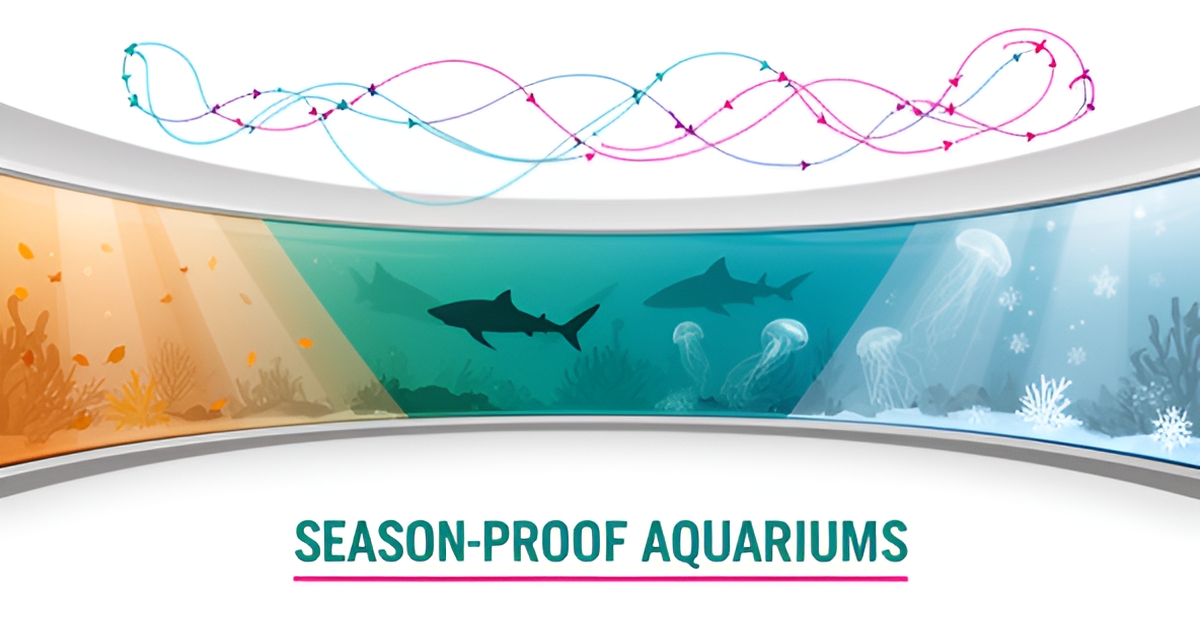
Can AI Handle Seasonal Changes in Aquarium Exhibit Design and Guest Flow?
Key Facts
- Aquarium AI platforms can typically extract pH, ammonia, nitrite and a range of other parameters from natural language descriptions, according to the Aquaria AI platform.Aquaria AI offers paid subscription tiers on top of a free core app; check the official site for current pricing as of late 2026.
- Aquadayum offers AI-powered species identification, smart tank analysis and adaptive maintenance schedules per its site.
- Aquaforest AI (AFAI) uses image recognition to flag aquarium issues and interpret ICP test results per its product page.
- AIQ Labs has deployed 200+ multi-agent systems and runs four live SaaS products daily — the same operational experience applied to facility-scale builds.
Hire a team member that works 24/7 — for less than a part-time wage.
AI receptionists, SDRs, dispatchers and 99+ roles. Trained on your business, fully managed.
Not sure where to start? Ask our AI planner
The Challenge of Seasonal Variability in Aquarium Operations
Seasonal shifts turn predictable aquarium operations into a moving target. Holiday exhibits draw surges of visitors while temperature swings and daylight changes stress life support systems, forcing teams to react instead of plan. Static schedules and manual checks struggle to keep pace with that variability.
The integration of AI into aquarium management is emerging as a significant advancement, offering solutions to the complexities of maintaining healthy aquatic ecosystems, particularly in response to seasonal changes. Current analysis shows AI systems can adapt to fluctuating environmental conditions like temperature shifts and holiday-related changes, helping maintain consistent water quality and optimal conditions for aquatic life.
Guest experience erodes when exhibit consistency slips. Crowding during peak seasons lengthens dwell times, increases noise and carbon load, and strains filtration. Temperature changes outside the building alter heating and cooling demand, while lighting cycles shift natural behavior cues for animals and plants. Without dynamic adjustment, staff spend more time firefighting and less time engaging visitors.
Operational complexity compounds across three pressure points:
- Visitor flow spikes around holidays and school breaks, creating bottlenecks at popular tanks and retail areas
- Ambient temperature changes drive energy use and water parameter drift that manual routines miss
- Exhibit rotations and temporary installations require rapid reprogramming of lighting, feeding, and interpretation content
Staff workload rises as these factors intersect. Teams log water parameters manually, interpret visual signs of stress, and adjust schedules by intuition. AI-powered tools aim to alleviate the guesswork involved in these processes, offering data-driven insights and automation capabilities. Industry research notes this reflects a broader movement towards leveraging technology to simplify and optimize hobbyist and professional practices.
Modern aquarium AI already demonstrates adaptive capabilities in related contexts. Aquadayum offers AI-powered species identification, smart tank analysis, and maintenance schedules that adapt to water conditions. Aquaria AI automatically extracts pH, ammonia, nitrite and a range of additional parameters from natural language descriptions, enabling faster logging during busy periods. These features show how automated monitoring and personalized recommendations can reduce manual burden.
Static systems fail because they assume seasonality is predictable and uniform. In reality, weather events, marketing campaigns, and animal health needs create overlapping variability. Dynamic adaptation is required to maintain both animal welfare and guest satisfaction.
AIQ Labs helps aquariums design flexible AI systems that evolve with seasons, ensuring consistent guest experience and operational efficiency — whether that starts with rebuilding the one workflow that costs the most or a fuller AI Operating System built in phases. The challenge is not just collecting data, but translating seasonal signals into timely adjustments for schedules, visitor flow, and content without adding complexity for staff.
How AI Adapts to Seasonal Shifts in Real Time
Imagine an aquarium where the environment intuitively adjusts to the changing seasons, much like nature itself. Modern AI systems are making this a reality, moving beyond static schedules to dynamic, real-time adaptation for aquatic environments.
At the core of this capability is continuous data ingestion. Tools like Aquaria AI can automatically extract pH, ammonia, nitrite and a range of additional parameters from natural language descriptions, providing a constant pulse on water chemistry. This real-time data allows AI to detect subtle shifts and predict potential issues before they escalate, supporting consistent water quality.
One of the most impactful applications is environmental control. AI can be integrated with aquarium controllers to automatically adjust heating and cooling systems based on ambient temperature changes, maintaining optimal water temperatures year-round. Similarly, AI programs lighting systems to mimic natural daylight cycles, adjusting intensity and duration to support plant growth and fish behavior through every season.
Feeding schedules also benefit from AI's adaptive power. As seasonal changes influence fish metabolism and food availability, AI optimizes feeding times and portions, preventing over or under-feeding. Platforms such as Aquaria AI guide users through precise dosing calculations and create customized supplementation schedules, helping inhabitants receive what they need as conditions shift.
AI's real-time adaptation extends to several key areas:
- Dynamic adjustment of water parameters to compensate for seasonal chemistry fluctuations.
- Automated lighting and temperature control for environmental stability.
- Optimized feeding and dosing schedules tailored to metabolic changes.
- Proactive identification of potential issues like algae or equipment malfunctions.
Aquaforest AI (AFAI), for instance, utilizes image recognition to identify aquarium issues and provides in-depth interpretation of ICP test results, offering tailored solutions. This comprehensive approach helps ensure that even subtle seasonal shifts are addressed promptly, maintaining a healthy environment for aquatic life.
Implementing such dynamic AI systems requires a strategic approach to integration and customization. AIQ Labs designs flexible AI solutions that evolve with an organization's needs — from a single fixed-price Workflow Build to a connected AI Operating System — ensuring these advanced tools integrate into existing operations for consistent performance and efficiency.
Implementing Adaptive AI Systems for Aquarium Resilience
Seasonal shifts demand more than reactive adjustments — they require systems that learn, predict, and adapt in real time. Aquariums face fluctuating guest volumes, temperature-sensitive exhibits, and holiday programming that strain legacy operations. AI-driven infrastructure turns these variables into managed inputs rather than operational surprises.
The foundation starts with discovery. AIQ Labs maps every workflow — ticketing, exhibit controls, staffing schedules, life-support systems — identifying where seasonal friction creates bottlenecks. This mirrors how intelligent aquarium companions automatically extract water parameters from natural language logs to build a living profile of system health. The same principle applies at facility scale: unify fragmented data streams into a single decision layer.
- Deploy AI Employees as front-desk coordinators, flow managers, and exhibit narrators that scale instantly during peak weeks — at a fraction of the cost of a human hire
- Build custom workflows that sync lighting, temperature, and feeding schedules with forecasted attendance and ambient conditions
- Integrate with existing CRM, POS, and building management systems through two-way API connections
- Establish governance guardrails so human operators retain authority over critical life-support decisions
Development follows a phased rollout — one gallery, one workflow, one department at a time, with pricing that matches: start monthly, build in milestones, or own the system outright. Specialized water-chemistry AI demonstrates how domain-trained models interpret complex ICP test results and recommend precise dosing schedules; similarly, exhibit automation agents can balance UV sterilization, chiller cycles, and photoperiods against real-time visitor density. Testing happens in shadow mode before any guest-facing change goes live.
Ongoing optimization closes the loop. Performance dashboards track queue times, exhibit dwell rates, energy draw, and animal welfare indicators — feeding each metric back into the model for continuous refinement. The result is an aquarium that breathes with the seasons: staffing flexes, exhibits shift, and guests move smoothly — without the scramble.
Still paying for 10+ subscriptions that don’t talk to each other?
We build custom AI systems you own outright. No vendor lock-in. Full control.
Not sure where to start? Ask our AI planner
Frequently Asked Questions
Can AI really keep up with seasonal changes in an aquarium?
How does AI handle temperature and lighting changes through the year?
Will AI reduce the manual logging my staff does during busy seasons?
Can AI help manage visitor flow spikes around holidays and school breaks?
What specific AI tools are used for aquarium monitoring today?
Is implementing seasonal AI complicated for staff?
From Seasonal Scramble to Self-Adjusting Operations
Seasonal shifts will always test an aquarium's resilience — holiday crowds, temperature swings, and rotating exhibits create overlapping pressures that static schedules cannot absorb. The article traced how AI moves operations from reactive firefighting to predictive adaptation: continuous water-chemistry ingestion keeps life-support systems stable, dynamic lighting and feeding schedules follow animal biology instead of the calendar, and AI Employees scale front-desk and flow management instantly when attendance spikes. The common thread is a single decision layer that turns fragmented signals into coordinated action without adding complexity for staff. Facilities that unify ticketing, exhibit controls, and environmental data into that layer gain the capacity to flex staffing, energy use, and guest experience in concert with the season. The next step is mapping your own seasonal friction points — queue bottlenecks, parameter drift windows, exhibit changeover delays — and identifying which workflow would deliver the fastest return if it became self-adjusting. Start with the two-minute Fit Check at aiqlabs.ai/apply, then book a free 30-minute strategy call at aiqlabs.ai/book to see where adaptive AI fits your operation.
Make AI your competitive advantage — not just another tool.
Strategy, implementation and ongoing optimization. One partner, end to end.
Not sure where to start? Ask our AI planner