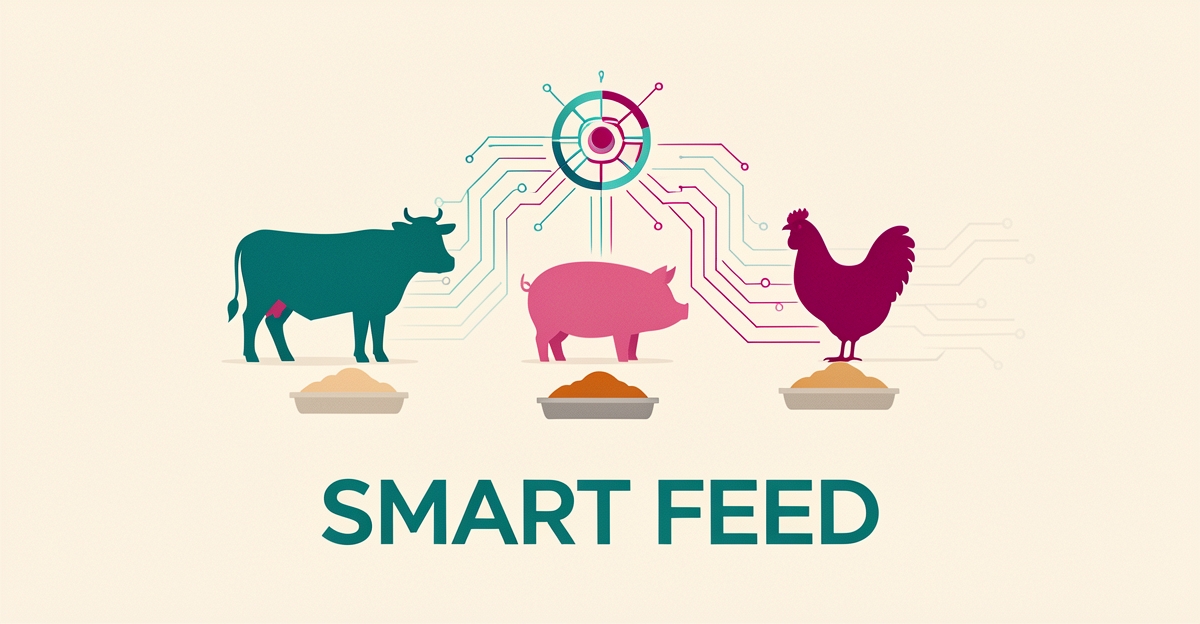
Can AI Handle Variations in Feed Requirements Across Different Livestock Types?
Key Facts
- Most large organizations have adopted AI for at least one business function as of recent industry surveys.
- Enterprise AI investment has continued to grow year over year through 2026, with spending concentrated in production deployment rather than experiments.
- Manufacturing and logistics—sectors closely aligned with agricultural operations—have consistently ranked among the fastest-growing areas for AI-driven applications.
- Industry analysis suggests the enterprise AI "gold rush" phase has ended, and the current phase rewards reliable execution over model demos.
- Feed is typically the largest single operating cost in livestock production, which is why even small formulation improvements compound quickly.
- AIQ Labs has deployed 200+ multi-agent systems and runs 4 live SaaS products daily—evidence of production-grade execution, not pilots.
Hire a team member that works 24/7 — for less than a part-time wage.
AI receptionists, SDRs, dispatchers and 99+ roles. Trained on your business, fully managed.
Not sure where to start? Ask our AI planner
The Complexity of Livestock Feed Variations
Managing feed for a mixed livestock operation is not one problem, it is hundreds of overlapping problems that change daily. A dairy cow in late lactation, a finishing pig, and a broiler at day 21 each need different energy, protein, and micronutrient profiles, and those needs shift with age, health, and performance goals.
Manual systems force producers to rely on static rations, spreadsheets, and nutritionist visits that cannot keep pace with variation. One-size-fits-all formulas waste feed, increase cost, and create performance gaps that show up in weight gain, milk yield, and feed conversion.
The complexity compounds across species, stages, and data sources:
- Species-specific metabolism, e.g., ruminant vs monogastric digestion
- Age and growth stage transitions that change nutrient density requirements
- Performance targets ranging from maintenance to peak production
- Fragmented records from feed mills, barns, and on-farm sensors
Producers who try to manage this manually face delays, human error, and inconsistent application. Feed adjustments lag behind animal needs, and historical data stays siloed, making it hard to learn what actually works.
This is why enterprise AI adoption keeps accelerating. Industry surveys in recent years have consistently found that most large organizations now use AI in at least one business function, and spending has continued climbing through 2026. Manufacturing and logistics—sectors whose operational patterns closely resemble agriculture—have ranked among the fastest-growing areas for AI-driven applications.
The shift is from experimentation to execution. As analysis of enterprise AI notes, success is no longer about demos and model capability, but whether a firm can deploy AI safely, reliably and at scale within existing systems. Feed management demands exactly that kind of reliable execution.
AI-driven solutions can adapt recommendations based on species, age, and performance data instead of static tables. By integrating barn sensors, intake records, and growth metrics, systems can surface nuanced feed needs for cattle, pigs, and poultry in the same operation without manual recalculation.
AIQ Labs builds these systems through three entry points: AI Workflow Builds to rebuild the one feed workflow that costs you the most, and AI Operating Systems when you want one connected layer across the whole operation. The value is not a single model, it is workflow and task automation that connects data to daily feeding decisions.
When feed guidance is dynamic, consistent, and traceable, producers reduce waste, improve animal outcomes, and move from reactive adjustments to proactive nutrition management.
How AI Adapts Feed Recommendations Using Data
AI systems excel at parsing complex, multivariable data to generate precise recommendations—a capability that transforms how suppliers approach livestock nutrition. By analyzing species-specific requirements alongside age, weight, and production goals, these systems move beyond one-size-fits-all feed formulations to deliver truly customized nutritional strategies.
The mechanics mirror advances in e-commerce, where AI-driven feed optimization uses Machine Learning and Natural Language Processing to enrich product data, fill missing attributes, and detect inconsistencies across vast catalogs. Applied to livestock management, these same principles enable AI to process distinct nutritional profiles for cattle, pigs, and poultry, adjusting formulations based on real-time performance data rather than static averages.
This data-centric approach aligns with broader industry shifts. Recent adoption surveys indicate that most large organizations now use AI for at least one business function, and enterprise AI spending has continued to grow year over year as of late 2026. This investment reflects growing confidence in AI's ability to handle nuanced, variable-driven decision-making.
For livestock feed management, this translates into specific adaptive capabilities:
- Species-specific profiling: AI distinguishes between ruminant and monogastric digestive systems, adjusting fiber, protein, and energy ratios accordingly
- Lifecycle stage analysis: Systems modify calcium, phosphorus, and amino acid profiles for starters, growers, and finishers within each species
- Performance-based optimization: Real-time weight gain, milk production, or egg output data triggers automatic formulation adjustments
- Data consistency enforcement: Automated validation ensures nutritional calculations remain accurate across changing ingredient availabilities
However, deploying these systems requires more than algorithmic sophistication. As industry analysts note, the current phase of AI implementation demands execution over experimentation—success depends on integrating AI safely and reliably within existing operational systems rather than pursuing model capability alone.
This execution gap explains why many agricultural operations struggle to move from pilot projects to production-scale feed optimization. AIQ Labs addresses this challenge by building systems that integrate directly with existing farm management software, ensuring that nutritional recommendations account for the specific data architectures and workflow constraints of each operation. Rather than forcing suppliers to adapt to rigid software templates, these tailored solutions adapt to the unique complexities of multi-species feed management.
The result is a dynamic recommendation engine that treats feed formulation as a continuous optimization problem rather than a static calculation. By processing the same data points that nutritionists use—but at machine speed and scale—AI enables suppliers to offer precision nutrition that responds instantly to changing animal needs, ingredient markets, and performance outcomes.
The Shift from Experimentation to Execution in Livestock AI
The enterprise AI conversation has changed. What looked like a race for models is now a test of execution.
Boards are no longer funding experiments, and they are demanding execution. Recent analysis of enterprise AI describes the shift as moving from pilots and demos to production deployment and business impact measurement. The enterprise AI gold rush is over. What comes next is far less glamorous and far more important: execution.
This matters for livestock feed. Handling variations across cattle, pigs, and poultry requires more than a promising prototype. It requires systems that are safely deployed, reliably integrated, and measured at scale within existing farm and supplier operations.
Industry coverage notes success is no longer about demos and model capability, but whether a firm can deploy AI safely, reliably and at scale within existing systems. The execution era demands integration, governance, and orchestration rather than model performance alone.
The broader adoption context underscores the pressure. Industry statistics show most large organizations have now adopted AI for at least one business function, and spending has kept climbing through 2026. With that scale of investment, tolerance for stalled pilots has collapsed.
For feed suppliers and producers, the gap shows up in three practical ways:
- Fragmented systems that prevent species-specific data from flowing into recommendations
- Constrained processes that stall AI after a limited trial
- Risk management that becomes non-negotiable when nutrition decisions affect animal health and cost
Production-ready AI for feed means moving past experimentation into workflow and task automation that is owned, integrated, and continuously optimized. AIQ Labs builds these systems—200+ multi-agent deployments to date—enabling suppliers to offer tailored solutions for cattle, pigs, and poultry.
The current phase rewards businesses that can operationalize AI rather than just access it. In hindsight we can see that in most cases, the model itself was rarely the problem, it was the business which fell short. That is why the shift from experimentation to execution is decisive for livestock AI.
Implementing AI for Livestock Feed Optimization
Moving from feed trials to AI-driven nutrition requires more than a model, it requires execution. Livestock operations that want species-specific recommendations for cattle, pigs and poultry need systems that integrate data, adapt to operational realities, and stay reliable at scale.
Most large organizations have now adopted AI for at least one business function, according to industry research as of late 2026. The shift is from experimentation to production deployment where business impact is measured, not demoed.
Successful feed optimization starts with data integration. Performance data, age cohorts, species requirements, and environmental inputs must flow from farm management, sensors, and mill systems into a unified view. Fragmented systems are a common failure point when AI is deployed at scale, and success now depends on safely deploying AI within existing organizational systems rather than model capability alone.
System customization is the next critical step. Feed needs vary sharply by species, life stage, and performance targets. A tailored AI solution learns those nuances from historical rations, intake records, and outcomes, then generates recommendations that align with operational constraints like ingredient availability and cost. This is where custom AI development replaces generic tools.
Working with a partner who builds owned systems changes the risk profile. AIQ Labs offers three ways in: AI Employees for managed AI staff at roughly 80% less cost than a human hire, AI Workflow Builds to rebuild your most expensive feed workflow at a fixed price, and AI Operating Systems for one connected layer you own outright. The approach mirrors the current enterprise emphasis on execution over experimentation.
Practical implementation typically follows these actions:
- Audit data sources and map integration points across feeding, herd management, and procurement tools
- Define species and age-specific nutrition rules and performance KPIs the model must respect
- Build a pilot workflow for one species or barn, validate recommendations against nutritionist oversight
- Establish governance for data quality, model updates, and human-in-the-loop approvals
- Scale across sites with monitoring for accuracy, cost impact, and animal performance
Boards are no longer funding experiments, and they are demanding execution, as noted in a recent analysis of enterprise AI. For livestock feed, that means reliable deployment at scale with clear ROI tracking.
With the right integration, customization, and ongoing optimization, AI can adapt feed recommendations in real time to species, age, and performance data without adding operational complexity.
Still paying for 10+ subscriptions that don’t talk to each other?
We build custom AI systems you own outright. No vendor lock-in. Full control.
Not sure where to start? Ask our AI planner
Frequently Asked Questions
Can AI really handle different feed requirements for cattle, pigs, and poultry at the same time?
How does AI adjust feed formulas as animals grow or production goals change?
What kind of data does an AI system need to manage livestock feed variations effectively?
Is AI feed management just a passing trend, or are operations actually adopting it?
Why do so many AI feed projects fail to move beyond the pilot stage?
How can feed suppliers implement AI without replacing their current farm management software?
From Static Rations to Real-Time Nutrition
Managing feed for cattle, pigs and poultry as one problem was never realistic — each species, age stage and performance goal creates a different nutritional equation that changes daily. AI handles this variation by integrating barn sensors, intake records and growth metrics to generate species-specific, lifecycle-aware recommendations that adapt as animals and conditions change, replacing static tables with continuous optimization. The real shift is from model demos to reliable execution: systems must be safely deployed, integrated with existing farm and supplier workflows, and measured at scale. For suppliers and producers, that execution translates into less waste, more consistent animal outcomes and nutrition decisions that move from reactive to proactive. If you're evaluating how to operationalize this, start with a focused assessment of your data flows and species-specific KPIs, then pilot a single workflow with nutritionist oversight before scaling. Ready to map your biggest bottleneck? Take the 2-minute Fit Check at aiqlabs.ai/apply and book a free 30-minute strategy call to identify high-ROI automation opportunities. With most large organizations already using AI in at least one business function, the advantage now goes to those who execute.
Make AI your competitive advantage — not just another tool.
Strategy, implementation and ongoing optimization. One partner, end to end.
Not sure where to start? Ask our AI planner