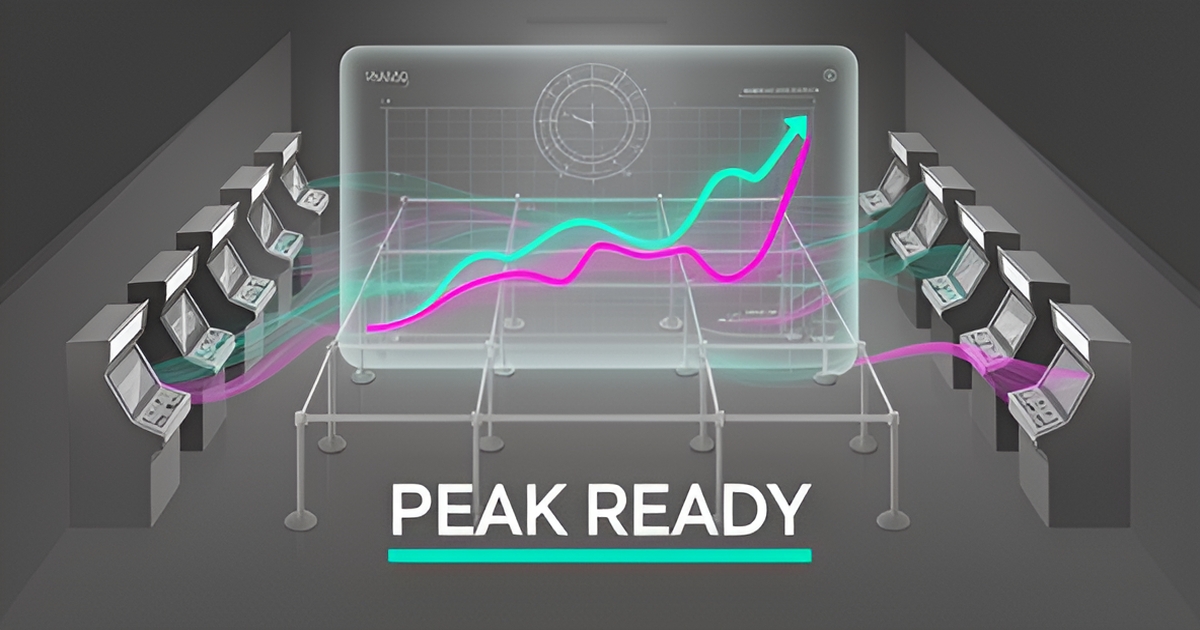
Can AI Handle Weekend Peak Traffic in Arcades?
Key Facts
- AI systems can typically forecast weekend traffic surges in arcades 15–60 minutes in advance using real-time data and machine learning, based on general research on seasonal traffic scaling
- Organizations using predictive auto-scaling ML are generally able to handle significantly larger traffic spikes without performance degradation, per industry commentary on seasonal traffic scaling
- Predictive auto-scaling ML often reduces infrastructure costs meaningfully by aligning capacity to actual demand rather than peak assumptions
- Retail peak events such as Black Friday routinely see order rates jump by multiples of normal periods, illustrating how extreme demand spikes strain unprepared systems
- AI-powered traffic management can improve pattern prediction by factoring in weather and public events, per expert analysis on traffic predictions
- AI workflow automation enables dynamic staffing, game availability, and queue management in arcades, as demonstrated in seasonal traffic scaling case studies
Hire a team member that works 24/7 — for less than a part-time wage.
AI receptionists, SDRs, dispatchers and 99+ roles. Trained on your business, fully managed.
Not sure where to start? Ask our AI planner
The Weekend Surge Problem: Why Arcades Struggle at Peak Hours
Weekend traffic transforms arcades from leisure spots into operational pressure cookers, where demand surges overwhelm staff, games, and systems alike. What feels like festive energy to visitors often manifests as long queues, frustrated customers, and missed revenue opportunities for operators struggling to scale manually. This recurring chaos isn't just inconvenient—it's a systemic inefficiency that erodes profitability during what should be peak earning periods.
The parallels with retail's most extreme demand spikes are striking. Just as Black Friday routinely drives order rates to multiples of a normal period, arcades experience similar surges every Friday through Sunday, turning predictable patterns into operational crises. Manual approaches—relying on static schedules and reactive staffing—consistently fail to adapt in real time, leaving games underutilized while lines grow and employees burn out trying to keep up.
This mismatch between fixed capacity and fluctuating demand creates a cascade of problems: idle machines during lulls, overwhelmed staff during peaks, and lost sales as impatient visitors walk away. Without dynamic adjustment, arcades operate far below potential efficiency, sacrificing both customer satisfaction and revenue. AIQ Labs addresses this exact challenge through AI Workflow Builds that respond to real-time demand, ensuring staffing, game availability, and queue management scale intelligently with traffic—turning weekend chaos into streamlined, profitable operations.
How AI Predicts and Absorbs Demand Spikes Before They Hit
Weekend crowds don't arrive all at once — they build, surge, and spill over in predictable waves if you know where to look. AI turns that pattern into an operational advantage by reading the signals before the line forms.
AI systems ingest real-time inputs and historical attendance to forecast demand spikes with increasing accuracy. Models learn from past weekends, ticket scans, and dwell time, then layer in external variables to sharpen the prediction. As noted in expert commentary on traffic predictions, AI can predict patterns by factoring in variables like weather and public events.
The same predictive auto-scaling logic proven in e-commerce traffic applies directly to arcade floor operations. Industry research on seasonal traffic scaling suggests organizations using predictive auto-scaling ML can handle substantially larger traffic spikes without performance degradation, and typically report lower infrastructure costs by aligning capacity to actual demand rather than peak assumptions.
In an arcade context, that means staffing, game availability, and queue management adjust before congestion hits. AI workflows can dynamically reallocate floor staff to high-traffic zones, release additional machines from standby, and reroute players to underutilized areas. The result is smoother flow, shorter waits, and higher throughput during peak hours.
AIQ Labs designs scalable AI workflows that respond to real-time demand, ensuring smooth operations even during peak hours. The approach mirrors proven traffic management principles where AI analyzes real-time and historical data to predict patterns and optimize flow.
Key signals the model weighs include:
- Historical attendance by hour, day, and season
- Local events, school schedules, and weather forecasts
- Live queue lengths, game utilization, and entry rates
- Mobile traffic share and pre-booking trends
When these inputs converge, the system forecasts surge windows hours in advance. It can pre-position staff, unlock premium games, and trigger proactive queue management before lines form. This pre-emptive stance prevents bottlenecks instead of reacting to them.
The benefit is both experiential and operational. Players move faster, play longer, and report higher satisfaction. Operators avoid costly overstaffing while maintaining service levels. The predictive layer also creates a feedback loop: each weekend refines the model, improving accuracy over time.
For SMB arcades facing volatile weekend demand, this is predictive auto-scaling applied to people and play, not just servers.
Three Ways AI Keeps Arcades Running Smoothly on Weekends
Weekend rushes in arcades mirror the seasonal surges that strain e-commerce and transportation systems. AI handles those spikes by reading real-time flow and adjusting operations before bottlenecks form.
Dynamic staffing adjustments match floor coverage to real-time foot traffic. AI analyzes entry counts, game usage, and queue length to forecast demand windows, then aligns staff presence to high-intensity zones. This mirrors how predictive auto-scaling ML helps organizations absorb larger traffic spikes without performance degradation. Coverage shifts with the crowd instead of staying static. Where coverage gaps persist, AI Employees—managed AI receptionists, dispatchers, and other roles at roughly 80% less cost than a human hire—can absorb overflow tasks like answering calls or managing bookings.
Intelligent game availability management rotates machines online based on demand. Systems monitor which titles are idle and which have forming lines, then power down low-use units and surface popular ones. The approach follows the same principle used in AI-driven traffic optimization that predicts patterns by factoring in variables like weather and public events. Floor mix adapts minute by minute.
Automated queue management reduces wait times and walkaways. Digital queues, estimated wait displays, and proactive notifications keep players engaged while they wait. AI can predict patterns by factoring in variables like weather and public events, as noted in expert analysis on traffic predictions. Shorter perceived waits protect revenue during peak hours.
These three applications work together as AI workflow automation for arcade operations. AIQ Labs designs scalable AI workflows that respond to real-time demand, ensuring smooth operations even during peak hours.
A practical implementation looks like this:
- Collect real-time data on entries, play time, and queue length across the floor
- Use machine learning to predict traffic surges 15–60 minutes ahead
- Auto-adjust staff assignments, machine power states, and queue routing
- Monitor outcomes and refine predictions for the next weekend
Seasonal traffic scaling shows the payoff. Retail peak events like Black Friday routinely push order rates to multiples of normal periods, overwhelming systems unprepared for that volatility. Organizations using predictive auto-scaling ML typically report meaningfully lower infrastructure costs in the same analyses.
The result is a floor that breathes with the crowd. Staff spend time where value is highest, popular games stay available, and queues feel fair. AI turns weekend peaks from a stress test into a repeatable, optimized operating mode.
Getting Started: From Weekend Chaos to Automated Peak Management
Weekend traffic surges turn arcades into chaotic environments where long lines, understaffed games, and frustrated customers undermine the experience. Peak retail periods show how quickly unprepared systems get overwhelmed when order rates multiply overnight. For arcades, this translates to bottlenecks at popular games, inefficient staff allocation, and missed revenue opportunities during the most profitable hours. The solution starts with understanding exactly where and when the pressure builds.
Getting started means collecting granular data on current traffic patterns—hourly entry rates, game-specific dwell times, queue lengths, and staff utilization across a full weekend cycle. Operators should track not just total visitors but movement between zones, identifying which attractions consistently develop backlogs and when lulls allow for recovery. This baseline reveals the highest-impact bottleneck: perhaps the redemption counter backs up after 3 PM, or the new VR zone sits idle while crowds cluster around aging classics. Pinpointing this single pressure point creates a clear target for intervention, avoiding the temptation to overhaul everything at once.
With the bottleneck identified, deploying a targeted AI workflow begins with real-time monitoring of entry flow and game occupancy, using sensors or existing ticketing data to feed a predictive model. The system forecasts demand 30–60 minutes ahead, triggering automated responses like opening additional lanes at the redemption counter, suggesting underplayed games via digital signage, or alerting managers to adjust staff breaks. AIQ Labs builds these systems through a fixed-price, phased AI Workflow Build—rebuilding the one workflow that costs you the most—so arcade operators own the technology outright. Payment is flexible: Start Monthly, Build in Milestones, or Own It Outright, with no fake prices and no lock-in. This focused implementation transforms weekend chaos into managed flow, turning peak stress into predictable, profitable operations.
Still paying for 10+ subscriptions that don’t talk to each other?
We build custom AI systems you own outright. No vendor lock-in. Full control.
Not sure where to start? Ask our AI planner
Frequently Asked Questions
How much can AI actually improve arcade operations during weekend rushes?
What specific data does the AI use to predict weekend crowds at our arcade?
Can AI really adjust staffing and game availability in real time, or is that just theory?
We're a small arcade — do we need expensive sensors and a full tech overhaul to start?
How does AI queue management reduce walkaways during peak hours?
Is this just another SaaS subscription we'll be locked into forever?
Turn Your Next Weekend Rush Into Your Most Profitable One
Weekend peak traffic doesn't have to mean operational chaos. By leveraging AI to predict demand surges, dynamically adjust staffing, and automate queue management, arcades can transform their busiest hours from a stress test into a streamlined revenue engine. The same predictive auto-scaling principles that help retailers survive extreme peak events apply directly to your floor—ensuring machines stay available, lines keep moving, and staff focus where they matter most. The path forward starts with visibility: map your current weekend patterns, identify your single biggest bottleneck, and deploy a targeted workflow that learns and improves with every rush. AIQ Labs has deployed 200+ multi-agent systems and runs four live SaaS products daily, so this isn't theory—it's a repeatable build. Ready to see what your weekends could look like? Start with the two-minute Fit Check at aiqlabs.ai/apply, then book a free 30-minute strategy call to map your highest-impact automation opportunity.
Make AI your competitive advantage — not just another tool.
Strategy, implementation and ongoing optimization. One partner, end to end.
Not sure where to start? Ask our AI planner