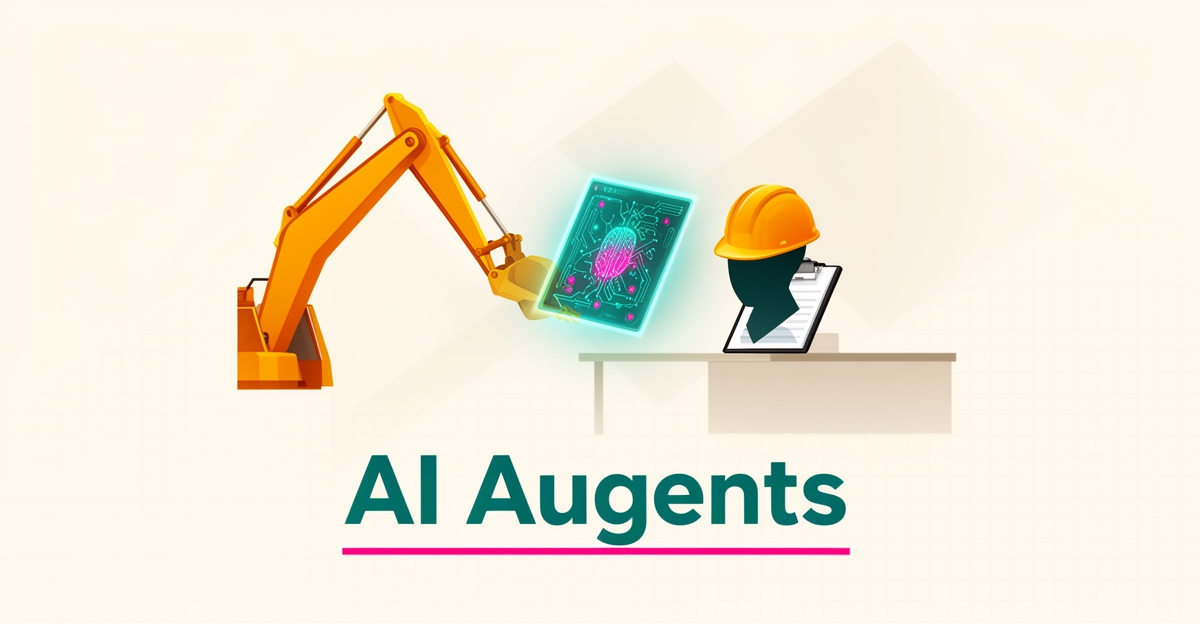
Can AI Replace Human Trainers in Heavy Equipment Schools? The Reality Check
Key Facts
- AI can take over routine work like candidate screening, pre-training assessments, and progress tracking, typically freeing up significant instructor time
- AI Employees operate around the clock with no missed calls, sick days, or fatigue
- AI augmentation lets trainers dedicate more time to personalized feedback and skill development
- AI cannot replace human judgment in safety-critical situations like unstable terrain or low visibility
- AI systems need guardrails—input validation, permission controls, and human review—to operate safely in training environments
- AI serves as a force multiplier—not a substitute—for human expertise in training
Hire a team member that works 24/7 — for less than a part-time wage.
AI receptionists, SDRs, dispatchers and 99+ roles. Trained on your business, fully managed.
Not sure where to start? Ask our AI planner
The Myth of AI Replacing Human Trainers in Heavy Equipment Training
AI can handle routine tasks in heavy equipment training, but it cannot replace the nuanced judgment and hands-on mentorship that human instructors provide. While AI excels at automating assessments and delivering real-time feedback during drills, it lacks the ability to interpret complex, safety-critical situations in real time. For instance, when a student operates heavy machinery near unstable terrain or in low-visibility conditions, only a human trainer can assess environmental cues, anticipate risks, and intervene with context-specific guidance—something current AI systems are not designed to do.
This limitation is especially critical in high-stakes environments where split-second decisions prevent accidents. AI systems require robust guardrails—such as input validation and strict permission controls—to avoid unsafe outputs, but even with these safeguards, they cannot replicate the experiential wisdom of seasoned instructors. AI can augment human trainers by managing routine tasks like pre-training evaluations and progress tracking, freeing instructors to focus on personalized feedback and skill development. However, AI cannot replace the human element essential for building confidence, correcting subtle technique errors, and fostering a safety-first mindset.
AIQ Labs supports this collaborative model by deploying AI Employees to manage administrative workflows and assessment logistics, allowing trainers to dedicate more time to direct student mentorship. This approach enhances training effectiveness without diminishing the instructor's irreplaceable role. Ultimately, AI serves as a force multiplier—not a substitute—for human expertise in heavy equipment education. The most effective training programs leverage AI to handle repetition and data collection, while humans provide the judgment, adaptability, and mentorship that machines cannot emulate. This synergy ensures students receive both technical precision and the human guidance necessary for safe, competent operation in real-world conditions.
How AI Augments, Not Replaces, Human Trainers in Practice
AI is not here to take over the classroom—it's here to support the instructor. In heavy equipment training, AI handles repetitive, time-consuming tasks like application screening, pre-training assessments, and real-time drill feedback, allowing human trainers to focus on what they do best: mentorship, safety oversight, and skill refinement. This shift doesn't diminish the trainer's role—it elevates it by removing administrative burdens and enabling deeper, more personalized engagement with students.
AIQ Labs' AI Employees model exemplifies this collaboration in practice. Roles like AI receptionists and AI recruiters automate initial application reviews, filtering candidates based on predefined criteria such as certifications, experience, and safety records—typically cutting a large share of the manual screening workload. Once enrolled, AI-powered assessment tools administer and score pre-training knowledge checks, identifying gaps in equipment operation theory before students even touch a machine. During live drills, AI systems equipped with computer vision and sensor integration can provide instant, objective feedback on blade angle, load stability, and response time—data points trainers can use to tailor their coaching in real time.
This human-AI partnership creates a more efficient training cycle. Trainers spend less time grading papers or logging metrics and more time observing technique, correcting form, and building confidence—especially critical in high-risk environments where split-second decisions matter. AI augments human expertise but cannot replicate the nuanced judgment, adaptability, and mentorship that experienced instructors bring to heavy equipment education. The result is a training environment where technology handles the measurable, and humans guide the irreplaceable.
Implementing AI as a Trainer Force Multiplier: A Practical Framework
Heavy equipment schools can implement AI as a trainer force multiplier by first assessing their readiness for integration, focusing on where AI can relieve instructors of routine administrative and feedback tasks. This begins with evaluating current workflows—such as student application screening, pre-training assessments, and drill performance tracking—to identify the highest-impact opportunities for automation. Integrating established protocols with AI monitoring streamlines reporting and analysis, allowing trainers to shift focus from data collection to hands-on mentorship.
Deployment should start with AI Employees handling defined roles like applicant screening and assessment management, where they operate 24/7 without fatigue while maintaining natural communication channels. These managed AI agents integrate with existing tools—CRMs, scheduling systems, and learning platforms—to provide real-time feedback during drills and flag safety concerns for human review. Because power without control creates risk, schools must establish guardrails including input validation, permission controls, and automated output reviews to prevent unsafe recommendations.
Impact measurement ties directly to trainer capacity: track reductions in time spent on administrative tasks, increases in hands-on instruction hours, and improvements in student skill acquisition rates. Schools using this model find that AI augmentation allows instructors to dedicate more time to personalized feedback and equipment operation guidance—core strengths of human trainers that AI cannot replicate. AIQ Labs offers three ways to adopt this model: start monthly with AI Employees, rebuild a single costly workflow with a fixed-price Workflow Build, or connect everything into one operating layer with an AI Operating System built in phases and owned outright. By framing AI as a force multiplier rather than a replacement, heavy equipment programs enhance both scalability and instructional quality while maintaining rigorous safety standards through continuous oversight and iterative optimization.
The Human Edge: Why AI Makes Trainers Better, Not Obsolete
As we've seen, AI isn't poised to replace human trainers in heavy equipment schools—it's here to amplify their impact. By automating routine tasks like application screening, pre-training assessments, and real-time drill feedback, AI frees instructors to focus on what machines cannot replicate: nuanced judgment, safety-critical intervention, and personalized mentorship that builds confidence and competence. This human-AI collaboration doesn't just improve efficiency; it elevates the quality of training where it matters most—keeping operators safe in high-stakes environments. For training programs looking to scale without sacrificing instructional integrity, the path forward is clear: leverage AI as a force multiplier for your expert trainers. To explore how this model can work for your specific workflow, start with the free, 2-minute Fit Check to identify your highest-ROI automation opportunities—then book a 30-minute strategy call with our team to map out a practical implementation plan.
Make AI your competitive advantage — not just another tool.
Strategy, implementation and ongoing optimization. One partner, end to end.
Not sure where to start? Ask our AI planner