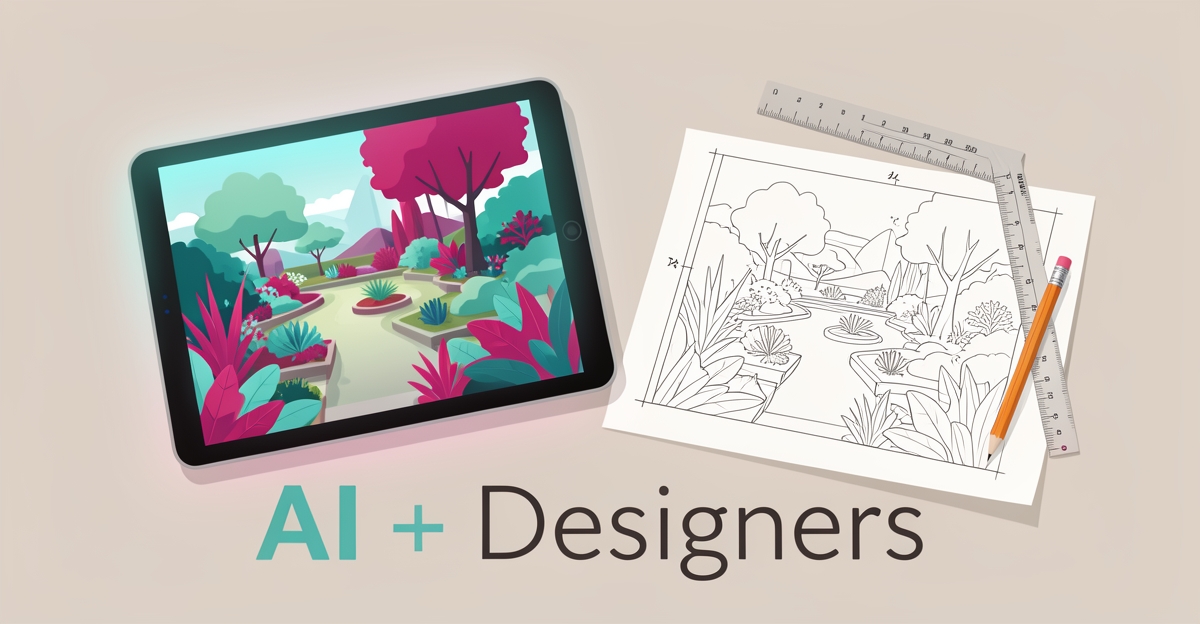
Can AI Replace Manual Client Consultations in Landscape Design? A Realistic Look
Key Facts
- AI landscape design tools typically cost a few dollars to tens of dollars per render, compared to human-led design services that often run into the thousands
- AI can compress concept generation from days to under a minute for photorealistic renders
- Industry surveys consistently show a large share of customers will switch to a competitor after repeated poor experiences
- Customer expectations for speed of initial response have climbed sharply in recent years
- Most CX leaders still consider human agents irreplaceable for high-stakes, empathy-driven decisions
- AI can meaningfully reduce project turnaround time for consultants by automating discovery and requirements gathering
- Tools like Hadaa's Garden Autopilot can generate a full set of photorealistic renders, a planting guide, and a contractor blueprint in under 60 seconds
Hire a team member that works 24/7 — for less than a part-time wage.
AI receptionists, SDRs, dispatchers and 99+ roles. Trained on your business, fully managed.
Not sure where to start? Ask our AI planner
The Bottleneck: Why Traditional Consultations Don't Scale
The phone rings, an email lands, and a contact form pings—all while your lead designer is on a job site. For many landscape firms, the initial client consultation is not a creative kickoff but a chaotic scramble that leaks revenue and burns out your best people.
This friction is no longer just an inconvenience; it is a critical failure point. Client expectations have shifted hard toward instant response, and industry customer-service research has tracked a sharp rise in demand for faster first replies in recent years. When a potential client has to wait days for a callback, they often move on—and a substantial share of customers will switch to a competitor after multiple poor experiences.
The core issue is not a design deficit but a triage failure. Your senior designers, whose time is best spent on complex site analysis and high-value closing, are instead bogged down by a flood of unqualified leads and repetitive administrative tasks. This manual intake process creates significant operational drag.
- Wasted Expert Hours: Senior staff spend valuable time answering basic questions and vetting prospects who are not a good fit.
- Slow Response Times: Manual follow-ups cannot keep pace with modern expectations, leading to lost opportunities.
- Inconsistent Qualification: Without a standardized process, lead quality varies, and promising projects fall through the cracks.
- Staff Burnout: The constant pressure of juggling administrative work with high-level design leads to frustration and turnover.
This is where intelligent automation offers a strategic advantage, not by replacing designers, but by protecting their time. AI Employees—managed AI staff like receptionists and intake agents—can handle first-level client engagement 24/7, answering initial questions, qualifying leads based on your criteria, and scheduling discovery calls directly into your calendar. This ensures every inquiry receives an instant, professional response.
By automating the top of the funnel, you transform the consultation process from a reactive bottleneck into a proactive, efficient system. This approach reserves your team's irreplaceable expertise for the technical judgment and creative problem-solving where they deliver the most value. It reframes the problem from "How can we answer faster?" to "How can we engage smarter?"
Where AI Actually Wins: Triage, Visualization, and Speed
The fuzzy front end of landscape design is where AI stops being a gimmick and starts paying for itself. It's the moment a homeowner types "I want a backyard that feels relaxing" and the firm needs to turn that vague idea into a qualified lead, a visual direction, and a scoped conversation — fast.
AI excels at triage. With customer expectations for response speed climbing year over year, an AI receptionist can answer FAQs, qualify budget and timeline, and book a discovery call 24/7 without a human on the line. That first-level engagement filters out tire-kickers and gives designers only conversations that are ready to move.
Visualization is the second clear win. Tools like D5 Render's AI Agent and Hadaa can compress concept generation from days to minutes. Hadaa's Garden Autopilot can generate a full set of photorealistic renders, a planting guide, and a contractor blueprint in under 60 seconds. D5 Render notes that what took days now happens in minutes, freeing designers to focus on innovation, not busywork.
Speed compounds into cost. As of late 2026, AI landscape design tools typically price in the range of a few dollars to tens of dollars per render, while human-led design services commonly run into the thousands. That differential lets firms offer instant, low-risk visuals as a lead magnet instead of charging for exploratory work.
The real value is iteration. Once a client sees a photorealistic option, they can request real-time changes — patio material, plant density, hardscaping style — and see results immediately. This moves clients from vague ideas to defined scope before a human designer is involved, which is exactly where AI belongs in the workflow.
AI can also accelerate the consultant side of the process. By automating discovery and requirements gathering, AI can meaningfully reduce project turnaround time for consultants, letting the firm present a polished vision upfront and then hand off to a pro for technical work.
Where this fits for firms is a practical hybrid:
- Instant lead qualification and after-hours intake via AI receptionists
- Photorealistic concept generation in under 60 seconds to test styles and budget
- Real-time style iteration that clarifies scope before human design time is billed
- Automated follow-ups and scheduling so qualified leads don't slip
This is the connected-client-workflow playbook AIQ Labs supports — handling initial client inquiries, generating design options, and scheduling follow-ups without losing personal touch. The human designer then steps in for grading, drainage, permits, and buildability, where judgment remains irreplaceable.
Used this way, AI doesn't replace consultations. It makes them start faster, cost less, and close more often.
The Hard Line: What AI Cannot Do (And Why It Matters)
The line between a helpful first impression and a costly mistake in landscape design is drawn on site, not on screen. AI can spark ideas fast, but it cannot stand in a yard, read the slope, or sign off on a build.
AI is strong at concepting and weaker at execution. It generates photorealistic renders in minutes and answers routine FAQs instantly, yet it cannot reliably assess site-specific issues like grading, drainage, soil conditions, or underground utilities. For projects involving retaining walls, major hardscaping, or permits, human judgment is essential.
This matters because overpromising visually is a real risk. AI can create a pretty image that is not a buildable plan. Without on-site verification, a design may look perfect but fail structurally, violate code, or create drainage problems that surface after installation. Human designers ensure a design is structurally sound, code-compliant, and can be accurately quoted and built by contractors.
The market agrees on the limits of automation. Industry research consistently shows that a strong majority of CX leaders believe human customer service agents are irreplaceable for high-stakes, empathy-driven decisions. That sentiment tracks with landscape work, where trust, technical judgment, and personal accountability close large projects.
Customer expectations are also rising. Customer service data shows a sharp increase in expectations for speed of initial response in recent years, and a substantial share of customers will switch to a competitor after multiple bad experiences. Speed without accuracy damages reputation fast.
AI cannot safely handle:
- Grading and drainage analysis that prevents water pooling and erosion
- Structural integrity of retaining walls, patios, and hardscaping
- Permit compliance and local code requirements
- Underground utility awareness and site safety assessment
These are non-negotiable boundaries. They require boots-on-the-ground evaluation, professional liability, and experience that models do not possess.
That is why the premium closer role stays human. AI can triage leads, generate design options, and schedule follow-ups so the team focuses on high-value work. AIQ Labs supports this hybrid model with managed AI receptionists and intake agents that handle first-level client engagement efficiently, freeing designers for the technical and relational work only people can do.
Use AI first for ideation and triage, then hand off to a human for site analysis, technical planning, permit-ready drawings, and contractor coordination. The result is faster early exploration without losing the personal touch that protects projects and the firm.
The Hybrid Workflow: AI-First, Pro-Second
The most effective landscape firms are not choosing between AI and human expertise; they are deploying a sequential workflow that leverages the strengths of both. This "AI-first, pro-second" model compresses the early stages of client engagement from days to minutes while preserving the technical judgment required for complex builds.
At the intake stage, an AI receptionist captures the lead immediately, answering common questions about services and availability around the clock. This responsiveness matters because customer expectations for initial response speed have risen sharply, and most clients are open to AI-assisted service during these early interactions—as long as there is a clear path to a human. The system qualifies the inquiry by asking about budget range, project type, and timeline, then books a discovery call directly into the calendar without human intervention.
During that first consultation, the designer uses AI visualization tools to generate two or three photorealistic concepts in real time. Platforms like D5 Render and Hadaa can transform a single photo of a client's yard into multiple style variations—modern, cottage, or Mediterranean—in under sixty seconds, allowing the client to compare options instantly rather than waiting days for initial drafts. This speed helps resolve the "fuzzy front end" of decision-making, giving homeowners concrete visuals to react to before serious money changes hands.
The designer then reviews these AI-generated concepts to qualify complexity and determine the appropriate service path. Simple refreshes or planting plans might proceed with minimal human oversight, while projects involving grading, drainage, or structural hardscaping trigger an immediate handoff to senior staff. As industry observers note, AI excels at concepting but cannot reliably assess site-specific technical constraints like soil conditions or underground utilities.
For qualified complex projects, the human expert takes over for technical design and closing. The AI-generated visuals serve as a polished starting point, eliminating hours of initial drafting and ensuring the client's aesthetic preferences are already documented. This allows the designer to focus on high-value work: creating permit-ready drawings, coordinating with contractors, and building the trust necessary for high-stakes decisions.
Throughout this process, automation prevents lead leakage. AI-powered CRM workflows handle follow-up emails, proposal delivery, and scheduling for site visits, ensuring no inquiry falls through the cracks. Research on landscaping operations indicates AI can meaningfully reduce project turnaround time by automating these discovery and administrative workflows.
Implementing this architecture requires integrated systems rather than disconnected apps. AIQ Labs builds managed AI receptionists and intake agents that handle first-level client engagement, qualification, and scheduling, creating a seamless bridge between instant AI responsiveness and human design expertise. For firms ready to connect intake, scheduling, CRM, and follow-up into one layer, a phased AI Operating System build is often the right path.
By assigning AI to the repetitive front-end tasks and humans to the technical back-end, firms can serve more clients without sacrificing quality. The result is a scalable consultation model that respects both the client's time and the designer's specialized judgment.
What This Looks Like in Practice: A Landscape Firm Case
At 9 PM, a homeowner uploads a photo of their overgrown backyard to a landscape firm's website. By 9:05 PM, they receive three AI-generated renders—one modern, one cottage-style, one Mediterranean—each reflecting their stated budget and site constraints. This instant visualization, powered by tools like Hadaa's Garden Autopilot, compresses what traditionally takes days into under a minute, enabling rapid style exploration without upfront cost. The system then prompts them to book a site visit through an integrated scheduler, syncing directly with the designer's calendar and CRM. By the time the human designer meets the client the next day, they already know the preferred aesthetic, budget range, and key site limitations—turning a generic discovery call into a focused, value-driven conversation. This seamless loop—handled 24/7 by AIQ Labs' AI receptionists and intake agents—ensures zero missed calls, automated lead qualification, and immediate follow-up, all while preserving the human touch for complex design work. Research shows most customers are open to AI service when it's efficient and escalatable, and AI can meaningfully reduce project turnaround time by automating early-stage exploration. For landscape firms, this means capturing after-hours leads, reducing manual intake burden, and letting designers focus on what they do best: turning visions into buildable, beautiful spaces. Industry research confirms customers increasingly expect faster initial responses—a gap AI closes instantly. Meanwhile, specialized tools can generate a full set of photorealistic renders in under 60 seconds, making early-stage design both accessible and actionable. The result isn't replacement—it's elevation: AI handles the friction, humans bring the finesse.
- Instant concept generation from a single photo
- 24/7 AI intake with CRM/calendar sync
- Human designer prep with vision, budget, and constraints pre-loaded
- Zero missed calls, automated scheduling
- Seamless handoff for technical design and closing
Still paying for 10+ subscriptions that don’t talk to each other?
We build custom AI systems you own outright. No vendor lock-in. Full control.
Not sure where to start? Ask our AI planner
Frequently Asked Questions
Can AI really replace a human landscape designer for client consultations?
How fast can AI generate landscape design concepts compared to a human designer?
What percentage of customers expect faster initial responses from businesses today?
Will customers switch to a competitor if they have a poor experience with a landscape firm?
How much can AI reduce project turnaround time for landscape consultants?
Are customers open to interacting with AI during the initial stages of a landscape consultation?
Where AI Meets Expertise: The Future of Landscape Consulting
The landscape design consultation isn't about choosing between AI and human expertise—it's about strategically combining both to serve clients better and scale your firm sustainably. AI excels at the front end: triaging leads, generating instant visualizations, and handling after-hours inquiries so no opportunity slips through. But when it comes to grading, drainage, permits, and buildable plans, human judgment remains irreplaceable. By deploying an AI-first, pro-second workflow—using managed AI receptionists for intake and AI visualization for rapid concepting—firms can reduce response times, qualify leads faster, and free senior designers to focus on high-value technical work where they deliver the most impact. This hybrid approach doesn't replace consultations; it makes them start smarter, close more often, and protect your team from burnout. To see how this fits your specific workflow, start with the two-minute Fit Check at aiqlabs.ai/apply, then schedule a no-obligation 30-minute strategy call with our AI engineering team to map your path forward.
Make AI your competitive advantage — not just another tool.
Strategy, implementation and ongoing optimization. One partner, end to end.
Not sure where to start? Ask our AI planner