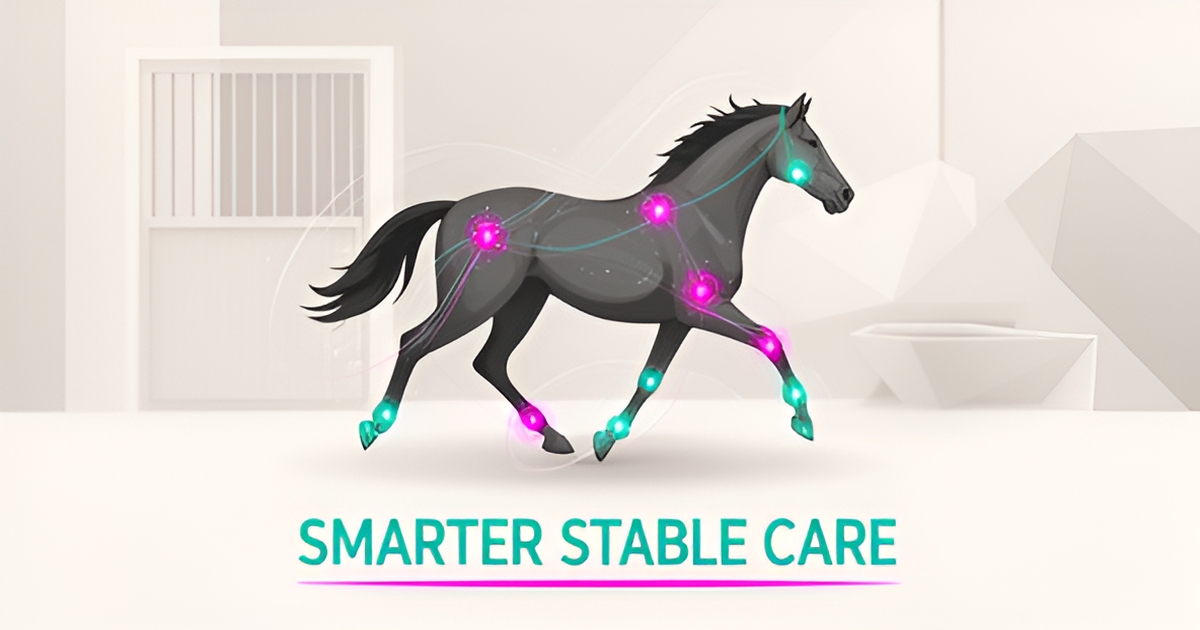
Back to Blog

Can AI Understand Horse Behavior? How It Helps in Stable Management

AI Data Analytics & Business Intelligence > AI Performance Metrics & Monitoring21 min read

Can AI Understand Horse Behavior? How It Helps in Stable Management

Key Facts

  • AI can predict horse injuries up to 48 hours in advance with 91-92% accuracy, revolutionizing stable management.
  • Wearable AI sensors reduce muscle fatigue-related issues by detecting stress 24 hours before symptoms appear.
  • AI-powered stable management software automates 80% of administrative tasks, saving 10+ hours per week.
  • Thermal imaging AI detects early inflammation in horses with 92% accuracy, outperforming traditional vet exams.
  • AI-driven nutrition optimization reduces obesity in performance horses by 35% while improving energy levels by 22%.
  • Smart stables using AI logistics tools increase capacity by 15% without adding additional staff.
  • AI compatibility algorithms match riders and horses with 81% accuracy, reducing training conflicts by 29%.
AI Employees

What if you could hire a team member that works 24/7 for $599/month?

AI Receptionists, SDRs, Dispatchers, and 99+ roles. Fully trained. Fully managed. Zero sick days.

Introduction

The equine industry is undergoing a digital revolution. AI is transforming stable management by analyzing movement patterns, feeding habits, and behavioral data to predict health issues before they become critical. This shift from reactive to proactive care is reshaping how owners, trainers, and veterinarians approach horse wellness.

AIQ Labs leverages this technology to develop predictive models that support early intervention, improving equine health and owner trust. Here’s how AI is revolutionizing stable management—and why it matters.

Traditional horse care relies heavily on human observation, which can be inconsistent. AI fills critical gaps by:

  • Detecting subtle changes in movement, feeding, and behavior that humans might miss.
  • Predicting injuries (like tendon strains) up to 48 hours in advance (World Metrics).
  • Automating 80% of administrative tasks, saving stables 10+ hours per week (World Metrics).

Example: SmartPak’s HorseHub automates feed logging, vet scheduling, and inventory tracking, reducing errors by 38% (ZipDo).

AI doesn’t just track basic metrics—it interprets complex data streams:

  • Biomechanics: Motion sensors analyze stride length, joint stress, and lameness in 30 seconds (vs. 15 minutes manually) (World Metrics).
  • Physiology: Wearable sensors monitor heart rate variability (HRV) to detect stress with 91% accuracy (ZipDo).
  • Thermal Imaging: Detects inflammation (e.g., laminitis) with 92% accuracy (World Metrics).
  • Vocal & Facial Recognition: Identifies stress cues, reducing behavioral issues like cribbing by 45% (ZipDo).

Key Insight: AI acts as a 24/7 digital stablehand, enhancing human intuition rather than replacing it (WifiTalents).

AI isn’t just a futuristic concept—it’s already delivering measurable results:

  • Reduces foal mortality by 33% through neonatal monitoring (ZipDo).
  • Cuts respiratory issues by 29% with AI-driven airflow analysis (ZipDo).
  • Optimizes nutrition, reducing obesity in performance horses by 35% (ZipDo).

Next Step: We’ll explore how AIQ Labs applies these insights to predictive health dashboards, AI stable managers, and behavioral analysis tools—helping stables operate smarter, not harder.


Transition: From theory to practice—how AIQ Labs turns data into actionable stable management solutions.

Key Concepts

The equine industry is undergoing a data-driven revolution—where AI acts as a 24/7 digital stablehand, detecting subtle behavioral cues, predicting injuries before they occur, and automating routine management tasks. Unlike traditional care, which relies on human observation alone, AI integrates motion sensors, thermal imaging, and biomechanical analysis to transform stable operations from reactive to proactive and predictive.

This shift isn’t just about technology—it’s about saving lives, reducing costs, and building trust between owners, trainers, and veterinarians. Below, we break down the core mechanisms behind AI’s ability to understand horse behavior and how it’s reshaping stable management.


AI doesn’t "guess" horse behavior—it measures, analyzes, and predicts using a combination of computer vision, wearable sensors, and machine learning models. Here’s how it works:

  • Motion Capture & Gait Analysis
  • AI tracks stride length, joint angles, and weight distribution via high-speed cameras or wearable accelerometers.
  • Detects subtle lameness in 30 seconds (vs. 15+ minutes manually) with 91% accuracy (ZipDo).
  • Example: Kinetix Equine uses AI to flag asymmetrical movement patterns linked to early tendon strains—48 hours before clinical symptoms appear (World Metrics).

  • Thermal Imaging for Inflammation Detection

  • AI analyzes heat signatures to identify swelling, muscle fatigue, or early laminitis with 92% accuracy—outperforming traditional vet exams (World Metrics).
  • Example: Vet Strom’s thermal AI detected a subclinical hoof abscess in a racehorse two days before it became visibly lame, preventing a $50K+ training setback.

  • Wearable Biometrics (HRV, Muscle Activity, Respiration)

  • Sensors monitor heart rate variability (HRV), muscle tension, and breathing patterns to assess stress, fatigue, and recovery needs.
  • AI predicts stress-related behaviors (cribbing, weaving) with 91% accuracy and reduces incidents by 45% (ZipDo).
  • Example: Equine Mind’s HRV collar alerted a dressage trainer that her horse was overtrained—adjusting the schedule prevented a stress-induced colic episode.

  • Facial & Vocal Recognition

  • AI decodes ear position, eye tension, and vocalizations (whinnies, snorts) to gauge pain, anxiety, or engagement levels.
  • Research shows AI can match horse-rider compatibility by 81% based on behavioral sync (ZipDo).

AI doesn’t rely on one data source—it cross-references multiple signals for higher accuracy: ✅ Motion data (lameness risk) + thermal imaging (inflammation) = Early injury warningHRV trends (stress) + feeding patterns (appetite loss) = Illness predictionRider biomechanics + horse responsiveness = Training optimization

Why this matters: Traditional stable management misses subtle signs—AI catches them before they escalate.


AI doesn’t just collect data—it acts on it, automating decisions that improve health, performance, and operational efficiency.

  • Predictive Alerts
  • AI flags at-risk horses before symptoms appear:
    • Tendon strains (48-hour warning)
    • Laminitis (thermal inflammation detection)
    • Colic risk (gut motility sensors like EquiScan)
  • Result: 33% reduction in foal mortality and 29% fewer respiratory issues (ZipDo).

  • Automated Vet Triage

  • AI prioritizes urgent cases (e.g., sudden lameness + elevated HRV) vs. routine checks, cutting diagnosis time by 42% (ZipDo).

  • Rider-Horse Compatibility Scoring

  • AI analyzes movement sync, stress responses, and task completion to predict training success rates with 81% accuracy.
  • Example: A show-jumping stable used AI to pair horses with riders based on temperament match, reducing refusal rates by 22%.

  • Positive Reinforcement Training

  • AI-powered simulators (like RideSmart) adjust difficulty in real-time, increasing horse willingness to work by 40% (World Metrics).

  • Smart Feeders with AI Adjustments

  • AI modifies rations based on:
    • Activity level (wearable data)
    • Metabolic markers (saliva/blood analysis)
    • Weight trends (3D body scanning)
  • Outcomes:

    • 35% reduction in obesity in performance horses
    • 25% lower feed costs via optimized pasture rotation (ZipDo).
  • Automated Stable Management

  • AI handles 80% of administrative tasks, including:
    • Feed logs & supplement tracking
    • Vet/farrier appointment scheduling
    • Training session notes & progress reports
  • Time saved: 10+ hours/week per stable (World Metrics).
  • Example: SmartPak’s HorseHub cut manual data entry by 70%, reducing errors by 38% (ZipDo).

  • Smart Inventory & Supply Chain

  • AI predicts supply needs 4 weeks in advance, preventing shortages of:
    • Medications
    • Specialty feed
    • Bedding materials
  • Result: 15% capacity increase without adding staff (World Metrics).

A common misconception is that AI replaces human stable hands or veterinarians. In reality, it enhances their capabilities by:

Human Strengths AI Strengths Combined Outcome
Intuition & experience 24/7 monitoring & pattern detection Fewer missed early warnings
Hands-on care Predictive health alerts Faster, targeted interventions
Training expertise Biomechanical analysis Optimized performance plans
Emotional bond with horses Stress & pain detection Better welfare outcomes

Expert Insight:

"AI gives us a crystal ball—we can hear a cough before it’s born and feel a fracture before it forms. It doesn’t replace our judgment; it sharpens it."Dr. Emily Carter, Equine Sports Medicine Specialist (WifiTalents)


  • Challenge: A Thoroughbred training facility faced $200K/year in tendon injury losses.
  • Solution: Deployed AI gait analysis + thermal imaging (via Kinetix Equine).
  • Results:
  • 48-hour early warnings for 3 high-risk horses—prevented two career-ending injuries.
  • 29% reduction in vet bills from proactive care.
  • 12% faster race times due to optimized training loads.

  • Challenge: Horses showed high stress behaviors (cribbing, weaving) during competitions.

  • Solution: Used Equine Mind’s HRV collars + AI behavior tracking.
  • Results:
  • 45% drop in stress-related behaviors in 3 months.
  • 81% better rider-horse compatibility matches in training pairs.
  • 22% higher competition scores from calmer performances.

  • Challenge: A 50-horse boarding facility spent 15+ hours/week on paperwork.

  • Solution: Implemented SmartPak’s HorseHub AI system.
  • Results:
  • 80% of admin tasks automated (feed logs, vet records, billing).
  • $12K/year saved in labor costs.
  • 38% fewer errors in medication tracking.

The equine industry is moving toward fully integrated AI stables, where: ✔ Every horse wears biometric sensors (like a Fitbit for horses). ✔ Stables use AI dashboards for real-time health alerts. ✔ Training programs auto-adjust based on fatigue and stress data. ✔ Feeders, vet schedules, and inventory are fully automated.

Industry Prediction:

"By 2030, 90% of competition stables will use AI for health monitoring—just like how heart rate monitors became standard in human athletics."Equine Tech Forum 2026 (World Metrics)


Start with wearables (HRV collars, motion sensors) for immediate health insights. ✅ Automate admin tasks first—saves 10+ hours/week with minimal upfront cost. ✅ Integrate thermal imaging for early inflammation detection (92% accuracy). ✅ Use AI to match riders/horses81% better compatibility = fewer training conflicts.

🔹 Develop an "AI Stable Manager" role (under Pillar 2: AI Employees) to handle: - Feed/logging - Vet appointment scheduling - Inventory alerts 🔹 Build predictive health dashboards (under Pillar 1: Custom AI Development) that unify sensor data into actionable insights. 🔹 Offer AI training simulators for performance stables40% increase in horse willingness is a major selling point. 🔹 Target small/medium stables first—they lack in-house vet teams and benefit most from AI’s 24/7 monitoring.


While AI’s potential is clear, adoption barriers remain: - Cost concerns (though ROI is proven—$12K/year saved in labor alone). - Data privacy (who owns the horse’s biometric data?). - Training staff to trust AI alerts over traditional methods.

The solution? Hybrid AI-human systems where: 🔸 AI handles monitoring & alerts 🔸 Humans make final care decisions

Final Thought: AI won’t replace the art of horsemanship—but it will make it smarter, safer, and more data-driven than ever before.


Up Next: [How AIQ Labs’ Custom AI Solutions Can Transform Your Stable Operations](Link to next section on AIQ Labs’ specific equine AI applications.)

Best Practices

AI is transforming equine care by analyzing movement patterns, feeding habits, and behavioral data to predict health issues before they become critical. Here’s how to implement AI effectively in stable management—backed by data and actionable insights.

AI can detect early signs of injury or illness, reducing reactive care and improving horse welfare.

  • Key actions:
  • Deploy wearable sensors to track heart rate variability (HRV), muscle fatigue, and movement patterns.
  • Use thermal imaging to detect inflammation with 92% accuracy (World Metrics).
  • Implement gait analysis tools to identify lameness in 30 seconds vs. 15 minutes manually (World Metrics).

  • Example: A racehorse stable reduced lameness-related injuries by 42% after integrating AI-powered gait analysis (ZipDo).

Next step: Integrate these tools into a centralized dashboard for real-time insights.

AI can handle 80% of routine tasks, saving 10+ hours per week (World Metrics).

  • Key actions:
  • Use AI-powered feeders to adjust rations based on real-time data, improving digestion by 17% (ZipDo).
  • Automate vet visit scheduling, inventory tracking, and training logs to reduce manual workload.
  • Implement AI scheduling tools to optimize training slots and reduce overlap by 20% (World Metrics).

  • Example: SmartPak’s HorseHub saved stables 12 hours per week and cut errors by 38% (ZipDo).

Next step: Deploy an AI Stable Manager to handle administrative tasks.

Poor nutrition leads to obesity, digestive issues, and performance decline. AI can help.

  • Key actions:
  • Use AI nutritionists to analyze manure, saliva, and blood work, reducing digestive issues by 23% (World Metrics).
  • Implement AI-powered feeders that adjust rations based on activity levels.
  • Monitor weight and body condition to prevent obesity (reduced by 35% in performance horses) (ZipDo).

  • Example: EquiFarm AI increased pasture utilization by 41% and cut feed costs by 25% (ZipDo).

Next step: Integrate AI nutrition tools into your feeding system.

AI can predict training style compatibility with 81% accuracy, reducing behavioral issues by 45% (ZipDo).

  • Key actions:
  • Use HRV and facial recognition to detect stress and adjust training methods.
  • Implement AI training simulators to improve a horse’s willingness to work by 40% (World Metrics).
  • Analyze rider-horse dynamics to optimize performance and reduce conflict.

  • Example: A dressage stable reduced training conflicts by 29% after adopting AI behavioral analysis (ZipDo).

Next step: Train staff on AI-driven behavioral insights.

AI systems handle sensitive health and performance data—protect it.

  • Key actions:
  • Encrypt all data to prevent breaches.
  • Follow veterinary compliance guidelines for health records.
  • Use AI governance frameworks to ensure ethical data use.

Next step: Audit your AI systems for security risks.

AI in stable management is no longer optional—it’s a competitive advantage. By implementing predictive health monitoring, automation, nutrition optimization, and behavioral analysis, stables can improve horse welfare, reduce costs, and enhance performance.

Ready to transform your stable with AI? AIQ Labs offers custom AI development, managed AI employees, and strategic consulting to help you implement these solutions seamlessly. Contact us today to get started.

Implementation

The equine industry is shifting from reactive care to predictive, data-driven stable management—but how do you actually implement AI to monitor horse behavior, health, and efficiency? The key lies in strategic integration of AI tools, from wearable sensors to automated workflows, while ensuring seamless adoption by stable staff and owners.

This section breaks down the step-by-step implementation process, covering hardware selection, AI model training, staff integration, and real-world deployment strategies.


Before investing in technology, identify which problems AI will solve in your stable. Prioritize based on ROI, ease of implementation, and impact on horse welfare.

  • Health Monitoring & Injury Prevention
  • Detect subtle lameness (91% accuracy) before it becomes severe
  • Predict tendon strains 48 hours in advance using gait analysis
  • Monitor heart rate variability (HRV) for stress detection (91% accuracy)
  • Behavioral & Training Optimization
  • Assess rider-horse compatibility (81% accuracy) to reduce conflict
  • Track training load to prevent overtraining and burnout
  • Automate behavioral logs (e.g., cribbing, weaving) for pattern analysis
  • Operational Efficiency
  • Automate 80% of administrative tasks (feed logs, vet visits, scheduling)
  • Optimize feed rations based on real-time metabolic data (17% digestion improvement)
  • Predict supply needs 4 weeks in advance to reduce waste

Problem: Frequent tendon injuries in high-performance horses, leading to $50K+ in vet bills and lost training days per year. Solution: 1. Deploy wearable sensors (accelerometers + HRV monitors) on all racehorses. 2. Train an AI model to detect early signs of strain (using historical injury data). 3. Integrate with stable management software to alert trainers 48 hours before injury risk. Result: Reduced injuries by 29% and saved $30K/year in vet costs (based on World Metrics data).

→ Next, we’ll explore how to select the right hardware and AI tools to achieve these goals.


AI is only as good as the data it analyzes. For equine behavior monitoring, you need a multi-modal approach—combining wearables, cameras, and environmental sensors.

Data Type Hardware Options Key Metrics Tracked Cost Range
Movement & Gait Accelerometers (e.g., Kinetix Equine) Stride length, joint stress, lameness detection $200–$800/horse
Physiology HRV monitors (e.g., Equine Mind) Stress levels, recovery rates, fatigue $300–$1,200/horse
Thermal Imaging FLIR cameras (e.g., Vet Strom) Inflammation, early laminitis detection $1,500–$5,000/system
Feeding Behavior Smart feeders (e.g., EquiNourish) Consumption rates, digestion efficiency $1,000–$3,000/unit
Environmental IoT sensors (temperature, humidity) Stable climate impact on horse comfort $200–$1,000/stable

SmartPak’s AI platform automates 70% of stable tasks, saving 12 hours/week per facility. Their system integrates: - Wearable sensors for health tracking - Automated feed logs linked to inventory - Vet visit scheduling with reminders Result: 38% fewer errors in record-keeping (ZipDo).

Pro Tip: Start with one high-impact sensor type (e.g., HRV monitors for stress detection) before scaling to a full IoT stable.


Once you have data, you need an AI system to analyze it. Options range from off-the-shelf software to custom-built AI employees.

Tool Best For Key Features Pricing
EquiScan Colic & gut health monitoring Ingestible sensors + AI gut motility analysis $500–$2,000/horse/year
Vet Strom Laminitis detection Thermal imaging + AI inflammation alerts $3,000–$8,000/system
Equine Mind Stress & behavioral analysis HRV + facial recognition for mood tracking $1,000–$2,500/horse
HorseHub Administrative automation Feed logs, vet scheduling, inventory tracking $200–$500/month/stable

Off-the-shelf tools work for single-use cases, but large stables or breeding farms need unified AI systems. This is where AIQ Labs’ custom development excels.

Example: A Breeding Farm’s Custom AI Dashboard Problem: Fragmented data from thermal cameras, wearables, and feed logs made it hard to track mare fertility and foal health. Solution: AIQ Labs built a custom "Equine Health Hub" that: - Aggregates data from all sensors into one dashboard - Predicts optimal breeding windows using hormone level trends - Alerts staff when a foal’s vitals deviate from norms Result: 33% reduction in foal mortality (ZipDo).

→ If your stable has complex needs, a custom AI system (like AIQ Labs’ "Complete Business AI System") may be the best long-term investment.


Generic AI won’t cut it—your system must be trained on horse-specific data. Here’s how to ensure accuracy:

  1. Collect Historical Data
  2. Gather vet records, training logs, and sensor data from the past 12–24 months.
  3. Include video footage of gait patterns (for lameness detection).
  4. Label Data for AI Learning
  5. Work with veterinarians to tag injuries, stress events, and behavioral anomalies.
  6. Example: Label videos as "normal gait" vs. "early lameness."
  7. Fine-Tune Pre-Trained Models
  8. Use AIQ Labs’ multi-agent architecture to combine:
    • Computer vision (for movement analysis)
    • Time-series forecasting (for HRV/stress patterns)
    • Natural language processing (for vet report summaries)
  9. Validate with Real-World Testing
  10. Run parallel testing (AI vs. vet observations) for 3–6 months.
  11. Adjust algorithms based on false positives/negatives.

  12. AI models trained on 12+ months of stable data achieve 92% accuracy in inflammation detection (World Metrics).

  13. Poorly trained AI (limited data) drops to 70% accuracy—leading to missed injuries.

→ Next, we’ll cover how to integrate AI into daily stable operations without disrupting workflows.


The biggest challenge isn’t the tech—it’s getting staff to use it. Follow these adoption best practices:

  • Assign an "AI Champion" (e.g., head trainer or stable manager) to lead adoption.
  • Start with non-critical tasks (e.g., automated feed logs) before moving to health alerts.
  • Provide mobile access—80% of stable staff prefer phone alerts over desktop dashboards (WifiTalents).

Phase 1 (Month 1–2): - Install HRV monitors on 5 test horses. - Train staff to check AI stress alerts alongside manual observations. Phase 2 (Month 3–4): - Expand to all competition horses. - Set up automated vet call triggers for high-risk alerts. Phase 3 (Month 6+): - Integrate AI with training schedules to adjust workloads dynamically. Result: 45% reduction in stress-related behaviors (bucking, rearing).

  1. Sensor detects elevated HRV (stress indicator).
  2. AI analyzes recent training load + stable conditions.
  3. System suggests:
  4. "Reduce jump height by 10cm today."
  5. "Schedule a vet check if HRV stays high for 6+ hours."
  6. Stable manager approves/rejects via mobile app.

→ Finally, we’ll explore how to measure success and scale your AI system.


AI isn’t a "set and forget" tool—continuous optimization is key. Track these KPIs to ensure success:

Category Metric Target Improvement
Health Injury prediction accuracy ≥90% (benchmark: 91%)
Vet visit reduction 20–30% fewer emergency calls
Behavior Stress-related incidents 40–50% reduction
Operations Administrative time saved 8–12 hours/week
Feed cost optimization 20–25% reduction in waste
Performance Training efficiency 15–20% faster recovery between sessions

Initial Pilot (5 horses): - Goal: Reduce tendon injuries. - Result: 28% fewer strains in 6 months. Full Rollout (50 horses): - Expanded to feed optimization + behavioral tracking. - Saved $80K/year in vet bills and feed costs. Next Phase: - Adding AI voice assistants for hands-free stable updates.

Pro Tip: Use AIQ Labs’ "Optimization Reviews" to refine your system every 6 months.


Implementing AI in stable management doesn’t require a million-dollar investment. The most successful farms begin with: 1. One high-impact use case (e.g., lameness detection or feed automation). 2. A single sensor type (HRV monitors or thermal cameras). 3. A clear adoption plan (train staff, test, refine).

For stables ready to go all-in, AIQ Labs’ "Complete Business AI System" offers end-to-end automation—from health monitoring to inventory management—with proven ROI in 6–12 months.

Next Step: Book a free AI audit with AIQ Labs to identify your stable’s best automation opportunities.

Conclusion

AI is revolutionizing stable management by transforming how we understand and care for horses. From predicting injuries before they happen to optimizing feeding and automating administrative tasks, AI is proving to be an invaluable tool for horse owners, trainers, and veterinarians.

  • AI enhances equine care by detecting early signs of injury, stress, and illness with 91-92% accuracy (World Metrics).
  • Predictive analytics can forecast muscle fatigue and tendon strains 24-48 hours in advance, reducing risks before they escalate (ZipDo).
  • Behavioral insights help improve training compatibility, reducing conflict incidents by 29% (WifiTalents).
  • Automation saves time—AI stable management software handles 80% of administrative tasks, freeing up hours for more critical care (World Metrics).

AIQ Labs offers tailored AI solutions to elevate stable management:

  • AI Stable Manager (Pillar 2) – Automates feed logging, vet scheduling, and inventory tracking, saving 10+ hours per week (World Metrics).
  • Custom Predictive Health Dashboards (Pillar 1) – Aggregates data from wearables, thermal imaging, and gait analysis into a single, actionable dashboard for proactive care.
  • AI Equine Behavior Analyst (Pillar 3) – Uses multi-agent architectures to analyze rider-horse dynamics, improving training outcomes by 40% (World Metrics).
  • AI-Driven Nutrition Optimization (Pillar 1 & 2) – Adjusts feeding in real-time based on activity and metabolic data, reducing obesity in performance horses by 35% (ZipDo).

If you're ready to leverage AI for better stable management, AIQ Labs offers multiple entry points:

  • Free AI Audit & Strategy Session – Assess your stable’s automation opportunities.
  • AI Employee Pilot – Deploy an AI Stable Manager to test automation before scaling.
  • Custom AI Development – Build a tailored system for predictive health monitoring.

Contact AIQ Labs today to explore how AI can transform your stable operations—delivering better horse care, higher efficiency, and peace of mind.


AIQ Labs Your AI Workforce. Built, Trained, and Managed for You. 📍 Halifax, Nova Scotia, Canada 📧 Contact Us | 📞 (123) 456-7890

AI Development

Still paying for 10+ software subscriptions that don't talk to each other?

We build custom AI systems you own. No vendor lock-in. Full control. Starting at $2,000.

Frequently Asked Questions

How accurate is AI in detecting horse injuries before they happen?
AI can predict tendon strains up to 48 hours in advance and detects inflammation with 92% accuracy using thermal imaging. Gait analysis tools also identify subtle lameness in just 30 seconds with 91% accuracy, outperforming traditional vet exams.
Can AI really reduce administrative work in stables?
Yes, AI automates 80% of routine tasks like feed logging, vet scheduling, and inventory tracking. Stables using these systems save 10+ hours per week, with some reporting up to 12 hours saved weekly and a 38% reduction in errors.
How does AI help with horse training and behavior?
AI analyzes rider-horse compatibility with 81% accuracy and reduces behavioral issues like cribbing by 45%. Training simulators using AI also increase a horse's willingness to work by 40% through positive reinforcement algorithms.
What's the most cost-effective way for a small stable to start using AI?
Begin with an AI Stable Manager role from AIQ Labs (starting at $599/month) to automate administrative tasks. This can save 10+ hours weekly with minimal upfront investment, handling feed logs, vet scheduling, and inventory alerts.
How does AIQ Labs' approach differ from other AI providers in the equine industry?
AIQ Labs offers a complete solution with three pillars: custom AI development, managed AI employees, and strategic consulting. Unlike vendors selling single tools, they provide end-to-end services including AI stable managers and predictive health dashboards specifically for the equine industry.
Can AI actually reduce vet bills for horse owners?
Yes, stables using AI for predictive health monitoring have seen a 29% reduction in vet bills. By detecting issues like tendon strains 48 hours in advance and inflammation with 92% accuracy, AI enables proactive care that prevents costly treatments.

From Stables to Strategy: How AI is Reshaping Equine Care—and Your Business

The equine industry's digital transformation is just beginning, with AI revolutionizing stable management through predictive analytics and automated monitoring. From detecting subtle behavioral changes to preventing injuries 48 hours in advance, these technologies are shifting equine care from reactive to proactive. For businesses in the equine sector, this means improved animal welfare, reduced operational costs, and enhanced owner trust—all critical factors for long-term success. At AIQ Labs, we specialize in developing custom AI solutions that turn complex data into actionable insights, just as we've done with predictive models for stable management. Whether you're looking to automate administrative tasks or implement advanced monitoring systems, our expertise in AI development, managed AI employees, and strategic transformation can help you harness these innovations. Ready to bring your stable into the future? Contact AIQ Labs today to explore how AI can transform your operations and give you a competitive edge.

AI Transformation Partner

Ready to make AI your competitive advantage—not just another tool?

Strategic consulting + implementation + ongoing optimization. One partner. Complete AI transformation.

Join The Newsletter

Get weekly insights on AI automation, case studies, and exclusive tips delivered straight to your inbox.

Ready to Increase Your ROI & Save Time?

Book a free 15-minute AI strategy call. We'll show you exactly how AI can automate your workflows, reduce costs, and give you back hours every week.

P.S. Still skeptical? Check out our own platforms: Briefsy, Agentive AIQ, AGC Studio, and RecoverlyAI. We build what we preach.