Finance Payment Automation for Insurance Accounting Processes
Key Facts
- Carrier statement reconciliation is described as one of the most critical and time-consuming financial workflows for insurance organizations.
- Some digital reconciliation solutions save up to an hour of manual effort per transaction.
- Vertafore's Reconciliation Agent matches carrier statement formats across 200+ unique carriers, surfacing exceptions automatically.
- Integrated systems can calculate amounts and trigger payments, cutting settlement times from days to minutes.
- 74% of insurers worldwide report steady or increasing fraud cases, according to Adyen research.
- 65% of organizations have experienced fraud attacks or attempts via checks per AFP data.
- Instant payment was the most-used disbursement method for 34.8% of recipients, Duck Creek found.
One AI employee doing one job, 24/7, for less than a part-time wage.
Receptionist, lead follow-up, intake or dispatch. Trained on your business and fully managed. From $700/mo.
The Reconciliation Bottleneck Draining Insurance Finance Teams
Carrier statement reconciliation remains the most draining workflow in insurance finance. It consumes hours weekly and delays month-end close. This bottleneck creates downstream errors that erode margins.
Applied Systems describes the task as "one of the most manual and time-consuming" for agency teams. Vertafore agrees, calling it a critical financial workflow. The volume is staggering. Teams must parse over 200 unique carrier statement formats.
Manual matching is slow and error-prone. Some digital solutions save up to an hour of effort per transaction. That single metric reveals the scale of the loss.
The risk extends beyond time. Fraud is rising. Sixty-five percent of organizations have experienced check fraud attempts. Seventy-four percent of insurers report steady or increasing fraud cases. Manual processes lack the visibility to catch these anomalies quickly.
The cost of inaction is high.
- Delayed month-end close impacts cash flow visibility
- Manual errors create audit trails that are difficult to defend
- Fraud exposure grows with every unchecked transaction
- Finance teams spend hours on data entry instead of analysis
AIQ Labs addresses this by automating the extraction and matching process. Our AI Bookkeeper and AI Payment Agent roles handle the heavy lifting. They verify banking details and trigger payments automatically. This cuts settlement times from days to minutes.
The system integrates directly with your accounting tools. It connects to QuickBooks, Xero, Stripe, and Square. No data silos. No manual transfers.
You retain control. The human-in-the-loop model ensures finance teams review and approve exceptions. AI handles the routine. Humans handle the judgment.
This approach eliminates the bottleneck. It reduces fraud exposure. It accelerates your close. The result is a finance team that works on strategy, not spreadsheets.
What Automated Claim Payment and Reconciliation Actually Looks Like
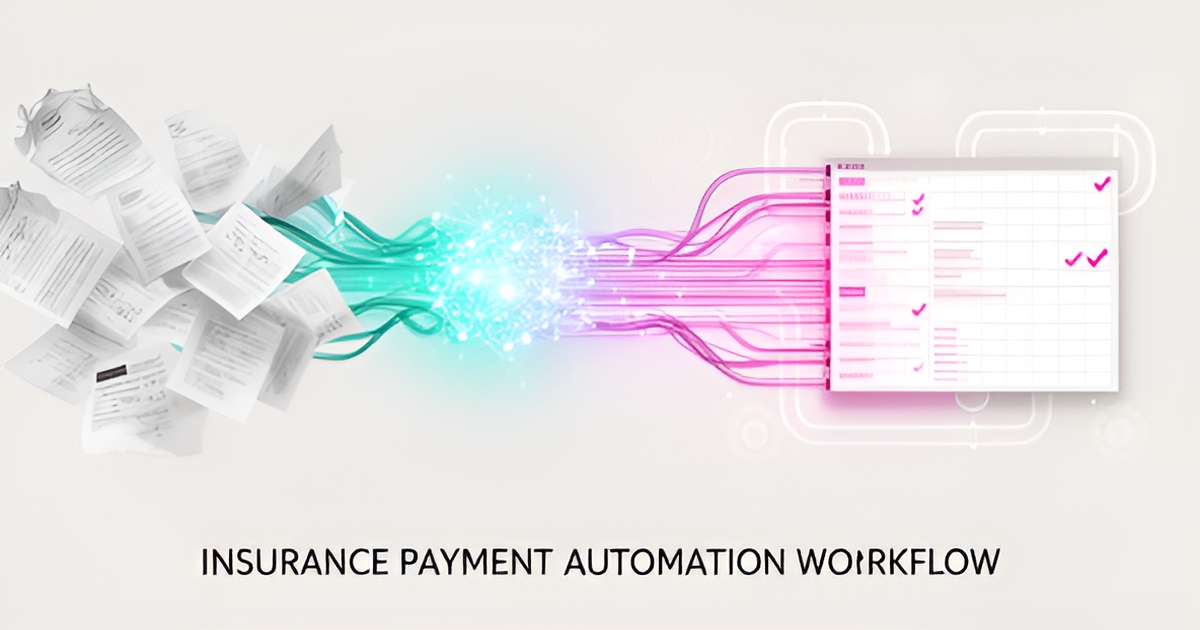
Reconciling carrier statements has long been one of the most manual, time-consuming tasks an insurance finance team faces, and it's where automation delivers its clearest win. The workflow itself is straightforward once you see it end to end: AI extracts and matches transactions from carrier statements in any format, flags the exceptions, and triggers approved claim payments.
Extraction comes first. Modern reconciliation tools pull transaction data from PDFs, spreadsheets, CSVs, and even paper, then match on multiple signals like policy number, term dates, and line of business, even when the data is partial. Applied Systems describes the pattern the industry has settled on: AI handles the heavy lifting while finance teams stay in control, reviewing, validating, and approving at every stage. That human-in-the-loop model isn't a limitation. In regulated finance work, it's the point.
Matching at scale is where the numbers get interesting:
- Vertafore's Reconciliation Agent matches carrier statement formats across 200+ unique carriers, surfacing exceptions and commission discrepancies instead of forcing teams to review every line by line (Vertafore)
- Some digital solutions save up to an hour of manual reconciliation effort per transaction (One Inc)
- Once a claim is approved, integrated systems calculate amounts, verify banking details, and trigger payments, cutting settlement times from days to minutes
That last figure is the one worth pausing on, because settlement speed now shapes retention. Instant payment was the most-used disbursement method for 34.8% of disbursement recipients when given a choice, which makes real-time rails table stakes rather than a differentiator. Carriers still running batch payments are quietly ceding ground to digital-first competitors.
Here's the caveat that separates a working deployment from a stalled pilot. Duck Creek found that carriers pairing payment technology with process redesign across billing, treasury, and claims saw cleaner reconciliation and fewer failed payments, and concluded that simply layering modern payment rails over legacy infrastructure is not sufficient. Technology alone doesn't fix a broken process; it just moves the bottleneck.
That's why AIQ Labs builds these systems around the workflow first, then the tools. An AI Bookkeeper, AI Invoice Processor, or AI Payment Agent only earns its keep when it's wired into the actual reconciliation process, with audit trails and configurable escalation built in, and owned outright rather than rented. If your finance team is still matching carrier statements by hand, start with the two-minute Fit Check and we'll map the bottleneck together.
Human-in-the-Loop: The Compliance Pattern Regulators and Auditors Expect
If you ask a compliance officer what worries them most about AI in finance, the answer is rarely "can it do the work?" It's "who signs off on it?" In insurance accounting, the industry has already settled that question, and the answer is refreshingly practical: AI does the extraction and matching, humans do the review and approval.
Applied Systems describes the pattern plainly: "AI handles the heavy lifting, while finance teams remain in control and can review, validate, and approve at every stage." That's not a hedge against AI capability. It's the governance model regulators and auditors expect, and it aligns with what Celent identifies as the established core principles of responsible AI: fairness, ethics, accountability, and transparency.
For a finance team adopting payment automation, this model translates into three concrete controls.
- Configurable escalation. The AI processes routine matches automatically, but anything ambiguous (a commission discrepancy, an unmatched carrier statement line) routes to a person. Escalation thresholds should be set by your team, so the AI's authority matches your risk tolerance.
- Validation layers before execution. Every action, especially payment triggers, gets validated before it runs. An AI that can calculate a settlement and verify banking details should still confirm both before money moves.
- Complete audit trails. Every match, exception, approval, and payment gets logged with who or what did it and when. When an auditor asks how a claim payment was approved, the answer is a query, not a scramble through spreadsheets.
This is exactly how AIQ Labs builds payment automation: AI Bookkeeper and AI Payment Agent roles handle extraction, matching, and processing around the clock, while human-in-the-loop escalation and full audit logging keep the approval chain intact. The system does the hour of manual reconciliation work per transaction that digital solutions can now save; your finance team keeps the decision rights.
There's a strategic upside here too. Because people stay in the loop on exceptions, the AI's accuracy gets tested against real judgment continuously, and the escalation patterns show you exactly where your processes need tightening. Regulated finance work doesn't require choosing between automation and control. The vendors winning in this space, and the auditors reviewing it, expect you to have both.
Building an Owned System Instead of Renting a Point Solution
The irony in today's insurance tech market is hard to miss: the vendors selling you automation want you to rent it forever. Applied Recon, Vertafore's Reconciliation Agent, and Optimus all ship genuinely useful AI reconciliation tools, but each one is a subscription-bound point solution tied to its own platform. Applied Recon only submits to the general ledger through native Applied Epic integration. Vertafore's agent lives inside Vertafore's ecosystem. Stop paying, and the automation disappears along with everything it learned about your workflows.
There's a real cost to that model beyond the monthly fee. When your reconciliation tool, your payment processor, and your accounting system are three separate rentals from three separate vendors, you've recreated the exact fragmentation that makes carrier statement reconciliation so painful in the first place. It's a problem Duck Creek's 2025 analysis flagged directly: unified, API-driven payment stacks that integrate cleanly with policy administration, billing, and claims consistently outperformed discrete tools bolted onto legacy infrastructure. The carriers who won paired technology with actual process redesign, because layering modern rails over disconnected systems "is not sufficient."
The alternative is to build the system and own it. That's the approach AIQ Labs takes with insurance finance automation: a custom-built reconciliation and payment system the client owns outright, with two-way API integration into the tools that actually run the money side of the business.
- QuickBooks and Xero for the general ledger, with matched transactions flowing in automatically
- Stripe and Square for payment processing, retries, and disbursement tracking
- AI Bookkeeper, AI Invoice Processor, and AI Payment Agent roles handling extraction, matching, and follow-up
- Human-in-the-loop controls and full audit trails, matching the governance pattern Applied Systems describes as "AI handles the heavy lifting, while finance teams remain in control"
Ownership changes the economics. Some digital reconciliation tools save up to an hour of manual effort per transaction, according to One Inc's 2025 trends report. If you're renting that capability, every hour saved generates a perpetual royalty to the vendor. If you own the system, that hour compounds into a permanent asset: no license renewal, no per-transaction fee, no risk that a pricing change or product sunset takes your workflow with it.
It also changes what the system can become. A rented point tool does one job within one platform. An owned system grows with the agency: add claim payment automation next quarter, extend into commission discrepancy tracking after that, connect a new carrier feed without waiting for a vendor's roadmap. Given that reconciliation is "one of the most critical and time-consuming financial workflows for insurance organizations," as Vertaforce itself puts it, the workflow deserves more than a single-feature rental.
AIQ Labs delivers these builds three ways, depending on budget and appetite: Start Monthly for a single AI employee on a flat plan, Build in Milestones where you pay per phase and keep everything shipped so far, or Own It Outright for a full system with complete ownership of the code, agents, and data. The right starting point depends on which workflow bleeds the most hours, which is exactly what a strategy call is for.
How to Start: Map Your Workflow, Then Automate the Worst Part
Don't try to automate everything at once. The teams that succeed with payment automation pick one workflow, the one that eats the most staff hours, and fix that first.
For most insurance accounting operations, that's carrier statement reconciliation. It's consistently described as one of the most critical and time-consuming financial workflows in the industry, and finance teams have long treated it as a manual, line-by-line grind. Some digital solutions save up to an hour of manual reconciliation effort per transaction, which tells you how much time is sitting in that one process. If your team touches dozens or hundreds of statements a month, the math gets ugly fast. Claim disbursement is the other common candidate, especially if settlement delays are frustrating policyholders or agents.
Once you've picked the target, map it before you build anything. Walk through every step: where statements arrive (PDF, CSV, paper), who touches them, what matching rules your team applies, where exceptions go, and how entries land in the general ledger. This map does two things. It exposes the steps worth automating, and it gives you a baseline to measure against.
Then phase the build:
- Start with extraction and matching, the highest-volume, lowest-risk work.
- Add exception flagging so discrepancies surface automatically instead of hiding in spreadsheets.
- Connect to your accounting system last, once matching accuracy is proven.
- Measure month-end close time and failed-payment recovery against your baseline at each phase.
Keep humans in the approval loop throughout. This isn't a compromise; it's the accepted pattern for regulated insurance finance. Applied Systems describes it plainly: AI handles the heavy lifting while finance teams review, validate, and approve at every stage. Your system should extract, match, and flag, with a person signing off on anything that touches money movement. Build in audit trails from day one so every automated action is logged and reviewable.
Resist the temptation to chase headline speed claims. Vendors promote settlement times "cut from days to minutes," and integrated systems genuinely can calculate amounts, verify banking details, and trigger payments automatically. But Duck Creek's 2025 retrospective found that carriers who simply layered modern payment rails over legacy processes saw disappointing results. The winners paired technology with process redesign. Your phased approach should include redesigning the workflow itself, not just automating the broken version of it.
This is exactly how AIQ Labs approaches these builds: map first, phase the delivery, keep approval loops intact, and hand you a system you own outright rather than another subscription. If there isn't a clear win in your workflow, we'll tell you that too.
The Fit Check: two minutes, real clarity
Start with the two-minute Fit Check at aiqlabs.ai/apply, then book a free 30-minute strategy call at aiqlabs.ai/book. It's a working session with an AI engineer, not a sales pitch. You'll map your biggest bottleneck, identify where automation pays for itself, and get honest numbers in writing. AIQ Labs takes on a limited number of builds at a time, so if the fit isn't there, you'll hear that straight.
Still paying for 10+ subscriptions that don’t talk to each other?
We build connected AI systems you own. Pay upfront or on a payment plan; the code is yours once it’s paid off.
Frequently Asked Questions
Why is carrier statement reconciliation such a bottleneck for insurance finance teams?
Can AI actually trigger claim payments automatically, or does a human still have to approve them?
How do auditors and regulators feel about AI handling insurance accounting tasks?
What's the difference between buying a reconciliation tool and building an owned system?
How much fraud exposure comes from manual insurance payment processes?
Should we automate our whole finance workflow at once or start with one process?
The Bottom Line: Your Finance Team Should Be Closing Books, Not Matching Lines
Carrier statement reconciliation doesn't have to be the workflow that eats your week and delays your close. The industry has already settled the big questions: AI can extract and match across 200+ carrier formats, human-in-the-loop controls satisfy regulators and auditors, and integrated systems cut settlement from days to minutes. Some digital solutions save up to an hour of manual reconciliation effort per transaction, time your team could spend on analysis instead of data entry. The real decision isn't whether to automate; it's whether to rent a point tool forever or own a system that grows with your agency. Start by mapping your worst workflow, then automate it in phases with audit trails built in from day one. If you want an honest read on where automation pays for itself in your operation, take the two-minute Fit Check at aiqlabs.ai/apply, then book a free 30-minute strategy call. You'll leave with real numbers in writing, and if there isn't a clear win, we'll tell you that too.
See what AI would actually do in your business, in 60 seconds.
The planner shows which step fits, the agents we’d build and the published price. No email needed.