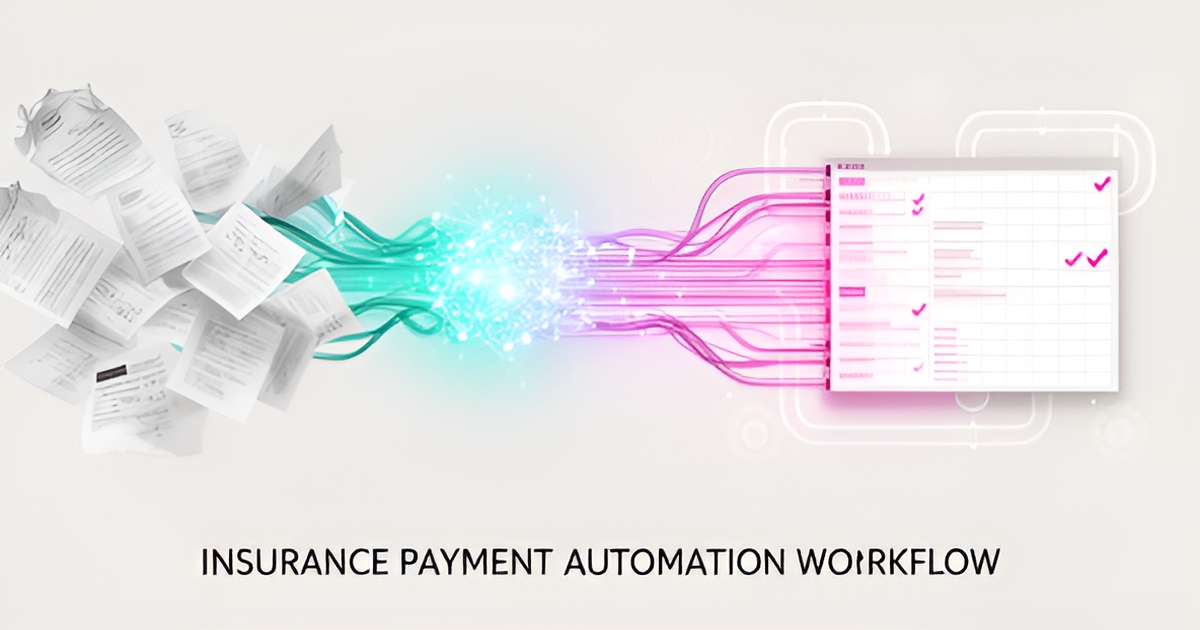
Finance Payment Automation for Insurance Accounting Processes
Key Facts
- 5–10% of insurance claims contain payment discrepancies that often go undetected according to reconciliation specialists.
- A 3–5% underpayment rate on $200,000 monthly payments costs insurers $72,000 to $120,000 annually per industry analysis.
- Digital solutions save up to an hour of manual reconciliation effort per transaction according to payment trend reports.
- A Nordic insurer achieved 70% automated document extraction with near real-time claims processing in a documented case study.
- If P&C Insurance processes 1.4 million claims yearly with half handled within 24 hours using LLM-assisted identification.
- True reconciliation requires matching remittance, claim records, and bank deposits to catch subtle underpayments as defined by CTO Richard Kemp.
- Reconciliation logic fails if claim numbers are missing or buried in unprocessed PDFs according to document intelligence research.
One AI employee doing one job, 24/7, for less than a part-time wage.
Receptionist, lead follow-up, intake or dispatch. Trained on your business and fully managed. From $700/mo.
The Hidden Cost of Manual Reconciliation
Every month, insurance accounting teams spend hundreds of hours posting payments they never actually verify. The result is silent financial leakage: money that walks out the door because nobody is checking the numbers against the bank.
Here's the uncomfortable truth. According to reconciliation specialists, most organizations aren't reconciling insurance payments at all. They're posting payments and hoping for the best. As Fincura's CTO Richard Kemp puts it, if you're posting payments without running a three-way match against bank deposits, you're not reconciling. You're estimating.
True reconciliation requires matching three things: the remittance advice, the claim record, and the actual bank deposit. Skip any leg of that match and discrepancies slip through. And they do slip through. Industry estimates put payment discrepancies at 5–10% of claims, and these tend to be subtle underpayments rather than obvious denials, so they rarely trigger a follow-up.
The dollar impact compounds fast. On $200,000 per month in insurance payments, a 3–5% underpayment rate means $6,000 to $10,000 lost every month. That's $72,000 to $120,000 per year in uncollected revenue, money the practice earned but never chased down, per the same analysis.
The labor cost is just as real. A single bulk payment covering 20–30 claims takes 30 to 60 minutes to post manually. A five-provider operation processes 150–300 remittance files a month across 20–30 payers, each containing 5–50 claims. Multiply that out and you're funding a small department whose entire job is typing numbers between screens.
The hidden costs stack up in ways that rarely appear on a budget line:
- Hours of staff time burned on manual posting that automation could handle, with digital solutions saving up to an hour of reconciliation effort per transaction.
- Underpayments and discrepancies absorbed as write-offs because nobody has time to investigate them.
- Month-end surprises, when document-level errors surface all at once instead of being caught close to intake.
- Delayed closes and stale cash-flow visibility, since treasury can't confirm what actually landed in the bank.
There's also a data quality tax hiding upstream. Reconciliation logic can only match what it can reliably identify, so if a claim number is missing or a payment reference sits inside an unprocessed PDF, the match starts with incomplete data, as document intelligence research points out. Garbage in, exceptions out.
This is exactly the problem AIQ Labs targets when building finance payment automation for insurers: replacing posting-and-hoping with a verified three-way match, so your team's job shifts from data entry to exception management. The leak isn't dramatic; it's just steady, which is precisely why it survives year after year in organizations that never stop to measure it.
The Three-Way Match Framework
Most insurance accounting teams think they're reconciling when they're really just posting payments and hoping for the best. That's the blunt assessment from Fincura's CTO, Richard Kemp, who argues that without a three-way match against bank deposits, you're not reconciling at all. You're estimating.
True reconciliation aligns three independent data sources that should tell the same story. The remittance advice says what was paid and why. The claim record says what was owed. The bank deposit says what actually arrived. When all three agree, the transaction closes itself. When they don't, you've found a discrepancy worth investigating.
The problem is that most back-office workflows only compare two of the three, usually remittance against claim. Industry estimates suggest 5–10% of claims carry payment discrepancies, typically subtle underpayments rather than obvious denials, and they routinely slip through undetected. On $200,000 in monthly payments, a 3–5% underpayment rate quietly compounds to $72,000–$120,000 in uncollected revenue per year.
The three legs of the match each catch different failure modes:
- Remittance data (e.g., ERA 835 files) confirms the payer's version of what was paid, line by line.
- Claim records establish what the insurer actually owed under the policy.
- Bank deposits verify the money physically moved, catching shortfalls remittance detail can hide.
Before matching can work, though, the data has to be readable. As document intelligence analysis points out, reconciliation logic can only match what it can reliably identify: a missing claim number or a payment reference stuck inside an unprocessed PDF means the system starts with incomplete data. That's why intelligent document processing sits upstream of any credible matching engine, structuring and validating information before comparisons begin.
The payoff is real. A Nordic insurer achieved 70% automated document extraction with near real-time claims processing in production, proving the pattern holds at scale. And once matching is automated, your team's job shifts from data entry to exception management: the system surfaces mismatches, humans resolve them.
This is exactly the architecture AIQ Labs builds for insurance payment workflows, pairing document intelligence with three-way matching so discrepancies surface automatically instead of at month-end.
Document Intelligence as the Upstream Fix
Garbage in, exceptions out. That's the quiet truth about reconciliation automation: no matching engine, however sophisticated, can pair a claim to a payment if the claim number was misread or the payment reference is still buried in an unprocessed PDF.
The problem is that insurance payment data arrives in formats built for humans, not systems. ERAs, EOBs, scans, and PDFs each carry the same critical fields in different layouts, and a manual posting of one bulk payment covering 20–30 claims can eat 30 to 60 minutes of staff time. As document intelligence research puts it, reconciliation logic can only match information it can reliably identify.
This is why intelligent document processing (IDP) sits upstream of everything else. Instead of waiting for month-end to discover mismatches, AI classifies each incoming document, extracts key fields, and validates values at intake. The result is structured, trustworthy data flowing into your reconciliation system, which prevents exceptions rather than just flagging them later. A typical document intelligence layer handles:
- Classification of mixed inbound formats: PDFs, scans, EOBs, and ERAs
- Field extraction for claim numbers, amounts, and payment references
- Validation against policy and claim records before matching begins
- Confidence scoring that routes low-certainty extractions to human review
The production numbers back this up. A Nordic insurer case study documented by EY found that 70% of documents fed into the system are extracted and interpreted automatically, with claims documents processed in near real time. That last part matters most: errors get caught at intake, where a single correction costs minutes, instead of at reconciliation, where a single discrepancy can cost an hour of investigation per transaction.
There's also a control benefit. When extraction runs through controlled confidence levels rather than a black box, reviewers see why each field was read the way it was, which keeps the process auditable and defensible. That aligns with how leading insurers now deploy AI: humans stay in the loop, and the model surfaces work rather than silently deciding it.
For teams building this pipeline, the architecture choice matters. AIQ Labs approaches this as a single owned system, pairing document extraction with downstream reconciliation logic so the data layer and matching layer share one validation standard rather than operating as disconnected point solutions. The payoff is simple: clean data at intake means fewer exceptions downstream, and fewer exceptions means your team manages problems by exception instead of keying data by hand.
Building a Human-in-the-Loop System
The case for automating insurance payments gets a lot easier once you stop treating it as a binary choice between full automation and full human review. Some insurers already run hybrid models in production: If P&C Insurance processes more than 1.4 million claims a year, with half handled within 24 hours using LLM-assisted identification and human oversight. The pattern that makes that possible is worth copying deliberately.
Here's how to structure it.
- Tier 1: straight-through processing. Routine claims with clean documents and a confident match to remittance, claim record, and bank deposit clear automatically. No human touches them.
- Tier 2: exception queue. Anything below a confidence threshold routes to a reviewer with the discrepancy already flagged, not buried in a PDF. Your team's job shifts from data entry to exception management.
- Tier 3: human adjudication. Complex or high-value claims go to adjusters with AI-generated context attached, so their time goes to judgment rather than document hunting.
The thresholds matter more than the technology. A Nordic insurer that automated claims processing with AI document intelligence reported that 70% of documents were correctly extracted and interpreted automatically, with output driven through controlled confidence levels rather than a black box. That's the number to design around: automate the 70%, escalate the rest, and tune thresholds as accuracy data accumulates.
Two design rules keep this honest. First, document intelligence has to sit upstream of matching, because reconciliation logic can only match information it can reliably identify. Second, every escalation needs a complete audit trail, since regulators increasingly scrutinize how automated decisions get made. AIQ Labs builds these systems as owned assets, delivered in phases through the Build in Milestones model, so you can prove the routine-claims tier works before expanding it.
Still paying for 10+ subscriptions that don’t talk to each other?
We build connected AI systems you own. Pay upfront or on a payment plan; the code is yours once it’s paid off.
Frequently Asked Questions
How do I know if my insurance accounting team is actually reconciling payments, or just posting them?
How much money are we really losing to payment discrepancies each month?
Why can't our reconciliation system just match the payments we already have?
Does automating insurance payments mean firing my accounting staff?
How long does it take to post one bulk insurance payment manually, and is automation really faster?
How do we keep an automated system auditable and compliant when regulators are watching?
From Posting and Hoping to Verifying and Closing
The pattern across insurance accounting is clear: silent leakage compounds because most teams post payments without verifying them against the bank, document intelligence sits downstream of the problem instead of upstream of it, and exceptions surface at month-end when they're expensive to fix. The fix isn't more dashboards or faster keystrokes. It's a verified three-way match, clean data at intake, and a human-in-the-loop tier structure that lets routine claims close themselves while complex ones reach adjusters with context already attached. The Nordic insurer case proved the pattern holds at 70% automated extraction in production, and If P&C Insurance runs the same hybrid model across 1.4 million claims a year. The leak isn't dramatic; it's just steady, and steady leaks are exactly what owned AI systems are built to stop. If you're ready to see what that looks like for your reconciliation workflow, start with the two-minute Fit Check at https://aiqlabs.ai/apply and we'll map the highest-ROI fix in a free 30-minute working session.
See what AI would actually do in your business, in 60 seconds.
The planner shows which step fits, the agents we’d build and the published price. No email needed.