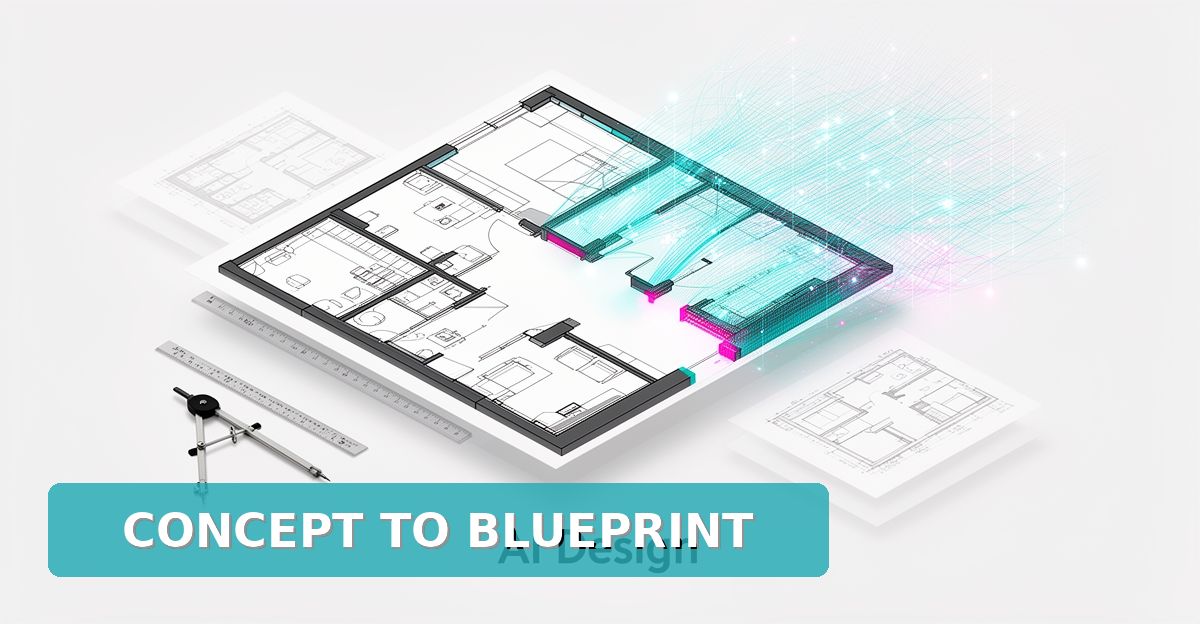
From Concept to Blueprint: How AI Can Accelerate Space Planning Projects
Key Facts
- A significant share of architecture professionals now use AI tools in their projects, according to industry research, with more planning adoption
- Most AEC professionals expect AI to become prevalent in the industry within the decade, according to recent data
- AI-powered tools generate regulation-aware floor plans in minutes rather than the hours required for manual drafting
- Firms that automate repetitive tasks across the inquiry-to-blueprint pipeline typically report substantially shorter lead times
- As of late 2026, AI space planning tools like laiout and TestFit have moved from experiment to standard workflow for many commercial design teams
Hire a team member that works 24/7 — for less than a part-time wage.
AI receptionists, SDRs, dispatchers and 99+ roles. Trained on your business, fully managed.
Not sure where to start? Ask our AI planner
The Space Planning Bottleneck: Why Manual Processes Are Holding Firms Back
The architecture industry stands at a crossroads where traditional drafting methods clash with modern client expectations for rapid turnaround. While some firms cling to manual workflows, competitors leveraging AI are capturing market share with faster turnaround times.
Manual space planning remains a significant bottleneck in architectural workflows. Designers spend hours translating client requirements into initial drafts, only to restart when feedback demands changes. This iterative cycle creates friction that ripples through entire project timelines, delaying proposals and frustrating stakeholders who expect immediate visualizations.
The numbers reveal an industry in transition. According to recent industry analysis, a large share of architecture professionals already integrate AI tools into their workflows, with more planning adoption within the year. This shift highlights a growing divide between firms embracing automation and those tethered to legacy processes.
Manual drafting introduces specific constraints that limit firm capacity:
- Time-intensive revisions that consume hours per iteration, delaying client feedback loops
- Limited exploration of design alternatives due to resource constraints on manual labor
- Bottlenecked proposal pipelines that prevent firms from responding quickly to new opportunities
- Inconsistent accuracy in regulation compliance when rushing to meet deadlines
These inefficiencies carry substantial opportunity costs. When competitors deliver regulation-aware floor plans in minutes rather than days, slow-moving firms lose prospects before initial consultations conclude. The gap between AI research and everyday practice has narrowed dramatically in recent years, meaning technological advantages now reach the market quickly.
The urgency for workflow transformation intensifies as client expectations evolve. Industry research indicates that the vast majority of AEC professionals expect AI to become prevalent within the decade, signaling that adoption is no longer optional for competitive firms. AIQ Labs helps architecture practices navigate this transition by rebuilding the workflows that cost the most—AI Workflow Builds delivered at a fixed price, in phases—eliminating manual drafting bottlenecks while preserving creative control.
Firms maintaining status quo workflows face mounting pressure as early adopters demonstrate what's possible. The ability to generate multiple compliant layout options rapidly transforms client presentations from static deliverables into dynamic collaborative sessions, fundamentally changing the business development landscape for architectural services.
AI-Powered Acceleration: From Inquiry to Blueprint in Minutes, Not Days
A client brief lands, and the clock starts. For years that meant hours of manual measuring, code checking, and iterative drafting before a first floor plan could be reviewed.
Today AI-powered space planning tools like laiout and TestFit are collapsing that timeline. These systems generate regulation-aware, measurement-accurate floor plans in minutes rather than days, letting firms test multiple layouts in a single working session. The shift moves designers from repetitive iteration to strategic curation, with human oversight guiding the final creative decisions.
Adoption keeps accelerating. According to industry research, a large share of architecture professionals already use AI tools in their projects, with more planning to adopt within the year. That momentum reflects how quickly architectural AI has moved from research into daily practice.
The impact is practical and measurable across the inquiry-to-blueprint pipeline:
- Inquiry to first concept in minutes, not days, with automated test-fits that respect zoning, egress, and dimensional constraints
- Rapid design iteration that lets teams explore alternatives and client options in compressed timeframes
- Regulation-aware generation that reduces manual code checking and rework early in the process
This speed changes how firms compete. When initial options can be produced quickly, proposals become more visual, responsive, and confident. Designers reclaim time for curation and client strategy instead of manual drafting loops. The technology does not replace creative control; it accelerates the groundwork so human judgment is applied to better options faster.
Market expectations confirm the direction. Recent analysis shows most AEC professionals expect AI to be prevalent within the decade, and a substantial share already see it as prevalent today. The tools are moving from experiment to standard workflow.
For SMB firms, the operational logic mirrors wider AI workflow automation. A full AI-driven project pipeline from client inquiry to final blueprint can cut lead times substantially when repetitive tasks are automated and integrated. AIQ Labs builds complete AI systems tailored to each client's business model—AI Employees for managed staff like intake and scheduling, or a connected AI Operating System built in phases and owned outright rather than rented through fragmented subscriptions.
The result is a new cadence for space planning: faster first drafts, more options for clients, and designers focused on value-adding decisions. The blueprint arrives sooner, and the firm moves on to the next opportunity without the traditional bottleneck.
Implementation Framework: Integrating AI into Your Space Planning Workflow
Implementing AI into your space planning workflow begins with a clear, phased approach that aligns with your firm's existing processes while unlocking measurable gains in speed and creativity. Start by mapping your current journey from client inquiry to final blueprint—identifying where manual drafting, iterative revisions, or delayed feedback loops consume the most time. AIQ Labs' phased build methodology ensures each stage is tailored to your business model, so automation enhances rather than disrupts your team's expertise. Industry research shows a large share of architecture professionals already use AI tools in their projects, with more planning adoption within the year, signaling a shift toward AI-augmented workflows as standard practice.
The next step involves deploying AI for rapid concept generation during the requirements phase. Tools like laiout and TestFit can produce regulation-aware, measurement-accurate floor plans in minutes—far faster than manual drafting—allowing teams to explore multiple design alternatives early in client conversations. Because innovations now move swiftly from theory to real-world application, waiting rarely improves your options. By integrating AI at this stage, firms reduce time spent on repetitive iteration and shift focus to strategic curation, where human designers refine AI-generated options based on client vision, site constraints, and aesthetic goals.
Finally, establish a feedback loop where AI-assisted concepts inform human-led refinement, leading to polished blueprints ready for client approval and construction documentation. Practical guardrails include:
- Define clear input parameters for AI tools (e.g., zoning codes, accessibility standards, spatial relationships)
- Schedule regular check-ins between AI output and designer review to maintain creative control
- Track time saved per project phase to quantify ROI and inform scaling
- Train team members on AI prompting and output validation to build internal expertise
- Iterate on workflows based on project outcomes and team feedback
This structured approach ensures AI acts as a force multiplier—not a replacement—for your team's judgment. Firms adopting this model typically report accelerated timelines, with many cutting lead times substantially through seamless integration of AI into core workflows. The result is a space planning process that's faster, more exploratory, and firmly anchored in human expertise—delivering better outcomes for clients and stronger competitive positioning for your practice. To begin, start with the 2-minute Fit Check, which leads to a free 30-minute strategy call to map your specific opportunities.
Still paying for 10+ subscriptions that don’t talk to each other?
We build custom AI systems you own outright. No vendor lock-in. Full control.
Not sure where to start? Ask our AI planner
Frequently Asked Questions
How fast can AI actually generate a usable floor plan compared to manual drafting?
Are most architecture firms really using AI for space planning, or is this just hype?
Will AI space planning tools replace designers or take away creative control?
Can AI-generated floor plans handle building codes and zoning requirements?
What's the ROI of adding AI to our space planning workflow?
How do we start integrating AI into our existing space planning process without disrupting the team?
Turning Speed Into Strategy: Your Next Move in AI-Powered Space Planning
The shift from manual drafting to AI-augmented space planning isn't just about saving time—it's about reclaiming your team's creative energy for what truly matters: strategic design and client collaboration. With a large share of architecture professionals already using AI tools and the research-to-practice gap narrowing fast, the window to act is narrowing. Firms that integrate AI thoughtfully—starting with rapid concept generation and building feedback loops that preserve human oversight—are seeing lead times shrink substantially while delivering more options, faster. The path forward begins with clarity: map your current workflow, pinpoint where manual iterations slow you down, and explore how tailored AI integration can remove those bottlenecks without disrupting your expertise. Take the first step with a free, no-obligation strategy session to see where AI can unlock measurable gains in your practice. Schedule your free 30-minute strategy call to map your opportunities and see if there's a clear win—no pressure, just clarity. Questions first? Reach us at [email protected].
Make AI your competitive advantage — not just another tool.
Strategy, implementation and ongoing optimization. One partner, end to end.
Not sure where to start? Ask our AI planner