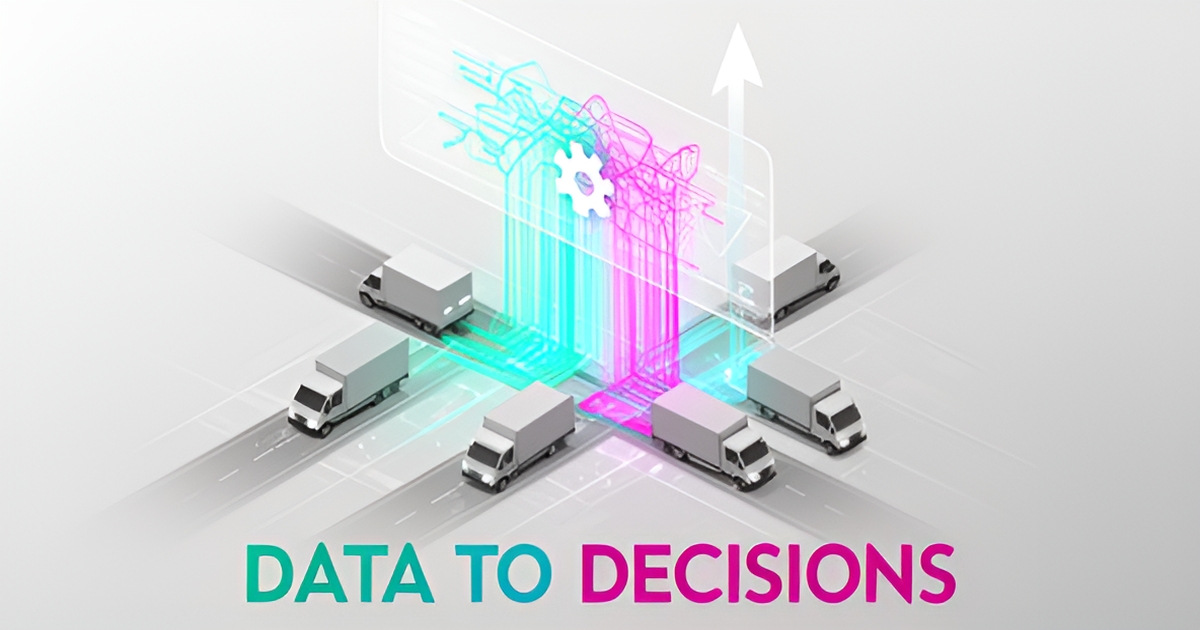
From Data to Decisions: How AI Transforms Fleet Telematics Insights
Key Facts
- AI-driven analytics can optimize routes, enhance driver safety, predict maintenance needs, and improve operational efficiency from the same underlying vehicle data
- Predictive maintenance powered by AI can typically reduce unplanned downtime by flagging component failures weeks in advance
- AIQ Labs has deployed 200+ multi-agent systems and runs 4 live SaaS products daily
- Fleet leaders who start with one focused workflow typically see results in weeks, not quarters
- AIQ Labs clients own their systems outright — no vendor lock-in, no rented insights
Hire a team member that works 24/7 — for less than a part-time wage.
AI receptionists, SDRs, dispatchers and 99+ roles. Trained on your business, fully managed.
Not sure where to start? Ask our AI planner
The Fleet Data Overload Problem
Modern fleets generate more data points in a single shift than most managers can review in a week, yet the vast majority of that information sits untouched in dashboards and spreadsheets. Telematics systems faithfully record every mile, idle minute, and hard-brake event, but without intelligent processing those signals remain noise instead of strategy. The result is a reactive loop where problems — excessive fuel burn, preventable breakdowns, risky driving patterns — are discovered only after the damage is done.
Manual analysis simply cannot keep pace with the volume and velocity of fleet data. A typical midsize operation produces thousands of route variations and driver-score fluctuations daily, far exceeding what any human team can correlate in real time. AI-driven analytics can optimize routes, enhance driver safety, predict maintenance needs, and improve operational efficiency by identifying patterns invisible to manual review. When those patterns go undetected, the costs compound silently across the fleet.
- Fuel waste from suboptimal routing and idling that could be eliminated with predictive analytics
- Unplanned downtime caused by maintenance issues that AI models can flag weeks in advance
- Driver risk profiles that evolve daily but are reviewed only quarterly, if at all
- Route variability that masks systemic inefficiencies unless analyzed across the entire network
The financial impact is measurable. Across logistics-heavy industries, companies that apply AI to routing and inventory decisions routinely recover waste that manual review leaves on the table. AIQ Labs helps fleet operators make that same shift, turning raw telematics into the strategic visibility that separates reactive management from proactive control.
How AI Turns Telematics Into Actionable Intelligence
Raw telematics data alone doesn't drive better fleet decisions—it's the intelligence layered on top that transforms operations. AIQ Labs' analytics platforms process metrics like miles per gallon, route variability, and driver scores to reveal patterns invisible to manual review, turning passive monitoring into strategic foresight. This shift enables fleet managers to anticipate issues before they occur, optimizing everything from fuel consumption to vehicle uptime.
AI-driven route optimization cuts fuel waste by identifying the most efficient paths in real time, adjusting for traffic, weather, and delivery windows. Predictive maintenance analyzes engine diagnostics and usage patterns to forecast failures weeks in advance, reducing unplanned downtime. Driver safety enhancement uses behavioral scoring to flag risky habits like harsh braking or speeding, enabling targeted coaching that lowers accident rates. Together, these capabilities boost operational efficiency across the fleet.
- Route optimization reduces fuel consumption and delivery times through dynamic pathfinding
- Predictive maintenance cuts downtime by forecasting component failures before they occur
- Driver behavior analytics enable proactive safety interventions based on real-time scoring
When telematics data flows through AI-powered analytics, it stops being a rearview mirror and becomes a compass—guiding fleets toward lower costs, higher safety, and smarter resource allocation with every mile driven.
Key Telematics Metrics AI Unlocks for Fleet Managers
A single connected vehicle can generate thousands of data points every day — fuel consumption, speed, idle time, braking patterns, engine diagnostics. On its own, that's noise. When AI processes it, that noise becomes a decision-making engine that fleet managers can actually act on.
The shift is from reactive monitoring to proactive optimization. Traditional fleet analysis relies on manual review of historical reports, while AI algorithms identify patterns and flag issues in real time, enabling preventative action before problems become costly — all from the same underlying vehicle data.
Four metrics stand out for the practical business intelligence they unlock:
- Miles per gallon optimization. AI correlates fuel data with route, speed, and idle-time patterns to pinpoint exactly where fuel is being wasted — and which corrective actions will recover it.
- Route variability reduction. By analyzing how actual routes deviate from planned ones, AI surfaces inconsistencies that inflate delivery times and fuel consumption.
- Driver behavior scoring. Real-time monitoring of acceleration, braking, and speed converts raw driving data into actionable safety scores managers can coach against.
- Predictive maintenance needs. AI analyzes vehicle diagnostics to forecast component failures, reducing downtime and unplanned repair costs.
What makes these metrics genuinely useful is delivery. A dashboard buried in a spreadsheet does nothing; insights surfaced in real time change decisions the same day. That's the distinction between historical reporting and real-time predictive insight — one tells you what happened, the other tells you what to do next. This is precisely the gap AIQ Labs' analytics platforms are built to close, giving fleet managers consolidated, strategic visibility across vehicle performance, driver scores, and maintenance signals in one place.
The result is a fleet operation that runs on evidence rather than instinct: routes tightened, fuel spend controlled, drivers coached with data, and vehicles serviced before they fail. For managers weighing where AI delivers measurable returns, telematics is one of the clearest cases — the data already exists, and AI simply turns it into decisions.
Implementing AI-Powered Fleet Analytics With AIQ Labs
Raw telematics streams are noisy until AI turns them into decisions fleet managers can act on today. The shift is from dashboards that report what happened to systems that flag what will happen next.
AI moves fleet management from reactive monitoring to proactive optimization. Traditional methods rely on manual analysis, while AI algorithms identify patterns and predict potential issues in real time — optimizing routes, enhancing driver safety, predicting maintenance needs, and improving operational efficiency.
Implementation starts with integration, not replacement. AIQ Labs maps AI Workflow Builds and AI Employees to your existing telematics, ERP and dispatch stacks. Deep two-way API integrations create seamless workflows and a single source of truth for miles per gallon, route variability and driver scores.
Owned analytics platforms replace subscription chaos with strategic visibility. Instead of renting insights, businesses build systems they control. This aligns with the AIQ Labs ownership model where clients receive full ownership of custom-built systems with no vendor lock-in.
A practical rollout follows three stages:
- Connect: Ingest telematics feeds and business systems for unified data
- Build: Develop owned analytics and agent workflows for routing, maintenance and driver coaching
- Operate: Deploy managed AI employees for dispatch, alerts and reporting, with continuous optimization
Payment flexibility supports different maturity levels. Start Monthly delivers one AI employee with setup plus a flat monthly plan that typically costs around 80% less than a comparable human hire, including build, training, integrations, monitoring and improvements. Build in Milestones splits a workflow or department system into phases with approval and payment per phase. Own It Outright provides a full AI Operating System with full ownership of code, agents and data when complete.
Data-driven decisions compound over time. By analyzing vehicle performance, driver behavior and operational patterns, AI provides real-time insights that inform strategic choices. The result is less fuel waste, fewer unplanned repairs and safer operations.
Fleet leaders who start with a focused workflow see results in weeks. A targeted AI Workflow Build can rebuild the single process that costs the most with a robust custom solution at a fixed price, then scale to department automation and a complete business AI system as confidence grows.
Still paying for 10+ subscriptions that don’t talk to each other?
We build custom AI systems you own outright. No vendor lock-in. Full control.
Not sure where to start? Ask our AI planner
Frequently Asked Questions
How does AI actually turn telematics data into something useful?
What fleet metrics does AI improve the most?
Can AI really cut downtime and fuel waste?
Is there proof AI saves money in logistics?
Do I need to replace my telematics system to use AI?
How fast can we see results with AI fleet analytics?
Turn Every Mile Into a Decision
Fleet telematics already captures every mile, idle minute and hard brake, but without intelligent processing that data stays noise instead of strategy. AI changes the equation by turning raw signals into real-time foresight: optimizing routes for fuel and delivery time, forecasting maintenance weeks before failure, and converting driver behavior into coachable safety scores. The result is a shift from reactive firefighting to proactive control over MPG, route variability, driver risk and uptime. When those patterns are surfaced in real time, small inefficiencies compound into measurable savings. Fleet managers who start with one focused workflow can see results in weeks, then scale to owned analytics and managed AI employees that work alongside the team. Start the 2-minute Fit Check at https://aiqlabs.ai/apply to book a free 30-minute strategy call and map your biggest bottleneck, or email [email protected].
Make AI your competitive advantage — not just another tool.
Strategy, implementation and ongoing optimization. One partner, end to end.
Not sure where to start? Ask our AI planner