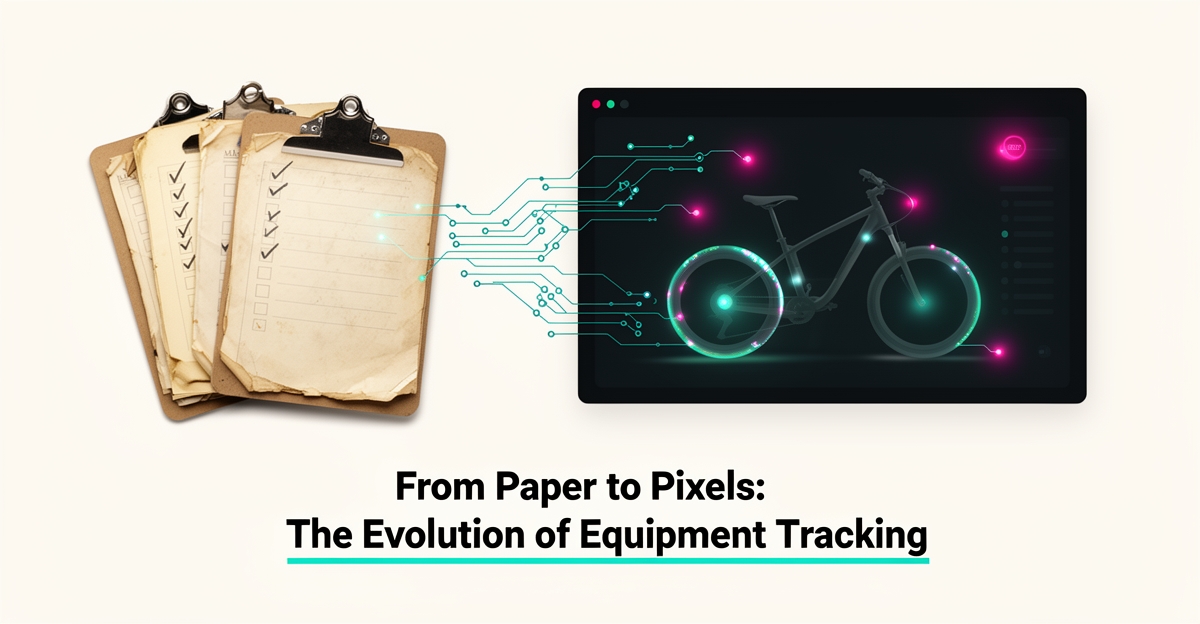
From Manual Logs to AI: Automating Equipment Damage and Wear Tracking in Sports Rentals
Key Facts
- Manual inspection typically misses a meaningful share of defects, letting damaged gear reach customers
- Industry research on AI asset management reports unplanned downtime reductions of up to roughly 70%
- Predictive maintenance can extend equipment lifespans by an estimated 20-25%
- Modern AI data agents parse complex, unstructured equipment datasets with high accuracy
- Teams adopting AI tracking commonly report reclaiming several hours per day from manual log analysis
- AI visual inspection can reduce defect escapes substantially on covered failure modes
Hire a team member that works 24/7 — for less than a part-time wage.
AI receptionists, SDRs, dispatchers and 99+ roles. Trained on your business, fully managed.
Not sure where to start? Ask our AI planner
The Hidden Costs of Manual Equipment Tracking in Sports Rentals
Manual equipment tracking in sports rentals creates hidden costs that silently erode profitability. Human error and inconsistent data entry compromise tracking accuracy, leading to misplaced gear and delayed maintenance schedules. These flaws prevent businesses from identifying wear patterns before they become critical failures. Even basic cloud systems require manual input of serial numbers and maintenance updates, introducing avoidable mistakes.
Inspection research suggests manual checks catch at best around 80% of defects, meaning a meaningful share of real issues escape detection and reach customers. This gap directly impacts customer satisfaction and increases liability risks when faulty equipment is rented out. Disconnected systems further exacerbate the problem, as asset tracking often operates separately from maintenance management, preventing proactive service planning. Teams waste hours reconciling spreadsheets and chasing missing check-in data instead of focusing on customer experience.
The reactive nature of manual processes means maintenance happens only after equipment fails, causing unplanned downtime and rushed repairs. Without real-time visibility into usage patterns or wear indicators, sports rental businesses cannot optimize equipment distribution across locations or anticipate seasonal demand spikes. This inefficiency drives up labor costs as staff spend excessive time on manual data entry rather than value-added tasks. AIQ Labs helps sports rental businesses overcome these limitations through AI Workflow Builds that transform inspection logs into actionable maintenance insights, eliminating the guesswork from equipment management.
How AI Transforms Equipment Damage Detection and Wear Tracking
Manual logs miss what machines can see. Sports rental teams still rely on checklists and memory to catch wear, which means damage is found late and failures are reactive.
AI changes the inspection from human eyes to continuous pattern recognition. Machine learning analyzes historical usage logs, maintenance events and failure patterns invisible to routine checks. Industry research on AI in asset management reports organizations can reduce unplanned downtime by up to roughly 70% and extend equipment lifespans by an estimated 20-25%.
Predictive analytics turns those patterns into foresight. Instead of fixed service intervals, the system forecasts which skis, bikes or pads are likely to fail next based on usage intensity, environmental exposure and repair history. This shifts maintenance from reactive to predictive, flagging high-risk items before they reach customers.
Natural language processing makes the data usable without reports. Teams can ask conversational questions like “Show me all assets overdue for inspection” and receive instant answers. Recent use-case analyses note that AI data agents parse complex, unstructured equipment datasets with high accuracy, while teams commonly report reclaiming several hours per day from manual log analysis.
In practice, AI-powered damage and wear tracking delivers:
- Machine learning pattern recognition that spots subtle wear signals across logs and sensor outputs
- Predictive analytics that forecasts failures and optimizes maintenance scheduling
- Conversational data access that makes equipment insights accessible to staff without technical training
Document processing becomes critical for rentals at this stage. Inspection notes, return forms and maintenance tickets are unstructured and scattered. AI systems can automatically scan and analyze those documents, detect wear patterns, and flag high-risk items for maintenance without human error.
AIQ Labs builds custom systems that process real-world documentation and generate actionable insights, automating the analysis of inspection logs for sports rental operations. The result is fewer escapes, longer asset life and a clear audit trail for compliance.
Equipment tracking stops being a paperwork burden and becomes a proactive control system.
Real-Time Monitoring and Predictive Maintenance: From Reactive to Proactive
Manual logs tell you what already broke. AI-powered monitoring tells you what’s about to.
Real-time monitoring replaces periodic checks with continuous visibility. IoT sensors, electronic tags, and GPS tags capture location, movement, and usage, while AI algorithms process and analyze this data to produce human-readable reports accessible on demand. This integration shifts equipment management from reactive repairs to proactive intervention.
Condition-based monitoring replaces fixed maintenance schedules with intelligent, usage-based predictions. Instead of servicing every ski set after 100 rentals, the system monitors actual stress and flags only high-risk items. Industry research suggests organizations can cut unplanned downtime substantially using AI in asset management, and extend equipment lifespans by an estimated 20-25% through predictive maintenance.
Early warning detection is driven by analysis of operational patterns that humans miss. AI-powered predictive maintenance systems analyze data from IoT sensors such as vibration levels, temperature, pressure, and operational hours to identify patterns and anomalies that signal potential problems.
- Vibration and temperature spikes indicating bearing wear or binding stress
- Usage frequency and rental duration patterns that accelerate fatigue
- Operational anomalies like increased fuel consumption or pressure drops before failure
These signals enable maintenance before a failure reaches customers. Comparative analyses of AI visual inspection find it can reduce defect escapes substantially on covered modes, while inspection-related downtime can often be reduced by 10-30%.
For sports rental operations, this means fewer mid-season failures, lower repair costs, and longer asset life. AI also automates the documentation layer: document-processing systems can automatically scan and analyze equipment inspection logs, detect wear patterns, and flag high-risk items for maintenance without human error.
AIQ Labs builds custom systems that process real-world documentation and generate actionable insights, turning scattered inspection notes and sensor feeds into a unified, predictive workflow. The result is condition-based monitoring that minimizes downtime, reduces repair costs, and extends equipment lifespan while keeping staff focused on customers, not paperwork.
The Business Case: ROI and Operational Benefits of AI Equipment Tracking
For sports rental businesses running on thin margins, the question isn't whether AI equipment tracking works—it's whether the math justifies the switch. For most operations, the returns show up well within the first year.
The most immediate return comes from labor. Teams using AI-powered equipment tracking commonly report reclaiming several hours per day from manual data entry and log analysis. That's roughly 15 hours a week reclaimed from clerical work—time that can shift toward customer service, equipment fitting, and revenue-generating tasks instead of transcribing serial numbers and updating spreadsheets.
Waste reduction delivers a second, larger payoff. Manual inspection catches at best around 80% of defects, meaning the rest slip through undetected—a gap that translates directly into damaged rentals, refund disputes, and premature equipment replacement. AI-driven inspection closes much of that gap: comparative analyses suggest it can reduce scrap on covered defects by 20-60% while substantially cutting defect escapes that reach customers. For a rental fleet, fewer defective items circulating means fewer warranty claims, fewer mid-rental failures, and longer usable life per asset.
The downstream effects compound over time:
- Reduced false rejects of 30-70%, keeping perfectly serviceable equipment in circulation instead of pulled for unnecessary re-inspection
- Inspection-related downtime reduced by 10-30%, keeping more of the fleet rentable during peak season
- Extended equipment lifespans of an estimated 20-25% through predictive maintenance
- Lower long-term per-unit costs, since automated systems carry minimal incremental labor compared to the ongoing staffing burden of manual inspection
That said, an honest cost-benefit analysis must acknowledge the upfront side of the ledger. Automated systems require a higher initial investment in equipment, integration, and training, and connecting AI with existing infrastructure can be complex. Data quality is the other non-negotiable: AI systems are only as good as the data they process, so businesses must first consolidate scattered spreadsheets, unify maintenance histories, and standardize fields like location, condition, and ownership. Change management matters too—shifting from manual to AI-based systems requires operational changes, not just a software install.
This is why implementation approach matters as much as the technology itself. AIQ Labs' AI Workflow Builds rebuild the one workflow that costs you the most at a fixed price, in phases—so you prove value on a single high-risk process before scaling. Payment models are straightforward: Start Monthly, Build in Milestones, or Own It Outright. The businesses that see the strongest returns treat AI tracking not as a one-time purchase but as a capability they grow into, with clean data and trained staff as the foundation.
For most sports rental operations, the equation is straightforward: reclaim hours daily, cut equipment waste substantially, and extend fleet life by a fifth or more. Few operational investments offer that combination of labor savings, waste reduction, and asset longevity.
Implementing AI Equipment Tracking: A Practical Roadmap for Sports Rental Businesses
Making the leap from spreadsheets to intelligent tracking doesn't require a complete operational overhaul—it demands a structured approach. Organizations implementing AI in asset management report major downtime reductions and longer equipment lifespans, but only when they build on solid data foundations.
Start with data consolidation and cleanup. Gather every maintenance log, inspection report, and usage record from scattered spreadsheets, email threads, and paper files. AI systems struggle with duplicate asset records and missing lifecycle events, so establish a standardized structure for fields like location, owner, condition, and maintenance history before deploying any algorithms.
Next, deploy IoT sensors on high-value equipment. Electronic tags (BLE and RFID) or GPS trackers continuously capture location, movement, and usage data, feeding the AI system with real-time inputs that manual logs cannot match. This hardware layer transforms tracking from periodic check-ins to continuous condition monitoring.
Configure automated workflows based on specific triggers:
- Auto-creation of work orders when wear thresholds are exceeded
- Automated maintenance scheduling based on usage patterns
- Instant alerts for equipment requiring immediate inspection
- Auto-updating asset records across all connected systems
Train AI models on historical maintenance data to enable predictive capabilities. Feed the system past failure events, repair logs, and usage patterns so machine learning algorithms can identify subtle warning signs—like a snowboard binding showing specific stress patterns before failure. Modern AI data agents parse complex, unstructured equipment datasets with high accuracy, turning chaotic historical records into actionable intelligence.
Establish weekly review cycles to assess AI predictions and adjust maintenance schedules accordingly. Teams using these systems commonly report reclaiming several hours daily from manual data entry, time that shifts from administrative work to actual equipment care.
For sports rental businesses lacking in-house AI expertise, partnering with a firm like AIQ Labs ensures the system fits specific operational needs. Unlike off-the-shelf solutions, custom-built platforms process real-world documentation and generate insights tailored to unique equipment inventories—from kayaks to ski gear—without forcing workflow compromises. If you'd rather start with managed AI staff handling intake, scheduling, and dispatch, AI Employees can run those roles at a fraction of the cost of a human hire.
Monitor system performance continuously during the first ninety days. Track false positives, missed predictions, and data quality issues, refining the models as new information flows in. AI implementation succeeds through iteration, not perfection on day one. With AI adoption accelerating across equipment-heavy industries as of late 2026, establishing these feedback loops now positions rental operations ahead of the competitive curve.
Still paying for 10+ subscriptions that don’t talk to each other?
We build custom AI systems you own outright. No vendor lock-in. Full control.
Not sure where to start? Ask our AI planner
Frequently Asked Questions
How much time can my team save each day by switching to AI-powered equipment tracking?
Will AI really reduce the number of defective items that reach our customers?
Can AI help us extend the lifespan of our rental equipment?
Is the upfront cost of AI tracking worth it for a small sports rental business?
What kind of data do I need to prepare before implementing AI equipment tracking?
How does AI detect wear and damage that humans might miss during inspections?
Turn Inspection Logs Into Your Competitive Edge
Moving from manual logs to AI-powered wear tracking replaces reactive repairs with proactive control. Consolidating scattered inspection notes, training models on historical failures, and adding IoT signals lets rental teams forecast which skis, bikes or pads will need service before they fail, reclaim hours lost to data entry, and keep more assets rentable during peak season. Industry research suggests AI in asset management can cut unplanned downtime substantially and extend equipment lifespans by an estimated 20-25%, turning documentation into measurable labor savings and longer asset life. Start with data cleanup and a single high-value workflow, then layer automated work orders and conversational access so staff get answers without reports. AIQ Labs builds custom systems that process real-world inspection documentation and generate actionable maintenance insights—whether as a single AI Workflow Build or a full AI Operating System you own outright. Take the 2-minute Fit Check at https://aiqlabs.ai/apply, then book your free 30-minute strategy call at https://aiqlabs.ai/book to map your biggest bottleneck and identify a high-ROI automation opportunity. Prefer email? Reach the team at [email protected].
Make AI your competitive advantage — not just another tool.
Strategy, implementation and ongoing optimization. One partner, end to end.
Not sure where to start? Ask our AI planner