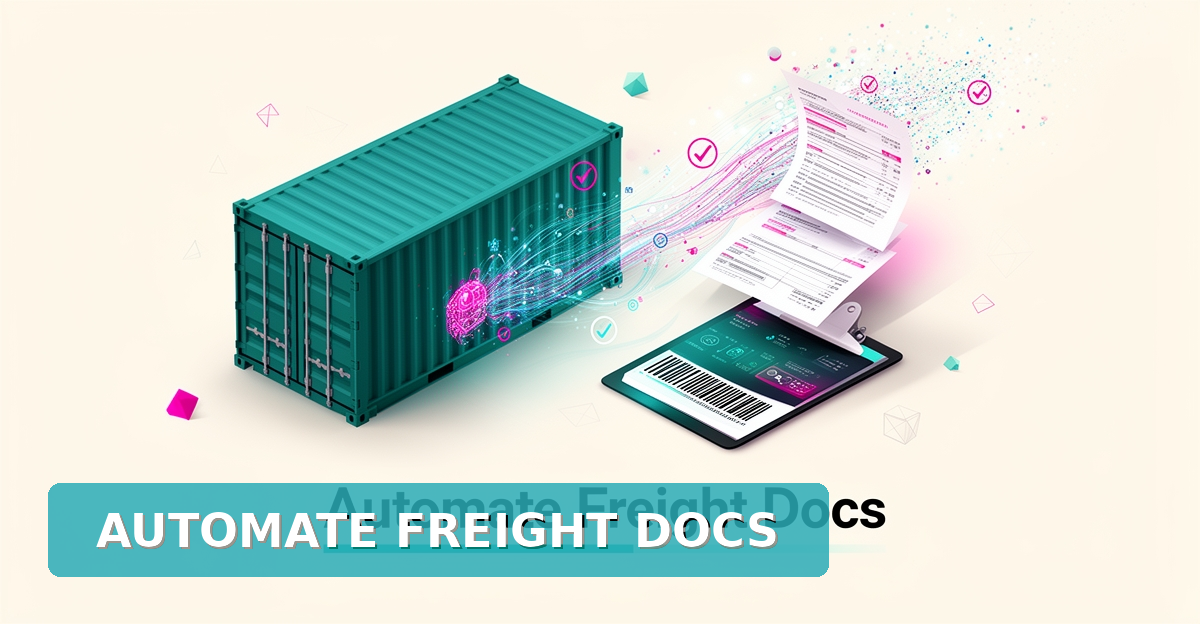
From Manual Logs to AI: Automating Freight Documentation in Real-Time
Key Facts
- Industry research suggests logistics teams can spend a large share of operational time—often cited around 40%—managing documents.
- Documentation inefficiencies are commonly estimated to add up to 15% to shipment costs through errors, delays, and rework.
- AI-powered capture processes Bills of Lading and invoices in seconds instead of minutes.
- AI systems automatically flag missing references, incorrect HS codes and mismatched quantities before submission.
- Speed is often prioritized over governance, creating risk gaps, warns EMEA Field CTO analysis.
- AI is becoming a basic business skill, much like Excel two decades ago.
- Manual handling creates redundant entry, validation overhead and reactive error correction cycles.
Hire a team member that works 24/7 — for less than a part-time wage.
AI receptionists, SDRs, dispatchers and 99+ roles. Trained on your business, fully managed.
Not sure where to start? Ask our AI planner
The Hidden Cost of Manual Freight Documentation
Logistics teams are trapped in a cycle of manual documentation that silently erodes operational efficiency and inflates costs. Industry reporting suggests these teams can spend a large share of their operational time—often cited around 40%—managing documents such as Bills of Lading, invoices, and customs forms, a burden that translates into shipment cost increases commonly estimated at up to 15% due to inefficiencies and errors.
This hidden cost manifests in three critical ways. First, redundant data entry forces teams to re-enter the same shipment details across multiple systems, wasting hours each week on repetitive tasks that add no value. Second, validation overhead requires constant manual checks of shipment references, product classifications, and invoice totals to catch discrepancies before they trigger delays or compliance issues. Third, reactive error correction dominates workflows, as teams spend more time fixing mistakes after submission than preventing them upfront, turning document management into a bottleneck that stalls freight execution.
- Repeated entry of shipment data across ERP, TMS, and accounting systems
- Manual validation of HS codes, quantities, and financial totals
- Time spent resolving mismatches between packing lists and commercial invoices
- Delayed customs clearance due to inconsistent or incomplete documentation
- Increased labor costs from overtime needed to clear documentation backlogs
For logistics leaders, the impact extends beyond wasted time—it's a competitive disadvantage. Every minute spent on manual document handling is a minute not spent on optimizing routes, improving carrier relationships, or enhancing customer service. As shipment volumes grow, this inefficiency compounds, making it increasingly difficult to scale operations without proportional increases in headcount or error rates. Addressing this hidden cost isn't just about saving time—it's about reclaiming operational agility in a market where speed and accuracy determine profitability. AIQ Labs helps logistics teams break this cycle through AI Workflow Builds that rebuild the documentation workflow that costs you the most—capture, extraction, and validation automated at a fixed price, in phases, with you owning the result outright.
How AI-Powered Capture and Classification Changes Freight Workflows
Manual freight documentation has long been a drain on operational efficiency, with teams spending a large share of their time managing paperwork instead of moving goods forward. AI-powered capture and classification transforms this reality by using OCR and intelligent validation to extract data from PDFs, scans, and spreadsheets, then feeding it directly into ERP or TMS systems. This shift eliminates repetitive data entry and enables teams to focus on exceptions rather than routine validation, turning a reactive process into a proactive workflow.
Documents like Bills of Lading, commercial invoices, and customs forms are processed in seconds instead of minutes, delivering measurable speed gains that allow logistics teams to scale shipment volumes without increasing headcount. AI systems automatically detect missing references, incorrect HS codes, duplicate entries, and mismatched quantities—errors that, when left unchecked, are commonly estimated to add up to 15% to shipment costs. By validating trade data before submission, these tools reduce customs delays and improve audit readiness, supporting compliance without manual oversight.
The result is exception-based processing: teams only intervene when the AI flags inconsistencies, creating a structured, predictable workflow that minimizes rework. This approach not only cuts operational overhead but also aligns with the growing need for AI to function as a core business skill—like Excel was two decades ago—requiring training in prompt engineering, data governance, and hallucination awareness to ensure safe, effective use. As organizations integrate these systems, they gain visibility into data flows while building the governance needed to balance speed with security in an evolving regulatory landscape.
Speed vs Security: Governing Real-Time AI Document Automation
AI speed is winning the race against the guardrails built to control it. In freight documentation, that gap is where sensitive shipment data and compliance exposure live.
Logistics teams can spend a large share of their operational time managing documents, according to industry reporting. Manual handling of Bills of Lading, commercial invoices and customs declarations creates redundant entry, validation overhead and reactive correction cycles. Documentation inefficiencies are commonly estimated to add up to 15% to shipment costs.
AI-powered capture and classification flips that model. OCR and intelligent validation extract data from PDFs, scans and spreadsheets, validate against ERP and TMS rules, and push structured records forward. Teams move from reviewing every file to handling exceptions only.
The paradox is that the same acceleration that creates value also creates risk. As models become more intuitive, speed becomes the priority and governance, security checks and compliance look like obstacles rather than necessity, warns EMEA Field CTO analysis.
A culture of immediacy drives employees to feed sensitive data into systems without visibility into where it goes or how it is protected. That lack of visibility widens the gap between innovation and oversight, and gaps are where threats thrive. Regulatory frameworks struggle to keep pace with AI evolution, leaving businesses exposed to data risks and compliance gaps.
Governance must be built in from the outset, not retrofitted. Freight companies adopting real-time AI document automation need foundations that match the speed of the technology:
- Visibility into data flows: what is used, where it goes, and how it is protected
- Validation rules for missing references, incorrect HS codes, duplicate entries and mismatched totals before submission
- Human-in-the-loop controls for exceptions and audit trails for regulated documents
- Security and compliance integrated into the workflow design, not added after deployment
AIQ Labs approaches this by building AI systems that process bills of lading, invoices and customs forms automatically, with ownership and integration designed for freight operations. Whether it starts as a single workflow build or grows into a full AI Operating System connecting your whole logistics stack, the goal is faster, more accurate workflows where information moves automatically across operations without amplifying risk.
Training teams to work with AI as a core competency is part of the shift. Organizations moving from AI as an experiment to AI as a basic business skill focus on capabilities, limitations, prompt engineering and data security. Without that foundation, speed outpaces control and security becomes an afterthought.
Implementation Roadmap for Real-Time Freight Documentation Automation
To successfully transition from manual freight documentation to real-time AI automation, organizations need a clear, actionable roadmap that addresses both technical and human factors. The process begins with identifying the documents that consume the most time and introduce the highest risk of error—such as Bills of Lading, commercial invoices, and customs declarations. Once high-friction documents are pinpointed, the next step is to assess their current formats—whether PDFs, scanned copies, spreadsheets, or email attachments—to determine the scope of AI-powered capture and validation required.
With this foundation, businesses should select AI systems equipped with Optical Character Recognition (OCR) and intelligent validation capabilities to extract and verify data before it enters operational systems like ERP or TMS platforms. Integration with these core systems ensures structured records flow seamlessly into existing workflows, eliminating redundant data entry. Critical to this phase is establishing clear validation rules—for missing shipment references, incorrect HS codes, duplicate entries, or mismatched quantities—so the AI can flag exceptions proactively rather than reactively. This shift enables teams to adopt exception-based processing, focusing only on documents requiring human review, which accelerates freight execution and reduces rework.
Before full deployment, it is essential to implement security and governance measures to address the risks posed by AI's rapid adoption, where speed often outpaces regulatory and compliance frameworks. Teams must gain visibility into data flows, ensure sensitive information is protected, and align AI use with broader security protocols to mitigate cyber threats and regulatory exposure. Concurrently, workforce training should begin, teaching employees how to interact with AI tools, recognize limitations like hallucinations, and manage the new exception-driven workflow—paralleling the historical shift when Excel became a core business skill two decades ago. Finally, continuous monitoring and optimization allow organizations to refine performance, identify further automation opportunities, and maintain compliance as regulations evolve. This structured approach ensures AI delivers sustainable efficiency gains without compromising security or operational integrity. Start the Fit Check to assess your documentation bottlenecks, then book a free 30-minute strategy call to map an automation plan with AIQ Labs.
Still paying for 10+ subscriptions that don’t talk to each other?
We build custom AI systems you own outright. No vendor lock-in. Full control.
Not sure where to start? Ask our AI planner
Frequently Asked Questions
How much time do logistics teams actually spend on manual freight documentation?
Can automating freight documentation really reduce shipment costs?
What specific errors does AI catch in freight documents before they cause problems?
Is it safe to use AI for processing sensitive freight documentation like customs forms?
Do I need to hire more staff to manage AI-powered document automation?
How do I get started with automating freight documentation in my logistics operations?
Reclaim Agility by Turning Documents Into Decisions
Manual freight documentation is no longer a back-office task — it's a drag on growth. Teams spending a large share of operational time on Bills of Lading, invoices and customs forms are losing speed, accuracy and margin to redundant entry, validation overhead and reactive corrections. AI-powered capture and classification flips that model: OCR and intelligent validation extract data from PDFs, scans and spreadsheets, validate against ERP/TMS rules, and push clean records forward so teams work exceptions only. The payoff is faster customs clearance, fewer costly errors and a predictable, scalable workflow without proportional headcount growth. That speed must be paired with governance built in from the outset — visibility into data flows, validation rules, human-in-the-loop controls and security integrated into design, not retrofitted. For logistics leaders ready to move from experiment to operations, the next step is mapping your highest-friction documents and a secure automation plan. Start the Fit Check at aiqlabs.ai/apply, then book your free strategy call to assess your documentation bottlenecks and map a high-ROI automation plan with AIQ Labs. Industry research shows the cost of waiting is measured in time and shipment cost.
Make AI your competitive advantage — not just another tool.
Strategy, implementation and ongoing optimization. One partner, end to end.
Not sure where to start? Ask our AI planner