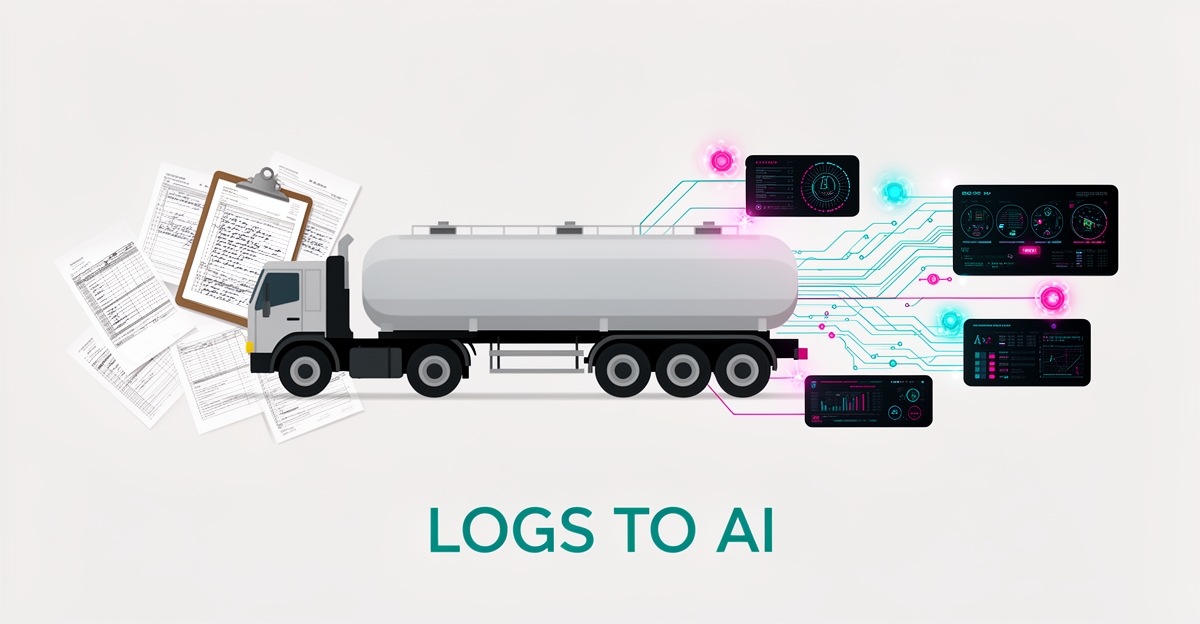
From Manual Logs to AI: Automating Fuel, Load, and Maintenance Records for Tankers
Key Facts
- AI-powered predictive maintenance is widely reported to cut unplanned downtime significantly — vendor case studies in heavy-duty sectors report reductions of up to 50% in unplanned failures maintenance insight platforms
- AI document processing turns handwritten sheets and scanned receipts into structured, validated data in real time for tanker operations
- Fleets relying on traditional, manual maintenance approaches typically face higher maintenance costs and more downtime than those using AI-powered automation, according to industry analysis
- Fusing sensor telemetry with operational records builds a unified asset health view for predictive maintenance
- AIQ Labs builds custom AI systems that automate data capture, validate entries in real time, and integrate fuel, load, and maintenance records into a unified source of truth — with 200+ multi-agent systems deployed
Hire a team member that works 24/7 — for less than a part-time wage.
AI receptionists, SDRs, dispatchers and 99+ roles. Trained on your business, fully managed.
Not sure where to start? Ask our AI planner
The Manual Logging Trap in Tanker Operations
Many heavy-duty logistics operations still rely on handwritten or manually entered logs to track fuel consumption, cargo loads, and maintenance activities — a practice that introduces significant risk and inefficiency. These paper-based or spreadsheet-driven processes are prone to transcription errors, illegible entries, and delayed updates, which compromise data integrity and hinder real-time decision-making. When records are incomplete or inaccurate, maintenance schedules become guesswork, leading to reactive repairs that could have been avoided with timely intervention.
This manual logging trap creates operational blind spots where issues go undetected until equipment fails, triggering unplanned downtime and costly emergency fixes. Industry analysis suggests organizations using traditional maintenance approaches typically face higher maintenance costs and meaningfully more downtime than those leveraging AI-powered automation. Without reliable data on fuel usage patterns or early warning signs from equipment sensors, fleets operate reactively rather than proactively, increasing both safety risks and operational expenses.
The consequences extend beyond immediate repair costs. Incomplete maintenance logs undermine compliance efforts, particularly in regulated industries where auditable records are required. When data is fragmented or inconsistent, proving adherence to safety and environmental standards becomes difficult, exposing companies to fines or operational restrictions. Furthermore, the lack of continuous, high-quality data prevents the use of predictive analytics — the kind of capability that heavy-duty implementers report can cut unplanned failures substantially, as shown by real-world implementations in heavy-duty sectors.
- Fuel logs with missing or estimated entries distort consumption trends and mask inefficiencies
- Load records entered after delivery delay billing and disrupt supply chain visibility
- Maintenance notes lost in paper files prevent trend analysis and root-cause investigations
- Manual processes consume valuable staff time that could be spent on higher-value tasks
- Delayed error detection allows small issues to escalate into major mechanical failures
AIQ Labs helps tanker operators transition out of this manual logging trap. Depending on where the pain is worst, that can start with AI Employees handling record capture and reconciliation around the clock, or a Workflow Build that rebuilds the single most expensive logging workflow at a fixed price. Either way, fuel, load, and maintenance records land in a unified, auditable source of truth — the clean, continuous data needed to shift from reactive to predictive operations.
How AI Turns Logs into Predictive Operations
Paper logs on tankers create blind spots between fuel burn, load weight, and maintenance needs. AI document processing closes that gap by turning handwritten sheets and scanned receipts into structured, validated data in real time.
The shift moves operations from reactive firefighting to proactive control. Instead of waiting for a breakdown or an audit finding, AI captures records at the point of entry, validates them against operational rules, and flags anomalies before they become costly. For heavy-duty logistics, this means fuel usage and maintenance records become a live operational feed rather than a monthly reconciliation task.
Predictive maintenance is the payoff. Industrial data platform analysis reports that AI-powered predictive maintenance can deliver major reductions in downtime and maintenance costs, while maintenance insight platforms cite reductions in unplanned failures of up to 50%. Exact numbers vary by fleet and vendor, but the direction is consistent: for tankers, where a single failure risks safety, compliance, and delivery SLAs, even modest gains compound quickly.
The automation loop works across three layers:
- Automated capture from fuel dock receipts, driver logs, and inspection sheets using document processing
- Validation against route, load, and vehicle history to detect missing entries or outliers
- Anomaly detection on fuel consumption and maintenance intervals to trigger early work orders
Once data is structured, predictive models identify degradation patterns before failure. For tanker fleets, that translates to fewer roadside incidents, longer asset life, and tighter compliance with fuel and load reporting.
This is where AI business process automation becomes operational. AIQ Labs builds custom AI document processing and management systems for heavy-duty logistics that automate data entry, validate logs, and surface anomalies in fuel usage and maintenance records. The result is compliance readiness without manual chasing, and operational efficiency that scales with fleet size.
With validated, continuous records, dispatchers, maintenance planners, and compliance teams work from the same source of truth. Decisions move from gut feel and paper trails to data-driven actions that reduce cost, protect safety, and keep tankers moving.
Building an Owned AI System for Fuel, Load, and Maintenance
Moving from paper logbooks to an AI-driven system starts with a single principle: the business must own the data, the models, and the workflows. When a tanker operator controls the full stack — sensor ingestion, document parsing, anomaly detection, and audit trails — compliance becomes a byproduct of daily operations instead of a quarterly fire drill. The reported gains from predictive maintenance only materialize when the system lives inside your infrastructure, not a vendor's cloud.
- Ingest fuel tickets, bills of lading, and maintenance work orders through a custom document pipeline that extracts structured data and flags low-confidence entries for human review
- Fuse sensor telemetry — pressure, temperature, vibration, flow rates — with operational records to build a unified asset health view
- Deploy AI Employees for fuel reconciliation, load validation, and maintenance scheduling that work 24/7 across your existing ERP, TMS, and CMMS, at a fraction of the cost of additional headcount
- Enforce human-in-the-loop gates for safety-critical decisions while automating routine approvals and exception routing
- Generate immutable audit trails that satisfy DOT, EPA, and customer requirements without manual compilation
AIQ Labs delivers this through three entry points. AI Employees give you managed AI staff for record capture and reconciliation right away. Workflow Builds rebuild the one logging workflow that costs you the most, at a fixed price and in phases. And when you're ready for the full picture, an AI Operating System connects fuel, load, and maintenance data into one operating layer — built in phases and owned outright. With 200+ multi-agent systems deployed across regulated industries, our multi-agent architecture handles the reasoning loops that turn raw logs into predictive work orders. You choose how you pay — start monthly, build in milestones, or own it outright — and the system, agents, and data remain yours to extend as regulations and operations evolve.
Still paying for 10+ subscriptions that don’t talk to each other?
We build custom AI systems you own outright. No vendor lock-in. Full control.
Not sure where to start? Ask our AI planner
Frequently Asked Questions
How much downtime can AI-powered predictive maintenance reduce for tanker fleets?
What risks come from relying on manual fuel and maintenance logs in tanker operations?
Can AI systems for tanker operations be owned by the company, or do they create vendor lock-in?
How does AI improve compliance readiness for tanker operators?
How does AI turn paper logs into usable operational data for tankers?
What's the best first step for a tanker fleet exploring AI automation?
Turning Tanker Logs Into a Competitive Edge
From manual logs to AI-powered automation, the journey for tanker operators is clear: replacing error-prone, time-consuming processes with intelligent systems that capture, validate, and act on fuel, load, and maintenance data in real time. This shift doesn't just eliminate paperwork — it enables predictive maintenance that heavy-duty implementers consistently report reduces unplanned failures and extends asset life, turning compliance from a burden into a natural outcome of daily operations. With AIQ Labs, you gain a system you own outright, designed to integrate with your existing tools and scale with your fleet — whether you start monthly with AI Employees, build in milestones, or go all the way to a connected AI Operating System. The result is cleaner data, fewer disruptions, and decisions rooted in insight, not guesswork. If you're ready to move from reactive fixes to proactive control, take the 2-minute Fit Check and book a free 30-minute strategy call to see where AI can deliver the fastest impact for your operations.
Make AI your competitive advantage — not just another tool.
Strategy, implementation and ongoing optimization. One partner, end to end.
Not sure where to start? Ask our AI planner