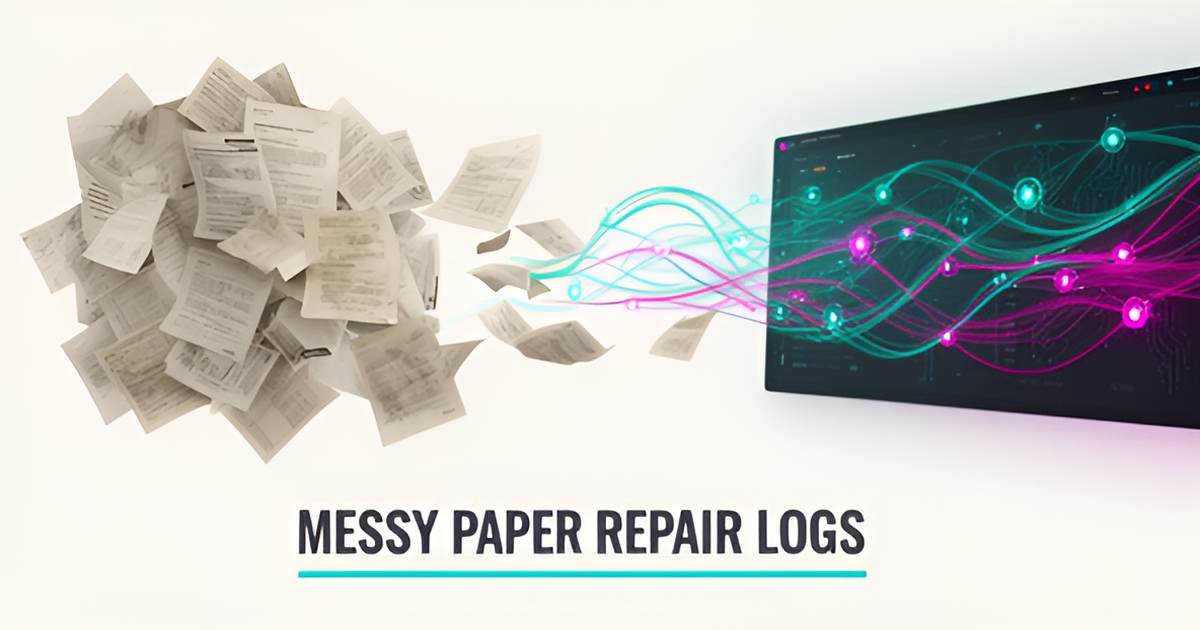
From Manual Logs to AI: Automating Repair History & Customer Records
Key Facts
- Teams in fragmented data environments spend 4 days a week cleaning data and only 1 day making decisions, according to industry analysis.
- Only 11% of organizations have successfully deployed AI agents, according to Deloitte.
- Gartner predicts 40% of agentic AI projects will be canceled by 2027 due to unclear value or missing risk controls, according to industry forecasts.
- By 2028, 60% of brands will use agentic AI, according to Gartner predictions.
- A 90-day preparation window is recommended to build a 'digital twin slice' before deploying AI agents, according to implementation experts.
- AI document processing can collapse data handling timelines from days to seconds, according to training research.
- Microsoft's responsible AI framework mandates six principles including fairness, accountability, and transparency, according to their guidelines.
Hire a team member that works 24/7 — for less than a part-time wage.
AI receptionists, SDRs, dispatchers and 99+ roles. Trained on your business, fully managed.
Not sure where to start? Ask our AI planner
Why Manual Repair Logs Are Costing You More Than Time
Manual repair logs are costing businesses far more than the time spent filling them out—they’re creating systemic risks that undermine efficiency, accuracy, and compliance before any AI solution can even be implemented. Paper-based and fragmented digital records often conflict with one another, leaving service shops with inconsistent data on parts used, service intervals, and customer history. According to industry research, teams in fragmented environments spend four days a week cleaning data and only one day making decisions, revealing how manual processes consume operational capacity without delivering value. This data chaos doesn’t just slow things down—it actively prevents AI from functioning correctly. As one expert notes, you cannot run an agent on fragmented data; instead, you need a dynamic digital twin of your operations in the form of a single, living data layer that reflects the true state of your business in real time. Without this foundation, AI automation doesn’t solve problems—it scales confusion at a speed the business cannot handle.
- Inconsistent repair logs lead to duplicate services, missed maintenance windows, and incorrect parts ordering.
- Fragmented data increases compliance exposure, especially when audit trails are missing or unverifiable.
- Operational inefficiency grows as staff spend more time reconciling records than serving customers.
- Errors in customer records can trigger liability risks if service history is inaccurate or incomplete.
- Trust in data erodes when employees rely on memory or scattered spreadsheets instead of a unified system.
These hidden costs compound over time, turning what seems like a simple record-keeping task into a liability that affects customer trust, regulatory standing, and long-term scalability. AIQ Labs helps businesses overcome this by building custom AI document processing systems that scan service records and automatically update customer databases—but only after establishing the data readiness and governance needed for AI to work reliably. The shift from manual logs to intelligent automation isn’t just about technology—it’s about creating the operational clarity that allows AI to act as a trusted extension of your team, not a source of new risk.
The AI-Powered Digital Twin: Building a Single Source of Truth for Service Records
A single, unified record of every repair, part, and service interval is no longer a luxury—it is the operational foundation that determines whether AI automation succeeds or fails. Without this single source of truth, attempts to automate customer records often scale confusion rather than solve it.
The core challenge lies in the fragmentation of data across paper logs, spreadsheets, and disjointed inventory systems. According to industry analysis, "you cannot run an agent on fragmented data"; instead, businesses must construct a dynamic "digital twin" of their operations. This digital twin acts as a living data layer that reflects the true state of the business in real time, resolving conflicts between disparate sources before automation begins.
AI document processing serves as the engine that builds this digital twin. By scanning service receipts and extracting data with high precision, these systems consolidate fragmented inputs into a unified database. Research from training experts indicates that organizations moving from manual entry to AI-assisted processing can collapse data handling timelines from days to seconds. However, this speed requires a foundation of clean data; a warning sign of premature automation is when teams spend four days a week cleaning data and only one day making decisions.
To build a reliable digital twin for repair history, businesses must follow a structured approach:
- Map decision architecture: Explicitly define who owns each decision, what data is trusted, and the thresholds for human escalation.
- Consolidate data sources: Resolve conflicts between inventory systems, service logs, and customer records to create a single operational truth.
- Select a pilot workflow: Choose one high-volume process, such as scanning service receipts to update customer fields, and build a "digital twin slice" of just that workflow.
- Define agent permissions: Treat AI agents like employees with specific read/write access, ensuring every action is traceable and reversible.
This structured consolidation allows AI to move from offering suggestions to executing delegated tasks, such as automatically updating service intervals or parts usage. Yet, this shift demands rigorous governance. As noted by security analysts, visibility and governance are the baseline for AI adoption, not optional features. Without clear audit trails, the risk of errors propagating through customer records increases significantly.
Implementing this level of integration requires more than just software; it requires a partner who understands data architecture. AIQ Labs specializes in building these custom AI document processing systems, ensuring that repair history and customer databases are not only digitized but unified into a reliable digital twin. By prioritizing data readiness and governance, businesses can transform fragmented logs into a strategic asset that drives accuracy and efficiency.
From Pilot to Profit: Implementing AI Automation with Governance and Workforce Readiness
From Pilot to Profit: Implementing AI Automation with Governance and Workforce Readiness
Starting small with a high-volume pilot workflow is the most reliable path to AI success in repair history automation. Research shows that 90 days is the suggested timeframe to prepare for AI agent integration by selecting a focused, repetitive task—such as scanning service receipts to update customer service intervals—to build a "digital twin slice" of operations. This approach allows businesses to validate data integrity and decision logic before scaling, avoiding the pitfall of automating confusion at machine speed. Industry analysis confirms that teams often spend four days a week cleaning data and only one day making decisions, signaling a critical need for operational cleanup prior to automation.
Defining clear agent permissions and governance is essential when transitioning from AI-assisted suggestions to delegated execution. Treat AI agents like employees on a payroll: specify exactly what data they can read, what records they can update, and what actions require human approval. Every change must be traceable and reversible, establishing rigorous audit trails that align with responsible AI principles. Microsoft’s framework emphasizes accountability and transparency—ensuring humans remain responsible for AI outcomes, especially when automating customer records where errors carry legal and safety implications.
Implement targeted training to prepare teams for collaboration with AI systems. Programs should focus on practical skills like preventing hallucinations, engineering effective prompts, and applying AI to role-specific tasks such as back-office document processing. As CoalBrain notes, AI is becoming a basic business skill—like Excel two decades ago—requiring hands-on practice to move from theory to daily workflow integration. Training outcomes include understanding AI limitations, controlling outputs, and applying tools to real departmental needs.
Validate the pilot with measurable results before expanding. Track improvements in processing speed, error reduction, and data consistency. If the pilot fails, it reveals flaws in underlying data or decision logic that must be addressed—not a failure of the technology itself. This iterative, milestone-aligned approach reflects AIQ Labs’ Build in Milestones model, ensuring each phase delivers owned, functional value before progressing. Scaling only after proof of concept minimizes risk and builds organizational confidence in AI as a sustainable capability.
Still paying for 10+ subscriptions that don’t talk to each other?
We build custom AI systems you own outright. No vendor lock-in. Full control.
Not sure where to start? Ask our AI planner
Frequently Asked Questions
Why are manual repair logs actually costing businesses more than just time?
What is a 'digital twin' in the context of repair history automation, and why is it essential for AI to work correctly?
How long should a business prepare before integrating AI agents for repair history automation, according to research?
What risks arise if AI agents are deployed without proper governance when automating customer records?
How does AIQ Labs ensure AI automation doesn’t create new risks when updating repair histories and customer databases?
What kind of training do teams need to effectively work with AI systems for repair log automation?
Turning Repair Logs into a Competitive Advantage
The shift from manual repair logs to AI-powered automation isn’t just about digitizing paperwork—it’s about building a reliable foundation where data drives decisions, not delays. As the article highlights, fragmented records don’t just waste time; they create operational chaos; they undermine AI’s potential by scaling confusion at machine speed. True automation begins with a digital twin: a unified, real-time view of service history, parts usage, and customer interactions that enables AI to act as a trusted extension of your team. Businesses that invest in data readiness and governance first don’t just avoid risk—they unlock measurable gains in accuracy, compliance, and scalability. The path forward is clear: start with a high-volume pilot, define clear agent permissions, and validate results before scaling. AIQ Labs helps service shops navigate this journey with custom AI document processing systems that turn repair history into a strategic asset. To explore how this applies to your operations, start with a free strategy call to identify your highest-ROI automation opportunity.
Make AI your competitive advantage — not just another tool.
Strategy, implementation and ongoing optimization. One partner, end to end.
Not sure where to start? Ask our AI planner