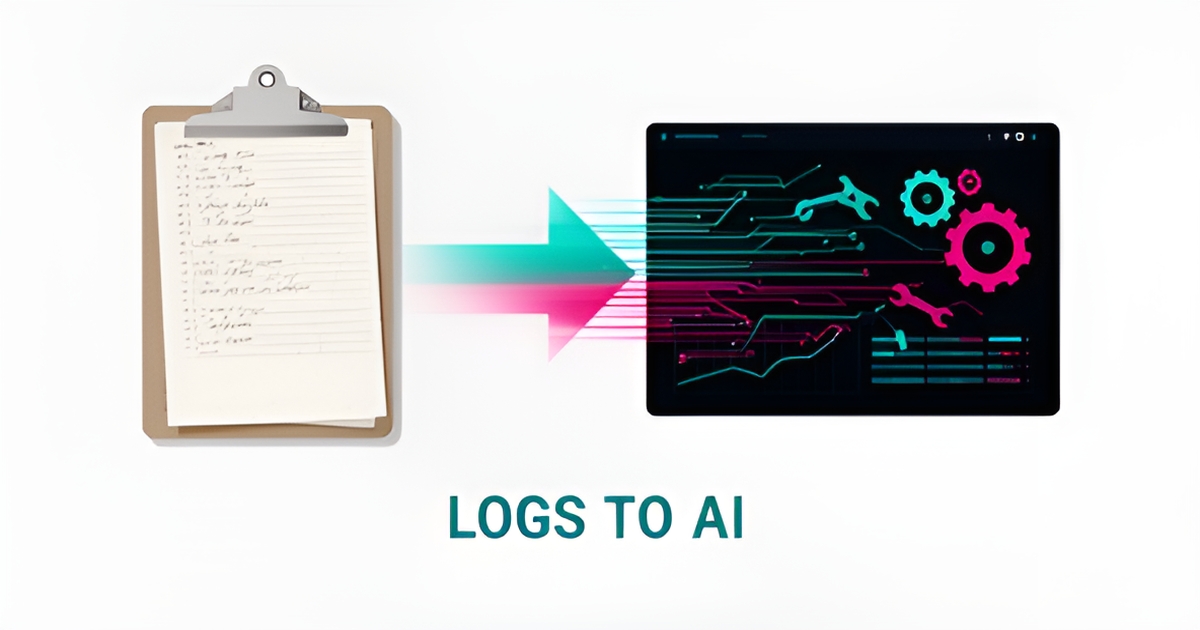
From Manual Logs to AI: Automating Repair Records and Diagnostic Tracking
Key Facts
- Industry analyses of workflow automation commonly report administrative task reductions of around 40%, with corresponding cost savings. according to industry analysis
- Manufacturers using machine learning for pattern detection have reported downtime reductions of roughly 30%. per operational efficiency research
- Large industrial programmes, such as General Electric's Digital Wind Farm initiative, use AI to predict maintenance needs and avoid costly unplanned breakdowns. as documented in cost-benefit assessments
- Rising employment costs, including increases in employer contributions in several markets, are putting pressure on labour-intensive workflows. per recent economic analyses
- Manual processes are consistently described in workflow research as error-prone and time-intensive compared to automated alternatives. according to workflow automation research
- Predictive analytics can forecast inventory needs and maintenance schedules, directly applicable to preventive maintenance in repair shops. as noted in diagnostic tracking studies
Hire a team member that works 24/7 — for less than a part-time wage.
AI receptionists, SDRs, dispatchers and 99+ roles. Trained on your business, fully managed.
Not sure where to start? Ask our AI planner
The Hidden Cost of Paper and Spreadsheet Repair Logs
The burden of manual repair logs goes far beyond the cost of paper or spreadsheet software. Every minute spent transcribing service details, cross-referencing diagnostic codes, or hunting through filing cabinets for a vehicle's history is time pulled away from actual repairs and customer interaction. This administrative drag isn't just inconvenient—it's expensive. Industry analyses of workflow automation commonly report administrative task reductions of around 40%, with direct cost savings from streamlining repetitive data entry and review processes according to industry analysis. For repair shops already facing rising labour expenses, this inefficiency compounds quickly.
Beyond time loss, manual systems introduce costly inaccuracies that erode trust and trigger comebacks. Handwritten logs are prone to transcription errors, while spreadsheets rely on consistent human input that varies across technicians and shifts. These mistakes aren't just typos—they can mean misrecorded fault codes, missed service intervals, or incorrect parts usage, all of which demand rework and damage customer confidence. Studies of manual workflows describe such processes as "prone to human error" and requiring "substantial time investment" to correct, creating a cycle where fixing mistakes consumes even more resources as documented in operational efficiency research. The result is a hidden tax on productivity that grows with every vehicle serviced.
The long-term financial impact extends further when considering workforce costs. Employment-related expenses keep climbing across many markets, adding pressure to optimize labour-intensive workflows per recent economic analyses. When margins are tightening, every inefficient process becomes a luxury few can afford. Shops that keep relying on manual logs aren't just using outdated tools—they're paying a premium for inefficiency in an environment where operational agility is essential.
This is where intelligent data systems transform the equation. By converting paper and spreadsheet logs into structured, searchable databases, AI-enabled platforms eliminate repetitive entry while unlocking patterns in service history that predict future needs. AIQ Labs builds custom systems that give repair shops full ownership of their data—turning passive records into active intelligence for preventive maintenance and faster diagnostics, without vendor lock-in or opaque data handling. The shift isn't about replacing expertise; it's about freeing skilled technicians to focus on what they do best: fixing vehicles, not filing paperwork.
How AI Automation Enables Predictive Diagnostics and Faster Service
Paper logs and spreadsheets slow a shop down exactly when speed matters most. AI changes that by turning fragmented repair history into a searchable, pattern-aware system that works 24/7.
AI systems monitor workflows, analyze data, and act without constant human input. For repair tracking, that means diagnostic trouble codes, parts replaced, and technician notes are parsed automatically and linked to vehicle history. Predictive analytics can forecast inventory needs and maintenance schedules, which is directly applicable to preventive maintenance in a repair shop.
The principle is already proven at scale. General Electric's Digital Wind Farm programme uses AI to predict maintenance needs and avoid costly breakdowns. Manufacturers using machine learning have reported downtime reductions of roughly 30% from the same pattern-detection approach. Industry analyses commonly report administrative task reductions of around 40% through automation, with corresponding cost savings.
In a shop environment, those gains translate to faster diagnostics and fewer comebacks. AI can flag a recurring issue tied to a specific model, mileage band, or component batch before a customer returns. It can surface which technicians resolve certain codes fastest and recommend the most effective parts and labor sequences.
Historical data becomes an active asset instead of a filing burden. The system identifies trends such as:
- Repeat DTC patterns across vehicles of the same year and engine
- Seasonal failure spikes for batteries, cooling systems, and brakes
- Parts with high return or warranty rates linked to specific suppliers
- Average diagnostic time per code and technician
That visibility enables predictive maintenance recommendations and smarter parts ordering. Shops reduce emergency orders, shorten bay time, and improve first-time fix rates.
Manual workflows are prone to human error and require substantial time investment for data entry, review, and analysis. AI agents help reduce that efficiency drain by analyzing data faster than manual teams can manage with spreadsheets. The result is quicker triage at intake, more accurate estimates, and service advisors who can speak confidently about likely root causes.
AIQ Labs develops custom data systems for repair shops that maintain full ownership of their service records, converting paper-based or spreadsheet logs into intelligent databases that track vehicle history, diagnostic codes, and service patterns. The focus stays on practical outcomes: faster diagnostics, better preventive maintenance, and records the business truly owns.
Building Secure, Owned AI Systems for Repair Shops: The AIQ Labs Approach
For repair shops still relying on paper logs or spreadsheets, the shift to intelligent diagnostic tracking isn't just about modernization—it's a strategic necessity driven by measurable inefficiencies in manual workflows. These systems require substantial time investment for data entry and review, creating bottlenecks that slow operations and increase the likelihood of human error, especially in repetitive tasks like logging diagnostic trouble codes or service histories. Industry research confirms that automation reduces these expenses by limiting repetitive work and minimising mistakes, offering a clear path to long-term savings despite higher upfront investment.
AIQ Labs addresses this transition through its AI Workflow Builds—rebuilding the one workflow that costs your shop the most, at a fixed price and in phases—or, for shops ready to go further, a full AI Operating System that connects intake, diagnostics, parts, and records into one operating layer you own outright. Unlike off-the-shelf platforms that trap data in proprietary ecosystems, our approach ensures repair shops retain full control over their service records, diagnostic patterns, and customer history. This ownership model matters in an industry where data security and compliance are increasingly urgent concerns. As AI innovation accelerates, regulation struggles to keep pace, leaving businesses vulnerable to data risks when sensitive information is input into systems without proper safeguards. Experts warn that this imbalance creates exposure to cyberattacks and unwarranted data exposure, particularly when employees automate processes without understanding security implications.
To counter these risks, AIQ Labs embeds security, transparency, and governance directly into the architecture of every custom system we build. Our solutions are designed so that AI augments—not replaces—human expertise, with audit trails, role-based access, and validation layers ensuring reliability and safe operation. By anchoring AI in responsible principles—such as those outlined by Microsoft for secure, private, and transparent systems—we help repair shops harness predictive analytics for maintenance forecasting and diagnostic pattern recognition while maintaining compliance. Responsible AI frameworks reinforce that visibility and governance are not optional but foundational to sustainable AI adoption. The result is a system that doesn't just track repairs—it learns from them, turning historical data into a proactive tool for reducing repeat visits and improving first-time fix rates. Real-world applications show AI can predict maintenance needs and meaningfully reduce downtime—a capability now accessible to shops that own their data and their AI.
Still paying for 10+ subscriptions that don’t talk to each other?
We build custom AI systems you own outright. No vendor lock-in. Full control.
Not sure where to start? Ask our AI planner
Frequently Asked Questions
How much can AI automation really save repair shops on administrative tasks?
Will switching to AI mean losing control of my shop's repair data?
Is AI automation too expensive for small repair shops to implement?
How does AI actually improve diagnostics and prevent repeat repairs?
Are there security risks with using AI for customer vehicle data?
Can AI really predict maintenance needs like bigger companies do?
Your Repair Records Should Work as Hard as Your Technicians
The message running through this article is simple: every hour spent transcribing codes into a spreadsheet is an hour not spent turning wrenches—and every mislogged fault code is a comeback waiting to happen. With rising labour costs and administrative task reductions of around 40% commonly reported from automation, the hidden tax on manual logs is one repair shops can no longer afford to pay. The good news is you don't need to overhaul everything at once. Start by identifying your single most painful workflow—whether that's diagnostic code logging, service history retrieval, or parts tracking—and rebuild it as an intelligent, searchable database. That's exactly what AIQ Labs' AI Workflow Builds are designed for: one workflow, fixed price, built in phases, owned outright. And if you want a connected layer across your whole shop, an AI Operating System can grow from there. Just make sure whatever system you adopt keeps your data in your hands, with security and transparency built in, not bolted on. Curious whether there's a clear win in your workflow? Take the two-minute Fit Check at aiqlabs.ai/apply and book a free 30-minute strategy call—an honest working session with an AI engineer, and if there's no obvious gain, we'll tell you that too.
Make AI your competitive advantage — not just another tool.
Strategy, implementation and ongoing optimization. One partner, end to end.
Not sure where to start? Ask our AI planner