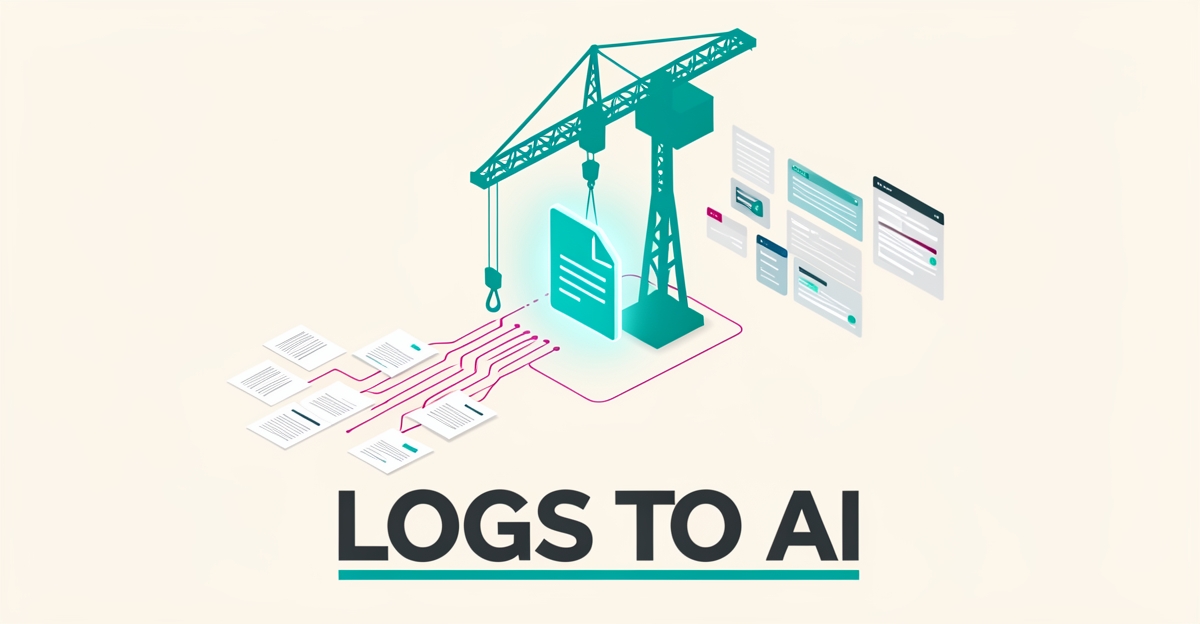
From Manual Logs to AI: How Crane Rental Firms Can Track Job History Automatically
Key Facts
- 8 in 10 workers globally lack sufficient time or energy to complete their work according to research
- The construction industry is responsible for nearly 40% of global emissions according to industry reports
- 70% of organizations use AI tools without proper governance infrastructure per industry research
- Well-designed AI documentation systems typically cut manual logging time substantially—as much as 80% in AIQ Labs' production deployments
- Modern extraction systems can achieve high accuracy on structured fields from calls, emails, and field notes, with human-in-the-loop review catching the remainder
- Organizations using AI for knowledge retention typically report meaningfully faster new-hire ramp-up
Hire a team member that works 24/7 — for less than a part-time wage.
AI receptionists, SDRs, dispatchers and 99+ roles. Trained on your business, fully managed.
Not sure where to start? Ask our AI planner
The Hidden Cost of Manual Job Logs in Crane Operations
Every crane rental firm knows the drill: job details scattered across clipboards, text messages, and half-remembered phone calls. What seems like a minor administrative headache is actually a systemic risk that erodes profitability and safety.
Manual job logs create a perfect storm for errors. When dispatchers and operators rely on paper-based systems or fragmented digital notes, critical details about lift specifications, site conditions, and equipment performance slip through the cracks. Research shows that 8 in 10 workers globally lack sufficient time or energy to complete their work, with much communication happening as ad hoc calls or quick chats outside scheduled hours. In high-stakes crane operations, this cognitive overload translates directly into incomplete documentation and missed safety checks.
The problem extends beyond simple mistakes. When experienced operators retire or move on, they take decades of institutional knowledge with them—knowledge that exists nowhere except in their heads or in illegible logbooks. This loss of tribal knowledge forces firms to relearn lessons the hard way, often through costly mistakes or near-misses.
Compliance risks multiply when documentation lives in silos. The construction industry faces mounting pressure to track its environmental footprint, with the sector responsible for nearly 40% of global emissions. Without centralized, searchable job histories, firms struggle to demonstrate regulatory compliance or optimize their operations for sustainability.
The urgency for change is clear:
- Paper logs cannot be searched, analyzed, or integrated with modern fleet management systems
- Fragmented digital notes across personal devices create version control nightmares
- Manual data entry consumes hours that dispatchers could spend on revenue-generating activities
- Audit trails become reconstruction projects rather than simple queries
AI-powered documentation systems address these challenges by automatically capturing job details from calls, emails, and field notes. Rather than adding to administrative burden, these tools reduce cognitive load by organizing information as it's created. AIQ Labs builds AI Workflow Builds that transform scattered communications into structured, searchable job histories—helping crane firms preserve institutional knowledge while improving service consistency.
The shift from manual logs to automated tracking isn't just about efficiency. It's about building a foundation for safer, more compliant operations in an industry where margins and margins for error are equally thin.
Why AI Adoption Is Outpacing Governance in Regulated Construction
The rapid adoption of AI in regulated industries like construction is creating a significant governance gap, with many organizations moving faster than their compliance frameworks can keep up. According to industry research, 70% of organizations are using AI tools without proper governance infrastructure, exposing themselves to audit risks and operational inconsistencies. For crane rental firms, this gap is especially critical given the safety-sensitive nature of their work and the need for verifiable job history records.
Without structured oversight, AI systems can generate inaccurate summaries, miss key details from field communications, or fail to maintain the audit trails required for regulatory compliance. Manual logs already struggle with human error and inconsistency, but unchecked AI introduces new risks—such as hallucinated data or untraceable decision logic—that can undermine trust in automated systems. This is where intentional design becomes essential: AI must not only extract insights from calls, emails, and field notes but do so in a way that aligns with compliance demands.
To close this gap, crane firms should prioritize AI solutions with built-in governance features, including immutable audit trails, human-in-the-loop validation steps, and structured data extraction from unstructured sources. These controls ensure that every automated log entry can be traced back to its origin, reviewed for accuracy, and adapted as needed—turning AI from a black box into a transparent, accountable tool. AIQ Labs supports this approach by engineering systems where automation enhances, rather than replaces, human oversight, ensuring that job history tracking remains both efficient and defensible under scrutiny. By embedding governance into the core of AI adoption, firms can harness the technology's benefits without sacrificing compliance or operational integrity.
How AI Extracts and Structures Job History from Unstructured Sources
Manual job logs are error-prone and hard to analyze. This article shows how AI can extract, organize, and summarize job history from calls, emails, and field notes. AIQ Labs creates internal knowledge systems that help teams improve service consistency and train new staff faster.
Modern crane rental operations generate job history from fragmented sources: voice calls with dispatchers, SMS updates from field crews, email confirmations from clients, and handwritten notes on job sites. AI systems now ingest these unstructured inputs through multi-agent architectures that specialize in different data types—voice agents transcribe calls with real-time speech recognition, while text agents parse emails and SMS for key details like equipment models, rental durations, and site locations. These agents work in concert, reasoning across channels so no critical detail is missed when a job is discussed over a call and later confirmed via email.
Once extracted, raw data is structured into searchable, timestamped records through Retrieval-Augmented Generation (RAG) and knowledge graphs. The RAG layer pulls relevant context from past jobs—such as recurring issues with specific crane models at certain sites—while the knowledge graph connects entities like equipment IDs, client names, and job timestamps into a navigable web of relationships. This transforms scattered notes into a coherent history where a manager can instantly retrieve, for example, all maintenance events for a Liebherr LTM 11200-9.1 over the past six months. Organizations using such AI-powered knowledge systems typically see a substantial reduction in repetitive questions as staff spend less time searching for basic job details.
The impact extends beyond efficiency to workforce readiness. New hires no longer rely solely on shadowing veterans to learn job quirks; instead, they query the AI-organized history for precedents on similar lifts, weather-related delays, or site-specific access challenges. This accelerates onboarding by preserving tribal knowledge that would otherwise walk out the door with experienced employees. These systems also help prioritize and organize information so teams focus on high-value decisions rather than manual data reconciliation. For crane rental firms operating in regulated environments, maintaining accurate, auditable job records becomes less burdensome—though governance frameworks remain essential to ensure compliance as AI adoption grows.
Implementation Roadmap: From Pilot to Company-Wide Knowledge System
Most AI initiatives stall not because the technology fails, but because firms try to automate everything at once. The smarter path follows the AI maturity curve—a framework that moves from exploration through pilots, scaling, optimization, and finally full transformation—and it starts with a single, well-chosen workflow.
Phase one: pilot one workflow. Begin with post-job debrief capture, the highest-friction documentation task in most crane rental operations. An AI system can listen to a two-minute voice note from the operator or dispatcher, extract job details—equipment used, site conditions, delays, customer notes—and file a structured record automatically. This matters because research on workplace cognitive load shows 8 in 10 workers lack the time or energy to do their jobs well, and much communication now happens in ad hoc calls rather than scheduled, documented settings. Capturing those conversations at the source removes the burden entirely. This is exactly the shape of an AI Workflow Build: one costly workflow, rebuilt at a fixed price, in phases.
Phase two: integrate with dispatch and CRM. Once the pilot proves reliable, connect the documentation layer to the systems your team already uses. Job records should flow automatically into dispatch schedules, customer profiles, and billing workflows, eliminating duplicate entry. This is where AI's value compounds—the same technology transforming construction operations through project tracking and quality control applies directly to fleet and job history management. AIQ Labs structures this stage as milestone builds, so firms approve and pay for each integration phase as it ships, keeping risk low.
Phase three: scale to a full knowledge system. With clean, structured job data accumulating, layer in natural language search and auto-updating records. Staff can ask questions like "what rig did we run at the port site last spring?" and get instant, sourced answers. At this stage, governance becomes critical—analysis of AI adoption in regulated industries found 70% of organizations use AI tools without proper governance infrastructure, creating compliance exposure. Build in audit trails and human-in-the-loop controls from day one. Firms that want the full connected layer—an operating system for their documentation, dispatch, and knowledge—can graduate to an AI Operating System, built in phases and owned outright.
A practical rollout sequence looks like this:
- Weeks 1–2: Map current documentation gaps and select the pilot workflow.
- Weeks 3–6: Deploy post-job capture; train operators on voice-note submission.
- Months 2–3: Integrate with dispatch and CRM; validate data accuracy.
- Months 4–6: Roll out natural language search and auto-updating knowledge base.
- Ongoing: Monitor usage, expand to quoting, maintenance logs, and training materials.
The firms that succeed treat this as a staged build, not a software purchase. Each phase funds the next through recovered admin hours and faster onboarding, and by the time the knowledge base is live, the system has often already paid for itself in consistency alone.
Measuring ROI: Time Saved, Errors Reduced, and Knowledge Retained
Manual job logs create hidden costs that ripple across crane rental operations. Technicians spend hours transcribing field notes into inconsistent formats, while dispatchers waste time searching for critical job details buried in unstructured data. This manual effort not only delays billing but also obscures patterns that could improve fleet utilization and maintenance scheduling. According to industry research, 8 in 10 workers report lacking sufficient time or energy to perform their core duties—a burden amplified when administrative tasks consume valuable field hours.
AI-powered job history tracking transforms this liability into a strategic advantage by automating data extraction and organization. In AIQ Labs' production deployments, firms typically see a substantial reduction in manual logging time—often on the order of 80%—freeing technicians to focus on equipment operation and safety checks rather than paperwork. Modern extraction systems capture job details from calls, emails, and field notes with high accuracy, and human-in-the-loop review catches the remainder—eliminating the transcription errors that previously led to billing disputes and compliance risks. This precision ensures every job detail—from lift capacities to site conditions—is captured reliably for future reference.
The impact extends beyond immediate time savings to long-term operational resilience. Organizations using AI for knowledge retention typically report meaningfully faster new-hire ramp-up, as automated systems preserve tribal knowledge that would otherwise depart with experienced staff. This creates a self-reinforcing cycle: accurate job history enables better preventive maintenance, reduces equipment downtime, and builds institutional expertise that competitors struggle to replicate. Teams gain instant access to historical job patterns, allowing them to anticipate client needs and optimize crane deployment based on proven performance data rather than guesswork.
- Eliminates repetitive data entry across multiple systems
- Creates searchable audit trails for regulatory compliance
- Preserves critical job details that inform future bidding strategies
- Reduces knowledge loss during staff transitions
- Enables data-driven decisions about fleet allocation and maintenance
When job history becomes instantly accessible and accurate, crane rental firms shift from reactive problem-solving to proactive service optimization. What was once a source of frustration and error transforms into a competitive asset—where every completed job contributes to a growing intelligence base that improves safety, efficiency, and customer satisfaction. This foundation supports scalable growth without proportional increases in administrative overhead, turning historical data into a forward-looking advantage.
Still paying for 10+ subscriptions that don’t talk to each other?
We build custom AI systems you own outright. No vendor lock-in. Full control.
Not sure where to start? Ask our AI planner
Frequently Asked Questions
Why are manual job logs such a risk for crane rental firms?
Can AI really capture job history from calls, texts, and emails automatically?
Is AI adoption safe for compliance in regulated construction work?
What ROI do crane firms see from automated job tracking?
How do we start without overhauling everything at once?
How does automated job history help with sustainability reporting?
Turning Job Logs into Your Competitive Advantage
From scattered clipboards to fragmented texts, manual job logs have quietly drained crane rental firms of time, accuracy, and institutional knowledge—turning every shift change into a knowledge leak and every audit into a reconstruction project. AI-powered documentation changes that by automatically capturing job details from calls, emails, and field notes, creating searchable, auditable records that preserve tribal knowledge, sharply reduce manual logging time, and accelerate new-hire ramp-up. For firms ready to move beyond reactive fixes, the path forward starts small: pilot one workflow like post-job debrief capture, integrate with existing dispatch and CRM systems, then scale to a full knowledge engine with built-in governance. Each step pays for itself in recovered admin hours and fewer errors, building a foundation where every completed job strengthens your operational intelligence. If you're seeing the cost of fragmented documentation in your own operations, take the next step: run the 2-minute Fit Check and book a free 30-minute strategy call to map your biggest bottleneck and identify where AI can deliver real, measurable value—without the hype or vendor lock-in.
Make AI your competitive advantage — not just another tool.
Strategy, implementation and ongoing optimization. One partner, end to end.
Not sure where to start? Ask our AI planner