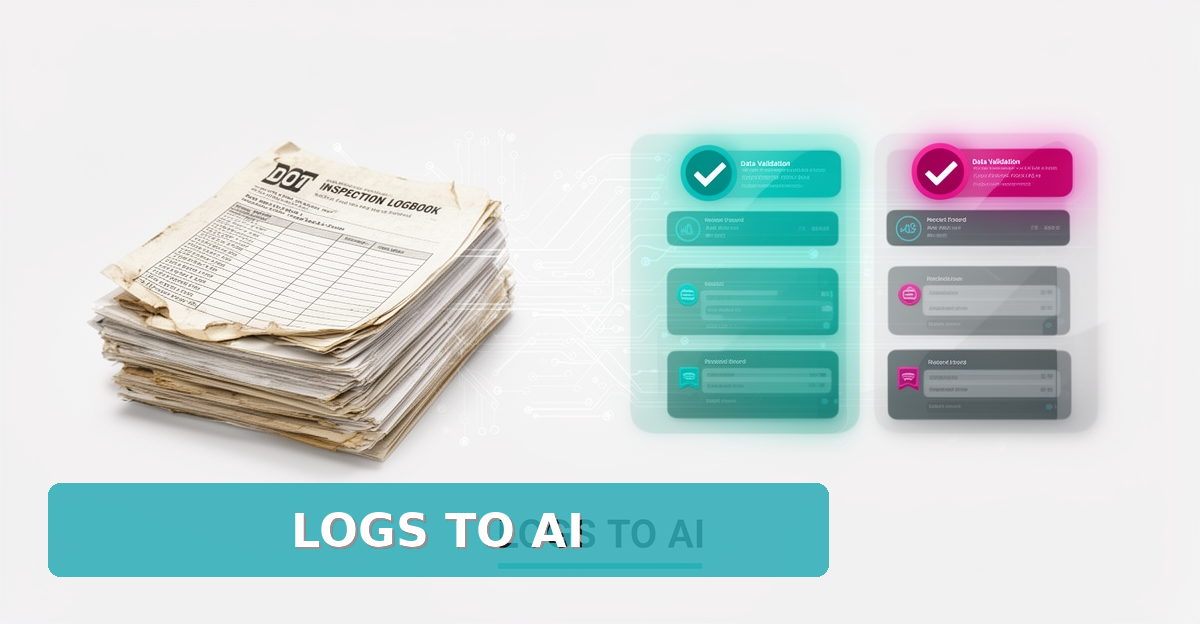
From Manual Logs to AI: How DOT Compliance Teams Can Modernize Inspection Records
Key Facts
- FMCSA conducts thousands of motor carrier investigations each year, with millions of commercial vehicle roadside inspections generating documentation that must stay audit-ready according to FMCSA data
- DOT non-compliance costs carriers billions annually in fines, out-of-service violations and lost efficiency per industry analysis
- AI-powered log analysis can significantly reduce Mean Time To Resolve (MTTR) for compliance incidents per industry research
- AI enables natural language queries like 'Show me all brake violations from last quarter' for instant insights
- AI detects recurring defects and maintenance-related violation spikes before they escalate
Hire a team member that works 24/7 — for less than a part-time wage.
AI receptionists, SDRs, dispatchers and 99+ roles. Trained on your business, fully managed.
Not sure where to start? Ask our AI planner
The Hidden Cost of Manual DOT Inspection Logs
For DOT compliance teams, the true cost of manual inspection logs rarely appears on a balance sheet—until it does. Between illegible handwriting, misplaced forms, and spreadsheet version chaos, paper-based systems quietly drain resources while exposing carriers to significant regulatory risk.
The scale of oversight alone should give pause. FMCSA data shows regulators conduct thousands of motor carrier investigations and millions of commercial vehicle roadside inspections each year. Each interaction generates documentation that must be accurate, accessible, and audit-ready. When records live in filing cabinets or disconnected spreadsheets, retrieving specific inspection histories becomes a time-consuming scramble rather than a simple query.
The financial stakes are substantial. Industry analysis estimates that DOT non-compliance costs carriers billions of dollars annually in fines, out-of-service violations, and lost operational efficiency. Manual processes contribute directly to these losses through transcription errors, missing signatures, and incomplete fields that trigger compliance flags during audits.
Manual systems create specific vulnerabilities that compound over time:
- Illegible handwriting and incomplete entries that invalidate inspection documentation
- Version control failures when multiple team members edit spreadsheet logs simultaneously
- Delayed incident response due to time-consuming manual log reviews
- Lost or damaged paper records that cannot be recovered during audits
These inefficiencies explain why AI-powered log analysis can deliver major improvements in Mean Time To Resolve (MTTR) for compliance incidents. When auditors request documentation or safety managers need to identify patterns across thousands of inspections, manual searching consumes hours that automated systems reduce to minutes.
AIQ Labs has seen how document processing bottlenecks paralyze compliance workflows across transportation and logistics operations. AI Workflow Builds eliminate these hidden costs by digitizing, validating, and organizing inspection records automatically—transforming reactive scrambling into proactive compliance management. The transition from manual logs represents more than operational efficiency; it fundamentally changes how carriers protect their operating authority and bottom line.
How AI Transforms Inspection Record Management
AI-powered inspection record management transforms how DOT compliance teams handle log data by enabling natural language queries, anomaly detection, and root cause analysis directly within their existing workflows. Instead of manually sifting through paper logs or spreadsheets, teams can ask plain-language questions like "Show me all brake violations from last quarter" and receive instant, accurate responses pulled from structured inspection data. This capability reduces the cognitive load on compliance officers and accelerates decision-making during audits or incident investigations.
These AI-driven tools automatically detect unusual patterns in inspection records—such as recurring defects on specific vehicle types or spikes in violations after maintenance events—flagging potential safety risks before they escalate. By correlating log entries with timestamps, geolocation, and technician notes, the system surfaces hidden trends that manual review often misses. Early identification of these anomalies supports proactive interventions, helping teams address systemic issues rather than just reacting to individual failures.
When an issue is detected, AI-powered log analysis performs root cause analysis by tracing related events across multiple data points—such as linking a tire blowout to prior under-inflation logs, route conditions, and service history—providing a clear chain of causality. This depth of insight enables compliance teams to implement corrective actions that prevent recurrence, improving long-term safety outcomes. Organizations using these capabilities typically see meaningful reductions in Mean Time To Resolve (MTTR) for inspection-related incidents, reducing downtime and regulatory exposure.
Modern AI platforms deliver these functions with minimal setup, allowing compliance teams to move from manual processes to AI-enhanced oversight without disrupting ongoing operations. By integrating natural language understanding, anomaly detection, and causal reasoning, AI transforms inspection record management from a reactive chore into a strategic asset for safety, compliance, and operational excellence. AIQ Labs supports this transition through AI Workflow Builds that embed these capabilities directly into DOT compliance workflows, ensuring seamless adoption and lasting value.
Implementing AI in Your DOT Compliance Workflow
Implementing AI in your DOT compliance workflow begins with a clear assessment of your current log systems to identify gaps and opportunities for improvement. Many teams still rely on paper logs or spreadsheets, which are prone to human error and time-consuming to manage. With millions of commercial vehicle roadside inspections occurring each year, the volume of data that needs accurate tracking is enormous. AIQ Labs starts this process by analyzing your existing workflows, data sources, and pain points to design a solution that fits your operational reality without requiring a complete overhaul.
The next step involves selecting AI tools with proper guardrails to ensure accuracy and compliance. AI-powered log analysis requires safeguards to prevent costly mistakes, especially when dealing with regulatory data that impacts safety scores and audit outcomes. AI can meaningfully reduce Mean Time To Resolve (MTTR) when properly implemented, but only if models are validated and outputs are checked for reliability. AIQ Labs builds custom systems with validation layers and human-in-the-loop controls to maintain trust in automated insights while eliminating manual bottlenecks.
Integration with existing workflows is critical for adoption and long-term success. Rather than replacing familiar tools, AI should enhance them—connecting seamlessly with your current CRM, scheduling, or documentation platforms via API. AIQ Labs designs systems that work within your environment, enabling real actions like updating records or triggering alerts based on AI analysis. This approach ensures that compliance teams gain immediate value without disrupting established processes, while maintaining full ownership of the built system.
Finally, validating AI outputs builds confidence and ensures ongoing reliability. Teams should routinely check AI-generated summaries, anomaly detections, and root cause analyses against known benchmarks or sample data. Validating model outputs is essential to prevent drift and maintain accuracy at scale. AIQ Labs includes performance monitoring and continuous optimization as part of its deployment process, helping DOT compliance teams trust their AI tools and scale them confidently over time. To explore how this could work for your operations, start with the 2-minute Fit Check to assess your readiness and identify high-impact automation opportunities.
Still paying for 10+ subscriptions that don’t talk to each other?
We build custom AI systems you own outright. No vendor lock-in. Full control.
Not sure where to start? Ask our AI planner
Frequently Asked Questions
How much do DOT non-compliance issues cost carriers annually?
What specific problems do manual inspection logs create for DOT compliance teams?
How does AI improve the speed of resolving compliance incidents?
Can AI tools integrate with our existing DOT compliance workflows without disruption?
How quickly can we start using AI for inspection log analysis?
What safeguards ensure AI-generated insights are accurate and trustworthy for audits?
Turning Inspection Logs into Strategic Advantage
Modernizing DOT inspection records isn't just about replacing paper with pixels—it's about transforming a compliance chore into a source of operational clarity and risk reduction. As we've seen, manual logs create hidden costs through errors, delays, and audit vulnerabilities that directly impact safety scores and bottom-line performance. AI-powered systems change this dynamic by enabling instant access to structured data, proactive anomaly detection, and faster root cause analysis—cutting resolution time dramatically when properly implemented. For compliance teams drowning in documentation, this shift means less time scrambling for records and more time preventing issues before they escalate. The path forward starts with understanding where your current process creates friction and where AI can deliver the highest impact. Take the first step with AIQ Labs: complete the 2-minute Fit Check, then book a free 30-minute strategy call to identify specific automation opportunities tailored to your workflow—no obligation, just clarity on how to turn inspection logs into a strategic asset for your operation. Prefer email? Reach the team at [email protected].
Make AI your competitive advantage — not just another tool.
Strategy, implementation and ongoing optimization. One partner, end to end.
Not sure where to start? Ask our AI planner