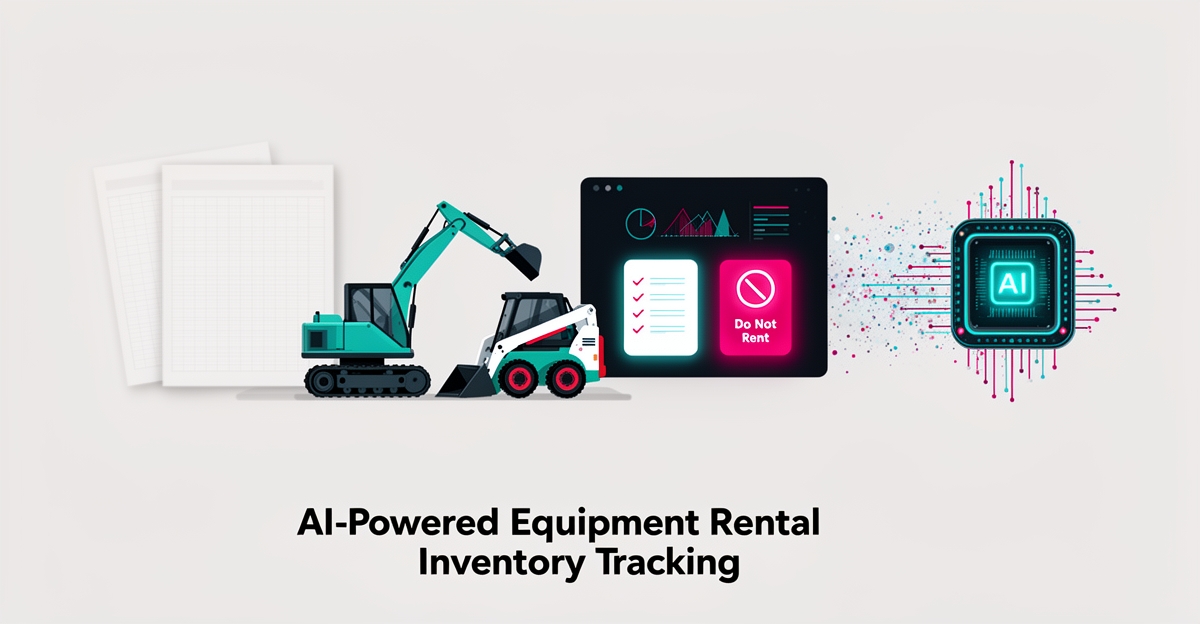
From Manual Logs to AI: How Equipment Rental Companies Can Modernize Inventory Tracking
Key Facts
- Unplanned equipment failures typically cost several times more than the preventive maintenance that would have avoided them, according to industry analyses
- Reactive maintenance on a mid-sized fleet drives costs up through emergency repairs, towing, and lost rental revenue based on fleet maintenance analysis
- Preventive maintenance compliance varies widely across the industry, with top operators consistently outperforming average fleets as shown in industry benchmarks
- Automated tracking can save thousands of staff hours annually and sharply reduce rework and equipment-chasing costs as reported by users of rental tracking software
- AI systems enable real-time inventory updates and automatic overdue flagging to stop the breakdown cascade through autonomous workflow execution
Hire a team member that works 24/7 — for less than a part-time wage.
AI receptionists, SDRs, dispatchers and 99+ roles. Trained on your business, fully managed.
Not sure where to start? Ask our AI planner
The Breakdown Cascade Cost of Manual Logs
The breakdown cascade begins when manual logs fail to reflect real-time equipment status, leading to deferred maintenance that spirals into costly failures. When a unit leaves the yard with overdue service because a binder or spreadsheet wasn’t updated, it often breaks on a customer’s site—triggering emergency repairs, towing, and lost productivity. This single failure pulls technicians from scheduled preventive maintenance, creating a ripple effect of further deferrals across the fleet. Industry analyses consistently find that unplanned failures cost a multiple of what the preventive service would have cost, and every idle asset bleeds rental revenue for each day it sits waiting for field repairs.
As technicians scramble to address breakdowns, preventive maintenance compliance erodes further. That gap isn’t just a tracking issue; it’s a revenue leak. Every missed service window compounds into downtime, rework, and customer credits. The honor system—where dispatchers rely on memory or whiteboards to clear equipment for rent—fails under pressure, especially when revenue opportunities clash with service schedules. AIQ Labs’ AI document processing closes this loop by automatically extracting usage data from returned equipment logs, updating inventory in real time, and enforcing hard blocks on overdue units without manual checks. By replacing reactive firefighting with autonomous workflows, rental companies stop the cascade before it starts—protecting both margins and reputation in competitive local markets.
Why Databases Aren’t Enough: Passive Storage vs Autonomous Execution
Many equipment rental companies believe they’ve solved their tracking problem with systems like Point of Rental or Texada. Yet these platforms function as passive databases—storing information but requiring human intervention to turn data into action. This gap between insight and execution is where costly breakdowns begin.
Autonomous AI systems close this loop by transforming static records into self-executing workflows. When equipment returns, AI agents can instantly generate work orders, assign technicians, and enforce Do Not Rent blocks without waiting for a dispatcher’s manual check. This shift from reactive flagging to proactive handling eliminates the honor system failures that erode profitability. Industry benchmarks show that fleets relying on manual processes consistently trail top operators on preventive maintenance compliance.
The financial impact of this gap is stark. Reactive maintenance multiplies costs across emergency repairs, lost rental days, and customer credits—several times what planned service would have cost. AI-driven autonomy ensures maintenance isn’t just scheduled—it’s enforced.
- Auto-generates work orders upon equipment return or hour-meter thresholds
- Blocks overdue units via real-time Do Not Rent flags visible to all dispatch
- Integrates GPS data from providers like Trackunit or Samsara for live usage tracking
- Triggers autonomous investigations into failure patterns using AI root-cause analysis
- Updates inventory instantly from scanned logs or forms without manual data entry
By embedding AI as an automation layer atop existing databases, rental companies move beyond passive storage to systems that act. This isn’t about replacing staff—it’s about closing the execution gap so every data point triggers the right action, every time. Users of automated tracking report saving thousands of hours annually and sharply cutting costs related to rework and equipment chasing. For AIQ Labs, this is where intelligent document processing meets operational autonomy—turning equipment logs into self-healing workflows that protect revenue and reputation. If this execution gap sounds familiar, our [AI Workflow Builds](/workflow-builds) rebuild exactly this kind of workflow, at a fixed price and in phases.
How AI Digitizes Logbooks and Tracks Assets in Real Time
The leap from manual logs to AI is not just about digitizing paper; it is about shifting from passive record-keeping to active, autonomous management. While traditional databases store information, modern AI systems process forms, extract data from images, and update inventory in real time without human input.
This transformation begins with data extraction. AI can digitize handwritten logbooks and forms quickly, using computer vision to analyze metadata and visual attributes. Industry insights on autonomous investigations describe how similar AI techniques allow systems to filter and match visual data to identify assets—a capability that turns static logs into dynamic intelligence. This eliminates the "honor system" where dispatchers rely on outdated whiteboards.
Real-time tracking anchors this digital shift. By integrating with GPS providers like Trackunit, Samsara, and John Deere, AI systems provide live location data and usage hours. Rental tracking solutions utilizing these integrations allow companies to scan barcodes or QR codes to verify equipment instantly, reducing dispatch errors and ensuring that the digital record matches physical reality.
Beyond tracking, AI monitors the regulatory landscape. Natural Language Processing (NLP) tools can scan regulatory websites and legal documents continuously to detect changes in compliance standards. This helps safety protocols and equipment certifications stay current without requiring staff to manually review legal updates.
When failures do occur, AI moves beyond simple alerts to root-cause analysis. Advanced systems combine heuristic-based retrieval with Large Language Models to diagnose why a breakdown happened. Research on AI-assisted analysis shows these systems can surface likely root causes within complex operations, helping fleet managers prevent recurring issues rather than just fixing symptoms.
The operational impact of these capabilities is measurable. Companies adopting automated tracking report significant gains:
- Thousands of hours saved annually per customer
- Major reductions in costs related to rework and chasing equipment
- Faster turnaround times on returns and service
These outcomes, reported by users of automated rental tracking software, demonstrate that AI does not just organize data—it recovers revenue. By automating the flow of information from logbook to ledger, rental companies close the gap between knowing maintenance is due and getting it done.
Build a Production-Grade AI Tracking System with AIQ Labs
Manual logs create the breakdown cascade that erodes rental margins. Binders and spreadsheets stay outdated until something breaks, and then the cost multiplies fast.
AIQ Labs maps the modernization path to production-grade systems that businesses own, not another subscription database. The approach starts with an audit of where data lives today and where the cascade begins, then builds an automation layer on top of existing rental software.
A fleet maintenance analysis shows unplanned equipment failures typically cost several times more than the preventive service that would have prevented them, with reactive maintenance driving up emergency repair, towing, and customer-credit costs across the fleet. Fleets that rely on manual tracking consistently trail top operators on PM compliance.
That gap is closed by moving from passive storage to autonomous execution. Instead of flagging overdue service for a human to act on, the system processes forms, extracts data from logs and images, and updates inventory in real time without manual input. AI agents generate work orders on return, route them to technicians, and enforce a hard “Do Not Rent” block when thresholds are hit.
Implementation follows a proven sequence, delivered through AIQ Labs’ [AI Workflow Builds](/workflow-builds), [AI Employees](/ai-employees), and [AI Operating Systems](/ai-operating-systems):
- Audit current manual processes and breakdown points to define service logic and thresholds
- Select an automation layer with durable execution, integrate GPS providers and barcode/QR scanning for live location and status
- Automate trigger events for work orders and overdue blocks, then deploy autonomous agents for continuous compliance monitoring
- Enable real-time reporting and natural language investigation so teams query fleet health without complex searches
The business impact is measurable. Users of automated rental tracking report thousands of hours saved annually, major reductions in rework and equipment-chasing costs, and faster turnaround on returns and service.
Ownership matters. AIQ Labs builds custom AI workflow and integration systems that connect CRM, accounting and operations tools with deep two-way APIs, and delivers them via [Start Monthly, Build in Milestones or Own It Outright](/pricing) models. Clients receive full code and data ownership with no vendor lock-in.
The result is a production system that replaces subscription chaos with real-time inventory updates and automatic overdue flagging, letting rental teams focus on revenue instead of chasing assets.
Still paying for 10+ subscriptions that don’t talk to each other?
We build custom AI systems you own outright. No vendor lock-in. Full control.
Not sure where to start? Ask our AI planner
Frequently Asked Questions
Why are manual logs and spreadsheets costing my rental company so much money?
We already use rental software like Point of Rental or Texada—why isn't that enough?
How can AI actually improve our preventive maintenance compliance rates?
What specific tasks can AI automate in our equipment tracking workflow?
What kind of ROI can we expect from switching to automated tracking?
Will AI replace our mechanics and dispatchers?
The Logbook Is Closed — The System Is Live
The breakdown cascade starts with a single missed entry — a spreadsheet not updated, a whiteboard not checked, a unit rented past its service window. From there, the costs compound: emergency repairs at a multiple of the preventive price, days of downtime, and a reputation that erodes faster than the equipment. The gap isn't data; it's execution. Databases store the schedule, but only an automation layer enforces it — generating work orders on return, blocking overdue units from dispatch, and updating inventory the moment a log is scanned. AIQ Labs builds that automation layer on top of your existing rental software, delivering production-grade systems you own outright — no vendor lock-in, no subscription chaos. Take the [2-minute Fit Check](/apply) to see where the cascade begins, or [book a free 30-minute strategy call](/book) to map your biggest bottleneck.
Make AI your competitive advantage — not just another tool.
Strategy, implementation and ongoing optimization. One partner, end to end.
Not sure where to start? Ask our AI planner