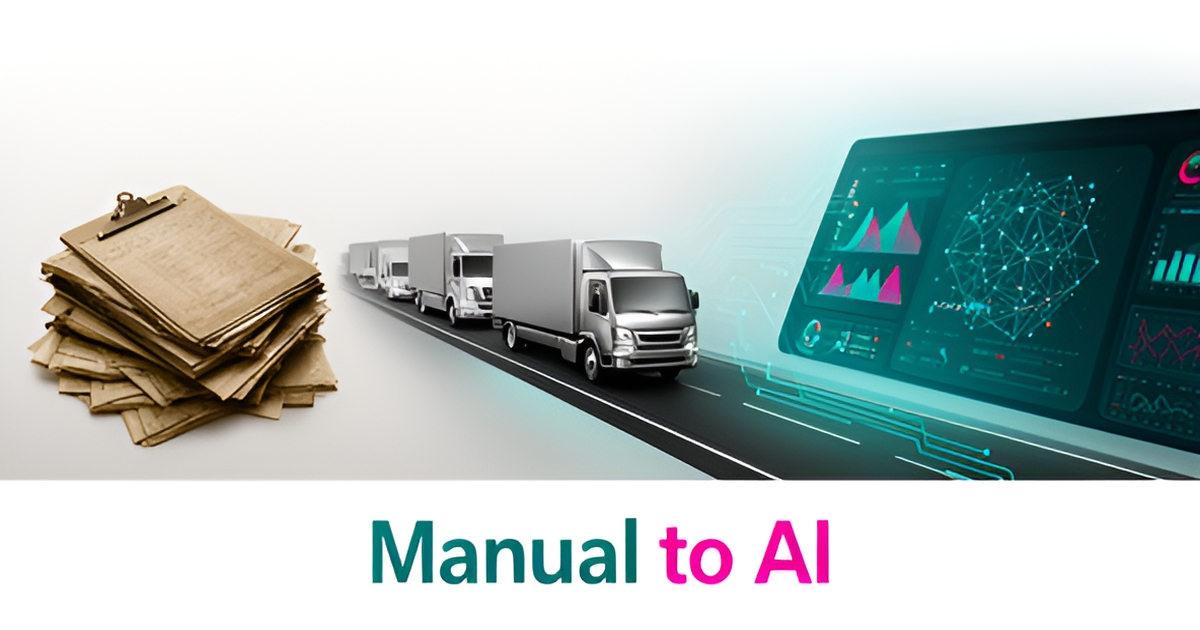
From Manual Logs to AI: How Fleet Managers Automate Driver Performance Reviews
Key Facts
- Industry analyses consistently find that manual compliance tracking leaves a meaningful accuracy gap across ELDs, DVIRs, and maintenance schedules
- Accuracy testing suggests human inspectors miss a significant share of vehicle defects during manual checks, while AI-assisted inspection reaches substantially higher detection rates
- Roadside inspection programs such as CVSA Roadcheck continue to record double-digit vehicle out-of-service rates, many tied to defects daily checks should have caught
- A single DOT audit failure can run well into five figures in direct fines for a mid-sized fleet — before revenue loss, downtime, and insurance impact
- Fleets that automate compliance and reporting typically recover their investment within the first year, with admin time dropping by roughly 40-45%
Hire a team member that works 24/7 — for less than a part-time wage.
AI receptionists, SDRs, dispatchers and 99+ roles. Trained on your business, fully managed.
Not sure where to start? Ask our AI planner
The Hidden Cost of Paper-Based Driver Reviews
Every Monday morning, a fleet manager sits down with a stack of paper DVIRs, a spreadsheet of mileage logs, and a nagging feeling that something slipped through the cracks. That feeling is justified — and expensive. The paper-based systems many fleets still rely on aren't just slow; they're quietly bleeding money and creating compliance liabilities that only surface when it's too late.
The problem starts with accuracy. Manual compliance tracking across ELDs, DVIRs, and maintenance schedules leaves a meaningful gap in regulatory accuracy — industry analyses typically put it in the double digits. That gap compounds when inspections depend on tired, time-pressed drivers: accuracy testing consistently shows human inspectors miss a significant share of vehicle defects that AI-assisted inspection systems catch.
The consequences show up on the roadside. Roadside inspection programs like CVSA Roadcheck continue to record double-digit vehicle out-of-service rates — meaning roughly one in five or six trucks inspected has a critical safety violation that daily manual checks failed to catch. "Pencil-whipped" inspections, where drivers rush or falsify reports to save time, only deepen the blind spots.
Then there's the audit risk. For a 50-vehicle fleet, a single DOT audit failure or major HOS violation can run well into five figures in direct fines — before counting grounded vehicles, lost revenue, and insurance premium increases. Fleets that automate compliance management consistently report stronger audit outcomes, because the records are complete, timestamped, and generated by the system rather than reconstructed by hand.
The hidden costs extend beyond fines into daily operations:
- Fleet managers commonly lose 10 or more hours per week to manual data entry — receipts, mileage, and expenses that AI can process automatically
- Reports that take hours to compile manually can be generated in minutes with AI tools
- Manual processes become overwhelmed as fleets grow beyond roughly 25-30 vehicles, creating gaps where maintenance services are missed or duplicated
- Manual dispatch and paper-based workflows quietly accumulate costs through fuel inefficiency, overtime, and administrative overhead
The core issue is structural: paper logs and retroactive spreadsheets capture only a fraction of what's happening across a fleet, and by the time patterns emerge, the violation or breakdown has already occurred. Manual oversight simply can't account for driver fatigue indicators, emerging maintenance needs, and compliance variables simultaneously.
This is precisely the gap AI document processing closes. By automatically ingesting data from ELDs, dashcams, and engine control modules, systems like those AIQ Labs builds convert raw operational data into audit-ready reports and real-time driver insights — no data entry required. Before any fleet can evaluate that shift, though, it needs an honest accounting of what the current paper trail is actually costing.
How AI Turns Telematics Into Real-Time Performance Coaching
Manual performance reviews based on paper logs and spreadsheets create blind spots that put fleets at risk. AI transforms this reactive process into continuous, real-time coaching by ingesting data directly from ELDs, dashcams, and engine control modules to deliver instant feedback on driving behavior, compliance, and safety risks. This shift enables fleet managers to move from sporadic audits to proactive intervention, significantly reducing administrative burden while improving outcomes.
AI systems analyze telematics streams to generate continuous driver scores based on hard braking, rapid acceleration, speeding, and idling patterns, turning raw data into actionable insights for immediate coaching. When combined with dashcam video analytics, the technology detects distracted driving, seatbelt non-compliance, and following distance violations, delivering in-cab alerts or post-trip video clips for targeted feedback. These capabilities support predictive safety models that identify high-risk drivers before incidents occur, allowing managers to intervene with personalized training or schedule adjustments. Industry research on AI-powered driver safety analytics points to meaningful reductions in safety incidents — often in the 35-40% range for behavior-focused programs.
Real-time HOS intervention is another critical function, where AI monitors drive time and rest periods against regulatory limits, issuing warnings to drivers and dispatchers before a violation occurs. This proactive approach helps fleets maintain compliance and avoid costly out-of-service penalties. By automating the collection and validation of ELD data, these systems eliminate manual log checks and close the accuracy gap inherent in paper-based processes. The result is not only fewer violations but also audit-ready reports generated in minutes instead of hours, cutting administrative safety tasks by roughly 45% and freeing managers to focus on strategic fleet optimization.
- Continuous scoring from ELD, dashcam, and ECM data for real-time driver feedback
- Predictive safety alerts that identify risk before incidents occur
- Automated audit-ready reports cutting admin time by roughly 45%
- Real-time HOS intervention preventing violations before they happen
- Substantially higher inspection accuracy than manual processes alone
By turning telematics into a continuous coaching loop, AI enables fleet managers to shift from periodic reviews to ongoing performance improvement. This approach not only enhances safety and compliance but also supports fuel efficiency gains through behavior-focused initiatives like reduced idling and smoother acceleration. For fleets of 20+ vehicles, the operational savings from reduced admin time, fewer violations, and optimized routing typically mean the system pays for itself within the first year. AIQ Labs helps fleet tracking providers implement these capabilities through custom AI systems that ingest GPS, speed, and route data into actionable insights, with full ownership and no vendor lock-in.
From Pilot to Owned System: A Practical Automation Roadmap
Moving from spreadsheets to AI feels risky until you see the cost of staying manual. Fleets of 20+ vehicles can shift from reactive logs to owned, automated driver performance without rebuilding operations overnight.
Start with assessment and data centralization. Map current pain points — compliance gaps, manual data entry, missed defects — and consolidate telematics from ELDs, dashcams and engine control modules into one dashboard. This baseline shows where manual processes create accuracy gaps and where time is lost.
Pilot on a subset of the fleet to prove value fast. Run AI and manual inspections in parallel for 15-20% of vehicles in the first couple of weeks, then compare detection rates and admin time. Fleet deployments typically show a meaningful reduction in administrative safety tasks within the first 90 days.
Once the pilot validates accuracy, integrate workflows. Connect the AI system to maintenance software to auto-generate work orders for flagged defects, configure alert thresholds for HOS risks, and set up automated regulatory reporting. Training is brief and framed as license protection, not surveillance, to reduce driver resistance.
Full rollout scales the gains. With centralized data and proven playbooks, expand to the entire fleet and establish real-time monitoring dashboards for continuous coaching. The financial case for fleets of this size is straightforward: reduced admin hours, fewer violations, and better routing usually recover the build cost within the first year.
A practical automation roadmap looks like this:
- Assess current state and centralize ELD, dashcam and ECM data streams
- Pilot on 15-20% of vehicles with parallel AI/manual validation
- Integrate AI alerts into maintenance and compliance workflows
- Train drivers and staff, then deploy fleet-wide with real-time dashboards
- Optimize inspection frequency and routing based on defect trends
AIQ Labs builds custom AI systems that process GPS, speed and route data into actionable driver reports, and works with fleet tracking providers to transition from paper logs to owned analytics — whether as a single workflow rebuild or a full AI operating system built in phases. The shift moves performance reviews from periodic, subjective checks to continuous, data-driven feedback loops that prevent violations before they occur.
Why Custom-Built AI Beats Off-the-Shelf Subscriptions for Fleets
For most fleet managers, the first step into AI looks the same: sign up for a subscription platform, pay per vehicle per month, and hope the features fit. The math seems reasonable at first — entry pricing across major platforms like Samsara and Geotab typically runs in the low tens of dollars per vehicle monthly. But over time, that per-vehicle pricing compounds, and the fleet never actually owns anything it pays for.
The subscription model carries a deeper problem than cost: vendor lock-in. Off-the-shelf tools dictate how your data is structured, which integrations are allowed, and what happens when you want to change or expand the system. If your telematics provider, ELD vendor, or compliance workflow doesn't match the platform's assumptions, you're forced to bend your operation around their software — not the other way around.
Custom-built AI flips that relationship entirely. When a fleet owns its system, the AI conforms to existing infrastructure: GPS feeds, speed and route data, dashcam streams, and compliance records flow into one unified platform rather than a patchwork of disconnected apps. This matters because centralized, automated compliance systems consistently outperform manual tracking on audit outcomes. A system you own can be tuned precisely to close that gap for your fleet's specific vehicles, routes, and regulatory exposure.
This is where AIQ Labs' ownership model diverges from the subscription marketplace. Instead of renting features, fleets work with a partner that architects custom AI systems around their existing telematics and compliance tools, with full ownership of the code, agents, and data transferring to the client. There are no platform dependencies and no restrictions on future development — the fleet's AI asset grows as the business grows.
The difference shows up in ongoing operations, too. Rather than waiting for a vendor's roadmap to add the reporting capability you need, a custom system delivers what your managers actually ask for. Consider what that means in practice:
- Comprehensive driver reports generated in minutes instead of hours of manual compilation.
- Continuous monitoring of HOS limits, speeding, braking, and idling patterns — flagging risks before they become violations.
- Audit-ready documentation compiled automatically from verified telematics data, eliminating manual calculation errors.
- Integration with maintenance workflows so flagged defects automatically trigger work orders.
For fleets weighing the investment, the economics favor ownership as well. Fleets of 20+ vehicles typically recover their investment within months of implementation through reduced admin hours, fewer violations, and optimized dispatch. With AIQ Labs' payment models — start monthly, build in milestones, or own it outright — the fleet controls its AI destiny rather than renting it.
The choice ultimately comes down to this: subscriptions give fleets access to someone else's AI; custom builds give fleets an AI asset that belongs to them, works with their systems, and evolves on their terms. In an industry where a single DOT audit failure can run well into five figures for a mid-sized fleet, that distinction isn't philosophical — it's financial.
Still paying for 10+ subscriptions that don’t talk to each other?
We build custom AI systems you own outright. No vendor lock-in. Full control.
Not sure where to start? Ask our AI planner
Frequently Asked Questions
How accurate are AI driver performance systems compared to manual reviews?
What does a DOT audit failure actually cost a mid-sized fleet?
How much time does AI actually save on driver performance reporting?
What's the real ROI timeline for automating driver performance reviews?
How does AI handle driver safety without creating a surveillance state?
Why choose a custom AI system over a per-vehicle subscription platform?
Turning Paper Logs into Profit: Your AI-Powered Fleet Starts Today
The shift from manual driver performance reviews to AI-powered automation isn't just about saving time — it's about closing compliance gaps, cutting administrative work by nearly half, and preventing costly DOT violations before they happen. Fleets of 20+ vehicles typically recover their investment within the first year, turning what was once a reactive, error-prone process into a proactive, profit-driving system. The real advantage comes not from off-the-shelf subscriptions, but from owning an AI solution built around your existing telematics, workflows, and compliance needs — one that scales with your fleet and gives you full control over your data and insights. If you're ready to see how custom AI can transform your fleet's performance without vendor lock-in, start with the 2-minute Fit Check, then book a free 30-minute strategy call to map your biggest opportunities — no obligation, just clarity on what's possible for your business.
Make AI your competitive advantage — not just another tool.
Strategy, implementation and ongoing optimization. One partner, end to end.
Not sure where to start? Ask our AI planner