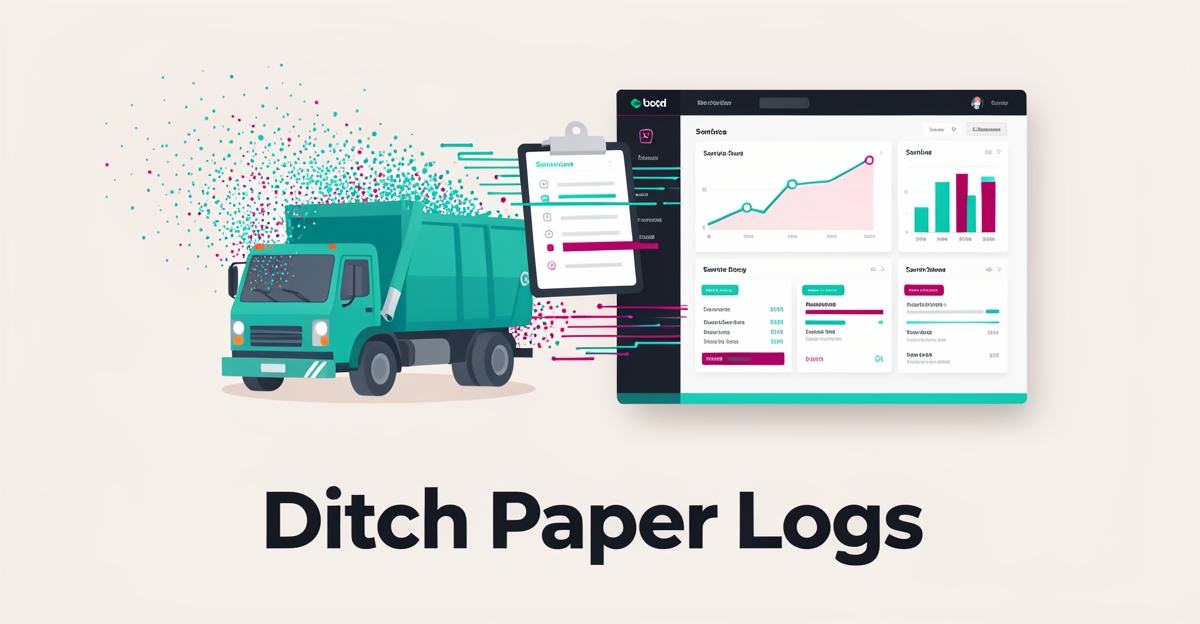
From Manual Logs to AI: How Garbage Disposal Businesses Can Automate Service Tracking
Key Facts
- Hyperautomation, the combination of AI, machine learning, and robotic process automation, has been projected by industry analysts to grow dramatically through the 2030s, with some estimates putting the market in the hundreds of billions of dollars according to industry analysis.
- Google Cloud's Document AI Custom Extractor can typically be fine-tuned with a small sample of documents, as few as 10 in many cases, for high-accuracy data extraction per Google Cloud.
- Gartner has projected that a growing share of enterprises will automate more than half their network activities by 2026, up sharply from 2023 levels per industry research.
- Document AI pricing is usage-based and has changed over time; check Google Cloud's current pricing page for up-to-date per-page rates before budgeting.
- "Automating tasks won't save your business. Automating outcomes will," as industry research puts it.
- The winning automation principle is "man with machine", human oversight for exceptions, with the routine majority of work running automatically according to research.
Hire a team member that works 24/7 — for less than a part-time wage.
AI receptionists, SDRs, dispatchers and 99+ roles. Trained on your business, fully managed.
Not sure where to start? Ask our AI planner
The Paper Log Trap Holding Garbage Disposal Businesses Back
A crumpled service ticket buried under a toolbox. A technician's handwriting that only they can read. A warranty claim denied because the completion date was never recorded. These aren't hypothetical problems, they're the daily reality for garbage disposal repair shops running on paper logs, and they're quietly draining profit from every job.
The administrative drag goes deeper than lost paperwork. When service details live only on clipboards, accountability gaps widen. Technicians can't verify what was done on prior visits. Managers can't spot recurring failure patterns across units. Owners can't prove compliance when a commercial client demands service records. Industry analysis describes hyperautomation, combining AI, machine learning, and robotic process automation, as transforming operations across industries by creating unified, efficient digital ecosystems, with analysts projecting strong growth through the 2030s.
Most shops try to solve this by digitizing the paper, scanning logs, typing notes into spreadsheets, or adopting basic field service apps. But that's task automation, not outcome automation. As research emphasizes, automating tasks like data entry only makes processes faster without fundamentally changing how the business operates. True outcome automation asks: "How do we redesign this workflow so the result happens with minimal human effort?"
- Instead of typing repair notes → the system extracts structured data from technician photos and voice memos automatically
- Instead of manually tracking completion times → timestamps generate from GPS check-ins and job closure actions
- Instead of compiling monthly reports → dashboards update in real time with warranty trends, parts usage, and technician efficiency
- Instead of chasing missing signatures → automated prompts ensure every job closes with required documentation
Google Cloud's Document AI platform demonstrates this capability, offering custom extractors that can typically be trained with a small sample of documents to pull repair details, model numbers, and labor hours from service tickets with high accuracy. AIQ Labs builds on foundations like these through its AI Workflow Builds, rebuilding the one workflow that costs your business the most, at a fixed price and in phases, so repair details get extracted, completion times get tracked, and reports generate themselves. The shift isn't about faster paperwork. It's about eliminating the paperwork entirely so the outcome, complete, searchable, actionable service records, happens by default.
How AI Document Processing Automates Entire Service Outcomes
Garbage disposal businesses are moving beyond simple task automation to achieve true outcome automation, where entire service results happen with minimal human effort. Industry research on hyperautomation, combining AI, machine learning, and robotic process automation, points to sustained growth in this space through the 2030s, reflecting its transformative potential across service sectors. This shift means redesigning workflows so that repair details are extracted, completion times tracked, and reports generated automatically, rather than just speeding up individual steps like manual data entry.
AI-powered document processing enables this outcome-focused approach, particularly through platforms like Google Cloud Document AI. Its Custom Extractor, powered by generative AI, can pull structured data from service logs and work orders with high accuracy after being fine-tuned on a small sample of documents, often as few as 10. The Custom Splitter automatically separates composite documents, such as bundled service tickets or multi-page inspection reports, into single-class files by identifying logical boundaries. Meanwhile, the Custom Classifier builds document categorization systems from the ground up using few-shot learning, allowing businesses to sort incoming paperwork by type, priority, or service category without extensive training data.
These capabilities let garbage disposal companies automate data entry from handwritten logs, extract key repair details like parts replaced or labor hours, and trigger completion tracking the moment a service ticket is processed. By connecting extracted data to existing systems, businesses can generate real-time service reports, monitor technician performance, and maintain audit trails with minimal administrative overhead. For SMBs that want to own their automation outright, AIQ Labs develops these systems through AI Operating Systems, one connected operating layer built in phases and owned outright by the client, eliminating manual bottlenecks while preserving full control over the AI assets. As accuracy improves through continuous use, these systems scale to handle growing document volumes, turning paper-based chaos into a streamlined, outcome-driven operation.
From Scattered Notes to Unified Digital Records
Most garbage disposal operations think they've "automated" their business because they've set up auto-reminders or digital checklists. But there's a fundamental difference between automating tasks and automating outcomes, one that determines whether technology actually changes how your business runs or just makes old habits slightly faster.
Task-based automation speeds up individual steps: a reminder pings a driver, an email confirms a pickup, a form digitizes a paper log. According to industry analysis, this approach makes processes faster without fundamentally changing how the business operates. The paperwork still exists. Someone still has to chase it, review it, and turn it into invoices and reports.
Outcome-based automation asks a different question: how do we redesign this workflow so the result happens with minimal human effort? Instead of reminding your office manager to file service records, an AI system extracts repair details from work orders, tracks completion times, generates customer invoices, and produces accountability reports automatically. The outcome, complete, auditable service documentation, simply happens. As the same research puts it, "automating tasks won't save your business. Automating outcomes will."
The technology to do this is mature and accessible. Google Cloud's Document AI platform offers custom extractors, classifiers, and OCR parsing that can typically be trained with a small sample of documents to achieve high accuracy, meaning a disposal company doesn't need thousands of historical records to get started. Custom extractors pull structured data (route numbers, bin conditions, completion timestamps) straight from service tickets, while classifiers sort mixed document batches automatically.
This shift matters because it changes what your team does with their day. When service completion, invoicing, and reporting run themselves, staff stop being data-entry clerks and start focusing on route optimization, customer relationships, and growth planning. Research on hyperautomation shows it frees teams from repetitive tasks to focus on innovation and strategic planning.
For garbage disposal businesses, a practical outcome-based system looks like this:
- Work orders and service tickets are ingested, read, and logged without manual entry
- Completion times are tracked automatically, creating an accountability trail for every route
- Invoices generate from verified service data, not from someone re-keying numbers
- Reports update themselves and surface insights proactively, rather than waiting for month-end crunch
This is the approach AIQ Labs takes when building document processing systems for service businesses: rather than digitizing individual tasks, the system is architected around the end result, a complete, accurate service record that flows from the field to invoicing to reporting with minimal human touch. Human oversight stays in place for exceptions and high-stakes decisions, but the routine majority of the workflow runs on its own.
The businesses that win in the next five years won't be the ones that typed their paper logs faster. They'll be the ones that stopped treating record-keeping as a job at all, and let the system deliver the outcome instead.
A Practical Roadmap to Automate Service Tracking
The gap between a paper log in a truck cab and an automated service record isn't just technology, it's a fundamental shift in how work gets done. Most small service businesses automate tasks, but the real gains come from automating outcomes, a distinction that separates businesses that merely speed up from those that transform.
Research on business automation makes this point bluntly: "Automating tasks won't save your business. Automating outcomes will." Task automation, auto-emails, reminders, small content pieces, makes processes faster without changing how the business operates. Outcome automation asks a different question: how do we redesign this workflow so the result happens with minimal human effort? For a garbage disposal operation, that means service records that update themselves, not just faster typing.
Here's a practical roadmap to get there:
- Identify outcome-level opportunities. Look for places where automation can handle entire results, processing service records end-to-end, generating completion reports, not just individual steps like data entry.
- Assess current workflows. Map where paper logs create administrative burden today, and evaluate which outcomes would benefit most from automation first.
- Select the right AI tools. Platforms like Google Cloud Document AI offer custom extractors, classifiers, and OCR parsing purpose-built for document-heavy workflows.
- Prepare training data. Gather a representative sample of your actual service documents, many systems can be fine-tuned with a small sample, sometimes as few as 10 documents, for high accuracy.
- Configure workflows and connect systems. Set up automated ingestion, processing, and storage that feeds your existing analytics and reporting tools.
The remaining steps are just as critical. Implement human oversight with review mechanisms and override capabilities for high-risk decisions, the principle of "man with machine," not "man versus machine." Then monitor performance continuously using accuracy metrics, and scale gradually from a pilot before expanding across operations. This last step matters: many organizations stall at the pilot stage and never scale, which is why structured governance and iteration matter more than the initial technology choice.
The market context supports moving now. Industry analysis projects sustained hyperautomation growth through the 2030s, and analysts at Gartner have projected a sharp rise in the share of enterprises automating the majority of their network activities by 2026. AI is moving from passive tools to active systems that deliver complete business functions.
This is also where the build-versus-buy decision matters. Custom document processing systems, like the AI Workflow Builds AIQ Labs delivers for service businesses, extract repair details, track completion times, and generate reports automatically, and because clients own the system outright, there's no vendor lock-in or subscription dependency. Ownership also simplifies the compliance side: standards like ISO 42001 and the EU AI Act require lifecycle risk management, documentation, and human oversight, easier to demonstrate when you control the system end to end.
Start with one workflow, prove the accuracy, and scale from there.
Still paying for 10+ subscriptions that don’t talk to each other?
We build custom AI systems you own outright. No vendor lock-in. Full control.
Not sure where to start? Ask our AI planner
Frequently Asked Questions
Are paper service logs really costing my garbage disposal business money?
What’s the difference between task automation and outcome automation for service tracking?
How much training data do I need to get AI document processing working for my service tickets?
Is hyperautomation actually growing, or is it just hype?
Will automating service records mean I lose control or compliance?
Where should I start if I want to automate service tracking without a big IT project?
Stop Chasing Paper and Start Owning Your Service Outcomes
The paper log trap isn't a storage problem, it's an outcome problem. Garbage disposal shops that move from manual tickets to outcome automation stop chasing signatures and re-keying notes, and start getting complete, searchable service records by default, with repair details extracted from photos and voice memos, completion times tracked automatically, and reports that update themselves. That shift from task speed to outcome design is what separates shops that digitize paperwork from those that eliminate it. For SMBs ready to make that change, the technology is accessible and the roadmap is clear: map the outcome you want, train a custom extractor on a small sample of real tickets, and connect it to the systems you already use. AIQ Labs builds exactly this for service businesses through AI Workflow Builds, one workflow rebuilt at a fixed price, in phases, or as part of a full AI Operating System you own outright, with no vendor lock-in. If you want a practical assessment of where automation can deliver the biggest lift first, take the two-minute Fit Check at https://aiqlabs.ai/apply and book a free 30-minute strategy call. The businesses that win will be those that let the system deliver the outcome instead of treating record-keeping as a job.
Make AI your competitive advantage — not just another tool.
Strategy, implementation and ongoing optimization. One partner, end to end.
Not sure where to start? Ask our AI planner