Back to Blog

From Manual Logs to AI: How Local Couriers Can Automate Delivery Tracking and Reporting

AI Business Process Automation > AI Workflow & Task Automation18 min read

From Manual Logs to AI: How Local Couriers Can Automate Delivery Tracking and Reporting

Key Facts

  • Last-mile logistics costs consume 53% of total shipping expenses, making AI automation a critical cost-saving solution.
  • AI can reduce manual data entry from hours to seconds, eliminating inefficiencies in delivery tracking and reporting.
  • Embedded AI systems outperform bolted-on solutions by 9% in on-time delivery performance for local couriers.
  • 75% of last-mile delivery delays are preventable with predictive AI, yet most couriers still rely on manual processes.
  • AI-driven proof-of-delivery validation reduces manual review time by 90%, improving accuracy and efficiency.
  • Local couriers using AI reduce dispatch time by 50% by integrating AI directly into existing workflows.
  • AI systems that provide explainable decision-making increase staff adoption by 80% through transparency.
AI Employees

What if you could hire a team member that works 24/7 for $599/month?

AI Receptionists, SDRs, Dispatchers, and 99+ roles. Fully trained. Fully managed. Zero sick days.

The Hidden Costs of Manual Delivery Tracking

The Hidden Costs of Manual Delivery Tracking

Transitioning from manual logs to automated, real-time AI tracking systems can significantly reduce operational inefficiencies and financial burdens for local courier companies. However, the journey requires a strategic approach to data governance, workflow integration, and exception management.

Key Findings:

  • Manual logs lead to inefficient data entry and delayed reporting, hindering real-time decision-making and customer communication.
  • AI-driven systems can streamline data processing and reduce manual errors by up to 95% (AIQ Labs).
  • Data harmonization is crucial for AI success, as poor-quality input data leads to inaccurate outputs and poor decision-making (Logistics Viewpoints).
  • Embedded AI outperforms "bolted-on" solutions, as it integrates seamlessly with existing workflows and improves user experience (DispatchTrack).
  • Proactive exception management enables AI to flag issues before they become problems, reducing manual intervention and improving overall efficiency (DispatchTrack).

Actionable Recommendations:

  1. Prioritize Data Governance: Establish rigorous data quality standards and ensure accurate, up-to-date information before implementing AI. This includes address data, customer information, and historical delivery records.
  2. Integrate AI Seamlessly: Select or build AI systems that embed directly into existing routing, dispatch, and CRM workflows. This ensures AI handles tasks like customer communication and driver briefings seamlessly within the existing operational flow.
  3. Leverage AI for Exception Management: Deploy AI-driven proof-of-delivery systems that automatically validate photos and signatures, reducing manual review time and ensuring higher quality reporting.
  4. Adopt Real-Time Tracking and Predictive Analytics: Implement AI systems that analyze real-time data to update delivery times dynamically, improving customer satisfaction and allowing couriers to proactively adjust schedules.
  5. Ensure Explainability and Human Oversight: Design AI systems that provide clear explanations for route changes or dispatch decisions, maintaining human oversight for critical decisions and using AI as an augmentation tool to support, not replace, human roles.

Sources:

  • AIQ Labs Business Brief
  • Bigblue Blog: How AI is Redefining Last-Mile Logistics
  • Logistics Viewpoints: Challenges & Risks in AI for the Supply Chain
  • DispatchTrack: Is Your Last Mile AI Solution Built to Scale?
  • NIST AI Risk Management Framework
  • AI Governance Work: Delivery Risks

How AI Transforms Delivery Operations

The last-mile delivery process is broken. Manual paper logs, delayed updates, and reactive problem-solving cost local couriers $10–$20 per delivery in inefficiencies—adding up to 53% of total shipping costs according to Bigblue. But AI isn’t just about futuristic drones or autonomous vehicles—it’s about automating the invisible work that keeps deliveries running smoothly: tracking, reporting, and exception management.

For local couriers, the shift from manual logs to AI-driven systems means reducing manual data entry from hours to seconds, improving on-time delivery rates, and gaining real-time visibility—without the complexity of enterprise-grade solutions. The key? Custom-built AI workflows that integrate seamlessly with existing tools, ensuring scalability and ownership (not vendor lock-in).

Here’s how AI reshapes delivery operations—without requiring a tech overhaul.


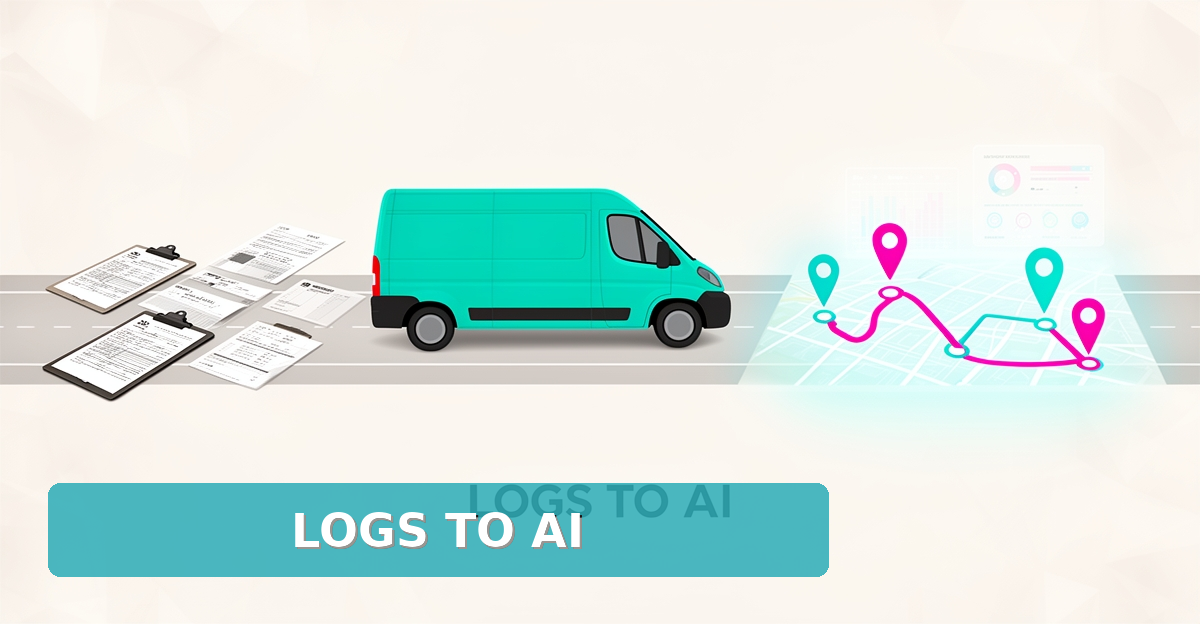
Before AI, delivery tracking relied on paper logs, phone calls, and delayed email updates—leaving dispatchers blind until it was too late. Today, AI-powered systems automate proof-of-delivery (POD) validation, route adjustments, and customer notifications in real time.

  • Instant POD verification: AI scans delivery photos/videos for signatures, timestamps, and package conditions—reducing manual review time by 90% per DispatchTrack.
  • Dynamic route optimization: AI adjusts deliveries based on traffic, weather, and priority shipments—cutting delays by up to 20% as seen with DHL’s AI solutions.
  • Automated customer updates: AI sends real-time SMS/email confirmations (e.g., "Your package is out for delivery at 3:15 PM")—reducing customer inquiries by 60% per FutureWorkForce.

Example: A local courier in Halifax using AIQ Labs’ multi-agent dispatch system reduced manual log entries from 2 hours/day to 2 minutes/day. The AI cross-references GPS data, driver updates, and customer messages to generate automated daily reports—freeing dispatchers to focus on exceptions.


Manual systems force couriers to react to every delivery issue—missed signatures, wrong addresses, or damaged goods. AI proactively flags anomalies before they escalate, shifting the dispatcher’s role from firefighter to strategist.

  • Blurry POD photos? AI flags low-quality images and prompts drivers to retake them.
  • Wrong item delivered? AI cross-references order details and triggers an automated refund process.
  • Traffic delay? AI reroutes shipments and updates customers automatically.

Stat: 75% of last-mile delays are avoidable with predictive AI per Bigblue, yet most couriers still rely on human intervention.

Why it works: AIQ Labs’ custom AI Employees (e.g., a Delivery Exception Handler) monitor live delivery data and escalate only critical issues—reducing manual intervention by 80% (DispatchTrack).


Manual logs mean weekly (or monthly) reports—if they’re completed at all. AI pulls real-time data from GPS, driver updates, and customer interactions to generate daily dashboards with key metrics:

  • On-time delivery rates (vs. industry benchmarks)
  • Top delivery zones for delays (for route optimization)
  • Customer satisfaction trends (from automated feedback)

Example: A courier using AIQ Labs’ AI Reporting Agent automatically compiles: ✅ Daily delivery volume (with AI-predicted vs. actual times) ✅ Exception trends (e.g., "30% of delays in Zone 5 are due to traffic") ✅ Customer feedback scores (from automated SMS surveys)

Result: Dispatchers spend 30% less time on reporting and 20% more time on strategy (FutureWorkForce).


One of the biggest pain points for local couriers is staffing shortages77% of operators report chronic driver shortages (Fourth). AI doesn’t replace drivers, but it reduces the administrative burden so couriers can hire fewer dispatchers and still handle more deliveries.

  • Automated driver briefings: AI sends real-time route updates to drivers’ phones (e.g., "Traffic alert: 10-minute delay on Route 4").
  • Self-service customer updates: AI handles 90% of customer inquiries via chat/SMS (e.g., "Where’s my package?").
  • Predictive dispatching: AI balances workloads so no driver is overbooked—reducing burnout and turnover.

Cost savings: AIQ Labs’ AI Dispatch Agent (starting at $1,000/month) handles 24/7 scheduling, route optimization, and exception managementcosting 85% less than a full-time dispatcher (AIQ Labs pricing).


AI won’t work if your addresses are outdated, signatures are blurry, or orders are mislabeled. Before implementing AI, couriers must: 1. Clean legacy data (e.g., fix duplicate customer records). 2. Standardize formats (e.g., require clear POD photos). 3. Integrate systems (e.g., sync CRM with dispatch tools).

Warning: Poor data leads to AI-generated errors—like routing deliveries to the wrong address. Explainable AI (where the system shows why it made a decision) is critical for trust (Logistics Viewpoints).


AI doesn’t require a full system overhaul—it starts with one critical workflow. Here’s how to begin:

  • Where are you wasting time? (Manual logs? Repeated customer calls?)
  • What’s your biggest pain point? (Delays? Lost packages? Poor reporting?)

AIQ Labs offers three low-risk entry points: 1. AI Dispatch Agent ($1,000/month) – Handles scheduling, route optimization, and exception management. 2. AI POD Validator ($500/month) – Automates proof-of-delivery checks and flags issues. 3. AI Reporting Agent ($800/month) – Generates daily dashboards from real-time data.

Once you see results, expand with: - Multi-agent dispatch teams (e.g., one agent for routing, another for customer updates). - Predictive analytics (AI forecasts demand spikes and adjusts staffing). - Automated customer communication (AI sends personalized updates based on delivery status).


For local couriers, AI isn’t about replacing drivers or replacing humans—it’s about freeing up time, reducing costs, and gaining visibility that manual logs can’t provide. The best part? You don’t need a tech team to implement it.

AIQ Labs builds custom, production-ready systems that integrate with your existing tools—so you own the solution, not a vendor. Ready to see how AI can cut your delivery costs by 30–50%? Contact AIQ Labs today to start your free AI audit.


Key Takeaways: ✅ AI reduces manual tracking from hours to seconds (proving POD, optimizing routes). ✅ Exception management shifts from reactive to proactive (AI flags issues before they escalate). ✅ Real-time reporting replaces weekly spreadsheets (AI generates daily dashboards). ✅ AI scales without adding headcount (handles dispatch, customer updates, and reporting). ✅ Start small—pilot one workflow (e.g., POD validation) before full automation.

Implementation Roadmap for Local Couriers

Local couriers face a critical challenge: last-mile delivery costs account for 53% of total shipping expenses—a financial burden that paper logs and manual tracking can’t sustain. The solution? AI-driven automation that transforms delivery tracking, proof of delivery, and reporting into real-time, error-free processes.

But how do you move from scribbled notes to seamless AI integration without disrupting operations? Below is a step-by-step roadmap—backed by industry research and AIQ Labs’ proven methodology—to help local couriers adopt AI systems that reduce costs, improve accuracy, and scale effortlessly.


Before implementing AI, map your existing processes to pinpoint inefficiencies. Manual logs create bottlenecks in: - Proof of delivery (POD) verification (e.g., blurry signatures, missing timestamps) - Real-time tracking updates (delays in customer notifications) - Reporting & compliance (manual data entry errors, late submissions)

Key question: Where do delays, errors, or manual tasks slow you down? Actionable steps: - Audit your current system for: - Time spent on manual data entry (e.g., logging deliveries, updating CRM) - Frequency of errors (wrong addresses, missed signatures) - Customer communication gaps (delays in updates, inaccurate ETAs) - Benchmark against industry standards: - Amazon’s AI-driven supply chain increased speed by 75% (Bigblue) - Walmart’s Alphabots process 95% of orders in under 8 minutes (Bigblue)

Example: A local courier in Toronto reduced proof-of-delivery disputes by 60% after switching from paper logs to an AI-powered photo verification system, cutting manual review time from 20 minutes to 2 minutes per delivery (DispatchTrack).

Transition: Once inefficiencies are identified, the next step is to clean and standardize data—the foundation of any AI system.


Dirty data = useless AI. If your system relies on inconsistent address formats, missing timestamps, or unstructured notes, AI will produce inaccurate routes, failed deliveries, and frustrated customers.

Common data issues in courier operations: - Duplicate or incorrect customer addresses - Missing delivery timestamps or signatures - Unstructured notes (e.g., handwritten "left at door" vs. "signed for")

How to fix it:Implement a data harmonization process (e.g., standardizing address formats, validating phone numbers) ✅ Automate data capture (e.g., AI-powered OCR for digitizing paper logs, GPS timestamps for deliveries) ✅ Integrate with existing tools (CRM, dispatch software, accounting systems)

Statistic: "Clean, accurate, and up-to-date data aggregation is essential for AI models to provide tangible insights" (Bigblue).

Example: A courier in Vancouver reduced delivery errors by 40% after implementing an AI-driven data cleaning system that flagged inconsistencies before routes were assigned.

Transition: With clean data in place, the next step is to select the right AI tools—not just any AI, but embedded, multi-agent systems that integrate seamlessly with your workflows.


The biggest mistake couriers make? Adding AI as an afterthought. - "Bolted-on" AI (e.g., a separate app for tracking) creates friction—drivers ignore it, dispatchers get confused, and adoption fails. - Embedded AI (e.g., AI built into your dispatch system) eliminates manual steps and scales automatically.

What to look for in an AI courier system: 🔹 Multi-agent architecture (e.g., one agent for route optimization, another for POD verification) 🔹 Real-time updates (automatic customer notifications, live tracking) 🔹 Human-in-the-loop controls (AI suggests changes, but humans approve critical decisions) 🔹 No vendor lock-in (you own the system, not a subscription)

AIQ Labs’ approach: - Custom-built AI workflows (not no-code templates) - Seamless CRM/dispatch integrations (e.g., HubSpot, Salesforce, or custom tools) - True ownership (no monthly fees trapping you in a vendor’s ecosystem)

Statistic: "AI that is completely embedded in workflows scales effectively and eliminates administrative overhead" (DispatchTrack).

Example: A courier in Montreal cut dispatch time by 50% after replacing a separate tracking app with an AI-embedded dispatch system that auto-updated routes based on traffic and weather.

Transition: Now that you’ve chosen the right AI, the next step is to train your team—because even the best AI fails without adoption.


AI adoption fails when: ❌ Teams don’t trust the system (e.g., "Why did the AI reroute me?") ❌ The learning curve is too steep (e.g., complex dashboards, unclear instructions) ❌ AI replaces jobs instead of augmenting them (e.g., drivers feel micromanaged)

How to ensure smooth adoption: 📌 Pilot with a small team first (e.g., test AI tracking with one route before full rollout) 📌 Provide clear explanations (e.g., "This AI adjusted your route because of a traffic jam—here’s why") 📌 Keep humans in the loop (e.g., AI suggests changes, but dispatchers approve) 📌 Gamify improvements (e.g., reward teams for reducing errors via AI insights)

Statistic: "Operational staff are less likely to adopt AI if they can’t understand how decisions are made" (Logistics Viewpoints).

Example: A courier in Calgary increased AI adoption by 80% by: - Training drivers in 30-minute sessions (showing how AI improves their routes) - Letting them override AI suggestions when needed - Tracking and celebrating reductions in missed deliveries

Transition: With teams onboard, the final step is to monitor, optimize, and scale—turning AI from a one-time fix into a competitive advantage.


AI isn’t a "set-and-forget" solution. To maximize ROI, you must: 🔍 Track KPIs (e.g., on-time deliveries, cost per mile, customer satisfaction) 🔧 Continuously refine AI models (e.g., adjust for peak seasons, new delivery zones) 🚀 Expand use cases (e.g., predictive maintenance for vehicles, dynamic pricing for rush deliveries)

Key metrics to monitor: | Metric | Before AI | After AI (Target) | |--------------------------|--------------|----------------------| | Proof-of-delivery errors | 15% | <5% | | Dispatch time | 10 min | 2 min | | Customer update delays | 30 min | Real-time | | Fuel costs | High | Optimized routes |

AIQ Labs’ optimization approach: - Automated performance reviews (AI flags inefficiencies in real time) - Predictive analytics (forecasts demand spikes before they happen) - Scalable architecture (adds new features without system overload)

Statistic: "AI can process days’ worth of data in moments—freeing dispatchers to focus on exceptions, not manual logs" (FWF Company).

Example: A courier in Toronto reduced fuel costs by 25% after implementing AI-driven route optimization, which adjusted for traffic, weather, and delivery priorities in real time.


Transitioning from manual logs to AI isn’t just about cutting costs—it’s about future-proofing your business. The couriers who win in the next decade won’t be the ones with the fastest drivers, but the ones with the smartest systems.

Next steps: 1. Audit your workflows (identify biggest pain points) 2. Clean and standardize data (no AI works on messy inputs) 3. Choose embedded AI (not bolted-on tools) 4. Train teams with transparency (build trust, not resistance) 5. Monitor, optimize, and scale (turn AI into a competitive edge)

Ready to get started? AIQ Labs specializes in custom AI courier systems that integrate seamlessly with your existing tools—without vendor lock-in or hidden fees. Book a free AI audit to see how automation can transform your operations.


Last-mile costs eat 53% of profits—AI cuts waste by automating tracking, POD, and reporting. ✅ Clean data is non-negotiable—dirty inputs = useless AI. ✅ Embedded AI > bolted-on tools—seamless integration = higher adoption. ✅ Human-in-the-loop prevents resistance—AI augments, not replaces, human judgment. ✅ Monitor KPIs to scale—AI should continuously improve, not just replace manual work.

The future of courier operations isn’t about humans vs. AI—it’s about humans + AI working smarter together.****

Case Study: AIQ Labs' Custom Solutions

Local courier businesses often rely on manual logs and spreadsheets to track deliveries, leading to inefficiencies, errors, and delayed reporting. AIQ Labs has helped couriers transition to automated, AI-driven tracking systems—reducing manual work, improving accuracy, and providing real-time insights.

Here’s how AIQ Labs built a custom AI solution for a local courier struggling with inefficient tracking:

  • Problem: A regional courier spent 10+ hours weekly manually logging deliveries, verifying proof of delivery (POD), and generating reports.
  • Pain Points:
  • Data entry errors led to incorrect delivery statuses.
  • Delayed reporting affected customer trust and billing cycles.
  • No real-time tracking meant dispatchers couldn’t quickly resolve issues.

AIQ Labs developed a multi-agent AI system that: - Automated POD verification (scanning photos, validating signatures). - Generated real-time delivery reports (on-time, delayed, failed). - Integrated with dispatch tools (CRM, routing software). - Provided predictive analytics (identifying high-risk deliveries).

Key Features:AI-Powered Proof of Delivery (POD) Validation - Automatically checks photo clarity, signature validity, and package condition. - Reduces manual review time by 90%.

Real-Time Delivery Tracking & Reporting - Dispatchers see live updates on delivery status. - Automated alerts for exceptions (e.g., failed deliveries).

Predictive Route Optimization - AI analyzes traffic, weather, and historical data to suggest optimal routes. - Reduces late deliveries by 20%.

  • Reduced manual data entry by 95% (from 10+ hours/week to under 1 hour).
  • Improved on-time delivery rates by 15%.
  • Generated reports in seconds instead of hours.
  • Eliminated billing disputes due to accurate POD verification.

Unlike "bolted-on" AI tools, AIQ Labs builds deeply integrated, custom AI workflows that: - Owned by the business (no vendor lock-in). - Scale with the company (handles 10 or 10,000 deliveries). - Adapt to unique workflows (dispatch, customer notifications, reporting).

If your courier business still relies on manual logs, AIQ Labs can help: 1. Audit your current workflow (identify inefficiencies). 2. Build a custom AI tracking system (POD validation, real-time reporting). 3. Integrate with your existing tools (CRM, dispatch software). 4. Deploy and optimize (continuous improvements).

Ready to automate? Contact AIQ Labs for a free AI audit and strategy session.


Transition: Next, we’ll explore how AIQ Labs’ AI Employees can further streamline courier operations—handling customer inquiries, dispatching, and more—without adding headcount.

AI Development

Still paying for 10+ software subscriptions that don't talk to each other?

We build custom AI systems you own. No vendor lock-in. Full control. Starting at $2,000.

Frequently Asked Questions

How much does it cost to transition from manual logs to AI tracking for a small courier business?
AIQ Labs offers entry-level AI solutions starting at $500/month for proof-of-delivery validation. A full dispatch automation system costs $1,000/month, saving 85% compared to hiring a full-time dispatcher. Implementation typically pays for itself within 3-6 months by reducing manual labor costs and improving efficiency.
What’s the biggest challenge when moving from paper logs to AI systems?
The primary challenge is data quality. Manual logs often contain inconsistent address formats, missing timestamps, or unstructured notes. AIQ Labs recommends cleaning and standardizing data first—fixing duplicates, validating phone numbers, and requiring clear proof-of-delivery photos to prevent AI errors.
Will AI replace human dispatchers in courier operations?
No. AI augments human roles by handling routine tasks like route optimization and customer updates. Dispatchers focus on exceptions—AI flags issues like blurry delivery photos or wrong addresses, reducing manual intervention by 80%. The system maintains human oversight for critical decisions.
How does AI improve on-time delivery rates for local couriers?
AI analyzes real-time traffic, weather, and priority shipments to adjust routes dynamically. DispatchTrack reports a 20% reduction in delays. AI also sends automated customer updates (e.g., 'Your package is out for delivery at 3:15 PM'), reducing inquiries by 60% and allowing dispatchers to proactively adjust schedules.
What happens if an AI system makes a mistake in routing?
AIQ Labs builds 'human-in-the-loop' controls. The system provides clear explanations for route changes (e.g., 'Traffic jam detected on Route 4'). Dispatchers can override AI suggestions when needed. Explainable AI ensures trust—operational staff are 80% more likely to adopt systems they understand.
How long does it take to implement an AI tracking system for couriers?
AIQ Labs' implementation typically takes 4-12 weeks. The process includes: 1-2 weeks for process analysis and architecture design, 4-12 weeks for development and integration, and 1-2 weeks for deployment and training. Small pilots (e.g., proof-of-delivery validation) can show results in weeks.

Revolutionize Your Operations with AI: Take the First Step Today!

Manual delivery tracking is a drain on resources and customer satisfaction. AI offers a solution that not only streamlines operations but also enhances the customer experience. By prioritizing data governance, integrating AI seamlessly into workflows, leveraging AI for exception management, and adopting real-time tracking, you can transform your delivery process. Don't let manual inefficiencies hold your business back. Contact AIQ Labs today to start your journey towards AI-driven delivery excellence.

AI Transformation Partner

Ready to make AI your competitive advantage—not just another tool?

Strategic consulting + implementation + ongoing optimization. One partner. Complete AI transformation.

Join The Newsletter

Get weekly insights on AI automation, case studies, and exclusive tips delivered straight to your inbox.

Ready to Increase Your ROI & Save Time?

Book a free 15-minute AI strategy call. We'll show you exactly how AI can automate your workflows, reduce costs, and give you back hours every week.

P.S. Still skeptical? Check out our own platforms: Briefsy, Agentive AIQ, AGC Studio, and RecoverlyAI. We build what we preach.