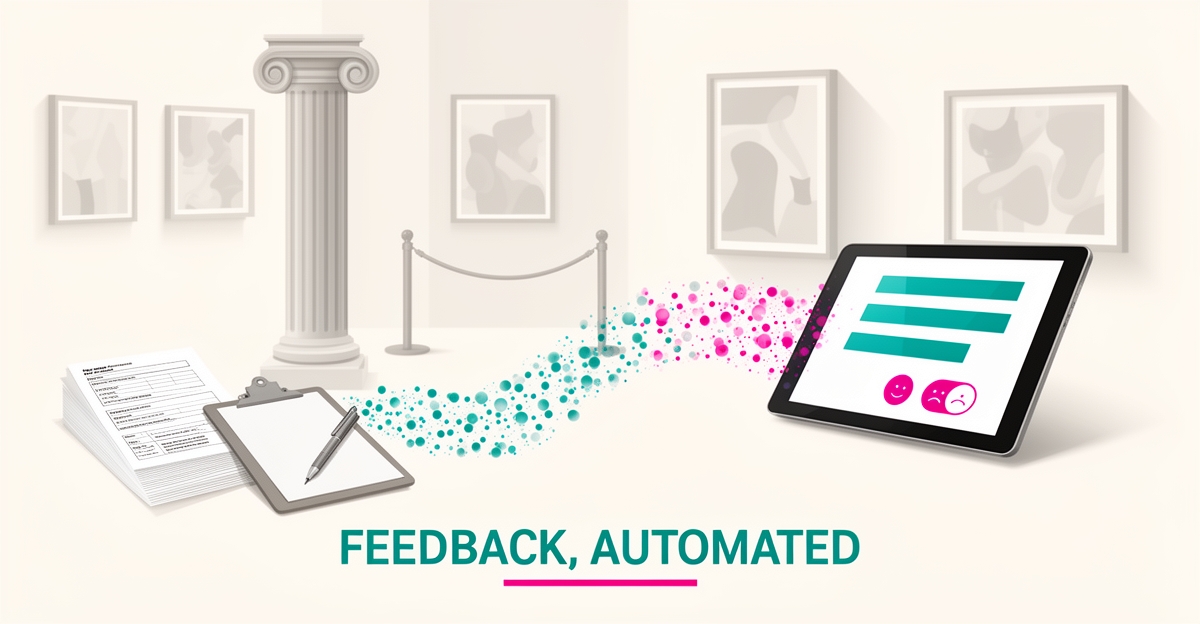
From Manual Logs to AI: How Museums Can Automate Visitor Feedback Collection
Key Facts
- Museums typically collect feedback from post-visit surveys, online reviews, social media, email, kiosks, and staff notes
- AI feedback analysis can process large volumes of comments quickly, grouping them into actionable themes like exhibitions, staff, pricing, cleanliness, and accessibility
- AI-powered tools can analyze both structured feedback (surveys, ratings) and unstructured feedback (reviews, social media, emails, staff notes)
- Common hidden themes in visitor feedback include queues, pricing, cleanliness, accessibility, staff interactions, wayfinding, and exhibit availability
- AIQ Labs builds custom AI systems that gather, analyze, and act on visitor feedback without requiring additional staff or IT infrastructure
- AI feedback analysis enables museums to implement service recovery before issues escalate into negative reviews, improving satisfaction and encouraging repeat visits
Hire a team member that works 24/7 — for less than a part-time wage.
AI receptionists, SDRs, dispatchers and 99+ roles. Trained on your business, fully managed.
Not sure where to start? Ask our AI planner
The Feedback Overload Problem in Modern Museums
Museums today gather visitor feedback from an increasingly diverse array of sources, creating a rich but fragmented dataset that traditional manual methods struggle to process effectively. Insights typically arrive through multiple channels including online reviews, social media comments and messages, email enquiries and complaints, kiosk or QR-code responses on site, and staff notes from frontline conversations. This fragmentation leads to delayed insights and missed opportunities for experience improvement, as teams often rely on spreadsheets, manual tagging, and ad hoc reading of comments, which makes visitor feedback analysis slow, inconsistent, and difficult to scale as visitor numbers grow.
AI-powered feedback analysis transforms this challenge by automatically categorizing visitor comments into themes and analyzing sentiment at scale. AI can process large volumes of comments quickly, grouping them into actionable themes such as exhibitions, staff helpfulness, pricing, cleanliness, and accessibility. This near-real-time insight allows museums to identify recurring problems like confusing wayfinding, long queues, or accessibility barriers, while also highlighting positive aspects worth expanding. Without such automation, teams risk reacting only to the loudest complaints rather than addressing systemic issues that affect overall visitor satisfaction.
- Post-visit surveys for structured ratings and direct questions
- Review platforms for public opinion and scalable museum review analysis
- CRM comments to connect feedback with membership, ticketing, and repeat visits
- Social media to spot emerging sentiment, shareable moments, and unmet expectations
- Guest services logs to capture complaints, accessibility issues, and operational friction in real time
By combining these key touchpoints, museums build a reliable multichannel feedback dataset that improves data integration and enables more accurate theme detection. This approach helps teams compare what visitors say privately, publicly, and during the visit itself, leading to stronger sentiment analysis and clearer priorities for exhibitions, staffing, signage, and service recovery. AIQ Labs supports this transition by building custom AI systems that gather, analyze, and act on visitor feedback without requiring additional staff or IT infrastructure, turning fragmented inputs into a unified stream of actionable insight. For institutions that want a managed approach, AI Employees can handle routine follow-ups and triage while your team focuses on the visitor experience.
How AI Transforms Feedback into Real-Time Operational Intelligence
AI transforms visitor feedback from scattered comments into near-real-time operational intelligence, enabling museums to act before frustrations escalate. By automatically categorizing large volumes of comments into themes like exhibitions, queues, staff, pricing, and accessibility, AI systems reveal patterns that manual review would miss entirely. This instant categorization allows teams to shift from reactive firefighting to proactive service recovery.
Sentiment analysis adds emotional context, distinguishing praise for knowledgeable staff from frustration over unclear wayfinding or long café queues. When combined with frequency and impact scoring, museums can prioritize issues that truly affect visitor flow or satisfaction—such as repeated accessibility barriers—over isolated complaints about minor inconveniences. This structured approach turns raw feedback into a ranked action list where high-negativity, high-frequency themes trigger immediate attention.
- Exhibitions and gallery layout feedback
- Queues at entry, cafés, or cloakrooms
- Staff helpfulness and service quality
- Pricing and value for money
- Accessibility for diverse visitor needs
With AI handling the heavy lifting of theme detection and sentiment scoring, museum staff can focus on implementing improvements rather than sifting through spreadsheets. AIQ Labs supports this shift by building custom feedback systems that integrate directly with existing ticketing and CRM tools, ensuring insights flow seamlessly into operational workflows without adding complexity. The result is a faster feedback loop where service adjustments happen in days, not weeks—keeping visitor experiences consistently positive and encouraging repeat visits.
Implementing AI Feedback Systems: A Practical Roadmap for Museums
Moving from paper logs to real-time insight requires a structured rollout that respects museum workflows and visitor privacy.
Start by mapping where feedback already lives. Museums typically collect feedback from post-visit surveys, online reviews, social media comments, email enquiries, kiosk or QR-code responses, and staff notes from frontline conversations. Combining these channels creates a comprehensive dataset that manual spreadsheets cannot scale.
Clean, tag, and standardize before any model touches the data. Remove duplicates, standardize terminology for exhibitions and facilities, anonymize personal data, and prepare text for AI processing. This step reduces noise and ensures consistent theme detection across structured surveys and unstructured reviews.
Define thematic categories that map to operations. AI scans free-text feedback and groups similar phrases into clear museum feedback themes such as exhibitions, queues, staff helpfulness, pricing, cleanliness, and accessibility. Setting these categories up front aligns reporting with decisions about staffing, signage, and service recovery.
Deploy AI analysis tools for sentiment and prioritization. Visitor feedback analysis includes both structured feedback and unstructured feedback from online reviews, social media, emails, and staff notes. The system classifies comments as positive, negative, or mixed and scores themes by frequency, sentiment, and operational impact.
Create operational dashboards for different audiences. Executive summaries show trends over time, while live dashboards flag emerging issues like wayfinding confusion or café queues for same-day action. Real-time visibility replaces the delays of paper forms that sit for days or weeks before review.
Establish human-in-the-loop validation. Staff regularly review AI-generated themes to ensure labels reflect real visitor issues and to catch nuance, sarcasm, and sensitive complaints about safety or accessibility. Human oversight keeps the system trustworthy and compliant.
Track outcomes and protect privacy. Monitor whether changes improve satisfaction, assign ownership to each prioritized issue, and confirm data is collected with informed consent and processed in compliance with regulations.
A practical roadmap typically includes:
- Multi-channel data source selection and integration
- Data cleaning, standardization, and anonymization
- Thematic category setup and reporting workflows
- AI deployment with human-in-the-loop validation
- Dashboard creation and outcome tracking
Museums can implement this shift without adding headcount or IT overhead. AIQ Labs builds custom AI systems that gather, analyze, and act on visitor feedback without requiring additional staff or IT infrastructure—whether as a single Workflow Build targeting your costliest feedback process or a full AI Operating System that connects feedback, ticketing, and operations in one layer. With AI feedback analysis able to process thousands of comments quickly, institutions move from reactive logging to proactive experience improvement.
Still paying for 10+ subscriptions that don’t talk to each other?
We build custom AI systems you own outright. No vendor lock-in. Full control.
Not sure where to start? Ask our AI planner
Frequently Asked Questions
How does AI help museums analyze visitor feedback from different sources like social media and surveys?
Can AI-powered feedback systems work with the feedback channels museums already use, such as kiosks and email?
Will implementing AI feedback analysis require hiring more staff or investing in complex IT infrastructure?
How do museums ensure AI-generated feedback insights are accurate and trustworthy?
What kinds of operational issues can AI feedback analysis help museums prioritize and act on quickly?
Is visitor data protected when using AI feedback systems in museums?
Turning Feedback into Forward Motion: A Smarter Path for Museums
Museums today collect rich visitor insights across surveys, reviews, social media, and frontline interactions—but without AI, this data remains fragmented and slow to act on. As explored, AI-powered feedback analysis transforms scattered comments into near-real-time intelligence by automatically categorizing themes like exhibitions, queues, staff helpfulness, pricing, and accessibility, while scoring sentiment and frequency to prioritize what truly impacts visitor experience. This shift enables museums to move from reactive logging to proactive improvements—fixing wayfinding confusion before it frustrates guests, expanding praised exhibitions, and allocating staff where they're needed most. The result isn't just better data—it's happier visitors, stronger repeat visitation, and operational agility without adding headcount. For museums ready to close the feedback loop and turn insight into action, AIQ Labs offers a practical path forward. Start with a 2-minute Fit Check, then book a free 30-minute strategy call to see how custom AI systems can integrate with your existing tools and deliver measurable improvements—no obligation, just clarity on where AI can make the biggest difference.
Make AI your competitive advantage — not just another tool.
Strategy, implementation and ongoing optimization. One partner, end to end.
Not sure where to start? Ask our AI planner