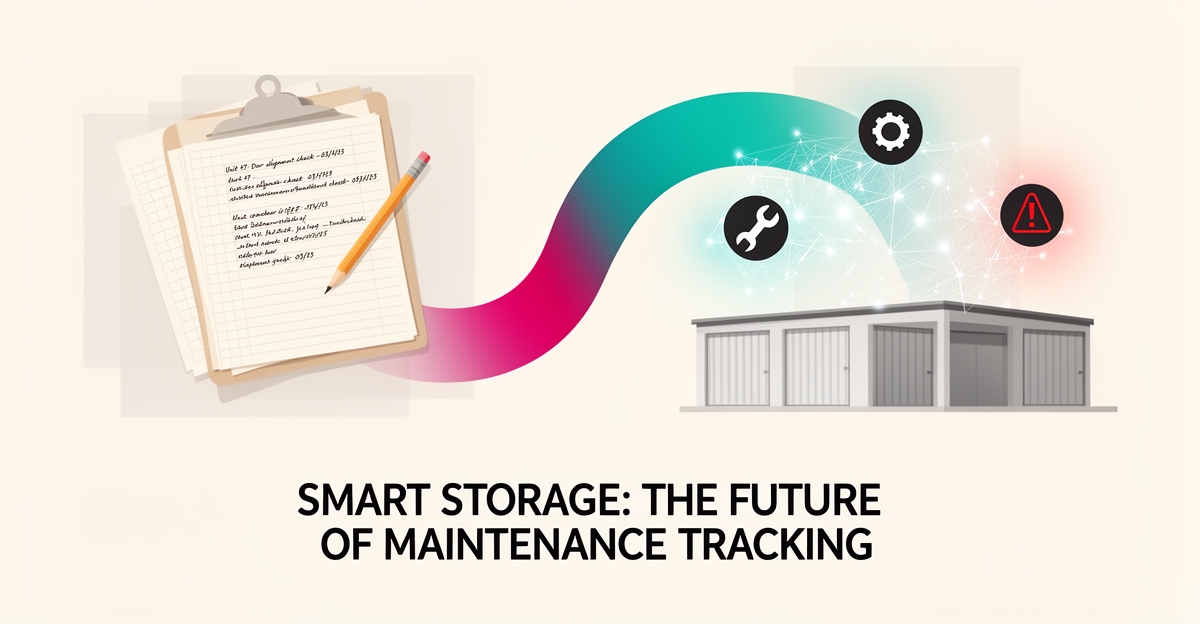
From Manual Logs to AI: How Self-Storage Facilities Can Automate Maintenance Tracking
Key Facts
- Self-storage automation refers to the use of technology to handle routine tasks, streamline workflows, and surface insights without constant manual effort
- AI-enabled tools can recognize patterns in behavior, analyze large amounts of data quickly, generate summaries and insights, suggest next steps, and learn from trends over time
- Traditional automation follows rules set by the operator, whereas AI-enabled automation uses machine learning and data analysis to make decisions
- AI document processing reduces errors and improves response times by converting paper maintenance logs and emails into structured digital records
- Proactive maintenance scheduling replaces firefighting when AI-enabled tools analyze historical data to predict failures and recommend inspection windows
- Staff time spent reconciling logs instead of servicing units is a hidden cost of paper-based maintenance logs that AI automation eliminates
Hire a team member that works 24/7 — for less than a part-time wage.
AI receptionists, SDRs, dispatchers and 99+ roles. Trained on your business, fully managed.
Not sure where to start? Ask our AI planner
The Hidden Cost of Paper-Based Maintenance Logs in Self-Storage
Paper logs and clipboard rounds create a maintenance backlog that tenants feel first. When repair requests live on sheets, emails, and memory, facilities lose visibility into what is broken, what is waiting, and what was missed.
Manual tracking forces staff to handle routine tasks with constant manual effort. Self-storage automation is the use of technology to handle routine tasks, streamline workflows, and surface insights without that constant manual effort. Without it, teams spend shifts chasing updates instead of completing repairs.
The friction shows up as delayed response and lost work. Paper-based systems follow rules set by the operator and offer limited data analysis. Traditional automation follows rules set by the operator, whereas AI-enabled automation uses machine learning and data analysis to make decisions. That gap means missed entries and slow triage.
Tenant dissatisfaction grows when small issues escalate. Operators lose trust because status is unclear and follow-up is inconsistent. The industry has been steadily moving away from that model, with automation technology now supporting tens of thousands of self-storage facilities. Scale adoption signals where performance pressure is highest.
Hidden costs of paper-based maintenance logs include:
- Lost work orders that never reach the service team
- Duplicate reports from tenants calling back for status
- Delayed repairs that increase liability and turnover
- Staff time spent reconciling logs instead of servicing units
These inefficiencies erode the tenant experience that operators aim to protect. The point of automation is not just saving time; it's about creating a better experience for tenants and operators alike.
AI changes the decision layer. AI-enabled tools can recognize patterns in behavior, analyze large amounts of data quickly, generate summaries and insights, suggest next steps or improvements, and learn from trends over time. That capability turns fragmented notes into real-time digital records.
For self-storage operations, digitizing maintenance logs, repair requests, and service schedules means requests scanned from paper forms or emails become actionable records instantly. AIQ Labs builds this type of AI document processing into production-ready systems for SMBs, reducing errors and improving response times. If maintenance tracking is the workflow costing you the most, an AI Workflow Build rebuilds it end to end at a fixed price.
The result is faster triage, auditable history, and a clearer picture of facility health. Operators make data-driven decisions, reduce guesswork, and act faster with confidence.
How AI-Enabled Tools Transform Maintenance Tracking from Reactive to Predictive
Paper logs, scattered emails and phone requests still slow down maintenance teams across self-storage. Facilities that move from manual tracking to intelligent automation cut response delays and free staff for higher-value work.
AI-enabled tools digitize paper forms, emails and service requests into real-time digital records. Self-storage automation is the use of technology to handle routine tasks, streamline workflows, and surface insights without constant manual effort. That shift replaces clipboard rounds with searchable, timestamped data that updates as soon as a request is made.
Pattern recognition turns raw logs into proactive scheduling. AI-enabled tools can recognize patterns in behavior, analyze large amounts of data quickly, generate summaries and insights, suggest next steps or improvements, and learn from trends over time. A facility can see which units, doors or HVAC systems fail repeatedly, when issues spike seasonally, and which vendors resolve tickets fastest.
The difference from traditional automation is decision-making. Traditional automation follows rules set by the operator, whereas AI-enabled automation uses machine learning and data analysis to make decisions. Rules trigger a work order when a form is filed. AI evaluates history, urgency, tenant impact and crew availability to prioritize and predict.
In practice this means maintenance moves from reactive to predictive. Instead of waiting for a tenant call, the system flags likely failures and recommends inspection windows. Response times compress because requests are captured once and routed automatically, and errors drop as manual transcription disappears.
Adoption is already at scale. Automation technology now supports tens of thousands of self-storage facilities, showing how widespread this shift has become as operators seek efficiency and better tenant experience.
How AI-enabled document processing changes daily operations:
- Scans paper maintenance logs and emails and converts them into structured digital records
- Extracts key fields like unit number, issue type and request date with minimal manual entry
- Links new requests to historical tickets to surface repeat problems and failure patterns
- Suggests next steps and optimal scheduling based on learned trends
This approach aligns with how AIQ Labs builds AI workflow automation for SMBs, where document processing digitizes and automates maintenance logs, repair requests and service schedules into real-time records. Data quality remains critical, because AI is only as good as the inputs provided, and operators must ensure data is accurate, consistent and up-to-date.
When logs become live data, managers gain confidence to act faster. Proactive maintenance scheduling replaces firefighting, and teams focus on work that matters rather than chasing paperwork.
Implementing AI Maintenance Automation: A Step-by-Step Guide for SMB Self-Storage Operators
Self-storage facilities often struggle with maintenance tracking due to paper logs and manual repair requests, leading to delays and tenant dissatisfaction. Transitioning to AI-driven automation can transform these processes into real-time digital workflows that reduce errors and improve response times. Self-storage automation refers to the use of technology to handle routine tasks, streamline workflows, and surface insights without constant manual effort, which is essential for operational efficiency. AI-enabled tools go further by recognizing patterns in behavior, analyzing large amounts of data quickly, generating summaries and insights, suggesting next steps, and learning from trends over time—capabilities that support smarter decision-making in maintenance management.
Implementation follows a practical, phased approach. First, facilities must prepare their data by digitizing existing paper logs, emails, and service records into a structured format that AI systems can process. This involves scanning documents or extracting information from digital communications to create a clean, consistent dataset—critical because AI is only as good as the inputs provided. Next, operators should select AI-enabled tools that match their specific needs, such as systems capable of interpreting maintenance requests, prioritizing repairs based on urgency, and scheduling preventive service. These tools should integrate with existing property management software to avoid data silos and ensure real-time updates across platforms.
Staff training is essential for successful adoption, as employees need to understand how to interact with the new system, submit requests through digital channels, and interpret AI-generated insights. Facilities should establish clear protocols for handling exceptions and escalating issues when AI confidence is low. Finally, continuous performance monitoring allows operators to evaluate effectiveness, refine workflows, and scale automation across additional workflows. AIQ Labs delivers this kind of work in milestones—you pay for each phase only when it works, and larger operators can eventually move to a fully connected AI Operating System owned outright. By following these steps, self-storage operators can move from manual logs to intelligent maintenance tracking—creating a more responsive, reliable, and tenant-focused operation. To explore how this transformation can work for your facility, take the 2-minute Fit Check and then book a free 30-minute strategy call to identify high-ROI opportunities.
Still paying for 10+ subscriptions that don’t talk to each other?
We build custom AI systems you own outright. No vendor lock-in. Full control.
Not sure where to start? Ask our AI planner
Frequently Asked Questions
What is the main difference between traditional automation and AI-enabled tools for maintenance tracking in self-storage?
How widely is automation technology adopted in the self-storage industry?
What are the hidden costs of relying on paper-based maintenance logs in self-storage facilities?
How does AI-enabled document processing improve maintenance tracking in self-storage operations?
Is AI only as good as the data it receives, and what must operators do to ensure effectiveness?
What is the real purpose of self-storage automation beyond saving time?
From Paper Logs to Predictive Maintenance: Your Path Forward
Self-storage operators know the hidden costs of paper-based maintenance logs: lost work orders, delayed repairs, and frustrated tenants. By digitizing logs with AI-enabled tools, facilities transform reactive maintenance into predictive insights—recognizing failure patterns, prioritizing repairs, and freeing staff for higher-value work. The shift isn’t just about efficiency; it’s about building tenant trust through faster, more reliable service. With tens of thousands of facilities already using automation technology, the industry is moving toward data-driven operations, and the operators still on paper are absorbing the cost. To see how this applies to your facility, take the 2-minute Fit Check, then book a free 30-minute strategy call to identify where AI can make the biggest impact—no obligation, just clarity.
Make AI your competitive advantage — not just another tool.
Strategy, implementation and ongoing optimization. One partner, end to end.
Not sure where to start? Ask our AI planner