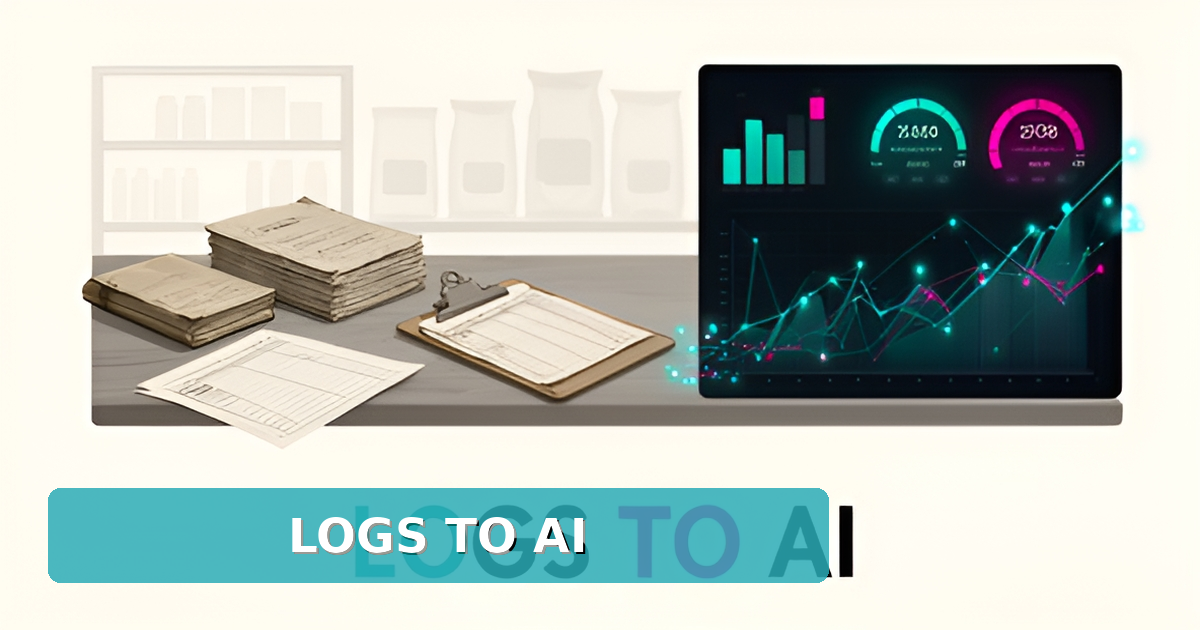
From Manual Logs to AI: How Veterinary Feed Stores Can Optimize Record-Keeping
Key Facts
- Veterinary practices commonly report long documentation sessions after full days of back-to-back appointments according to industry research
- Skilled staff often spend breaks entering data instead of resting per veterinary practice research
- AI inventory forecasting can substantially reduce stockouts and excess inventory for feed stores per AI Business OS analysis
- Stores typically reclaim 15–20 hours weekly from manual entry tasks using AI-powered transformation per AI Business OS analysis
- Reorder accuracy typically improves markedly with AI-driven inventory forecasting per AI Business OS analysis
- Expired inventory can often be cut significantly through AI-powered inventory systems per AI Business OS analysis
- Invoice processing time drops sharply with AI-driven accounts payable automation per AI Business OS analysis
Hire a team member that works 24/7 — for less than a part-time wage.
AI receptionists, SDRs, dispatchers and 99+ roles. Trained on your business, fully managed.
Not sure where to start? Ask our AI planner
The Hidden Cost of Paper-Based Feed Store Operations
Every day, veterinary feed stores across the country lose hours to manual record-keeping that could be automated. While staff scramble with paper logs and disconnected spreadsheets, valuable insights about customer preferences, seasonal trends, and inventory patterns stay buried in filing cabinets.
The administrative burden plaguing veterinary practices mirrors what feed store operators face daily. According to recent industry research, veterinary practices spend hours daily on administrative tasks that could be automated, with staff juggling multiple unconnected systems just to maintain basic operations.
This same fragmentation cripples feed store efficiency. Customer purchase histories live in one notebook, inventory counts in another, and supplier information scattered across multiple spreadsheets. Store managers waste time hunting for data that should be instantly accessible.
The parallels run deeper than simple inconvenience. Industry analysis shows that manual processes offer lower upfront costs but scale poorly as volume grows, leading to staff burnout and missed tasks.
Feed stores face unique record-keeping challenges that compound these issues:
- Seasonal demand fluctuations for different animal feeds
- Complex supplier relationships with varying lead times
- Customer preferences spanning multiple livestock types
- Regulatory compliance tracking for medicated feeds
- Inventory expiration dates and batch tracking
Manual systems simply cannot capture the interconnected nature of feed store operations. When a customer asks about their usual horse feed blend, staff must dig through months of handwritten receipts. When suppliers change formulations, there's no efficient way to identify affected customers.
The cost extends beyond wasted time. Research indicates that talented staff spend their breaks entering data instead of focusing on customer service or business development. This represents a fundamental misallocation of human resources.
Modern AI systems can transform these fragmented logs into searchable, intelligent databases. AIQ Labs converts paper-based records into dynamic data systems that reveal patterns invisible in manual logs — tracking product usage trends, predicting seasonal demands, and identifying customer preferences automatically. If the biggest drain is a single broken workflow, AI Workflow Builds rebuild just that one process at a fixed price; if the whole operation needs connecting, an AI Operating System unifies everything in phases.
The shift from reactive record-keeping to predictive intelligence allows feed store owners to anticipate customer needs, optimize inventory levels, and build stronger supplier relationships based on data rather than guesswork.
Why Traditional Tools Fail Feed Store Intelligence Needs
Manual logs and generic spreadsheets feel safe until volume hits. Then the cracks show in lost sales, missed reorder points, and compliance gaps that cost more than the software ever saved.
Excel and basic POS tools were built for transactions, not intelligence. They record what sold, but they do not connect product usage patterns to customer preferences or seasonal demand fluctuations. Staff end up copying data between sheets, reconciling mismatched entries, and guessing at restock timing.
Industry research on veterinary operations shows the human cost of that gap. Most veterinary practices spend hours daily on administrative tasks that could be automated, with veterinarians staying late to finish charts. Practices commonly report long documentation sessions after full days of back-to-back appointments, and skilled staff spending lunch breaks entering data instead of taking breaks.
Feed stores face the same pattern with inventory and customer logs. Practice managers juggle multiple software logins just to get a complete picture of daily operations, a friction point that repeats in feed retail when sales, loyalty, and supplier data live in separate places.
Manual processes offer lower upfront costs and direct staff control but scale poorly as volume grows. That scaling problem translates directly to feed stores. As animal counts, SKU variety, and seasonal spikes increase, spreadsheets create bottlenecks rather than visibility.
Traditional tools fail intelligence needs in predictable ways:
- Inconsistent record-keeping creates compliance risks when usage logs, prescriptions, and supplier invoices do not match
- Fragmented data prevents detection of product usage patterns and seasonal demand fluctuations
- Generic POS systems cannot enrich existing data to reveal customer preferences across visits
- Manual entry scales poorly, increasing error rates and staff burnout as volume grows
The result is reactive purchasing, stockouts on high-demand items, and lost repeat business. Manual processes scale poorly as volume increases, leading to staff burnout and missed tasks such as vaccination reminders in clinics and reorder reminders in stores.
Moving from paper-based or Excel-driven records to dynamic, searchable data systems changes the equation. AI can transform fragmented logs into actionable intelligence for better product decisions by enriching existing data and connecting usage, seasonality, and customer history in one view. AIQ Labs builds custom systems that do exactly this for SMBs, turning disconnected records into operational clarity without replacing the tools teams already use.
How AI Transforms Fragmented Logs into Actionable Intelligence
The administrative burden facing veterinary operations isn't just about paperwork — it's about fragmented intelligence trapped across paper logs, spreadsheets, and disconnected POS exports that never speak to each other. Research shows veterinary practices commonly run long documentation sessions after full days of appointments, with practice managers juggling multiple software logins just to get a complete picture of daily operations.
Custom AI systems solve this by ingesting every data format — handwritten delivery logs, inventory spreadsheets, POS transaction exports — and building a unified, searchable data layer that tracks product velocity, customer purchase cycles, and seasonal trends in real time. Unlike generic analytics tools, these systems use multi-agent architectures where specialized agents handle distinct tasks: one extracts and normalizes messy historical data, another identifies purchasing patterns across customer segments, and a third correlates seasonal demand signals with external factors like weather patterns or local agricultural cycles.
- Raw transaction logs transform into predictive inventory forecasts that meaningfully reduce stockouts
- Customer purchase histories enrich into personalized reorder recommendations and targeted promotions
- Seasonal trend analysis enables proactive ordering weeks before demand spikes
- Product velocity tracking identifies slow-moving SKUs for strategic discounting
This isn't theoretical. AIQ Labs has deployed 200+ multi-agent systems and runs four live SaaS products daily using the same engineering approach — multi-agent workflows where reasoning loops validate every prediction before it reaches your ordering decisions. The same rigor applies to your build: the data enrichment pipeline handles your specific feed formulations, regional regulations, and supplier constraints without forcing you into rigid templates.
This approach turns retrospective record-keeping into forward-looking intelligence — the difference between knowing what sold last month and knowing what to order next month.
Implementation Roadmap: From Pilot to Production System
The shift from paper logs to an AI-powered operating system doesn't happen in a single leap — it happens in deliberate phases that each deliver measurable value before the next begins. Veterinary practices already using AI documentation tools report their records become more comprehensive and detailed than manual entry, capturing nuances that get forgotten during back-to-back appointment days, according to industry research on AI vet tools. The same principle applies to feed stores: start with one high-friction workflow, prove the model, then expand.
- Phase 1 — Pilot a single workflow (weeks 1–4): Digitize invoice capture or automate inventory reconciliation. Connect to existing accounting or POS tools via API so data flows without double-entry.
- Phase 2 — Validate and integrate (weeks 5–8): Measure processing time reduction and error rates. Add a second workflow — such as seasonal demand forecasting — that feeds on the clean data from Phase 1.
- Phase 3 — Scale to department automation (months 3–6): Extend the AI layer across purchasing, sales, and compliance reporting. Each new agent inherits the shared data foundation, eliminating the multiple-software-logins problem managers face today.
- Phase 4 — Deploy a complete AI operating system (month 6+): Unify all agents under a custom dashboard with role-based access, audit trails, and predictive analytics for product mix and customer preference trends.
AIQ Labs structures every engagement around milestone-based builds: you approve and pay for each phase as it ships, stop anytime, and own everything built so far — no perpetual subscription fees or vendor lock-in. Systems integrate with the tools you already run — QuickBooks, inventory platforms, supplier portals — using frameworks that handle real-world complexity, not demo data. The result is an AI operating system you own outright that turns fragmented logs into searchable intelligence for better product decisions. See pricing models for how Start Monthly, Build in Milestones, and Own It Outright work.
Measuring ROI: Time Saved, Stockouts Prevented, Margins Improved
For veterinary feed stores still relying on manual logs or spreadsheets, the hidden costs of inefficient record-keeping compound daily. Every hour spent on data entry is an hour not spent advising customers, managing supplier relationships, or optimizing product mix. AI-powered transformation directly addresses these drains by converting fragmented, paper-based systems into unified, intelligent data platforms that drive measurable operational gains.
Feed store operators using AI inventory forecasting typically report fewer stockouts and less excess inventory, directly improving cash flow and shelf availability. These results stem from predictive models that analyze historical sales, seasonality, and local demand patterns to automate reorder points with precision — eliminating guesswork and preventing both lost sales and waste from expired feed. When combined with AI-driven accounts payable automation, which sharply cuts invoice processing time, staff reclaim significant capacity previously lost to manual data entry and payment scheduling.
The cumulative impact translates into concrete KPIs: stores typically reclaim 15–20 hours weekly from manual entry tasks, reduce expired inventory substantially, and improve reorder accuracy markedly. This efficiency enables higher-margin decisions — such as prioritizing fast-turnover, premium feed lines or adjusting seasonal stock based on real-time usage trends — without increasing headcount. By turning record-keeping from a cost center into a strategic asset, AI transformation delivers ROI not just in time saved, but in sustained margin improvement and reduced operational risk. AIQ Labs helps feed stores quantify these gains through tailored ROI modeling that aligns automation with specific pain points and growth goals — starting with a two-minute Fit Check.
Still paying for 10+ subscriptions that don’t talk to each other?
We build custom AI systems you own outright. No vendor lock-in. Full control.
Not sure where to start? Ask our AI planner
Frequently Asked Questions
How much time do veterinary feed stores actually lose to manual record-keeping?
Can AI really handle our specific feed store complexities like medicated feed compliance and batch tracking?
What kind of ROI can we expect from switching to AI-powered inventory forecasting?
Do we have to replace our current POS, accounting, or supplier systems to use AI?
How does the implementation work — is it a long, risky project?
Will our staff actually trust AI recommendations for ordering and customer insights?
From Paper Trails to Predictive Advantage
Manual logs and disconnected spreadsheets keep veterinary feed stores reactive, hiding customer preferences, seasonal demand, and inventory risks in filing cabinets while staff burn hours on data entry. Moving to a unified, searchable data layer changes that equation, turning fragmented delivery logs, POS exports, and supplier records into real-time intelligence for forecasting, reorder accuracy, and compliance tracking. The shift is practical and phased: pilot a single workflow like invoice capture or inventory reconciliation, validate time saved and error reduction, then expand to seasonal forecasting and department-wide automation with a system you own outright. Stores that make the move reclaim capacity for customer service and strategic buying instead of chasing receipts. AIQ Labs builds custom AI systems that enrich existing data and connect usage, seasonality, and customer history without forcing you into rigid templates — whether that's one workflow rebuild or a full AI operating system. If you want to map your biggest bottleneck to a high-ROI automation plan, start the Fit Check at https://aiqlabs.ai/apply for a free 30-minute strategy call with an AI engineer. Research shows veterinary practices spend hours daily on administrative tasks that could be automated, with long documentation sessions after full days of appointments — feed stores face the same drain, and it's solvable.
Make AI your competitive advantage — not just another tool.
Strategy, implementation and ongoing optimization. One partner, end to end.
Not sure where to start? Ask our AI planner