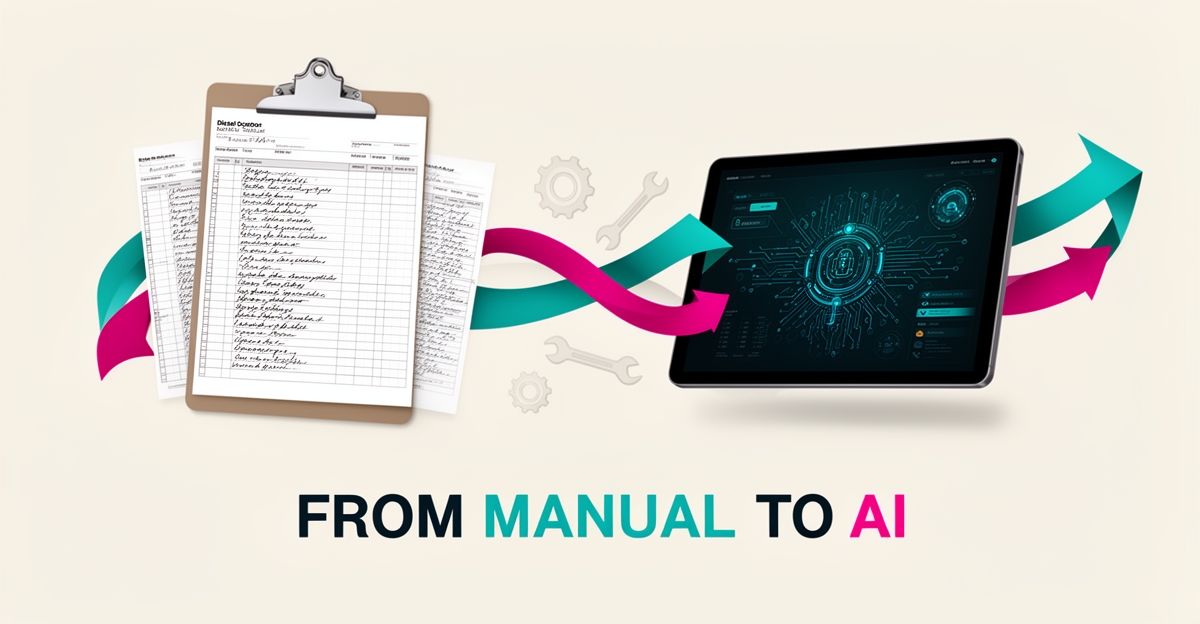
# From Manual Logs to AI: Modernizing Diesel Repair Work Orders and Service Tracking
**Quick Answer:** Struggling with manual work orders? AI-powered systems can dramatically cut admin time and lift technician billability. Reclaim time, reduce errors, and protect revenue—start with a free strategy call.
## Key Facts
- AI adoption in auto and diesel repair is accelerating through 2026, with a growing share of shops using some form of AI technology for scheduling, service writing, and work order management
- Shops using AI work order systems typically report large reductions in manual admin and higher technician billability, driven by automated data capture and service history tracking
- Technician downtime from chasing paperwork creates bottlenecks and slows repairs in manual work order systems
- Error-driven comebacks increase when service notes are lost or incomplete in paper-based systems
- Delayed invoicing and cash flow gaps result from slow administrative close-out in manual work order processes
- Lost repeat business occurs when follow-up alerts and maintenance reminders are forgotten in manual tracking systems
## Table of Contents
- [The Hidden Cost of Manual Work Order Systems in Diesel Repair](#the-hidden-cost-of-manual-work-order-systems-in-diesel-repair)
- [How AI-Powered Work Order Systems Transform Service Tracking](#how-ai-powered-work-order-systems-transform-service-tracking)
- [Implementing AI Work Order Systems: A Step-by-Step Guide for Diesel Shops](#implementing-ai-work-order-systems-a-step-by-step-guide-for-diesel-shops)
## The Hidden Cost of Manual Work Order Systems in Diesel Repair
Paper-based work orders quietly drain diesel shops every day. The hidden cost shows up not on a single invoice, but in lost billable hours, repeated mistakes, and frustrated customers.
Manual logs and spreadsheets force technicians to toggle between wrench work and paperwork. That context switching slows repairs and creates bottlenecks at the service writer desk. Shops that rely on paper also struggle to retrieve service history fast, which delays estimates and erodes trust.
Administrative overhead compounds quickly. Handwritten notes get misread, carbon copies are lost, and spreadsheet formulas break when multiple users edit simultaneously. The result is rework, missed follow-ups, and revenue left on the table.
The industry is shifting. As of late 2026, a growing share of auto and diesel repair shops use some form of AI technology, and adoption is accelerating because the efficiency gains are measurable: faster service writing, fewer data-entry errors, and quicker invoicing.
Shops using modern AI work order systems typically report major reductions in admin burden after adoption. Those improvements come from automated data capture, service history tracking, and follow-up alerts that replace manual entry.
The hidden cost of manual systems shows up in several predictable ways:
- Technician downtime from chasing paperwork and clarifying incomplete work orders
- Error-driven comebacks caused by missed steps or lost service notes
- Delayed invoicing and cash flow gaps from slow administrative close-out
- Lost repeat business when follow-up alerts and maintenance reminders are forgotten
Paper also limits visibility. Managers cannot see real-time labor utilization or parts usage without manual consolidation. That makes staffing decisions reactive instead of data-driven.
**Error rates rise with complexity** in diesel repair, where a single job can involve multiple systems, OEM specs, and compliance documentation. Spreadsheets rarely enforce validation, so incorrect VINs, hours, or part numbers slip through.
Customer experience suffers as well. Without centralized service history, advisors repeat questions and customers wait longer for updates. Manual data entry, paperwork, and inefficient workflows make it harder to deliver the service quality cus
AI Employees
Hire a team member that works 24/7 — for less than a part-time wage.
AI receptionists, SDRs, dispatchers and 99+ roles. Trained on your business, fully managed.
See If You’re a Fit — AI Employees from $700/mo
Not sure where to start? Ask our AI planner
tomers expect.
AIQ Labs works with SMBs to replace these legacy processes with production-ready systems that auto-capture data, track service history, and generate follow-up alerts. The focus is on eliminating human error and improving service consistency while integrating with existing shop tools.
Modernizing work order tracking is less about adopting new software and more about reclaiming technician time and protecting revenue.
## How AI-Powered Work Order Systems Transform Service Tracking
Manual work order systems drain valuable technician time through repetitive data entry and fragmented service tracking. AI-powered work order automation eliminates these inefficiencies by capturing data automatically, intelligently tracking service history, and generating predictive follow-ups—directly addressing the core pain points in diesel repair operations.
This transformation begins with automated data capture that removes the burden of manual logging. Instead of technicians spending hours filling out paper forms or updating spreadsheets, AI systems extract work order details directly from voice notes, digital forms, or integrated diagnostic tools. Service history intelligence then builds a comprehensive vehicle profile by analyzing past repairs, parts usage, and labor patterns across all visits. Predictive follow-ups use this history to automatically schedule maintenance reminders, parts reorders, or customer check-ins based on vehicle usage and service cycles.
The impact extends beyond time savings to measurable operational improvements. With administrative tasks sharply reduced, technicians reclaim billable hours previously lost to paperwork. Integrated service history tracking supports consistent, accurate repairs by providing instant access to a vehicle's complete maintenance story—reducing repeat visits and improving first-time fix rates. Predictive alerts prevent missed follow-ups, increasing customer retention and creating proactive service opportunities that drive revenue.
For diesel repair shops ready to modernize, [AI Workflow Builds](/workflow-builds) from AIQ Labs rebuild the one workflow that costs you the most—fixed price, delivered in phases. These systems auto-capture data from multiple sources, maintain real-time service histories, and trigger intelligent follow-ups—all without requiring technicians to change their workflow. The result is a seamless transition from manual logs to AI-driven service tracking that improves consistency, boosts billability, and positions shops for sustainable growth in an increasingly competitive market.
## Implementing AI Work Order Systems: A Step-by-Step Guide for Diesel Shops
Many diesel repair shops still rely on paper logs or spreadsheets to track work orders, creating bottlenecks and increasing the risk of human error. AI-powered work order systems eliminate these inefficiencies by automatically capturing data, tracking service history, and triggering follow-up alerts—freeing technicians to focus on repairs rather than paperwork.
To implement such a system effectively, start by conducting a thorough needs assessment. Map your current workflow, identify pain points like duplicate data entry or missed service reminders, and define clear goals for automation. This step ensures the solution aligns with your shop's specific operational challenges and avoids investing in unnecessary features.
Integrate the new AI work order system with your existing tools such as accounting software, inventory trackers, or scheduling platforms. AIQ Labs builds deep two-way API integrations that create seamless data flow between systems, reducing manual handoffs and ensuring a single source of truth across departments. This integration capability is critical for maintaining continuity during the transition and preventing data silos.
Train your staff using role-specific sessions that focus on practical, day-to-day use of
AI Development
Still paying for 10+ subscriptions that don’t talk to each other?
We build custom AI systems you own outright. No vendor lock-in. Full control.
See If You’re a Fit — AI Employees from $700/mo
Not sure where to start? Ask our AI planner
the system. Emphasize how the technology reduces repetitive tasks—such as manual data entry—and improves service consistency. AIQ Labs' implementation process includes customized training and documentation delivery to support smooth adoption, with ongoing monitoring to catch and resolve issues early.
Finally, monitor key performance indicators like technician billability and administrative time reduction. Use these insights to refine workflows, optimize system use, and measure ROI over time—turning AI adoption into a sustainable competitive advantage.
**Start the [Fit Check](/apply)** — a two-minute assessment — to identify your shop's highest-impact automation opportunity. Follow it with a **free 30-minute strategy call** at [aiqlabs.ai/book](/book) to map out a phased implementation plan tailored to your diesel repair workflow. No obligation—just clarity on where AI can deliver real, measurable results.
## Frequently Asked Questions
**Will AI work order systems actually save my diesel shop time or just add more tech?**
Shops using AI work order automation typically report significant reductions in manual admin by removing repetitive data entry and paperwork. Automated capture from voice notes and diagnostic tools lets techs stay on repairs instead of toggling between wrench work and logs.
**How soon do I need to modernize before I fall behind competitors?**
AI adoption in auto and diesel repair is accelerating through 2026, driven by measurable gains in efficiency and service consistency. Shops that wait risk competing against rivals with faster estimates and cleaner service records.
**What are the biggest hidden costs of sticking with paper work orders?**
Paper logs create technician downtime from chasing paperwork, error-driven comebacks from lost notes, delayed invoicing, and lost repeat business from missed follow-ups. Manual consolidation also prevents real-time visibility into labor utilization and parts usage.
**Can an AI system integrate with the shop management tools I already use?**
Yes. Modern AI work order systems are built to integrate with existing accounting, inventory and scheduling platforms via two-way APIs for a single source of truth. Integration prevents data silos and maintains continuity during transition.
**Is AI work order software expensive for a small diesel shop?**
Pricing varies by provider. AIQ Labs offers [Start Monthly, Build in Milestones, and Own It Outright](/pricing) payment models, so you can start with one workflow and scale without vendor lock-in—no fake prices, just clear options.
**What's the first step to get started without disrupting my shop?**
Start with a needs assessment to map current workflows and pain points, then integrate and train role-specific staff on the new system. AIQ Labs recommends starting the [Fit Check](/apply) at aiqlabs.ai/apply, followed by a free 30-minute strategy call to map a phased implementation plan.
## Turning Paperwork into Profit: Your Next Move in Diesel Repair
Modernizing diesel repair work orders isn't just about ditching paper—it's about reclaiming technician time, reducing costly errors, and turning service history into a revenue driver. AI-powered systems cut admin time and lift technician billability by automating data capture, tracking repairs intelligently, and triggering proactive follow-ups. These gains directly address the hidden costs of manual logs: downtime, comebacks, delayed invoicing, and lost repeat business. And the shift is already underway across the repair industry in 2026. For diesel shops ready to move beyond spreadsheets, the path forward starts with clarity. Take the two-minute [Fit Check](/apply) to pinpoint your highest-impact automation opportunity, then [book a free 30-minute strategy call](/book) to map a phased implementation that fits your workflow—no obligation, just a clear view of where AI can deliver real, measurable results.
AI Transformation Partner
Make AI your competitive advantage — not just another tool.
Strategy, implementation and ongoing optimization. One partner, end to end.
See If You’re a Fit — AI Employees from $700/mo
Not sure where to start? Ask our AI planner