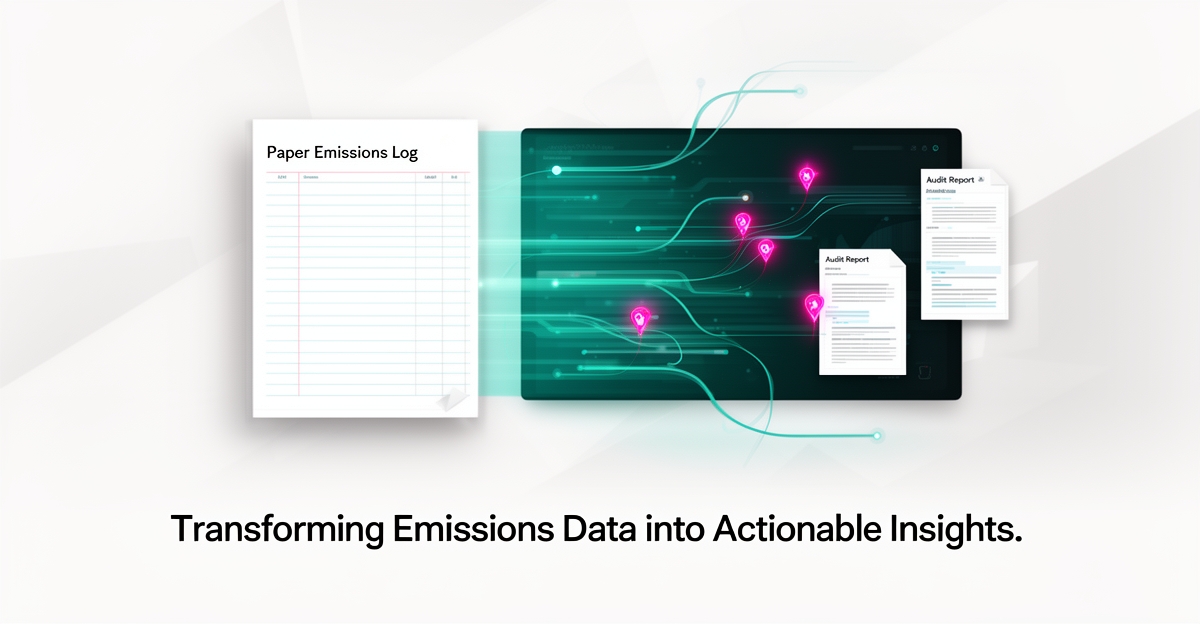
From Manual Logs to AI: Modernizing Emissions Test Data Management
Key Facts
- A majority of enterprise AI projects fail due to inadequate data readiness according to industry research
- 80% of IT leaders report "extreme worry" about shadow AI per Komprise survey data
- AI can automate data entry, flag anomalies, and generate compliance reports for emissions testing per AIQ Labs
- 62% of developers who write tests use AI to assist them per DORA 2025 report
- 59% of respondents report a positive impact of AI on perceived code quality per DORA 2025 report
- AI governance is critical to ensuring accountability, transparency, and fairness per Microsoft guidance
- Shared responsibility model between provider and customer is essential for AI adoption in regulated records per Microsoft’s compliance framework
Hire a team member that works 24/7 — for less than a part-time wage.
AI receptionists, SDRs, dispatchers and 99+ roles. Trained on your business, fully managed.
Not sure where to start? Ask our AI planner
The Hidden Costs of Manual Emissions Data Logging
The burden of manual emissions data logging is becoming unsustainable for testing stations striving to meet evolving regulatory demands. Paper-based or spreadsheet-driven systems require technicians to spend excessive time transcribing test results, diverting focus from core testing activities and creating operational bottlenecks. This inefficiency not only slows throughput but also increases the likelihood of human error during data entry, a critical vulnerability when handling regulated emissions records. According to industry research, manual data processes are inherently time-consuming and prone to mistakes, directly undermining data integrity in high-stakes compliance environments.
These manual workflows introduce significant compliance risks that can escalate quickly into costly violations. Inaccurate or incomplete logs—whether from transcription errors, delayed entries, or inconsistent formatting—can trigger failed audits, fines, or even suspension of testing privileges. The Microsoft compliance framework emphasizes that data accuracy and audit readiness are foundational to regulatory alignment, yet manual systems offer little protection against omissions or inconsistencies. Stations relying on outdated logging methods often lack real-time visibility into data quality, making it difficult to identify and correct issues before they reach regulatory review.
The hidden costs extend beyond labor and errors to include missed opportunities for proactive compliance management. Without automated anomaly detection or trend analysis, stations cannot easily spot drifting equipment performance or emerging patterns that might indicate systemic issues. This reactive approach leaves them vulnerable to preventable failures and limits their ability to optimize testing protocols. As AIQ Labs observes in its emissions data modernization work, the inability to transform raw test data into actionable insights keeps stations trapped in a cycle of manual correction rather than strategic improvement. Breaking free requires moving beyond spreadsheets to systems designed for accuracy, speed, and regulatory confidence.
Why AI Projects Fail: The Data Readiness Problem
The promise of AI in emissions testing is compelling, but the reality check is sobering: industry research shows that a majority of enterprise AI projects fail due to inadequate data readiness. For stations managing regulated emissions records, this represents more than a technical hurdle — it's a compliance risk. The gap between AI ambition and execution often traces back to fundamentals that manual logging systems never addressed.
Data silos, lack of classification, and incomplete governance create a foundation that cannot support intelligent automation. When test results live in disconnected spreadsheets, paper logbooks, and isolated software tools, AI models cannot learn the patterns that distinguish normal variation from genuine anomalies. Research from Komprise confirms that these structural deficiencies actively hinder AI adoption across regulated industries. Without unified, classified, and governed data, even the most sophisticated algorithms produce unreliable outputs.
- Fragmented storage across paper logs, local files, and vendor portals
- Inconsistent naming conventions for test types, equipment IDs, and failure codes
- Missing metadata — timestamps, technician credentials, calibration records
- No audit trail linking raw readings to final compliance submissions
- Access controls that prevent cross-station analysis or regulatory review
These conditions explain why IT leaders report extreme worry about shadow AI — unauthorized tools filling governance gaps. In emissions testing, where a single misclassified failure can trigger fines or license review, uncontrolled AI experimentation carries real consequences. The path forward requires treating data readiness as a prerequisite, not an afterthought. AIQ Labs helps organizations assess their data infrastructure against a readiness model, then build the classification, governance, and integration layers that make AI reliable for compliance-critical workflows — starting with the one workflow that costs the most, rebuilt in phases at a fixed price.
How AI Transforms Emissions Test Data Into Actionable Intelligence
Manual logs create bottlenecks that slow compliance and hide risk in emissions testing. AI changes that by turning raw test streams into verified, auditable intelligence in real time.
Automated data entry removes the transcription burden from test equipment. Sensors and analyzers feed directly into a structured system, eliminating re-keying and the errors it creates. This shift supports real-time data tracking for stations handling regulated emissions records.
Anomaly detection runs continuously across incoming readings. The system learns normal operating ranges and flags irregular readings, deviations, and outliers as they occur. Early flagging reduces investigation time and prevents bad data from entering compliance reports.
Automated compliance report generation pulls validated data into regulator-ready formats. Reports assemble on schedule with audit trails, version control, and consistent calculations. Teams spend less time compiling and more time acting on results.
These capabilities deliver measurable operational gains:
- Automated capture from test equipment with minimal manual touch
- Real-time anomaly detection that flags irregular readings immediately
- Automated compliance report generation with built-in audit trails
- Centralized, accurate records that improve regulatory readiness
Adoption still depends on data foundations. According to industry research, a majority of enterprise AI projects fail due to inadequate data readiness. AI requires high-quality, well-structured data to function effectively, and data silos, lack of classification, and incomplete governance hinder AI adoption.
Governance matters as organizations scale. Microsoft guidance emphasizes that AI governance is critical to ensuring accountability, transparency, and fairness. A shared responsibility model between provider and customer is essential for AI adoption, with responsible AI principles integrated into development.
AIQ Labs builds custom AI systems that ensure accurate, real-time data tracking for stations handling regulated emissions records — systems you own outright rather than rent. Whether it starts with a single workflow build or grows into a full AI operating system, the approach prioritizes data quality, security, and transparency.
Risk awareness is growing alongside adoption. A Komprise IT survey found that 80% of IT leaders report "extreme worry" about shadow AI. Visibility and control over data flows become part of reliable emissions data management.
When data readiness, governance, and automation work together, manual labor falls while accuracy and compliance rise.
Building a Governance Framework for Responsible AI Adoption
Regulated emissions testing leaves no room for opaque automation. Stations handling compliance records need systems that are auditable, explainable, and accountable from day one.
AI governance is critical to ensuring accountability, transparency, and fairness in AI systems, according to Microsoft guidance on AI assurance. For emissions testing, that means every automated decision about data entry, anomaly flagging, or report generation must be traceable to source records and human-approved logic.
A shared responsibility model between platform provider and customer is essential for AI adoption, as noted in Microsoft’s compliance framework. In practice, stations retain ownership of test data and compliance rules while AI vendors provide guardrails, logging, and model controls. This split prevents shadow AI risks that worry IT leaders, with Komprise survey data showing 80% of IT leaders report “extreme worry” about shadow AI.
Responsible AI principles such as fairness, reliability, and safety must be integrated into AI development, per Microsoft’s responsible AI guidance. For emissions data, reliability means consistent anomaly detection across vehicles and testers, and safety means preventing automated report submission without human review.
Data readiness underpins governance. Industry research via Komprise highlights that a majority of enterprise AI projects fail due to inadequate data readiness. Silos, missing classification, and incomplete governance hinder adoption before models are even built.
A practical governance framework for emissions test data management includes:
- Audit trails and immutable logs for every data capture, transformation, and report export
- Role-based access controls with human-in-the-loop approvals for compliance submissions
- Model transparency documentation describing training data, thresholds, and anomaly rules
- Ongoing monitoring for drift, bias, and data quality with automated alerts
AIQ Labs builds custom AI systems that ensure accurate, real-time data tracking for stations handling regulated emissions records, with architecture designed for auditability from the start — and ownership that stays with you, not a vendor. The approach aligns with a comprehensive approach to AI adoption necessary to realize benefits, as emphasized in emissions data modernization research.
Governance also means defining accountability. Who signs off when AI flags an anomaly? Who is responsible if a compliance report is generated from incomplete data? Clear policies, documented escalation paths, and regular assurance reviews keep transparency and accountability operational, not theoretical.
When governance is embedded early, AI can automate data entry, flag anomalies, and generate compliance reports without sacrificing trust. That balance of efficiency and control is what makes modernization sustainable in regulated environments.
Your Roadmap: From Assessment to AI-Powered Compliance
Moving from paper logs to real-time compliance is not a single software upgrade, it is a staged transformation that starts with data and ends with trust.
The first step is a frank data readiness assessment. AI requires high-quality, well-structured data to function effectively, and data silos, lack of classification, and incomplete governance hinder AI adoption. A data readiness model can help organizations assess and improve their data management practices. According to industry research, a majority of enterprise AI projects fail due to inadequate data readiness.
With a clear view of data health, stations can establish governance before automation. AI governance is critical to ensuring accountability, transparency, and fairness, and responsible AI principles such as fairness, reliability, and safety must be integrated into AI development. A shared responsibility model between provider and customer is essential for AI adoption in regulated records. Microsoft guidance on assurance emphasizes audit trails and human-in-the-loop controls for critical decisions.
Deployment then focuses on practical compliance workflows. This is where AI can automate data entry, flag anomalies, and generate compliance reports, improving decision-making and unlocking new efficiencies. For emissions testing, that means capturing test results directly from equipment, validating ranges in real time, and producing regulator-ready reports without manual transcription.
A practical roadmap for stations typically includes:
- Assess data readiness using a data readiness model to map sources, quality, and gaps
- Develop a governance framework for AI adoption with roles, policies, and audit requirements
- Integrate responsible AI principles into AI development for fairness and safety
- Automate data entry, anomaly flagging, and compliance reporting using AI systems
AIQ Labs approaches this as an end-to-end transformation, not a point tool. Whether that means a fixed-price workflow build for your costliest logging process or a phased AI operating system that connects your whole station, the process is tailored to emissions records, with true ownership of custom-built systems and enterprise-grade integration. The emphasis is on production-ready deployment with monitoring, failsafes, and compliance-first architecture.
Organizations that skip readiness often stall at pilots. As leadership commentary on AI transformation notes, AI is not a spectator sport, you have to be in it, willing to sweat every single time to have the results you’re aiming for.
Still paying for 10+ subscriptions that don’t talk to each other?
We build custom AI systems you own outright. No vendor lock-in. Full control.
Not sure where to start? Ask our AI planner
Frequently Asked Questions
Why is manual emissions data logging so risky for compliance?
What makes AI projects fail in emissions testing?
How does AI actually improve emissions test data management?
Isn’t AI a compliance risk for regulated records?
What should we do first before adopting AI?
What’s the roadmap from paper logs to AI-powered compliance?
Turning Emissions Data Into Your Competitive Advantage
From manual logs to AI-powered intelligence, the journey to modernizing emissions test data management hinges on three pillars: data readiness, governance, and responsible automation. Fragmented spreadsheets and paper trails not only drain technician time but also introduce compliance risks that can snowball into fines or audit failures. The path forward begins with assessing your data foundation—identifying silos, inconsistent naming, and missing metadata—then building a governance framework that ensures audit trails, human oversight, and model transparency. Only then can AI deliver on its promise: real-time anomaly detection, automated compliance reporting, and actionable insights that shift your team from reactive correction to proactive optimization. For emissions testing stations ready to move beyond manual bottlenecks, the next step is a clear-eyed evaluation of where your data stands today. Take the free Fit Check — two minutes to map your biggest bottlenecks — then book a free 30-minute strategy call to see which workflow to rebuild first. You can reach the team at [email protected].
Make AI your competitive advantage — not just another tool.
Strategy, implementation and ongoing optimization. One partner, end to end.
Not sure where to start? Ask our AI planner