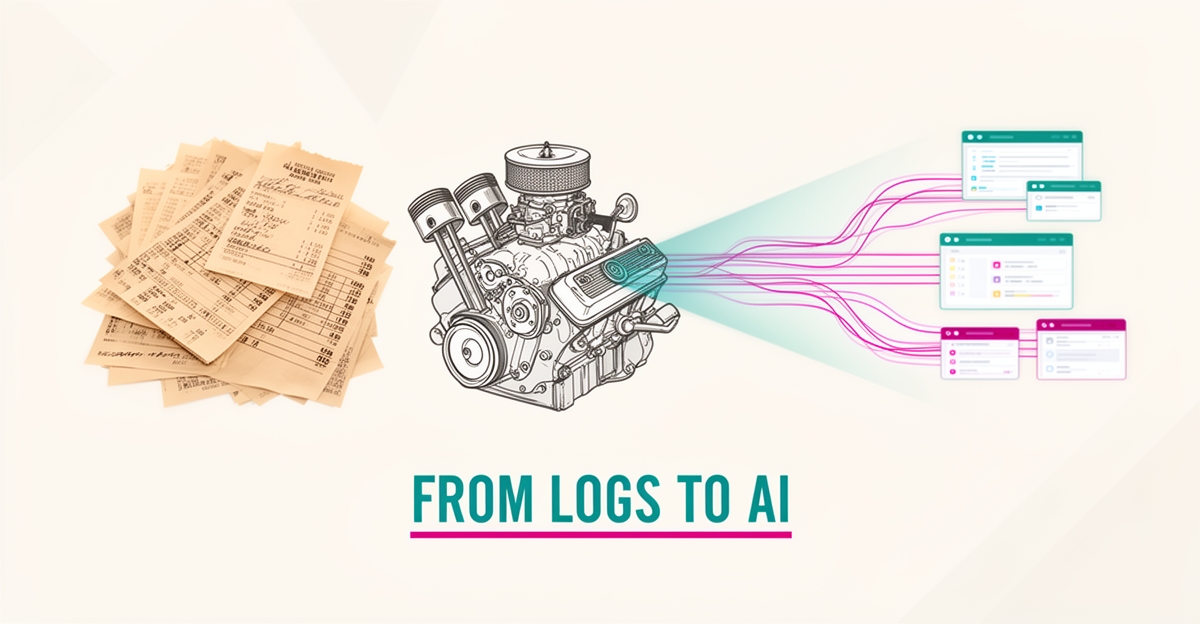
From Manual Logs to AI: Modernizing Engine Part Tracking in Hot Rod Shops
Key Facts
- Manual document processing typically takes hours to days per batch, while AI completes comparable work in minutes to seconds
- Modern foundation-model LLMs can extract part numbers and specs from handwritten receipts and photos using document understanding capabilities
- AI document processing reduces manual data entry errors and creates searchable audit trails that paper logs cannot match
- Extraction accuracy in production systems typically reaches the high 90s percent range when paired with validation and human review of exceptions
- AIQ Labs has deployed 200+ multi-agent systems and runs four live SaaS products daily — production experience, not slideware
Hire a team member that works 24/7 — for less than a part-time wage.
AI receptionists, SDRs, dispatchers and 99+ roles. Trained on your business, fully managed.
Not sure where to start? Ask our AI planner
The Paper Trail Problem: Why Manual Logs Are Costing Hot Rod Shops
Handwritten build sheets tucked in glove boxes and receipts stuffed in shoeboxes are still the norm in many hot rod shops, and the cost shows up every time a customer asks for provenance.
Paper trails fragment across notebooks, invoices, and photos, forcing teams to hunt for part numbers, dates, and specs before a sale or show. That manual chase turns simple lookups into hours of searching, with critical details lost between jobs.
Traditional manual processing moves at hours to days per document batch and carries a high error rate from human fatigue. AI-powered processing shifts that to minutes to seconds, with accuracy in the high 90s percent range when validation and exception review are layered in. Audit trails built by hand are prone to gaps, while automated logging creates continuous, searchable records.
The operational pain compounds in three ways:
- Lost provenance when receipts, manuals, and photos are stored in different places and formats
- Compliance gaps for show regulations and resale documentation that require complete modification histories
- Hours of manual data entry each week to recreate build histories from scattered notes
AI document processing reduces manual effort and improves data accuracy through validation and exception workflows. Modern systems extract fields, tables, handwriting, and layouts from documents — essential for shop receipts and handwritten build notes.
Foundation-model LLMs handle document understanding and reasoning, enabling automatic extraction of part numbers, specifications, and provenance information from receipts, manuals, and photographs. That creates searchable databases that preserve critical information for restoration and resale value.
Production-grade AI systems also deliver the reliability shops depend on: continuous processing rather than bursts, and logging that stands up to scrutiny. With AIQ Labs' AI Workflow Builds, engine part tracking, maintenance logs, and restoration milestones can be automated — reducing human error and keeping historical documentation complete.
The shift from paper to instant retrieval changes how decisions get made on the floor.
How AI Document Processing Actually Works for Parts and Provenance
Manual logs and shoeboxes of receipts are where provenance dies in a hot rod shop. AI document processing changes that by turning every email, photo, and scanned invoice into structured, searchable parts history without adding headcount.
The pipeline starts with ingestion. Documents arrive from email, scanners, photos, cloud storage, or file shares and are automatically classified by type. Modern ingestion systems handle multiple sources in parallel, so receipts, build sheets, and handwritten notes enter the same workflow.
Classification and extraction follow. AI document extraction reads forms, tables, IDs, signatures, and custom layouts — including handwriting. The models pull part numbers, dates, specs, and provenance fields from invoices, manuals, and photos, then tag entities and key phrases.
Validation is where accuracy is earned. Extracted data is checked against your shop's business rules, with foundation-model LLMs handling document understanding and reasoning. Human review handles exceptions only, keeping the loop tight. With this layered approach, production systems typically reach high-90s extraction accuracy.
Integration closes the loop. Clean structured data is pushed via REST APIs and workflow orchestration to shop systems like QuickBooks, CRM, or custom databases. The result is instant retrieval of engine build milestones, maintenance logs, and parts provenance for compliance and resale value.
For hot rod shops, this means:
- Automatic capture of part numbers and specs from receipts and photos
- Searchable restoration timelines with dates and vendor sources
- Audit trails for show regulations and historical documentation
- Reduced manual entry and human error in parts tracking
AIQ Labs builds production-grade systems that store, analyze, and retrieve this data instantly for better decision-making. If part tracking is the workflow that costs your shop the most, a fixed-price AI Workflow Build rebuilds exactly that — in phases, with the shop still running while it happens.
Once data is structured, shops can track rare components, document modifications, and maintain provenance that supports value and authenticity without slowing the build floor.
From Shoebox Receipts to a Searchable Engine History Database
The moment a rare flathead intake manifold changes hands at a swap meet, its story begins slipping away. AI document processing stops that erosion by automatically extracting part numbers, specifications, and provenance from receipts, manuals, and photographs, then filing everything into a searchable engine history database that outlives the shoebox.
Modern extraction systems read forms, tables, handwriting, and custom layouts, then validate the results against business rules before anything is committed to the record. This multi-stage approach handles everything from scanned invoices to photographed build sheets, with production implementations typically reaching high-90s extraction accuracy.
The payoff for a restoration shop is a living archive rather than a pile of paper. Every carburetor rebuild, machining tolerance, and period-correct component gets logged with its source document attached, creating the kind of documented provenance that judges look for and buyers pay premiums to verify.
That database becomes genuinely useful when it connects to the systems a shop already runs:
- QuickBooks integration ties every extracted receipt to a job, so parts costs reconcile against build budgets automatically
- Searchable databases let builders pull a complete component history by casting number, date, or vehicle in seconds
- Custom dashboards surface restoration milestones, pending parts orders, and documentation gaps before show deadlines
- REST API connections push clean data into whichever tools the shop adopts next
Extracted data flows directly into systems like QuickBooks, Salesforce, and custom databases through standard API gateways, eliminating the double-entry that plagues manual bookkeeping.
The audit trail matters as much as the data itself. Automated logging captures who added what and when, with permissions and approval trails built in, which supports stronger auditability and compliance with show documentation requirements. When a judge questions a component's authenticity or a buyer wants verification, the shop produces timestamped records instead of memories.
Security scales with the collection. Cloud architectures store extracted data in encrypted databases with controlled API access, protecting decades of irreplaceable build history from the coffee spills and shop fires that destroy paper archives. The records exist precisely when a sale or inspection depends on them.
AIQ Labs builds these document processing systems as owned assets rather than subscriptions, training extraction models on the specialized terminology of vintage automotive components so a shop's tribal knowledge becomes permanent, searchable infrastructure. The shoebox had a good run. The database simply remembers everything it forgot.
Implementation Roadmap: Rolling Out AI Tracking Without Stalling Your Shop
Rolling out AI for engine part tracking works best when you treat it like a shop build — measure twice, install once, and keep the bays running while you work. A phased rollout protects daily operations while capturing the parts data that drives restoration value and compliance.
Start with document ingestion from the sources already in use. Photos of receipts, scanned build sheets, email invoices, and manual logs flow in from email, scanners, portals, APIs, and cloud storage. That breadth matters in hot rod shops where provenance lives on paper, Polaroids, and handwritten notes.
Next, add AI extraction and validation before anything touches your system of record. Extraction pulls fields, tables, handwriting, and layouts from documents, while foundation-model LLMs handle document understanding and reasoning. Validation uses business rules and human-in-the-loop review for exceptions — critical for specialized terminology, rare vintage parts, and provenance verification that general models miss.
Store processed data in a fast database and orchestrate the workflow around it. Processed results are written to storage built for fast retrieval, with a workflow orchestrator coordinating every processing step. This architecture supports the speed and reliability shops need.
Expose data via a simple dashboard and keep change management honest. A clean interface surfaces part numbers, dates, specifications, and restoration milestones in searchable form. AI document processing reduces manual effort and improves accuracy through validation and exception workflows — but the impact depends on the depth of implementation.
Hot-rod-specific challenges shape the rollout:
- Specialized terminology and part naming that requires domain-aware validation
- Rare and vintage parts with incomplete or non-standard documentation
- Provenance verification where authenticity affects resale value and show compliance
- Shop adoption and workflow change, with clear roles for human review on exceptions
Be realistic about outcomes. Shallow implementations — tools bolted on without fixing the underlying process — rarely move revenue. Sustainable gains come from production-grade systems, not pilots.
AIQ Labs builds production-grade systems that store, analyze, and retrieve this data instantly for better decision-making, with ownership and integration designed for SMB shops. If you want a no-obligation working session to map your biggest bottleneck, start the Fit Check at aiqlabs.ai/apply, then book a free 30-minute strategy call to identify high-ROI automation opportunities.
Getting Started: Owning Your AI Tracking System
The gap between a prototype that demos well and a system your shop actually depends on is where most AI projects die. A production-grade engine part tracking system looks very different from a weekend experiment: it runs continuously rather than in bursts, and it maintains complete audit trails so every extracted part number, date, and specification can be traced back to its source.
What does "production-grade" actually mean for a hot rod shop? It means the system ingests receipts, manuals, build sheets, and photos from your scanner, email, or phone; classifies and extracts fields, tables, and even handwriting; validates everything against your shop's business rules; and pushes clean data into a searchable database you can query in seconds. Done right, these systems achieve high-90s extraction accuracy — a far cry from fatigued manual entry — with the logging and approval trails that matter when provenance is on the line.
The path there doesn't have to be all-or-nothing. Most shops start with one painful workflow and expand from there:
- A single workflow fix — an AI Workflow Build that rebuilds the one workflow costing you the most, at a fixed price, in phases. Automating parts invoice and build log intake into one searchable system is a common first build.
- A department-level system — connecting parts tracking, maintenance documentation, and customer records into one integrated flow, with AI Employees handling intake, data entry, and lookups at roughly 80% less cost than a human hire.
- A full shop-wide AI system — an AI Operating System: one connected operating layer built in phases and owned outright, serving as the shop's central intelligence hub.
Whichever tier you choose, ownership matters. Many AI vendors hand you a subscription to someone else's platform, which means your parts provenance data — the very thing that protects your restorations' resale value — lives in a system you don't control. AIQ Labs' Own It Outright model means the code, the AI agents, and the data belong to you, with no vendor lock-in and full control over future development.
That's how AIQ Labs approaches every build: production-ready custom systems, not prototypes, backed by 200+ multi-agent systems deployed and four live SaaS products the team runs daily. And a word of honest caution — companies that adopt AI tools without fixing the underlying process rarely see returns. The difference is strategy before software.
If you're ready to find out where AI would actually move the needle in your shop, start with the free two-minute Fit Check at aiqlabs.ai/apply, then book a free 30-minute strategy call at aiqlabs.ai/book. It's a working session with an AI engineer — not a sales pitch — where you'll map your shop's biggest documentation bottleneck and get a clear, written picture of the cheapest path to the win. If there isn't a clear opportunity, they'll tell you that too.
Still paying for 10+ subscriptions that don’t talk to each other?
We build custom AI systems you own outright. No vendor lock-in. Full control.
Not sure where to start? Ask our AI planner
Frequently Asked Questions
How long does it take to process engine part documents with AI compared to manual methods?
Can AI extract data from handwritten build sheets and receipts in hot rod shops?
What kind of accuracy can hot rod shops expect from AI document processing for parts tracking?
How does AI document processing integrate with existing shop systems like QuickBooks?
How can hot rod shops avoid AI implementations that don't pay off?
What does 'production-grade' mean for an AI engine part tracking system in a hot rod shop?
Turn Your Shoebox into a Searchable Legacy
Hot rod shops no longer need to hunt through shoeboxes or guess at provenance when every receipt, build sheet, and photo can become part of a living, searchable engine history. AI document processing turns fragmented paper trails into structured data that powers faster decisions, stronger compliance, and higher resale value — without adding headcount. By capturing part numbers, dates, and specifications from handwritten or printed sources, shops gain instant access to restoration milestones and audit trails that stand up to scrutiny. The real win isn't just automation; it's owning a system that preserves tribal knowledge as permanent infrastructure. If you're ready to see where AI would actually move the needle in your shop, start with the free two-minute Fit Check at aiqlabs.ai/apply, then book a no-obligation 30-minute strategy call at aiqlabs.ai/book to map your biggest documentation bottleneck and get a clear path forward — with an honest answer about whether there's a win worth pursuing.
Make AI your competitive advantage — not just another tool.
Strategy, implementation and ongoing optimization. One partner, end to end.
Not sure where to start? Ask our AI planner