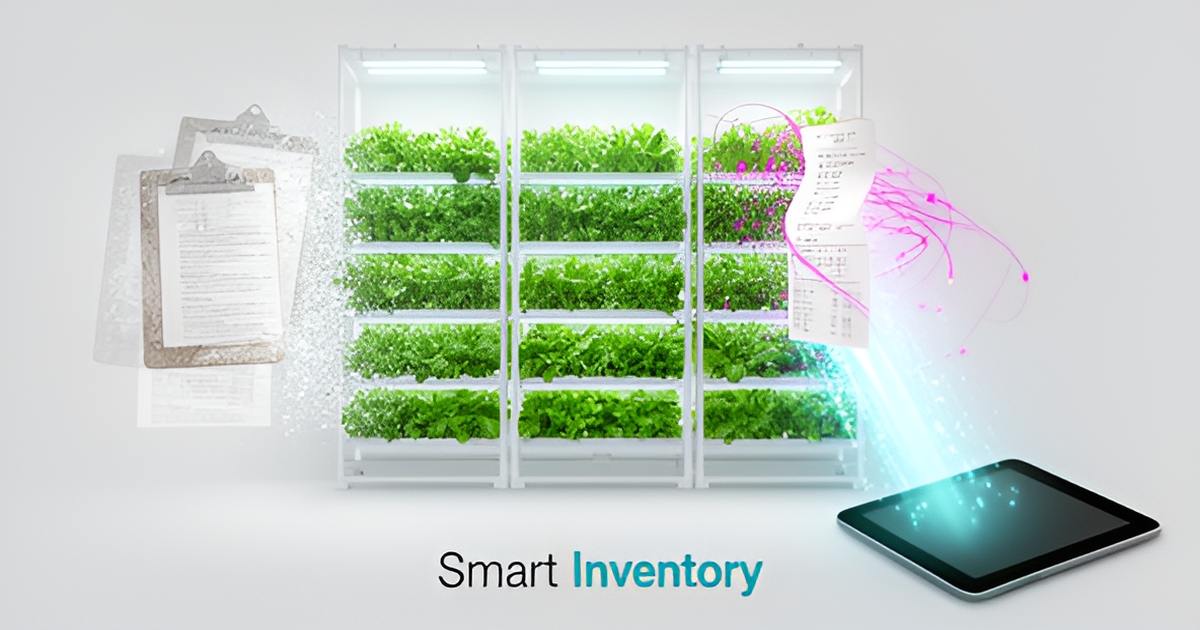
From Manual Logs to AI: Modernizing Inventory Tracking in Vertical Farms
Key Facts
- Manual inventory tracking in vertical farms creates alert fatigue and forces context switching across multiple disconnected tools—paper logs, spreadsheets, invoices, and order confirmations
- AI-assisted analysis typically shrinks investigation time from hours to minutes, which matters when a missed nutrient reorder can cost an entire crop cycle
- Non-programmers can build production-grade inventory systems using Python, Flask, and AI coding assistants without vendor subscriptions
- Human-in-the-loop controls keep critical purchasing and reorder decisions with the grower, not the software
- Free-tier hosting on platforms like Vercel, Netlify, and Render makes custom AI inventory deployment accessible for low-usage internal tools
- AIQ Labs builds custom AI systems with full code and data ownership through milestone-based builds that can stop anytime
Hire a team member that works 24/7 — for less than a part-time wage.
AI receptionists, SDRs, dispatchers and 99+ roles. Trained on your business, fully managed.
Not sure where to start? Ask our AI planner
The Hidden Cost of Manual Inventory in Vertical Farms
Every morning, a grower in a vertical farm walks the racks with a clipboard, eyeballing nutrient tanks and tallying seed trays by hand. This is not a quaint ritual—it is a measurable drain on the entire operation.
Merriam-Webster defines "manual" as work "of, relating to, or involving the hands." In vertical farming, that definition translates into handwritten logs, spreadsheet re-entry, physical seed counts, and harvest tallies reconciled at the end of a long shift. Each step is a chance for error, and each error compounds downstream into ordering mistakes and supply chain inaccuracies.
The operational toll goes far beyond slow data entry. Manual monitoring workflows tend to produce alert fatigue, where high-volume, noisy signals overwhelm the people responsible for responding to them. They also force constant context switching—exactly what happens when a farm manager bounces between a paper log, a spreadsheet, an email order confirmation, and a supplier invoice just to answer "how much nutrient do we have left?"
The hidden costs of manual inventory tracking typically include:
- Hours lost weekly to transcription and double entry between paper logs and spreadsheets
- Transcription errors that distort reorder points and create phantom stockouts
- Knowledge silos where only one experienced worker understands the "real" numbers
- Delayed detection of waste, spoilage, and discrepancies until physical counts catch up
- Inability to scale—every new grow rack adds proportional administrative burden
Perhaps the most quantifiable impact is on resolution time. When something goes wrong—a nutrient shortage discovered mid-cycle, a seed lot discrepancy—manual investigation stretches the problem. AI-assisted analysis typically shrinks that investigation from hours to minutes. In a vertical farm where a missed nutrient reorder can cost an entire crop cycle, that gap is the difference between a recoverable hiccup and a total loss.
AIQ Labs works with SMBs facing exactly this pattern: capable teams buried under workflows that were never designed to scale. The bottleneck is rarely effort—it is the architecture of the process itself, built on hand-powered data movement in an environment that demands real-time precision. For farms that want to fix the single most expensive workflow first, a targeted AI Workflow Build is often the fastest entry point.
Why AI-Powered Tracking Outperforms Traditional Automation
Manual inventory tracking in vertical farms means handwritten logs, spreadsheet transcription, and hours lost to data entry errors. Traditional automation platforms haven't solved this cleanly. Enterprise monitoring and ERP deployments often require weeks of configuration, data pipeline setup, and dashboard design before delivering value—assuming the farm can afford them at all.
AI-powered systems shift that dynamic. Instead of rigid rules that break every time a supplier changes an invoice format, modern extraction models handle messy real-world inputs—crumpled receipts, varied line-item naming, inconsistent units—and propose clean inventory updates for human approval.
- Receipt scanning and data extraction that updates inventory in real time
- Automated correlation across systems without context switching
- Governed workflows where human judgment stays central to critical decisions
- Full data ownership without vendor lock-in or subscription dependencies
That last principle—human judgment stays central, always—is the governance model AIQ Labs applies to vertical farm operations. We build custom systems that handle receipt scanning, extraction, and real-time updates while keeping growers in control of purchasing, planting, and waste-reduction decisions. The result is a system the farm owns, not a platform it rents.
Building Custom AI Inventory Systems Without Vendor Lock-In
The gap between manual inventory logs and enterprise AI platforms isn't as wide as most vertical farm operators assume. Non-programmers can now build production-grade inventory systems using Python, Flask, and AI coding assistants—owning every line of code and every data point without ongoing vendor subscriptions.
The development process is fundamentally iterative. You start with a detailed prompt describing your inventory workflow: receipt scanning for seeds and nutrients, real-time stock updates, waste tracking, and harvest reconciliation. AI coding assistants then recommend a practical stack—Python for readability, Flask for lightweight backend structure, Jinja2 for server-rendered templates—and guide you through local environment setup, Git version control, and virtual environment management. The key discipline: tackle one functionality at a time and commit changes frequently.
Free-tier hosting makes deployment accessible. Platforms like Vercel, Netlify, and Render typically offer plans suitable for low-usage internal tools, deployable via a simple Git push. For vertical farms, that means a custom inventory system can go from concept to production in days or weeks, not quarters.
- Define inventory workflows in a detailed prompt for your AI coding assistant
- Accept the recommended stack: Python, Flask, Jinja2, Git
- Develop locally with version control, testing each feature incrementally
- Deploy to low-cost or free-tier hosting via Git push
- Monitor logs and iterate—full ownership, zero vendor lock-in
AIQ Labs helps SMBs accelerate this path when internal bandwidth is tight, delivering custom AI systems that transfer full code and data ownership at completion. The result is an inventory backbone that scans receipts, extracts line items, and updates stock in real time—built on your infrastructure, governed by your rules, and free from recurring per-seat fees. For farms ready to go further, a phased AI Operating System connects inventory with purchasing, harvest planning, and reporting in one owned layer.
Implementation Roadmap: From Receipt Scanning to Real-Time Dashboards
Manual inventory logs are, by definition, work done with the hands—which means hours lost to handwriting, retyping, and reconciling. Vertical farms can replace that friction with a phased AI rollout that proves value fast and scales without vendor lock-in.
Start with one workflow and prove accuracy before expanding. A single receipt-scanning pilot for seeds and nutrients creates clean training data, validates extraction quality, and builds operator trust. The same pattern that shrinks investigation time from hours to minutes in operations applies directly to inventory reconciliation.
Phase 1 focuses on capture and validation. Operators photograph receipts, the AI extracts item name, quantity, price and date, and proposes an inventory update for human approval. Human-in-the-loop controls keep judgment with the team. This guardrail prevents bad data from entering stock records while the model learns farm-specific suppliers and SKUs.
Phase 2 integrates with existing tools. Extracted data syncs to the farm's current ERP or spreadsheet via two-way API integrations, creating a single source of truth for seeds, nutrients and supplies. Real-time dashboards replace manual compilation with live usage, waste and reorder signals.
Phase 3 expands scope and adds intelligence. Harvest tracking joins the pipeline, then predictive reordering models use historical usage patterns and seasonality to suggest buys. Risk mitigation runs in parallel:
- Data quality gates require timestamps, clear categories, and validated sources before AI analysis
- Access controls and audit trails protect sensitive operational and supplier data
- Human-in-the-loop escalation ensures critical reorder decisions stay with staff
A milestone-based build supports this progression. With Build in Milestones, one workflow or department system is split into phases, you approve and pay per phase, and you can stop anytime while keeping everything built so far. AIQ Labs has deployed 200+ multi-agent systems this way, and every build transfers full code and data ownership—no long-term subscriptions, no vendor lock-in—so the farm retains complete control as the system grows from receipts to real-time dashboards.
Still paying for 10+ subscriptions that don’t talk to each other?
We build custom AI systems you own outright. No vendor lock-in. Full control.
Not sure where to start? Ask our AI planner
Frequently Asked Questions
What exactly counts as 'manual' inventory tracking in a vertical farm, and why is it so costly?
How much faster can AI-powered systems resolve inventory issues compared to manual methods?
Do I need to be a programmer to build a custom AI inventory system for my farm?
Will using AI mean I lose control over my inventory data or get locked into a vendor subscription?
What's the fastest way to start using AI for inventory tracking without overhauling everything at once?
How do AI inventory systems handle critical decisions like reordering nutrients without removing human judgment?
Your Inventory Backbone Starts With a Single Receipt
Vertical farms don't need another dashboard—they need inventory data that arrives clean, current, and under their control. The shift from clipboard to AI isn't a leap; it's a phased rollout that starts with receipt scanning, proves accuracy on one workflow, and expands only when the team trusts the numbers. AI-assisted analysis typically shrinks investigation time from hours to minutes, and the technology is accessible enough that non-programmers can build and own custom systems using Python, Flask, and AI coding assistants—no vendor lock-in, no recurring per-seat fees. AIQ Labs helps SMBs accelerate that path when internal bandwidth is tight, delivering custom AI inventory systems that transfer full code and data ownership at completion. Whether you start with a single workflow fix or a department-wide build, the first step is mapping the bottleneck. Take the two-minute Fit Check at aiqlabs.ai/apply, then join a free 30-minute strategy call to see where AI pays off fastest for your operation.
Make AI your competitive advantage — not just another tool.
Strategy, implementation and ongoing optimization. One partner, end to end.
Not sure where to start? Ask our AI planner