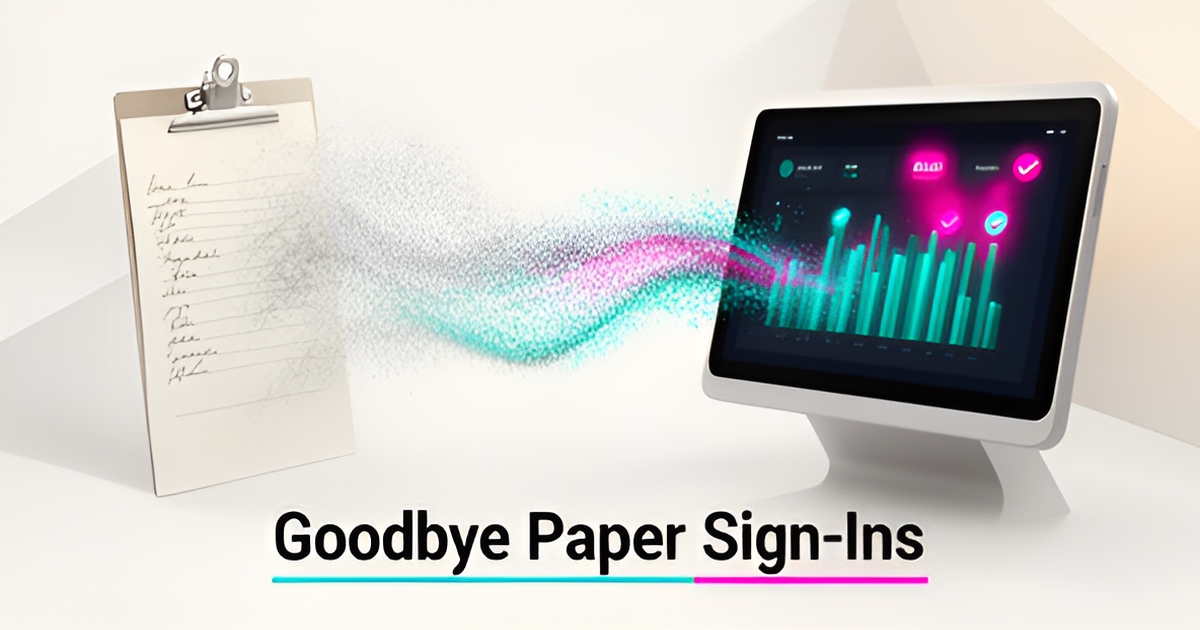
From Manual Sign-Ins to AI: How Bingo Halls Can Automate Attendance Tracking
Key Facts
- Manual sign-in sheets are prone to illegible entries, duplicates, and gaps — problems that compound on busy nights.
- AI-powered data capture is typically far more accurate and consistent than manual entry, and it doesn't fatigue on the third busy session of the week.
- Automated attendance data feeds directly into reports, capacity alerts, and compliance records — no re-typing required.
- Most organizations now use AI in at least one business function, and adoption in operations-heavy businesses continues to grow.
- AIQ Labs has deployed 200+ multi-agent systems and runs 4 live SaaS products daily — attendance automation is a well-trodden build, not an experiment.
Hire a team member that works 24/7 — for less than a part-time wage.
AI receptionists, SDRs, dispatchers and 99+ roles. Trained on your business, fully managed.
Not sure where to start? Ask our AI planner
The Hidden Cost of Paper: Why Manual Attendance Tracking Is Holding Bingo Halls Back
On a quiet Tuesday, a paper sign-in sheet feels harmless. On a packed Friday night with a line out the door, it becomes the bottleneck. Players wait to scrawl their names, staff re-key the same data into spreadsheets later that evening, and nobody notices the sheet that went missing until the licensing report is due.
The costs stack up in ways that don't show up on a receipt:
- Staff time spent on double handling. Every name written on paper gets typed somewhere else — usually by your highest-paid person on shift, after hours.
- Errors that ripple downstream. Illegible handwriting, duplicate entries, and missed rows mean attendance counts you can't fully trust for capacity limits, payouts, or regulator requests.
- No real-time visibility. With paper, you find out a session is over capacity when someone counts heads — not when the twentieth player walks in.
- Compliance risk. Many jurisdictions require accurate attendance records for licensing. A gap in the sign-in book is a gap in your paper trail.
None of this is a reflection on your staff. Paper simply can't validate, total, or alert. It just sits there until someone processes it.
AI-Powered Attendance: How Automation Delivers Accuracy, Efficiency, and Scalability
An automated attendance system replaces the clipboard with a connected process: players check in via a tablet, kiosk, or assisted entry, and the system handles the rest.
Here's what that looks like in practice:
- Automatic, consistent recording. Every entry is captured the same way, every time — no handwriting, no guessing at a smudged name.
- Real-time capacity alerts. When a session approaches its player limit, staff get notified before the door, not after. That's the difference between managing the room and apologizing to it.
- Reports that build themselves. Daily, weekly, and monthly attendance reports generate automatically — ready for management review or regulator requests without a single re-typed cell.
- Scalability without headcount. A busy charity night with triple the usual crowd costs the system nothing extra. Paper costs you a second staff member and a longer line.
- Connected data. Attendance feeds into your other operations — staffing decisions, concession planning, session scheduling — instead of living in a drawer.
This is exactly the kind of single high-friction workflow that AIQ Labs rebuilds through AI Workflow Builds: one fixed-price project, delivered in phases, focused on the process that costs you the most.
From Pilot to Production: Implementing AI Attendance Tracking in Your Bingo Hall
You don't need to rip everything out on day one. A phased approach keeps risk low and value visible early:
- Map the current process. Where does attendance data come in, who touches it, and where does it end up? Most halls find the sign-in sheet is just the visible tip of a longer manual chain.
- Start with the highest-friction step. Usually that's the check-in itself plus the downstream re-keying. Automate that first, prove it on one or two sessions a week, then expand.
- Integrate with what you already use. A good system pushes data into your existing spreadsheets, POS, or reporting tools rather than creating another silo.
- Train staff on the short version. Automated check-in typically takes less training than the manual process it replaces — there's simply less to do.
- Monitor and expand. Once attendance runs itself, the same foundation can handle scheduling reminders, player communications, or session capacity forecasting.
For halls that want more than one workflow automated, AIQ Labs also builds full AI Operating Systems — a connected operating layer you own outright, delivered in phases. And if you'd rather start even smaller, an AI Employee can handle front-desk check-ins and player questions at a fraction of the cost of an additional hire.
Still paying for 10+ subscriptions that don’t talk to each other?
We build custom AI systems you own outright. No vendor lock-in. Full control.
Not sure where to start? Ask our AI planner
Frequently Asked Questions
Will AI attendance tracking actually be more accurate than our sign-in sheets?
How much time and money could we save by automating sign-ins?
Can an AI system handle a busy bingo night when attendance spikes?
What are the main challenges when switching from paper to AI?
How do we actually implement AI attendance tracking in our hall?
Is AI attendance tracking worth it for a small bingo hall?
The Final Number Called: What Comes Next
Paper sign-in sheets served their purpose, but they can't keep pace with modern expectations for accuracy, speed, or insight. AI-driven attendance tracking eliminates the manual bottlenecks that cost time and money, replacing them with automated recording, real-time capacity alerts, and reports that actually inform decisions. The shift isn't just about digitizing a process — it's about freeing staff to focus on the player experience while the system handles the paperwork. AIQ Labs has deployed 200+ multi-agent systems and runs 4 live SaaS products daily, so this is a build with a track record, not a science project. Payment is flexible too: start monthly, build in milestones, or own the system outright. The next step is simple: take the 2-minute Fit Check, then book a free 30-minute strategy call — no obligation, just clarity on where automation fits your hall.
Make AI your competitive advantage — not just another tool.
Strategy, implementation and ongoing optimization. One partner, end to end.
Not sure where to start? Ask our AI planner