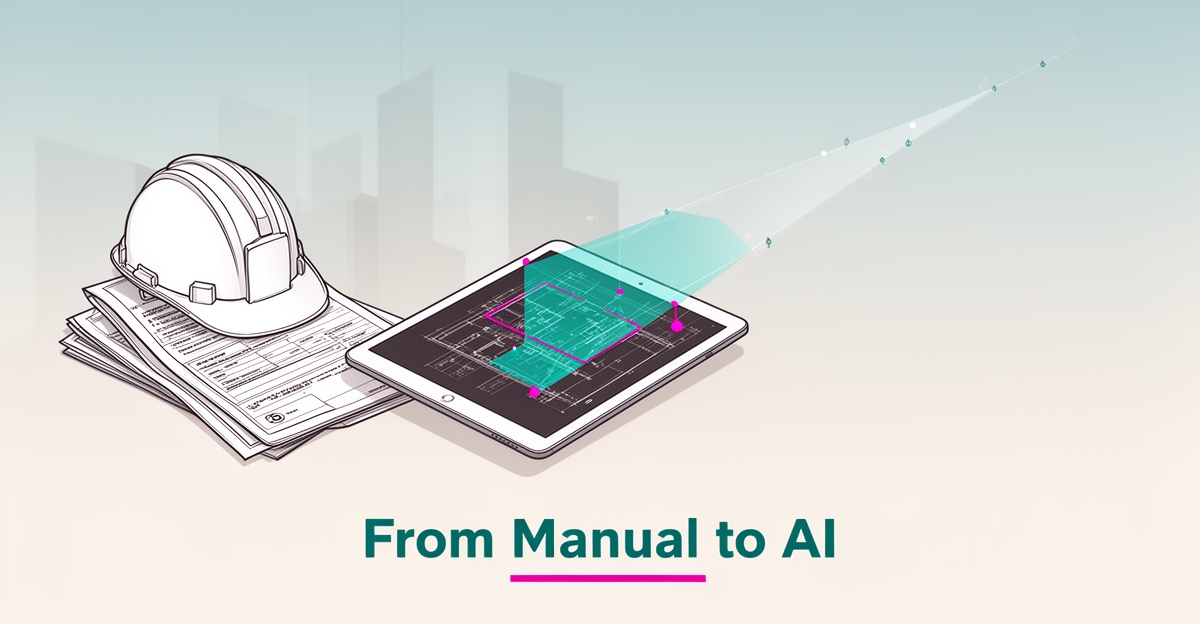
From Manual to AI: How General Contractors Can Automate Site Inspections and Reporting
Key Facts
- Automated takeoffs can reduce manual measurement time by roughly 80–90%, according to industry analyses
- Construction rework is widely estimated to cost the U.S. tens of billions of dollars annually — a persistent drag on margins
- A meaningful share of total project costs is lost to change order inefficiencies, often tied to late field observations
- AI-trained computer vision can detect structural issues like cracks and corrosion with precision that matches or exceeds manual photo review
- Standardized data protocols typically yield far higher inspection accuracy than poorly prepared inputs
- AI-generated inspection reports can be produced in minutes instead of the 3–5 days common with manual reporting
- Custom AI systems trained on construction data can distinguish cosmetic cracks from foundation-threatening fissures
Hire a team member that works 24/7 — for less than a part-time wage.
AI receptionists, SDRs, dispatchers and 99+ roles. Trained on your business, fully managed.
Not sure where to start? Ask our AI planner
The Hidden Cost of Manual Field Documentation
Every day a project sits waiting for inspection reports, money evaporates — not in dramatic losses, but in the quiet accumulation of delays, miscommunication, and rework that could have been caught earlier. Construction rework is widely estimated to cost the U.S. economy tens of billions of dollars annually, and much of it traces back to documentation gaps that AI could close. A further share of project budgets leaks away through change order inefficiencies — a direct consequence of field observations that arrive too late to inform decisions.
Manual photo capture and handwritten field notes create a fragile chain of custody. A superintendent snaps progress photos on a personal phone; a project engineer transcribes scribbled notebooks days later; the office receives a PDF report that no longer matches site reality. Each handoff introduces errors, omissions, and version conflicts. By the time a structural issue reaches the decision-maker, the window for low-cost correction has often closed — and the liability exposure has widened.
- Photos stored in disconnected cloud folders with no metadata linking them to drawings or specs
- Handwritten daily logs that vary in detail, terminology, and legibility across crews
- Inspection reports generated 3–5 days after site visits, rendering them reactive rather than preventive
- No searchable history — finding "that crack on Grid Line 4" means scrolling through hundreds of unnamed images
- Change orders initiated from incomplete records, triggering disputes and schedule slippage
AIQ Labs works with general contractors to replace this fragmentation with AI systems that ingest site photos, detect anomalies against design intent, and auto-generate structured inspection reports in minutes — not days. Our AI Workflow Builds target the single workflow that costs you the most, at a fixed price and in phases. The shift isn't just faster documentation; it's a fundamental change in how field intelligence flows to the office, turning passive records into actionable data that reduces rework, accelerates approvals, and creates an auditable trail when questions arise months later.
How AI Transforms Visual Data into Instant Inspection Reports
Computer vision transforms site photos into actionable inspection data by automatically identifying structural issues like cracks, corrosion, or misalignments. This capability eliminates the need for manual photo review, where inspectors once spent hours scrutinizing images for subtle defects. Instead, AI scans thousands of images in minutes, flagging anomalies with precision that matches or exceeds human capability when trained on construction-specific datasets.
Automated takeoffs further accelerate the process, with industry analyses suggesting reductions in manual measurement time of roughly 80–90%. What once required days of manual calculation using rulers and spreadsheets now happens in near real-time as the system extracts quantities directly from visual data. This time savings allows contractors to reallocate skilled labor to higher-value tasks like problem-solving and client communication rather than repetitive measurement work.
Document automation then compiles these findings into compliant inspection reports within minutes rather than days. The system generates standardized reports that meet regulatory requirements, complete with annotated images, issue descriptions, and recommended actions — all without manual formatting or data entry. This end-to-end workflow transforms what was a bottleneck into a streamlined process, enabling faster decision-making and reducing delays caused by reporting lag.
Construction-specific AI training is essential for accuracy because generic image recognition tools lack the contextual understanding needed to distinguish between normal wear and actual structural concerns. AI models trained on large datasets of construction site imagery learn to recognize industry-specific patterns — like the difference between cosmetic surface cracking and foundation-threatening fissures — that generic tools often misclassify. This specialization ensures reports reflect real-world conditions accurately, reducing false alarms and missed defects that could lead to costly rework or safety issues.
AIQ Labs develops custom AI systems trained on construction-specific data to ensure accuracy and compliance in field documentation, helping contractors turn visual data into reliable inspection insights without the delays of manual processes. With 200+ multi-agent systems deployed and four live SaaS products we run ourselves every day, this is automation built for the real demands of construction site reporting.
Deploying Automated Inspections: A Phased Implementation Strategy
Starting small and scaling smart is the most reliable path to AI-powered site inspections. Begin with a single, high-impact workflow — like daily progress photo documentation — where AI can immediately replace manual data entry and reporting delays. This pilot approach lets teams validate accuracy, refine processes, and build confidence before expanding to full site documentation automation, reducing risk while demonstrating tangible value early on.
Data quality is foundational to success. Poor image resolution, inconsistent labeling, or missing metadata can undermine AI performance, leading to false positives or missed defects in structural assessments. Contractors must establish clear standards for photo capture — such as consistent lighting, angles, and timestamps — and ensure all visual data is properly tagged with project phase, location, and trade-specific labels. The accuracy of AI-driven tools depends heavily on input quality: poorly prepared data produces unreliable results, while standardized protocols enable dependable automation. Integrating the AI system with existing project management platforms like Procore or Autodesk Construction Cloud ensures seamless data flow, eliminating duplicate entry and keeping schedules, budgets, inspections, and change order tracking synchronized in real time.
A phased rollout should prioritize integration, governance, and scalability. First, connect the AI inspection engine to your current tools via secure APIs to enable automatic report generation and storage within familiar workflows. Second, implement human-in-the-loop review checkpoints for critical findings — such as cracks, misalignments, or water intrusion — to maintain compliance with field documentation standards while continuously improving AI accuracy through feedback. Third, adopt a custom-built solution rather than off-the-shelf software to avoid vendor lock-in and ensure full ownership of the AI models, data, and intellectual property. This is the thinking behind AIQ Labs' AI Operating Systems: one connected operating layer, built in phases and owned outright, so contractors can tailor the system to their specific trades, regional codes, and reporting formats while retaining complete control over future updates and expansions. As the system proves its value, scale incrementally — adding trades, sites, and document types — until AI handles end-to-end site documentation from foundation to finish.
Still paying for 10+ subscriptions that don’t talk to each other?
We build custom AI systems you own outright. No vendor lock-in. Full control.
Not sure where to start? Ask our AI planner
Frequently Asked Questions
How much does manual site documentation actually cost contractors?
Can AI really speed up inspection reporting from days to minutes?
Do generic AI tools work for construction site inspections?
What’s the best way to start automating inspections without disrupting the site?
Will AI replace field inspectors or just change their role?
How do I know if my data is good enough for AI inspections?
From Days to Minutes: The Window for AI Adoption Is Open Now
The math is hard to argue with: manual site documentation feeds the rework costs the U.S. construction industry absorbs every year, while a meaningful share of project budgets leaks away through change order inefficiencies that better field intelligence could prevent. As this article has shown, AI-powered computer vision, automated takeoffs that can cut measurement time by roughly 80–90%, and construction-specific document automation can turn inspection reporting from a days-long bottleneck into a minutes-long workflow — provided the rollout starts with one high-impact pilot, prioritizes data quality, and integrates with tools like Procore rather than replacing them. The contractors pulling ahead aren't waiting for the technology to mature; they're building owned, custom systems tailored to their trades and reporting standards. If you're ready to see what that looks like for your projects, start with the two-minute Fit Check at https://aiqlabs.ai/apply, then book a free 30-minute strategy call with an AIQ Labs engineer — a real working session to map your biggest documentation bottleneck and identify the highest-ROI automation opportunity. If there isn't a clear win, we'll tell you that too. You can also reach the team directly at [email protected].
Make AI your competitive advantage — not just another tool.
Strategy, implementation and ongoing optimization. One partner, end to end.
Not sure where to start? Ask our AI planner