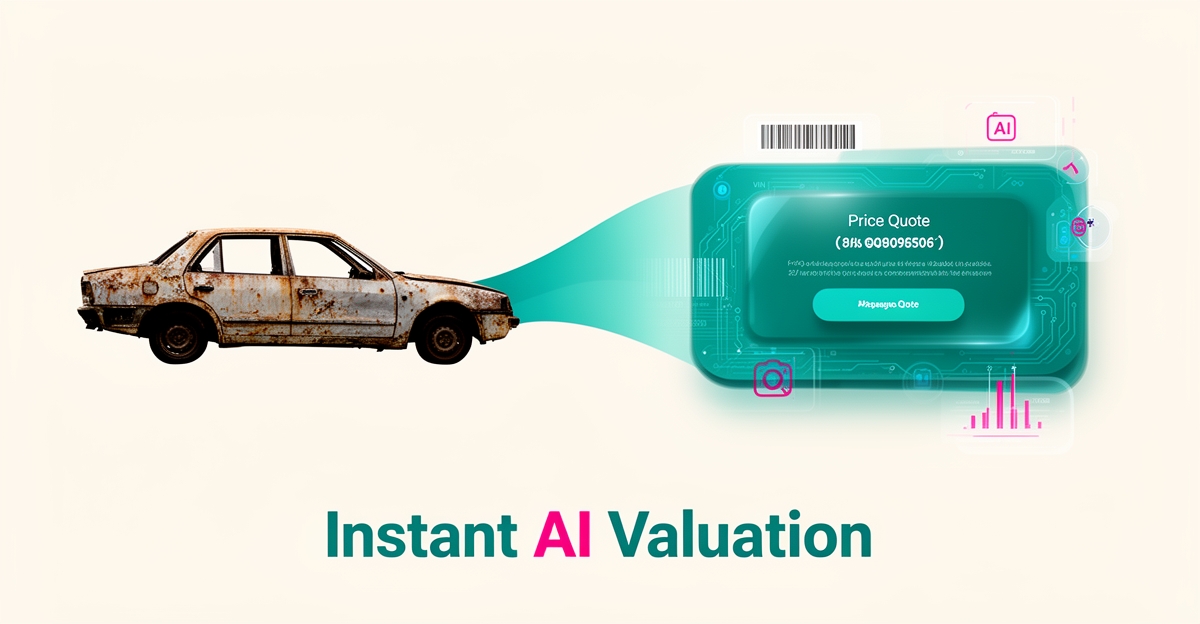
From Manual to AI: How Junk Car Removal Services Can Automate Vehicle Valuation
Key Facts
- AI assistants can handle a large share of routine junk removal inquiries without human intervention, according to industry research
- Companies using AI for lead follow-up report meaningful gains in junk removal job conversion rates per industry statistics
- AI-powered route optimization can reduce mileage for junk removal fleets, typically by double digits according to waste management data
- Automating dispatch can cut manual scheduling time roughly in half for waste service providers in industry research
- Tens of thousands of cars enter American scrapyards daily — millions of vehicles annually per supply chain analysis
- Investment in AI for waste management continues to grow, with forecasts projecting a multi-billion-dollar market by 2030 according to forecasts
- Most waste management executives expect AI to be a core competitive advantage per industry survey
Hire a team member that works 24/7 — for less than a part-time wage.
AI receptionists, SDRs, dispatchers and 99+ roles. Trained on your business, fully managed.
Not sure where to start? Ask our AI planner
The Cost of Manual Valuation Bottlenecks
Every minute a junk car sits unquoted is a minute a competitor might win the job. Traditional appraisal methods rely on manual data entry, phone tag, and subjective judgment — creating a bottleneck that slows the entire operation from first inquiry to final pickup.
According to industry research, AI assistants can now handle the majority of routine junk removal inquiries without human intervention, yet many operators still depend on spreadsheets and callbacks to price vehicles. This lag doesn't just frustrate customers; it directly erodes conversion rates. Operators using AI for lead follow-up report significant conversion gains, while those stuck in manual workflows watch high-intent leads go cold.
The hidden costs compound across the business:
- Delayed quotes push customers toward competitors offering instant estimates
- Inconsistent pricing across staff members creates trust gaps and margin leakage
- Manual data entry consumes hours that could be spent on dispatch, routing, or customer service
- No real-time market integration means valuations lag behind scrap metal fluctuations and parts demand
With tens of thousands of cars entering American scrapyards every day — millions annually per supply chain analysis — the volume alone makes manual valuation unsustainable. AIQ Labs builds custom AI systems that ingest make, model, mileage, and live market data to generate accurate valuation reports in seconds, integrating directly with existing CRM and dispatch tools so operators can quote on the first call, not the third follow-up. For teams that want a managed starting point, [AI Employees](/ai-employees) can handle quoting calls and lead follow-up from day one.
How AI-Driven Valuation Works: Data Ingestion to Instant Quotes
The technical workflow of AI-driven vehicle valuation begins with comprehensive data ingestion from multiple sources. Modern systems pull VIN specifications to decode make, model, year, and trim details while simultaneously capturing real-time telematics data on mileage, engine performance, and maintenance history. This foundational data layer creates the vehicle's digital profile, which AI algorithms use to establish baseline condition assessments before analyzing visual or market factors.
Computer vision analysis processes vehicle photos to identify damage patterns, corrosion levels, and component integrity that human appraisers might miss. These visual inputs are cross-referenced with historical auction comps from thousands of similar vehicles, maintenance logs indicating service frequency and repair quality, and real-time scrap metal market fluctuations. The machine learning model weighs geographic buyer density for specific parts and regional labor rates to adjust valuations dynamically—when global supply chains tighten, residual values for certain components can spike even with chassis damage.
Feature engineering optimizes which variables carry the most weight in the final calculation, allowing the system to prioritize local demand signals over national averages. Real-time processing enables instant response to hyper-local market shifts, such as sudden increases in demand for catalytic converters in a specific region. This multi-layered approach generates accurate salvage values and instant quotes without human intervention, transforming what once took days of manual research into a real-time automated process that scales with business growth.
Beyond Valuation: Operational Benefits of AI Integration
AI valuation is the entry point, not the finish line. Once the quoting engine is live, the same AI infrastructure starts reshaping how crews move, how leads convert, and how inquiries are handled 24/7.
Routine customer service scales instantly. Industry research shows AI assistants handle a large share of routine junk removal inquiries without human intervention, freeing dispatchers to focus on exceptions instead of repetitive questions. That automation extends to follow-up, where companies using AI for lead follow-up report meaningful increases in job conversion rates.
Operations tighten around the route. AI-powered route optimization can reduce mileage for junk removal fleets, cutting fuel spend and driver hours while keeping trucks fuller. Automated dispatch compounds the gain by cutting manual scheduling time roughly in half for waste service providers.
The impact shows up in customer experience metrics too. Real-time tracking links and automated SMS reminders reduce missed appointments and lift customer satisfaction. These are not side benefits; they are the operational logic that makes valuation automation sustainable.
AIQ Labs builds these systems as integrated workflows rather than point tools. The valuation model feeds directly into quoting, dispatch, and CRM, so a photo-based estimate can trigger an automated follow-up sequence and route assignment without rekeying data.
Broader operational gains that follow valuation automation include:
- Most routine inquiries handled without agents, reducing phone load during peak hours
- Higher job conversion from AI-driven lead follow-up and instant quoting
- Fleet mileage reduction through AI-optimized routing and load balancing
- Substantially less manual scheduling time with automated dispatch
This is why valuation is a gateway. Once make, model, mileage and market data flow automatically, the same agents can qualify leads, book pickups, send reminders, and update customers post-job. For SMBs that want custom systems they own, AIQ Labs designs valuation-first architectures that expand into full operational automation without new hires or training overhead — see [AI Workflow Builds](/workflow-builds) for how a single high-cost workflow gets rebuilt first.
Implementation Roadmap: Building Your Custom AI Valuation System
Manual valuation is the bottleneck that keeps junk car removal teams tied to phones and spreadsheets. A custom AI valuation system replaces that friction with instant, data-driven quotes while keeping existing tools in place.
The roadmap starts with data integration, not model building. Modern valuation models begin by ingesting datasets from VIN specifications and real-time telematics. You connect make, model, mileage, and condition inputs to historical auction comps, maintenance logs, and live scrap metal pricing. Real-time processing lets the system reflect sudden changes in parts demand or scrap pricing in the specific region where the vehicle sits.
Compliance must be designed in from day one. State-specific salvage title laws vary significantly, requiring algorithms to adapt output based on vehicle location. What constitutes “junk” versus “salvage” title changes by jurisdiction, so automated appraisals need legal guardrails to stand up to regulatory scrutiny. Embedding regulatory compliance layers ensures every quote is defensible and consistent with local requirements.
A phased build avoids disruption and avoids hiring specialized staff. AIQ Labs architects custom systems that integrate with existing tools, enabling faster, accurate valuations without requiring new staff or training. The phased approach typically follows:
- Discovery & Architecture: map current quoting workflow, data sources, and compliance rules for each operating state
- Data Integration & Ground Truth: ingest VIN, telematics, and auction data and establish labels from historical claims and repair estimates
- Model Training & Logic Engine: configure total loss threshold logic, feature engineering for parts availability and local demand, and computer vision for photo-based estimating
- Pilot Deployment & Optimization: launch with a single region or vehicle class, monitor accuracy, and expand as confidence grows
Real-time market integration keeps valuations accurate. Feature engineering lets the system weigh specific variables like parts availability or local demand higher than others. When supply chains tighten, residual value of certain components can spike even if the chassis is destroyed.
Organizations that adopt AI-driven operations see measurable gains. Industry research shows AI now handles a large share of routine junk removal inquiries without human agents, freeing teams for on-site work. The same data finds AI-powered route optimization can reduce fleet mileage, compounding the efficiency of faster quoting.
The system is built to own, not rent. Clients receive full ownership of custom-built systems with no vendor lock-in, and the valuation engine can run alongside existing CRM, dispatch, and accounting tools through deep two-way API integrations. For operators ready to connect valuation, dispatch, and follow-up into one layer, [AI Operating Systems](/ai-operating-systems) shows how that scales in phases.
Still paying for 10+ subscriptions that don’t talk to each other?
We build custom AI systems you own outright. No vendor lock-in. Full control.
Not sure where to start? Ask our AI planner
Frequently Asked Questions
How long does it typically take for a junk car removal business to see ROI from implementing AI for vehicle valuation?
Can AI really handle most customer inquiries without a human agent, or is that just marketing hype?
Will using AI for vehicle valuation actually help me close more jobs, or is it just faster quoting?
I'm worried about compliance—can AI systems adapt to different state laws for junk vs. salvage titles?
Do I need to hire new staff or retrain my team to use an AI valuation system?
How does AI improve valuation accuracy when scrap metal prices or part demand changes suddenly?
Turn Your Valuation Bottleneck Into a Competitive Edge
Manual vehicle valuation isn't just slow—it's a silent profit leak that pushes customers to competitors, erodes margins, and ties up your team in repetitive tasks. As the article showed, AI-driven valuation transforms this bottleneck into a real-time advantage: instant quotes powered by VIN data, live market feeds, and computer vision, all while reducing follow-up work and lifting conversion rates. Beyond pricing, the same AI foundation streamlines dispatch, cuts fleet mileage, and automates routine inquiries—freeing your staff to focus on higher-value work. For junk car removal businesses ready to move beyond spreadsheets and callbacks, the path forward starts with a clear look at your current workflow. Start with the 2-minute Fit Check at [/apply](/apply), then book a free 30-minute strategy call to see where AI can deliver the fastest impact in your operation—no hype, just a practical roadmap built around your existing tools and goals. Questions first? Reach us at [email protected].
Make AI your competitive advantage — not just another tool.
Strategy, implementation and ongoing optimization. One partner, end to end.
Not sure where to start? Ask our AI planner