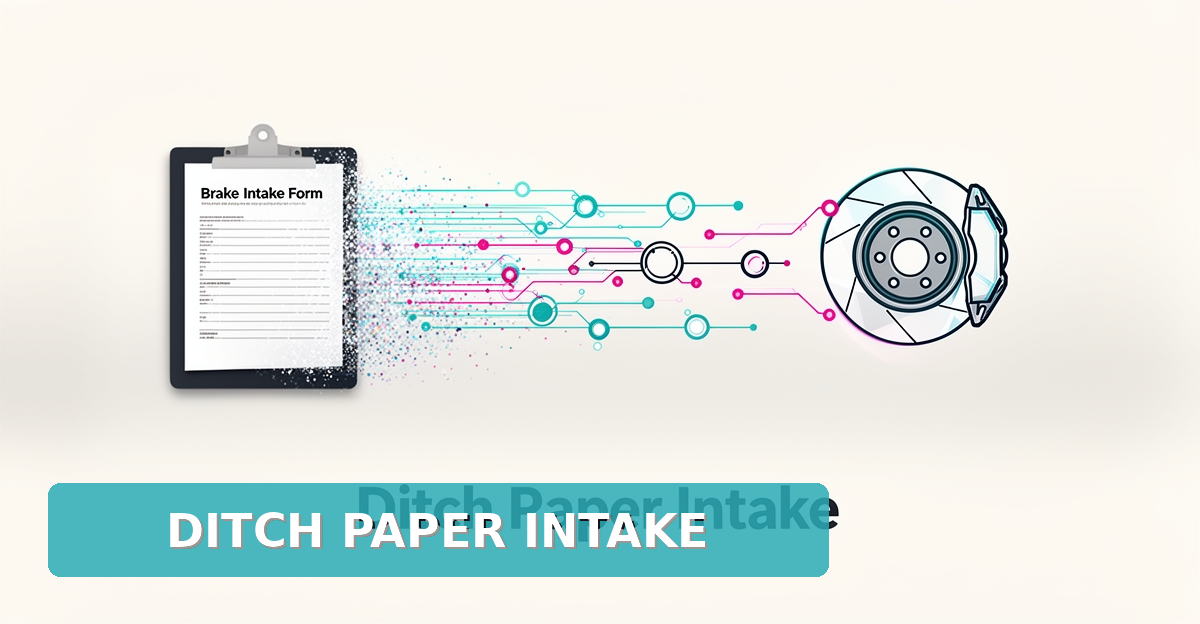
From Manual to AI: Transforming Brake Repair Job Intake and Follow-Up
Key Facts
- Industry reporting suggests a meaningful share of AI requests fail under load, with capacity limits and application design—not the models themselves—typically cited as the primary causes.
- Token usage has grown sharply in many production environments as of late 2026, with heavy users seeing several-fold growth, driving up costs and failure risk.
- High AI costs and failure rates typically come from how applications are built, not the models themselves.
- Manual intake forms trade low upfront costs for high maintenance costs and error-prone processes.
- Operational excellence—not raw model power—is widely described as AI's real competitive edge.
- AI intake systems capture customer details through voice kiosks, tablets, or phone agents, eliminating transcription errors and boosting first-time fix rates.
- Shops should fix one painful intake workflow first, prove the return in weeks, then expand with visibility, guardrails, and optimization.
Hire a team member that works 24/7 — for less than a part-time wage.
AI receptionists, SDRs, dispatchers and 99+ roles. Trained on your business, fully managed.
Not sure where to start? Ask our AI planner
The Hidden Cost of Paper Intake Forms at the Brake Shop Counter
The brake shop counter remains a bottleneck where paper intake forms create silent revenue leaks. Staff spend precious minutes deciphering handwriting, re-entering data into shop management systems, and chasing missing details—time that could be spent on actual repairs. These manual processes introduce errors at every step, from misread VINs to incorrect service descriptions, leading to incorrect parts orders, rework, and frustrated customers who leave without returning. What seems like a low-cost solution—paper forms and clipboards—actually accumulates hidden expenses through delayed jobs, wasted labor, and lost trust.
Manual systems carry high long-term costs despite low upfront investment. Manual approaches may appear economical initially but generate significant maintenance burdens and error rates over time. In brake repair, where precision and timing directly impact safety and satisfaction, these inaccuracies translate into tangible losses: repeat visits, negative reviews, and missed upsell opportunities. The cumulative effect erodes profitability more severely than any perceived savings from avoiding digital tools.
AI-driven intake transforms this dynamic by capturing information accurately at the first point of contact. Whether through voice-enabled kiosks, tablet interfaces, or AI-powered phone agents, customer details are recorded consistently and fed directly into workflow systems. This eliminates transcription errors, ensures complete service histories, and triggers automated follow-ups for parts arrival or service completion. Shops using such systems typically report fewer comebacks and higher first-time fix rates, directly protecting revenue streams that manual processes jeopardize.
The contrast is stark: paper forms trade immediate simplicity for chronic inefficiency, while AI intake requires upfront configuration but delivers sustained accuracy and speed. For brake shops aiming to scale without proportional labor increases, the choice isn't about rejecting technology—it's about recognizing that the true cost of manual intake isn't in the paper, but in the mistakes it enables and the opportunities it obscures. Ending reliance on outdated methods isn't just an upgrade; it's a necessary step toward operational resilience in a competitive service landscape.
Why AI Transformation Is an Operational Race, Not a Technology Race
The shift to AI in brake repair isn't about chasing the latest model—it's about mastering how you operate the technology at scale. Industry reporting as of late 2026 suggests that a meaningful share of AI requests fail under load, primarily due to capacity limits and inefficient application design, not model shortcomings. Token usage has grown sharply in many production environments, with heavy users seeing volumes grow several-fold, driving up costs and increasing failure risks. These aren't flaws in the AI itself—they're symptoms of poor operational practices like unoptimized prompts, inefficient routing, and lack of visibility into resource consumption.
Winning with AI requires treating it like any critical business system: with discipline, monitoring, and guardrails. Shops that focus on operational excellence—establishing clear attribution of token usage to specific workflows, enforcing consumption limits to prevent runaway processes, and optimizing utilization before adding more capacity—see far better results than those chasing raw model power. The real race, as industry observers note, is operational: who can run AI reliably, efficiently, and safely at scale. This means designing intake and follow-up systems that route requests intelligently, cache repeated queries, and fail gracefully when limits are approached.
For brake shops, this translates to AI that doesn't just automate forms but does so predictably—without sudden cost spikes or dropped follow-ups. AIQ Labs helps shops build these resilient systems by focusing on workflow design first: mapping intake steps, identifying bottlenecks, and applying AI only where it adds consistent value. The goal isn't the most advanced AI—it's the most reliable one. When your intake process runs smoothly day after day, that's when AI stops being an experiment and starts being an advantage.
Designing an AI-Driven Intake and Follow-Up System That Actually Works
Brake repair shops are moving beyond paper forms and manual follow-ups to create intake systems that run smoothly, even when hiccups occur. The goal is to build an AI-driven workflow that captures customer details accurately, triggers timely follow-ups, and keeps core operations running if a single request fails. This requires designing for visibility, attribution, and guardrails from the start.
An effective AI intake workflow begins with automated customer engagement through channels like web forms, SMS, or voice. As the customer describes their brake issue—symptoms, vehicle details, preferred appointment time—the AI agent captures and structures this data in real time. This eliminates transcription errors and ensures every detail flows directly into the shop's scheduling or CRM system. Industry analysis consistently finds that inefficient patterns and poor routing drive up token usage and increase the risk of errors, making precise data capture essential from the first interaction.
Visibility and attribution are critical to maintaining reliability. By tagging each intake request with metadata—such as source channel, timestamp, and associated vehicle type—shops can trace how AI resources are consumed across jobs. This insight helps identify bottlenecks, like certain times of day when intake volume spikes, and prevents one overloaded process from disrupting others. Establishing visibility and attribution to map compute and token usage to specific applications is a foundational step for operational excellence.
Guardrails ensure that a failed intake request never halts shop operations. These include hard limits on retry attempts, automatic fallbacks to human staff after repeated failures, and queue management that isolates problematic requests. For example, if an AI agent struggles to interpret a customer's description due to background noise or unclear phrasing, the system can escalate to a human representative after two attempts—without blocking the intake line for other customers. Enforcing control and guardrails to make consumption predictable and prevent runaway experiments from impacting core services is a proven strategy for scaling AI safely.
Finally, automated follow-up sequences keep customers informed without manual effort. After intake, the AI sends appointment confirmations, prep instructions (like "please bring your vehicle in by 8 AM"), and post-service reminders for brake pad wear checks. These sequences are triggered by completed intake events and adjusted based on service type—ensuring relevance without overwhelming the customer. By combining accurate data capture, real-time visibility, and fail-safe design, brake shops can transform intake from a fragile manual process into a resilient AI-driven workflow that supports, rather than strains, daily operations. AIQ Labs helps shops build and manage such systems end-to-end—whether that's an AI workflow build for the intake process itself or a broader AI operating system connecting the whole shop—ensuring they own the technology and can adapt it as their needs evolve.
Implementation Roadmap: From First Workflow Fix to Full Shop Automation
The most common mistake brake shops make with AI is trying to automate everything at once. The smarter path is to fix one broken workflow, prove the return, then expand with intent.
Start with your single most painful intake bottleneck—usually the paper forms, phone tags, or missed follow-ups that lose brake jobs every week. This is where a targeted AI workflow fix delivers value fastest: one critical process rebuilt at a fixed price, in phases, with results visible in weeks rather than months. For a typical shop, that means digital intake that captures vehicle details, brake symptoms, and customer contact accurately the first time, then triggers follow-up automatically. If intake volume is the real problem, an AI receptionist or dispatcher can handle calls and booking around the clock at a fraction of the cost of another hire.
Ownership matters from day one. Shops should know who controls the system they're buying—whether it's a monthly arrangement they can pause, a milestone-based build they can stop while keeping everything shipped so far, or a full system they own outright, code and data included. These are the payment models AIQ Labs builds around: Start Monthly, Build in Milestones, or Own It Outright. Custom systems the business owns, not rented software that locks them in.
Phase two is integration, not replacement. The AI system should connect to the tools the shop already runs—scheduling, invoicing, customer communication—so data flows without double entry. Deep two-way integrations turn disconnected apps into a single source of truth, eliminating hours of weekly manual data entry and reducing operational errors dramatically.
Phase three is where discipline pays off. As AI adoption scales, costs and failure rates are driven by how applications are put together, not the models themselves—inefficient patterns, poor routing, and unoptimized prompts drive up token usage and increase errors, according to industry analysis. Token usage has grown sharply in many production environments as of late 2026, which makes optimization before expansion essential.
Before scaling shop-wide, apply three operational principles:
- Establish visibility so you can see exactly how AI usage maps to specific workflows, like intake versus follow-up.
- Enforce guardrails so one runaway process can't disrupt core operations like booking or dispatch.
- Optimize what's running before adding capacity—avoiding overprovisioning keeps costs predictable as you grow.
Industry reporting also notes that a meaningful share of AI requests fail at scale, with capacity limits typically the primary cause—a reminder that reliability engineering, not just clever prompts, separates a working system from a frustrating one. Operational excellence, as the saying goes, is AI's real competitive edge.
The full journey—from a single fixed intake workflow to a shop-wide system handling scheduling, follow-up, and customer communication—typically unfolds across discovery, development, deployment, and ongoing optimization. Shops that sequence it this way avoid the pilot trap where AI experiments stall before ever delivering returns. If you're unsure where your biggest bottleneck is, start with the 2-minute Fit Check and a free 30-minute strategy call with AIQ Labs can map it out—and if there isn't a clear win, they'll tell you that too.
Still paying for 10+ subscriptions that don’t talk to each other?
We build custom AI systems you own outright. No vendor lock-in. Full control.
Not sure where to start? Ask our AI planner
Frequently Asked Questions
Why are paper intake forms a problem for brake shops beyond just being outdated?
How does AI-driven intake improve accuracy and reduce delays in brake repair shops?
What does it mean that 'the real race with AI is operational, not technological' in the context of brake shop automation?
What are the key guardrails brake shops should implement when scaling AI intake systems to avoid disruptions?
Do AI requests fail at scale, and what causes these failures?
What's the recommended approach for brake shops starting with AI instead of trying to automate everything at once?
The Real Cost Isn't Paper, It's What Paper Allows
Paper intake feels cheap until you count the misread VINs, rework, missed follow-ups and lost customers it creates. AI-driven intake replaces that fragility with accurate capture at first contact, automated follow-up, and workflows built for visibility, attribution and guardrails so one failure doesn't stop the shop. The shift isn't about chasing the newest model; it's about operational discipline, because AI run without capacity planning and good design fails under load, as industry reporting has consistently shown. Start with your single most painful bottleneck, prove the return, then integrate with the tools you already use. AIQ Labs helps brake shops build owned, resilient intake and follow-up systems that map to real workflows, not rented experiments. Start the 2-minute Fit Check at aiqlabs.ai/apply, then book a free 30-minute strategy call at aiqlabs.ai/book to map your biggest bottleneck and see if there's a clear win.
Make AI your competitive advantage — not just another tool.
Strategy, implementation and ongoing optimization. One partner, end to end.
Not sure where to start? Ask our AI planner