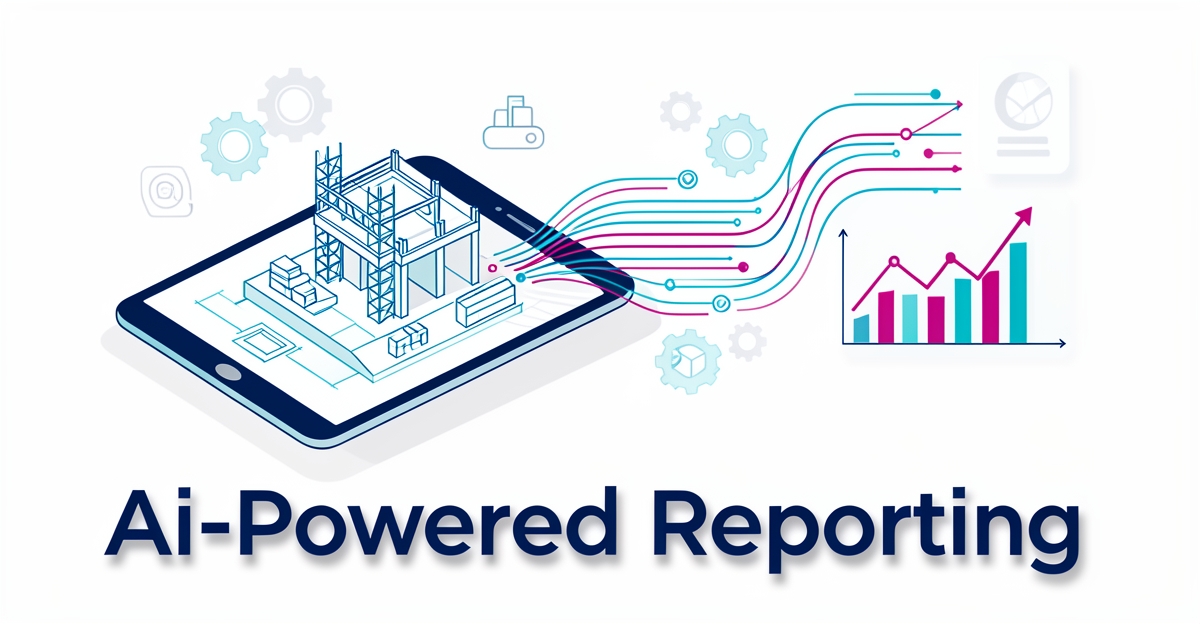
From Manual to AI: Transforming Civil Engineering Project Reporting with Automation
Key Facts
- Industry analysis suggests manual administrative work can consume a large share of staff time on civil engineering projects—often cited at up to half according to industry research
- Firms that automate reporting typically report meaningful reductions in administrative time, with some industry analyses citing figures around 50% per industry analysis
- Automating timesheet extraction and reconciliation is widely reported to speed up invoicing cycles significantly per Monograph analysis
- AI-powered project management has been associated with substantial gains in business task efficiency in industry reporting based on industry research
- AI-enhanced documentation tools can save significant time on drawing production and specification writing per Monograph reporting
- Computer vision can automate site monitoring by comparing drone imagery to BIM models without manual photo review per industry research
Hire a team member that works 24/7 — for less than a part-time wage.
AI receptionists, SDRs, dispatchers and 99+ roles. Trained on your business, fully managed.
Not sure where to start? Ask our AI planner
The Reporting Bottleneck Costing Civil Firms Time and Margin
Manual reporting is quietly draining civil engineering firms. Project teams spend their weeks chasing timesheets, reconciling spreadsheets, and compiling photos instead of driving design decisions.
Progress summaries, financial updates, and drawing documentation are the heaviest drag. Industry research suggests manual administrative work can consume a large share of staff time—often cited at up to half—with substantial reductions achievable after automation. The bottleneck is not a lack of data, it is the labor required to turn it into usable reports.
Timesheet scrubbing remains a core pain point. Engineers log hours across phases and tools, then administrators manually validate, categorize, and roll up billable time. Errors compound, invoicing slows, and budget visibility lags weeks behind reality. Monograph analysis notes that firms can see meaningfully faster invoicing cycles when AI handles extraction and reconciliation.
Spreadsheet budget tracking creates a second choke point. Teams copy numbers between contracts, proposals, and project plans, then update forecasts by hand. Pattern identification for undervalued phases and at-risk overruns is reactive, not real-time. Recent reporting associates AI-powered project management with substantial gains in business task efficiency.
Manual photo analysis for site monitoring adds a third layer of friction. Site visits generate hundreds of images that must be reviewed, tagged, and compared to BIM models. Variance detection relies on human memory and availability, delaying corrective action.
The cumulative effect is margin erosion. Administrative load limits capacity to take on new work, while delayed reporting reduces client trust and payment speed. Firms that automate reporting free senior staff for safety-critical and creative decisions that cannot be delegated.
Common manual reporting drains include:
- Hours spent combing through timesheets for accurate phase allocation
- Scrambling for project updates across email, field notes, and spreadsheets
- Manual budget tracking in spreadsheets with no real-time alerts
- Time-consuming drawing production and specification writing
- Manual photo analysis for site monitoring and quality control
AI Business Process Automation is shifting this dynamic by turning live project data into consistent, timely deliverables. AIQ Labs builds custom AI systems that generate reports from live project data, cutting manual effort and improving accuracy across engineering teams without forcing firms into generic SaaS workflows.
The opportunity is clear: replace repetitive reporting with automated, reliable outputs so teams can focus on engineering judgment rather than administrative assembly.
How AI Automates Project Reporting Without Replacing Engineering Judgment
Engineering teams no longer need to choose between efficiency and expertise when it comes to project reporting. AI transforms repetitive tasks like progress summaries and financial updates into automated, consistent deliverables—freeing engineers to focus on design decisions and safety-critical judgments. This shift isn’t about replacing human insight; it’s about amplifying it with tools that handle the routine so professionals can concentrate on what truly matters.
According to industry research, AI-powered project management and budget intelligence can substantially reduce manual effort in business tasks while cutting administrative time significantly. These systems analyze historical timesheet data and past project performance to recommend realistic budgets and optimal team assignments, then flag risks in real time when phases threaten to overrun. The result is faster, more accurate reporting that keeps stakeholders informed without draining engineering bandwidth.
AI also streamlines documentation through enhanced Revit plugins and computer vision tools that automate drawing generation, schedule updates, and annotation standards—tasks that once consumed hours of technical staff time. As noted in the same research, firms using AI-assisted documentation see significant time savings on drawing production and specification writing, allowing teams to redirect energy toward solving complex engineering problems rather than managing repetitive CAD work. This automation ensures consistency across documents while preserving the engineer’s role in review and approval.
For site monitoring, platforms like Bentley OpenSite+ use computer vision to analyze drone imagery, compare site conditions against BIM models, and automatically track progress against timelines—identifying variances that require attention without manual photo analysis. These tools generate actionable reports continuously, but final interpretations and decisions remain firmly in human hands. As one expert put it, AI won’t sign and seal drawings without human review; it still needs you at the wheel. AIQ Labs builds custom systems that integrate these capabilities into existing workflows, ensuring automation serves as an extension of expertise—not a replacement for it.
A Phased Roadmap to Automated Reporting for Engineering Teams
The most effective AI transformations in civil engineering don't happen all at once—they follow a deliberate, phased approach that builds capability while managing risk. Monograph's implementation framework outlines three distinct phases that systematically transform how engineering teams handle reporting, from initial project setup through final site documentation.
Phase 1: Transform Project Management
Begin with AI-powered platforms that automatically extract key phases, budgets, and staffing requirements directly from contracts and proposals. Machine learning algorithms analyze historical timesheet data to recommend realistic budgets and optimal team assignments, while real-time budget modeling sends alerts when projects risk overrunning. Industry research associates these AI-driven project management systems with meaningful profit improvements within months, alongside substantial reductions in administrative time.
Phase 2: Streamline Documentation
Next, integrate AI-enhanced Revit plugins to automate drawing sheet generation and schedule updates across multiple views. Identify your most time-consuming drawing production tasks, install automated annotation tools, and pilot the workflow on one active construction project before scaling. Computer vision engines can compare drone imagery to BIM models, flagging misaligned rebar or safety compliance issues without manual photo analysis.
Phase 3: Optimize Site Monitoring
Deploy platforms like Bentley OpenSite+ for automated site condition analysis and progress tracking against existing timelines. Configure exception reporting that flags variances requiring attention, and train project managers to interpret AI-generated reports rather than compile them manually. This shift from data collection to data interpretation represents the core value of automation—teams focus on solving engineering problems rather than documenting them.
Governance Throughout
Technical implementation requires parallel governance structures to manage risk responsibly. Microsoft's Cloud Adoption Framework recommends a three-step governance process that runs concurrent with deployment:
- Conduct risk assessments for each AI task to identify security, operational, and ethical vulnerabilities specific to your projects
- Document governance principles that align with organizational values, defining clear boundaries for AI use in client deliverables
- Enforce standards through automated tools where possible, with manual oversight and regular audits for complex engineering judgments
AIQ Labs structures client engagements using similar phased methodologies—such as AI Workflow Builds that rebuild the one workflow costing you the most, at a fixed price and in phases—while establishing governance frameworks that protect data integrity throughout the transformation. By following this roadmap—project management first, then documentation, then site monitoring—engineering firms build AI capability incrementally while maintaining the rigorous standards their work demands.
Why Custom AI Systems Beat Off-the-Shelf Tools for Engineering Reporting
Off-the-shelf reporting tools often force civil engineering teams into rigid workflows that don’t reflect how projects actually progress, leading to fragmented data and delayed insights. Custom AI systems, by contrast, are built around the specific data flows of a firm’s CRM, accounting, project management, and live site sensors, ensuring reports are generated from a unified, real-time source of truth. This integration eliminates the manual reconciliation of spreadsheets and disparate platforms, cutting administrative time and improving business task efficiency. Monograph’s research indicates that firms using AI-powered project management see not only faster reporting but also meaningful profit improvements, driven by reduced overhead and smarter resource allocation.
AIQ Labs develops these tailored systems through three engagement models designed for engineering firms at different stages of AI adoption. The Start Monthly model allows teams to begin with a single AI workflow—such as automated progress reporting—without large upfront costs, while Build in Milestones enables phased deployment tied to project cycles, ensuring each deliverable is validated before moving forward. For firms seeking long-term control, the Own It Outright model transfers full ownership of the code, data pipelines, and AI logic, eliminating vendor lock-in and enabling continuous refinement as project reporting needs evolve. Unlike subscription-based tools that increase in cost with usage or feature additions, owned systems provide predictable, scalable value over time.
By connecting live field data—such as drone imagery, sensor feeds, and daily logs—directly into AI-driven reporting engines, civil engineering firms gain the ability to generate consistent, accurate updates on schedule, budget, and safety compliance without manual intervention. This shift transforms reporting from a reactive, time-consuming task into a proactive, strategic function that supports faster decision-making and stronger client communication. The result is not just efficiency, but a reporting infrastructure that grows with the firm’s capabilities and remains fully under its control.
Still paying for 10+ subscriptions that don’t talk to each other?
We build custom AI systems you own outright. No vendor lock-in. Full control.
Not sure where to start? Ask our AI planner
Frequently Asked Questions
How much time can AI actually save on civil engineering reporting?
Will AI replace engineers or just handle the boring admin work?
What’s the fastest win for automating project reporting?
Can AI help with timesheets, invoicing and budget tracking?
Is custom AI better than off-the-shelf reporting tools for engineering firms?
How do we govern AI responsibly in engineering reporting?
Engineering Judgment, Amplified by Automation
Moving from manual reporting to AI-assisted workflows is less about replacing engineers and more about removing the administrative drag that keeps them from doing the work only they can do. When timesheets, budgets, drawings and site photos are pulled into live, automated reports, firms typically see administrative time fall substantially, freeing senior staff for safety-critical decisions and design leadership. The shift works best as a phased build: start with project management and budget intelligence, add Revit-enhanced documentation, then layer in computer vision for site monitoring, all governed by clear risk and ownership principles. AIQ Labs helps civil firms implement this roadmap with custom AI systems—whether an AI Employee handling reporting admin at a fraction of a human hire, a fixed-price Workflow Build targeting your costliest workflow, or a full AI Operating System your team owns outright. If you’re ready to map your biggest reporting bottleneck to a high-ROI automation plan, take the two-minute Fit Check at https://aiqlabs.ai/apply and book a free 30-minute strategy call, or reach the team at [email protected].
Make AI your competitive advantage — not just another tool.
Strategy, implementation and ongoing optimization. One partner, end to end.
Not sure where to start? Ask our AI planner