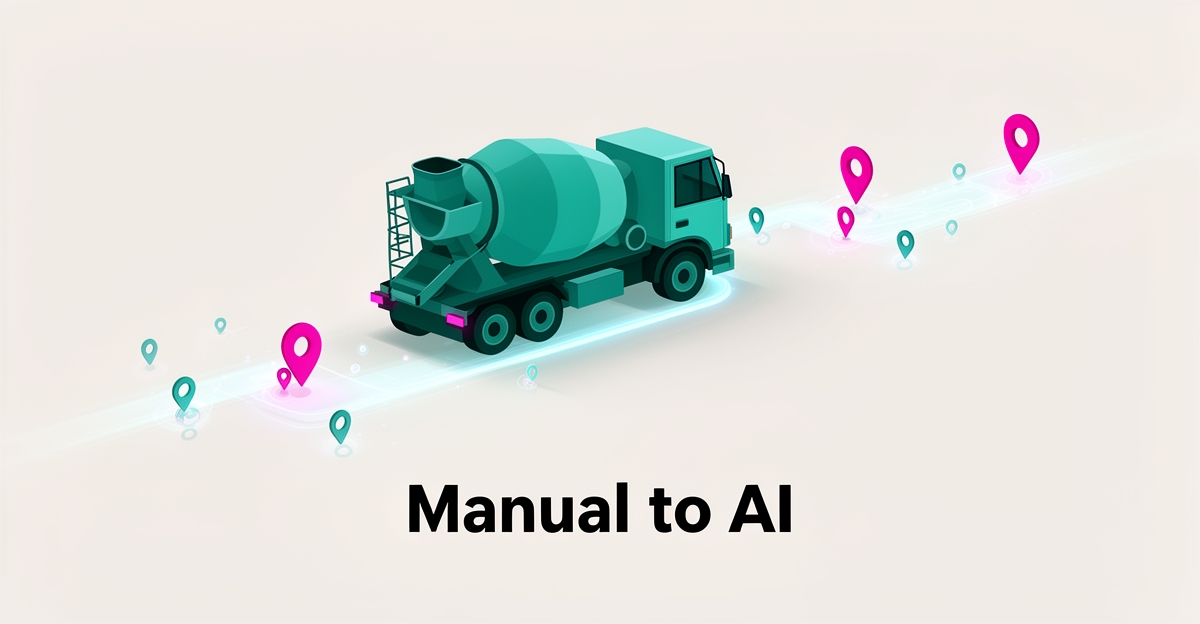
From Manual to AI: Transforming Dispatch and Job Tracking for Concrete Suppliers
Key Facts
- Automating duplicate data entry is one of the most reliable time savers in dispatch operations—teams commonly reclaim several hours per week once tickets, GPS logs, and invoices sync automatically.
- AI-driven routing and load optimization typically reduce empty mileage and fuel spend while keeping delivery volume constant.
- Machine-learning production planning aligns batch output with real-time demand instead of lagged forecasts, which in industry deployments has meaningfully cut overproduction and waste.
- Real-time sensor insights are increasingly replacing paper tickets and 28-day cylinder breaks as the standard for quality verification.
- AIQ Labs has deployed 200+ multi-agent systems and runs 4 live SaaS products daily—production experience, not slideware.
- Open APIs let AI dispatch platforms integrate with existing dispatch, ERP, and GPS tools without a rip-and-replace migration.
Hire a team member that works 24/7 — for less than a part-time wage.
AI receptionists, SDRs, dispatchers and 99+ roles. Trained on your business, fully managed.
Not sure where to start? Ask our AI planner
The Manual Dispatch Bottleneck Costing Concrete Suppliers
The manual dispatch bottleneck in concrete supply chains creates cascading inefficiencies that directly impact delivery reliability and operational costs. Paper tickets, phone-based coordination, and siloed data systems force dispatchers into reactive modes where human error becomes inevitable and late deliveries common. This fragmentation prevents real-time visibility across batching, transit, and placement stages, turning routine scheduling into a high-risk guessing game.
Duplicate data entry is the most visible cost. Dispatchers repeatedly re-enter job details from paper tickets into separate tracking systems, GPS logs, and customer invoices. Each manual transfer introduces transcription risks—missed slump specifications, incorrect batch times, or wrong delivery addresses—that compound into costly rework or rejected pours. The 28-day cylinder break cycle adds further delay, since quality verification happens long after concrete has set, preventing timely mix adjustments and increasing the likelihood of field failures that disrupt schedules and damage client trust.
These manual processes create a fragile dispatch ecosystem where a single point of failure—like a lost ticket or miscommunicated pour time—can delay entire crew rotations and trigger overtime costs. Without integrated data flows, dispatchers lack the situational awareness to optimize truck sequencing or anticipate traffic-related delays, forcing conservative scheduling that wastes fleet capacity. AIQ Labs addresses this bottleneck through AI Workflow Builds that sync job boards, GPS tracking, and delivery logs into a single operational view, reducing human error and creating the real-time coordination needed to improve on-time delivery rates. Eliminating manual intervention isn't just about saving time—it's about removing the systemic risks that prevent concrete suppliers from delivering reliably at scale.
How AI-Driven Dispatch and Digital Platforms Change the Game
The shift from manual dispatch to AI-driven platforms transforms how concrete suppliers operate by connecting batch plants, fleets, and jobsites into a unified, real-time ecosystem. Wireless IoT sensors embedded in trucks and concrete continuously stream temperature, moisture, and strength data to cloud dashboards, replacing paper tickets and delayed cylinder breaks with live insights. These platforms integrate batch plant outputs, GPS tracking, and delivery logs through open APIs, enabling seamless data flow across production, transit, and placement stages. AI algorithms analyze this interconnected data to optimize routing, predict demand, and flag anomalies before they become delays or waste, creating a feedback loop that improves with every delivery.
The operational gains are practical and measurable. AI-driven routing typically cuts empty mileage and fuel spend by optimizing distance, load, and mode variables together. Machine-learning production planning aligns batch output with real-time demand instead of lagged forecasts, which in industry deployments has meaningfully reduced overproduction and waste. And automating duplicate data entry frees staff to focus on exception handling and customer coordination rather than administrative tasks—time that compounds week after week.
- Real-time sensor data from trucks and concrete enables predictive strength monitoring and proactive mix adjustments.
- Cloud dashboards provide a shared, live view of batch plant output, truck location, and field conditions for producers, contractors, and engineers.
- AI-powered routing continuously optimizes for distance, load, and emission factors, turning sustainability into a core operational metric.
- Open APIs ensure seamless integration with existing dispatch, ERP, and project management systems without rip-and-replace complexity.
Computer-aided dispatch (CAD) systems enhanced with AI go beyond basic tracking to enable dynamic rescheduling based on traffic, weather, and jobsite readiness. Dispatchers receive AI-generated recommendations for optimal load sequencing and truck allocation, reducing idle time and preventing bottlenecks at both plant and pour sites. This level of coordination minimizes overdesign, reduces concrete waste from rejected loads, and improves on-time delivery rates—critical factors in an industry where timing directly affects structural quality and project costs. For concrete suppliers, the move to integrated digital platforms isn't just about tracking trucks; it's about creating a responsive, data-driven supply chain where every decision is informed by real-time conditions and predictive insights. AIQ Labs builds these end-to-end systems through AI Operating Systems, connecting legacy equipment with modern AI workflows to eliminate silos and unlock measurable efficiency gains across the concrete lifecycle.
Building a Production-Ready AI Dispatch System Step by Step
Concrete suppliers are shifting from manual dispatch to AI-driven workflows that connect every stage from batching to placement, eliminating paper tickets and reducing human error through real-time data integration. This transformation enables producers to optimize delivery routes, monitor mix performance in transit, and coordinate seamlessly with job sites, directly improving on-time delivery rates and reducing waste. AIQ Labs builds production-ready systems that unify sensor data, GPS tracking, and ERP platforms into a single operational workflow, ensuring decisions are based on live conditions rather than outdated schedules.
The implementation begins with sensor integration, where wireless IoT devices monitor temperature, moisture, and strength via maturity in concrete during transit, streaming data continuously to the cloud. A centralized dashboard then aggregates inputs from batch plants, trucks, and sensors, providing visualizations of truck location, mix performance, and field strength gain for producers, engineers, and contractors. Advanced analytics tools analyze this data to flag anomalies, suggest mix adjustments, and optimize routing based on real-time demand and traffic conditions.
API integration connects the platform with dispatch systems, ERP software, and GPS providers, enabling automated data synchronization across tools and eliminating duplicate entry. This seamless collaboration supports real-time coordination between production and field conditions, reducing delays, overdesign, and waste while improving fleet utilization through smarter load and mode optimization. Over a quarter, these gains compound: fewer rejected loads, less idle truck time, and a dispatch operation that runs on live data instead of guesswork.
AIQ Labs delivers this system through three entry points and payment models: Start Monthly for ongoing managed support, Build in Milestones for phased deployment with fixed-price phases, or Own It Outright for full ownership of the code, agents, and data. Each approach includes tool integrations, monitoring, and continuous improvement, ensuring the system evolves with the business while maintaining production reliability and compliance. For teams that need dispatch capacity without a full platform build, AI Employees—including AI dispatchers—run the day-to-day coordination at roughly 80% less cost than a human hire.
Avoiding Common Pitfalls in Concrete AI Transformation
Concrete suppliers moving from paper tickets to AI-driven dispatch often discover that technology is the easy part. Integration complexity, poor data quality and rushed change management quietly erode the gains that AI promises for on-time delivery and fleet utilization.
Integration complexity emerges when batch plants, dispatch, GPS and delivery logs speak different languages. Connecting disparate systems requires robust API development and data synchronization protocols, and without a clear integration map teams automate broken handoffs instead of fixing them. AIQ Labs addresses this through production-tested multi-agent architecture that syncs with job boards, GPS and delivery logs, ensuring dispatch decisions reflect real-time field conditions rather than stale spreadsheets.
Data quality determines whether AI improves routing or amplifies errors. Ensuring consistent, accurate data flow across all platforms is critical for AI algorithms to function effectively, yet manual entry and legacy formats create noise that degrades predictions. The most effective teams recognize that rapid, automated feedback is far more valuable than manual process gates, and they invest in automated testing and continuous integration to catch issues early.
Legacy system migration and change management risks compound when organizations underestimate operational change. Many concrete suppliers operate with established systems that may not easily integrate with modern AI-driven platforms, and transitioning from manual processes to AI-driven systems requires significant cultural and operational changes. Staff must be trained to work alongside AI systems and interpret AI-generated recommendations, otherwise adoption stalls at pilot stage.
Governance and human-in-the-loop controls keep transformation practical and safe. Pitfalls to avoid include:
- Skipping a data audit before automation, which embeds inconsistent batch and delivery records into AI models
- Treating AI as a drop-in replacement without redesigning workflows, which moves inefficiencies into a digital format
- Lack of human oversight for exceptions, weather disruptions and compliance decisions that require field expertise
- Deploying without real-time traceability and audit trails, limiting accountability across producers, contractors and owners
A structured approach reduces risk and accelerates value. Start with a narrow workflow fix, validate data quality and integration points, then expand with clear adoption plans, training and performance metrics. Real-time insights from sensors, cloud dashboards and AI tools are steadily replacing outdated methods like paper tickets and 28-day cylinder breaks across the industry. When AI is applied to logistics, the impact compounds quarter over quarter: fewer wasted trips, tighter scheduling, and a cost structure competitors running on paper can't match.
AIQ Labs helps suppliers design governance frameworks, embed human-in-the-loop controls for critical dispatch decisions, and build adoption plans that turn pilot wins into operating model change—with 200+ multi-agent systems deployed as the track record behind that approach.
Still paying for 10+ subscriptions that don’t talk to each other?
We build custom AI systems you own outright. No vendor lock-in. Full control.
Not sure where to start? Ask our AI planner
Frequently Asked Questions
How does manual dispatch actually hurt concrete suppliers?
Can AI-driven dispatch really cut costs and waste?
What does real-time sensor monitoring do for concrete in transit?
How long does it take to build a production-ready AI dispatch system?
What are the biggest pitfalls when moving from paper to AI dispatch?
Is AI dispatch only for large concrete suppliers?
From Paper Tickets to Predictive Power: The Concrete Supplier's AI Advantage
Concrete suppliers no longer need to choose between operational reliability and technological advancement. As this article has shown, replacing manual dispatch with AI-driven workflows directly tackles the industry's most persistent pain points: human error from duplicate data entry, blind spots in transit, and reactive scheduling that wastes fleet capacity. By integrating real-time sensor data, GPS tracking, and batch plant outputs into a unified platform, companies gain the visibility to optimize routing, predict mix performance, and coordinate seamlessly with job sites—reclaiming hours of administrative time every week while improving on-time delivery rates and reducing waste. The shift isn't just about efficiency; it's about building a resilient, data-first supply chain where every decision is informed by live conditions rather than outdated schedules. For concrete suppliers ready to move beyond pilot projects and into measurable, scalable transformation, the next step is clear: start with a focused assessment of your biggest dispatch bottleneck. Take the 2-minute Fit Check at aiqlabs.ai/apply, then book a free 30-minute strategy call at aiqlabs.ai/book—no sales pitch, just a real working session to determine if there's a clear win for your business.
Make AI your competitive advantage — not just another tool.
Strategy, implementation and ongoing optimization. One partner, end to end.
Not sure where to start? Ask our AI planner