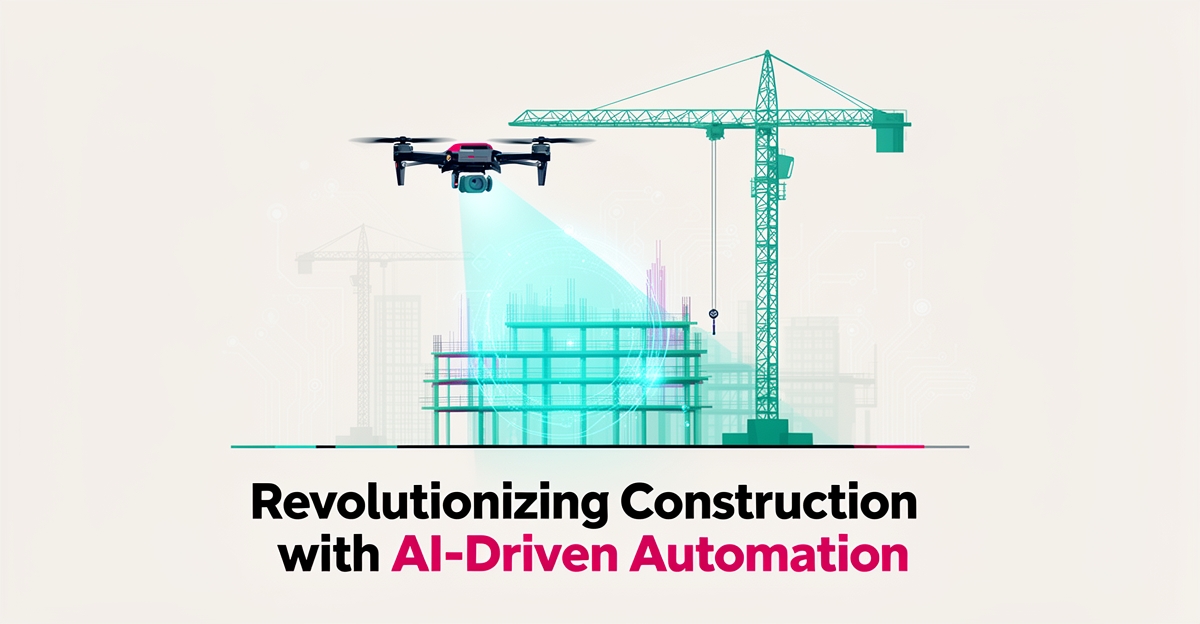
From Manual to AI: Transforming Drone Inspection Workflows in Construction
Key Facts
- AI-driven drones reduce inspection time by 80%, cutting assessments from 6 hours to just 45 minutes.
- Drone inspections achieve 99.1% surface coverage, significantly outperforming the 78% coverage of manual methods.
- Automated work order creation occurs within 60 seconds of AI analysis, eliminating manual transcription delays.
- AI classification maintains 97% consistent accuracy across all surface zones, surpassing human inspection reliability.
- Inspecting with drones reduces worker safety risks by 95% by eliminating exposure to hazardous heights.
- AI-driven drones detect 40% more defects than manual methods due to systematic high-resolution coverage.
- Inspection frequency increases by 4x with AI, shifting from annual cycles to quarterly proactive maintenance.
What if you could hire a team member that works 24/7 for $599/month?
AI Receptionists, SDRs, Dispatchers, and 99+ roles. Fully trained. Fully managed. Zero sick days.
The High Cost of Manual Inspection
Traditional construction inspection methods are no longer just slow; they are financial liabilities that endanger workforce safety and compromise data integrity. Manual surveys, scaffolding setups, and paper-based reporting have become bottlenecks that stall project momentum and inflate operational budgets unnecessarily.
By clinging to legacy processes, construction firms face escalating risks that automated systems were designed to eliminate. The transition from manual to AI-driven workflows is not merely an upgrade in speed, but a fundamental shift in how operational intelligence is captured and utilized on-site.
- Manual inspections require scaffolding and rope access teams, which inflate costs and introduce significant fall hazards.
- Inconsistent documentation formats lead to data gaps that hinder accurate project forecasting and compliance reporting.
- Labor-intensive data entry creates administrative bottlenecks, delaying critical decision-making by days rather than minutes.
The financial impact of these inefficiencies is staggering. Inspection costs drop by 40-70% when firms eliminate expensive scaffolding and specialized rope-access teams, as reported by MicrocosmWorks. Furthermore, drone missions typically cost $500-$2,000 per asset, compared to $5,000-$15,000 for traditional manual methods, according to industry data from MicrocosmWorks.
Consider the time disparity: while a manual inspection might take 4–6 hours, AI-enabled drones complete the same task in just 35–45 minutes. This represents an 80% reduction in inspection time, a metric highlighted in Oxmaint’s 2026 implementation guide. Such speed allows inspectors to flag defects in minutes, not days, keeping projects on schedule.
Beyond cost and time, the safety implications are critical. Drone inspections reduce worker safety risks by 95% by eliminating exposure to heights, electrical hazards, and confined spaces, according to MicrocosmWorks. This drastic reduction in risk is vital for maintaining workforce morale and avoiding costly regulatory penalties.
The consistency of data is another major differentiator. Drone inspections achieve 99.1% surface coverage, compared to just 78% for manual inspections, as detailed by Oxmaint. This comprehensive coverage ensures that no critical defect goes unnoticed, providing a complete picture of asset health.
Furthermore, AI classification achieves 97% consistent accuracy across all surface zones, surpassing human capability in detecting subtle anomalies. This level of precision is supported by Oxmaint’s research on automated defect recognition.
Manual processes also suffer from significant labor inefficiencies. Labor costs per inspection are reduced by 60-75% when moving away from manual piloting, as noted by MicrocosmWorks. This allows skilled personnel to focus on high-value analysis rather than routine data collection.
Automated systems also streamline downstream workflows. Automated work order creation occurs within 60 seconds of AI analysis, eliminating hours of manual transcription, according to Oxmaint. This immediacy accelerates the repair cycle and reduces asset downtime.
The frequency of inspections also increases dramatically. Inspection frequency increases by 4x, enabling quarterly cycles instead of annual or biannual checks, as reported by MicrocosmWorks</a**. This proactive approach prevents minor issues from becoming major structural failures.
Ultimately, the high cost of manual inspection is measured not just in dollars, but in missed opportunities for safety and efficiency. By adopting AI-driven drone workflows, construction firms can transform their inspection processes from a reactive cost center into a proactive strategic advantage. This shift sets the stage for integrating these insights into broader digital transformation initiatives.
The AI-Driven Efficiency Leap
Construction inspection workflows are undergoing a radical transformation, shifting from labor-intensive manual surveys to automated, AI-driven precision. This evolution is not merely about speed; it represents a fundamental increase in data quality and operational safety across the built environment. By replacing inconsistent human documentation with standardized, georeferenced datasets, companies can finally execute proactive maintenance rather than reactive repairs.
The quantitative impact of this shift is staggering, delivering measurable improvements in speed, cost, and accuracy. Traditional manual inspections are increasingly viewed as inefficient bottlenecks that expose workers to unnecessary risk and delay project timelines. AI-enabled drones, integrated with Building Information Modeling (BIM), provide the real-time, high-fidelity data necessary to eliminate these inefficiencies.
The most immediate benefit of AI-driven inspection is the compression of time and resources required to assess site conditions. Manual surveys often require extensive scaffolding setup and rope-access teams, creating significant delays and budget overruns. AI-enabled drones bypass these physical barriers, capturing comprehensive site data in a fraction of the time.
Inspection time drops by 80%, reducing assessments from hours to minutes. This acceleration allows for more frequent checks without impacting project schedules. The financial implications are equally profound, as automated systems eliminate the need for expensive temporary structures and specialized labor crews.
- Time Efficiency: Inspections drop from 4–6 hours to just 35–45 minutes.
- Cost Reduction: Total inspection costs fall by 40–70% per asset.
- Labor Savings: Labor costs per inspection are reduced by 60–75%.
According to Oxmaint’s implementation guide, the transition from manual to AI-driven workflows cuts inspection time from an average of four to six hours down to just 35–45 minutes. This 80% reduction in inspection time allows teams to complete more audits within the same shift, drastically improving resource allocation.
Furthermore, MicrocosmWorks’ industry research indicates that inspection costs drop by 40–70% by eliminating scaffolding and rope access teams. While drone missions may cost $500–$2,000 per asset, manual methods often run $5,000–$15,000, making AI a highly scalable solution for large portfolios.
Beyond speed, AI drones deliver superior data integrity that manual inspections simply cannot match. Human inspectors are limited by line-of-sight, fatigue, and accessibility, often missing subtle defects in hard-to-reach areas. AI algorithms, however, systematically analyze every pixel of high-resolution imagery to identify anomalies with consistent precision.
This systematic approach ensures 99.1% surface coverage, compared to just 78% for manual inspections. The result is a more complete picture of asset health, enabling earlier intervention before minor issues become major structural failures. AI-driven defect recognition achieves high accuracy rates that surpass human capabilities, reducing the need for costly re-inspections.
- Coverage: Drones achieve 99.1% coverage vs. 78% manually.
- Accuracy: AI classification maintains 97% consistent accuracy.
- Detection: AI detects 40% more findings than manual methods.
Research from Oxmaint shows that AI classification achieves 97% consistent accuracy across all surface zones, significantly outperforming manual variability. Additionally, MicrocosmWorks reports that AI-driven drones detected 40% more findings than manual methods due to systematic high-resolution coverage.
Automated work order creation occurs within 60 seconds of AI analysis, ensuring that defects are logged and addressed immediately. This seamless integration transforms inspection data into actionable maintenance tasks, closing the loop between data collection and operational response.
Perhaps the most critical advantage of AI-driven inspections is the dramatic improvement in worker safety. Traditional methods often require personnel to work at dangerous heights, in confined spaces, or near active construction zones. By deploying autonomous drones, companies can assess these hazardous environments remotely, keeping employees out of harm’s way.
Drone inspections reduce worker safety risks by 95% by eliminating exposure to these high-risk areas. This shift not only protects employees but also reduces insurance premiums and liability concerns associated with workplace accidents. The ability to inspect from a safe distance is a game-changer for compliance and ethical operations.
- Safety: Risks reduced by 95% through remote assessment.
- Downtime: Asset downtime reduced by 30% via predictive scheduling.
- Frequency: Inspection frequency increases by 4x.
As noted by MicrocosmWorks, drone inspections reduce worker safety risks by 95% by eliminating exposure to heights, electrical hazards, and confined spaces. This safety boost is complemented by a 30% reduction in asset downtime through better predictive maintenance scheduling.
For construction teams seeking to modernize their operations, adopting AI-driven inspection workflows offers a clear path to efficiency. The next step involves selecting the right hardware and integrating these insights into existing project management systems.
Strategic Implementation Blueprint
Transforming drone inspection workflows requires a structured approach that balances cutting-edge technology with rigorous operational governance. Construction firms must move beyond simple data collection to establish production-ready AI systems that integrate seamlessly with existing project management infrastructure.
Successful deployment hinges on avoiding common pitfalls like isolated data silos and regulatory non-compliance. By adopting a phased implementation strategy, teams can ensure that AI integration drives measurable efficiency rather than creating new bottlenecks.
Before deploying hardware, firms must establish the technical and legal groundwork for autonomous operations. This phase prioritizes regulatory alignment and hardware selection to ensure long-term scalability.
Key Implementation Steps:
- Secure BVLOS Waivers Early: Begin engagement with regulatory bodies like the FAA or EASA to secure Beyond Visual Line of Sight approvals, which are essential for scaling operations without onsite pilots.
- Select Sensor Payloads Strategically: Conduct an asset-specific audit to match sensors to inspection goals, choosing LiDAR for structural mapping and thermal imaging for electrical hotspot detection.
- Deploy Hybrid Compute Architecture: Implement edge computing hardware for real-time defect screening while integrating cloud platforms for long-term storage and digital twin creation.
Regulatory compliance is no longer a barrier but an enabler. In 2026, drone inspection is recognized as an acceptable means of compliance under frameworks like FAA Part 107, provided documentation meets maintenance program standards.
Choosing the right regulatory pathway early prevents costly delays during the scaling phase. Once the legal framework is secured, the focus shifts to physical infrastructure.
The true power of AI drones lies in their ability to connect with existing business systems, transforming raw data into actionable work orders. This phase eliminates manual transcription and ensures data accuracy across departments.
Integration Priorities:
- Automate CMMS/BIM Connectivity: Select drone software with native APIs to push defect classifications and coordinates directly into Computerized Maintenance Management Systems.
- Establish Human-in-the-Loop Validation: Create review queues for AI findings below defined confidence thresholds, ensuring qualified inspectors validate borderline detections before action.
- Standardize Data Formats: Replace inconsistent manual documentation with standardized, georeferenced datasets that integrate cleanly with Building Information Modeling (BIM) tools.
This integration drastically reduces administrative overhead. Automated work order creation occurs within 60 seconds of AI analysis, compared to hours of manual entry.
By automating the flow of information, firms can shift from reactive repairs to proactive maintenance strategies. This connectivity is the backbone of operational efficiency.
A phased pilot program allows construction firms to validate AI performance in controlled conditions before full-scale rollout. This stage focuses on tuning algorithms and training staff on new workflows.
Pilot Execution Strategy:
- Start with Single Asset Types: Limit the initial pilot to one asset type or site section to isolate variables and simplify model tuning.
- Monitor Confidence Calibration: Track AI accuracy over the first 3–6 months, adjusting algorithms to reduce false positives as the system learns site-specific conditions.
- Train Staff on New Protocols: Educate inspection teams on interpreting AI-generated reports and utilizing human-in-the-loop validation tools effectively.
This approach minimizes risk while demonstrating immediate value. The goal is to prove ROI through reduced inspection time and increased defect detection rates.
Successful pilots provide the data needed to justify broader enterprise adoption. With proven results, firms can confidently expand their AI capabilities.
Implementing this blueprint delivers significant operational improvements, including substantial cost savings and safety enhancements. These metrics validate the investment in AI-driven workflows.
Expected Performance Gains:
- 80% Reduction in Inspection Time: Drone + AI inspections reduce time from 4–6 hours (manual) to 35–45 minutes.
- 40-70% Cost Reduction: Eliminating scaffolding and rope access teams significantly lowers overall inspection expenses.
- 95% Reduction in Safety Risks: Removing workers from hazardous heights and confined spaces protects human capital.
- 97% Defect Detection Accuracy: AI classification achieves consistent high accuracy across all surface zones, surpassing manual capabilities.
These results demonstrate that AI integration is an engineering discipline, not just a technological upgrade. The combination of speed, accuracy, and safety creates a competitive advantage.
The transition from manual to AI-driven workflows is now a strategic imperative for modern construction firms. By following this blueprint, organizations can unlock sustainable efficiency and safety improvements.
Conclusion: From Reactive to Proactive
The transition to AI-driven drone inspection is no longer a speculative future—it is a fundamental data quality transformation reshaping construction. Moving beyond simple speed improvements, this shift replaces inconsistent manual documentation with standardized, georeferenced datasets that drive real operational value.
Traditional methods like scaffolding and paper-based reporting are becoming obsolete liabilities. They are slow, error-prone, and expose workers to unnecessary danger. In contrast, AI-enabled drones integrated with IoT and Building Information Modeling (BIM) create "smart environments" that offer proactive insights.
The difference between manual and AI-driven workflows is stark. While manual inspections take hours and miss significant areas, AI systems deliver comprehensive coverage with unmatched speed. This isn't just about efficiency; it’s about having a complete, accurate picture of your assets.
Consider the following performance metrics:
- 80% Reduction in Time: Inspections drop from 4–6 hours manually to just 35–45 minutes with AI.
- 99.1% Coverage: Drones cover virtually every surface, compared to only 78% for manual checks.
- 97% Accuracy: AI classification consistently detects defects across all surface zones.
These numbers represent a massive leap in reliability. When you can detect structural weaknesses with 30% greater accuracy than human inspectors, you stop guessing and start knowing.
Proactive management allows teams to shift from reactive fixes to predictive maintenance. By analyzing historical and real-time data, AI models forecast failures before they cause downtime. This capability changes the entire economics of asset management.
The financial implications are significant:
- Cost Savings: Inspection costs drop by 40-70% by eliminating expensive scaffolding and rope access teams.
- Risk Reduction: Worker safety risks are lowered by 95% by keeping humans out of hazardous zones.
- Downtime Reduction: Predictive scheduling cuts asset downtime by 30%, keeping projects on track.
For example, automated work orders can be created within 60 seconds of AI analysis, compared to the hours required for manual data entry. This immediacy ensures that critical issues are addressed before they escalate into costly delays.
Implementing this technology requires more than just buying a drone; it demands a strategic approach to integration. Success hinges on adopting a hybrid compute architecture that balances real-time edge processing with deep cloud analytics. This ensures immediate safety alerts while maintaining comprehensive data storage.
Furthermore, seamless integration with existing tools is non-negotiable. Connecting drone outputs directly to Computerized Maintenance Management Systems (CMMS) or BIM platforms eliminates manual transcription bottlenecks. This creates a unified workflow where data flows automatically from site to office.
Ultimately, the goal is to build production-ready systems that evolve with your business. AIQ Labs specializes in architecting these custom solutions, replacing software subscription chaos with unified, owned digital assets.
By partnering with experts who understand engineering excellence, you can move beyond pilot programs to full-scale transformation. The result is a competitive advantage that grows stronger with every inspection cycle.
Ready to modernize your inspection workflows? Contact AIQ Labs today to discover how we can architect your competitive advantage.
Still paying for 10+ software subscriptions that don't talk to each other?
We build custom AI systems you own. No vendor lock-in. Full control. Starting at $2,000.
Frequently Asked Questions
How much money can a construction firm actually save by switching from manual scaffolding inspections to AI drones?
Is the 80% time reduction claim realistic for complex construction sites?
Do I need to worry about AI accuracy compared to human inspectors?
How does this technology actually improve worker safety on site?
What if the AI misses something? How do we ensure reliability?
Can drone inspection data integrate with our existing maintenance software?
From Inspection to Intelligence: Architecting Your Competitive Advantage
The transition from manual to AI-driven drone inspection is not merely a technological upgrade; it is a necessary evolution to eliminate the financial liabilities and safety hazards inherent in legacy processes. By shifting from labor-intensive scaffolding and inconsistent paper-based reporting to automated workflows, construction firms can achieve an 80% reduction in inspection time and cut costs by up to 70%. However, implementing these solutions requires more than just deploying hardware—it demands robust, production-ready systems that integrate seamlessly with your operational infrastructure. At AIQ Labs, we specialize in building these custom AI ecosystems, transforming raw site data into actionable intelligence. We move beyond theoretical pilots to deliver end-to-end AI transformation, ensuring your business owns scalable, enterprise-grade assets that drive sustainable competitive advantage. Don’t let manual bottlenecks stall your project momentum. Schedule a free AI Audit & Strategy Session with AIQ Labs today to discover how we can architect your workflow automation and turn operational inefficiencies into measurable growth.
Ready to make AI your competitive advantage—not just another tool?
Strategic consulting + implementation + ongoing optimization. One partner. Complete AI transformation.