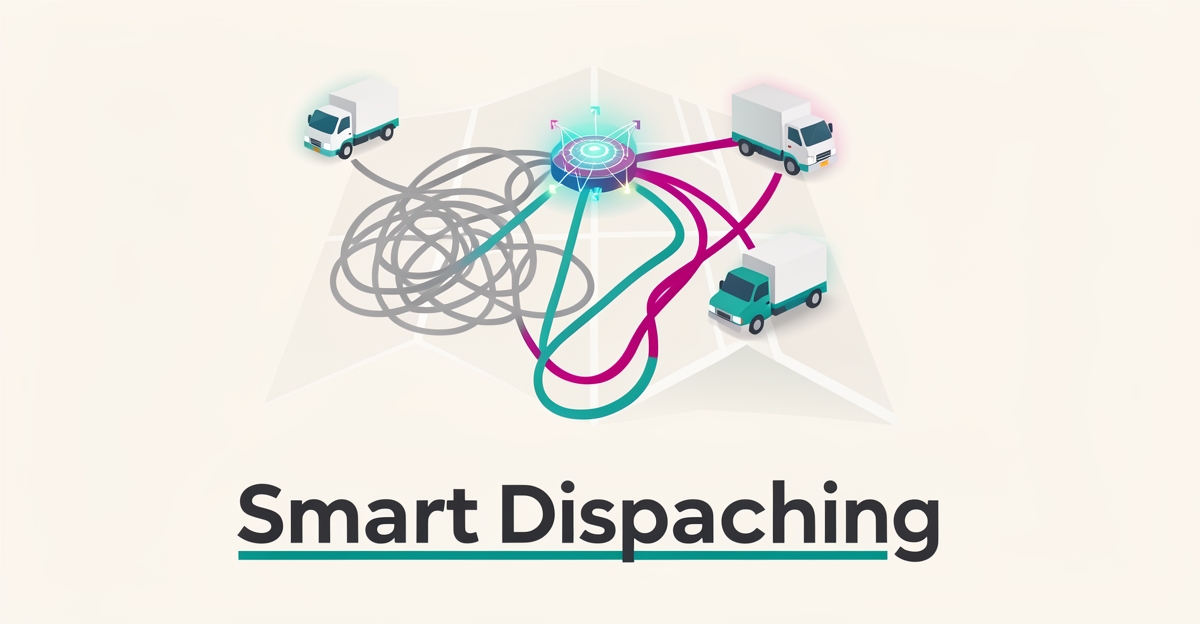
From Manual to AI: Transforming Equipment Dealer Service Calls with Smart Dispatching
Key Facts
- Industry analysis of AI versus manual dispatching suggests planning time can drop by 80-95%, shrinking hours of manual scheduling to minutes per industry analysis
- AI route optimization can reduce service mileage by roughly 20-35%, lowering fuel costs and vehicle wear per industry analysis
- A 2023 field service industry report found 86% of decision-makers need better tools for technician scheduling according to that report
- Microsoft's 2023 Work Trend Index reported 66% of frontline employees experiencing burnout according to Microsoft
- Manual dispatching typically requires 2-4 hours of planning; AI can complete the same optimization in minutes
- AIQ Labs AI Employees cost roughly 80% less than a human hire while working 24/7 without sick days or missed shifts
Hire a team member that works 24/7 — for less than a part-time wage.
AI receptionists, SDRs, dispatchers and 99+ roles. Trained on your business, fully managed.
Not sure where to start? Ask our AI planner
The Hidden Cost of Manual Dispatching in Equipment Service
The operational reality of manual dispatching in equipment service takes a measurable toll on both technicians and the business itself. Frontline workers report high levels of strain—Microsoft's 2023 Work Trend Index found 66% of frontline employees experiencing burnout. That burnout isn't just a human resources issue—it directly impacts service quality, response times, and retention in an industry already facing skilled labor shortages.
Dispatchers and service managers spend excessive hours on tactical planning that could be automated. Industry analysis suggests AI-powered dispatching can reduce planning time by 80-95%, freeing valuable human capacity for higher-value activities like customer relationship management and proactive maintenance planning. Without automation, skilled personnel stay trapped in reactive scheduling cycles that prevent strategic thinking and continuous improvement.
The hidden costs extend beyond time allocation to inefficient resource utilization and operational waste. Manual dispatching often produces suboptimal routing, leading to unnecessary mileage, fuel consumption, and vehicle wear—factors AI systems can typically reduce by 20-35% through intelligent route optimization. These inefficiencies compound daily, creating a drag on profitability many equipment dealers accept as "the cost of doing business" rather than recognizing it as a solvable operational challenge.
- Technician burnout leading to higher turnover and training costs
- Excessive planning time diverting skilled staff from strategic work
- Suboptimal routing increasing fuel costs and vehicle maintenance
- Inconsistent response times damaging customer satisfaction
- Limited visibility into true operational performance and bottlenecks
The human toll may be the most significant hidden cost. When dispatchers constantly firefight scheduling conflicts and technicians carry inefficient routes, morale suffers and consistent, high-quality service becomes harder to deliver. AIQ Labs addresses these challenges through AI Employees—managed AI staff, including dispatchers, that handle dispatching workflows 24/7 at roughly 80% less cost than a human hire, allowing your team to focus on complex problem-solving and customer engagement rather than tactical coordination. This shift reduces operational strain and creates space for the proactive service that builds long-term customer loyalty in the competitive equipment market.
How AI-Powered Dispatching Solves Core Field Service Challenges
Manual dispatching eats your margins and your team's energy. Many equipment dealers still rely on phone calls, spreadsheets, and dispatcher intuition to match technicians, parts, and jobs—a process that is slow, error-prone, and burnout-inducing.
Planning time collapses with AI. Industry analysis suggests AI-powered dispatching can reduce planning time by 80-95%, shrinking hours of manual scheduling to minutes. That shift frees dispatchers from repetitive work and lets them focus on exceptions, customer issues, and strategic coverage.
Route efficiency follows immediately. The same analysis of AI versus manual dispatch finds mileage can be reduced by roughly 20-35% through optimized routing. Fewer miles mean lower fuel and maintenance costs, less wear on equipment, and more jobs completed per day without adding headcount.
Customer experience improves because the system communicates in real time. AI dispatching provides accurate ETAs and automatic status updates, replacing limited check-ins with transparency. Dealers see higher satisfaction and fewer "where is my tech?" calls when customers can track progress without intervention.
The pain points are real and widespread. A 2023 field service industry report found 86% of decision-makers say they need better tools to manage field technician scheduling. Burnout compounds the issue, with Microsoft's 2023 Work Trend Index reporting 66% of frontline employees experiencing burnout at work.
AI dispatching directly addresses these manual workflow failures:
- Planning time drops from 2-4 hours to minutes with automated optimization
- Routes shift from intuition-based to data-optimized, cutting mileage and drive time
- Customers receive real-time updates and accurate ETAs instead of limited status calls
In practice, that means the right equipment goes to the right job faster, with fewer re-dispatches and missed windows. Dispatchers stop re-keying data between CRM and ERP and start managing exceptions the AI surfaces.
For equipment dealers, this is workflow automation applied to a core revenue operation. AIQ Labs deploys AI dispatchers as AI Employees that work 24/7 to optimize field operations, integrating with existing dealer systems so scheduling, routing, and customer updates run continuously without manual hand-offs.
The result is faster response times, lower cost per service call, and a more engaged field team.
Implementing AI Dispatching: A Practical Roadmap for Equipment Dealers
Transitioning from manual to AI-powered dispatching requires a structured approach that aligns with your operational realities. Equipment dealers can begin by thoroughly assessing current dispatch workflows to pinpoint inefficiencies such as excessive planning time or frequent misassignments. This foundational step ensures the AI solution targets real pain points rather than adding complexity. AIQ Labs supports this through its AI Workflow Builds offering—rebuilding the one workflow that costs you the most, at a fixed price and in phases, so you see value before committing further.
Selecting the right AI system involves evaluating how well it integrates with existing CRM and ERP tools, handles real-time data inputs, and adapts to dynamic scheduling needs. The system should reduce planning time significantly—industry analysis suggests AI-powered dispatching can cut planning time by 80-95%, freeing dispatchers to focus on exception handling and customer communication. Once chosen, integration with platforms like HubSpot, Salesforce, or industry-specific software enables seamless data flow between customer requests, technician availability, and parts inventory.
Training staff is critical to successful adoption. Dispatchers and field technicians must understand how to interpret AI-generated recommendations, override when necessary, and provide feedback for continuous improvement. AIQ Labs' Start Monthly payment model for AI Employees includes build, training, tool integrations, and ongoing optimization, so the AI dispatcher learns from real-world performance. Finally, establish metrics to monitor outcomes such as response time, first-time fix rate, and mileage reduction—AI dispatching can typically lower mileage by 20-35% through optimized routing. Regular reviews keep the system aligned with business goals and evolving service demands. For dealers ready to go further, AI Operating Systems connect dispatching with the rest of the business in one operating layer, built in phases and owned outright. Start the 2-minute Fit Check, then schedule a free 30-minute strategy call to map your dispatching bottlenecks and explore a tailored AI implementation plan.
Still paying for 10+ subscriptions that don’t talk to each other?
We build custom AI systems you own outright. No vendor lock-in. Full control.
Not sure where to start? Ask our AI planner
Frequently Asked Questions
How much time can AI-powered dispatching save compared to manual planning?
Will implementing AI dispatching require us to replace our existing CRM or ERP systems?
How does AI dispatching improve customer experience in equipment service?
Can AI dispatching really reduce fuel costs and vehicle wear?
Is AI dispatching only for large equipment dealers, or can small businesses benefit too?
What if our team is resistant to adopting AI for dispatching?
Where AI Dispatching Meets Real Business Impact
The pattern is clear: manual dispatching drains equipment dealers through technician burnout, wasted planning hours, and inefficient routing that drives up costs while eroding service quality. AI-powered dispatching flips this script—cutting planning time by 80-95% and reducing mileage by roughly 20-35%—so your team can focus on what matters: solving complex problems, strengthening customer relationships, and delivering consistent, high-value service. This isn't about replacing people; it's about freeing your skilled staff from reactive firefighting so they can drive proactive, profitable operations. If you're ready to see where your dispatching bottlenecks lie and how AI can remove them, start with the two-minute Fit Check to assess your readiness, then schedule a free 30-minute strategy call with our team to map a clear, no-obligation path forward.
Make AI your competitive advantage — not just another tool.
Strategy, implementation and ongoing optimization. One partner, end to end.
Not sure where to start? Ask our AI planner