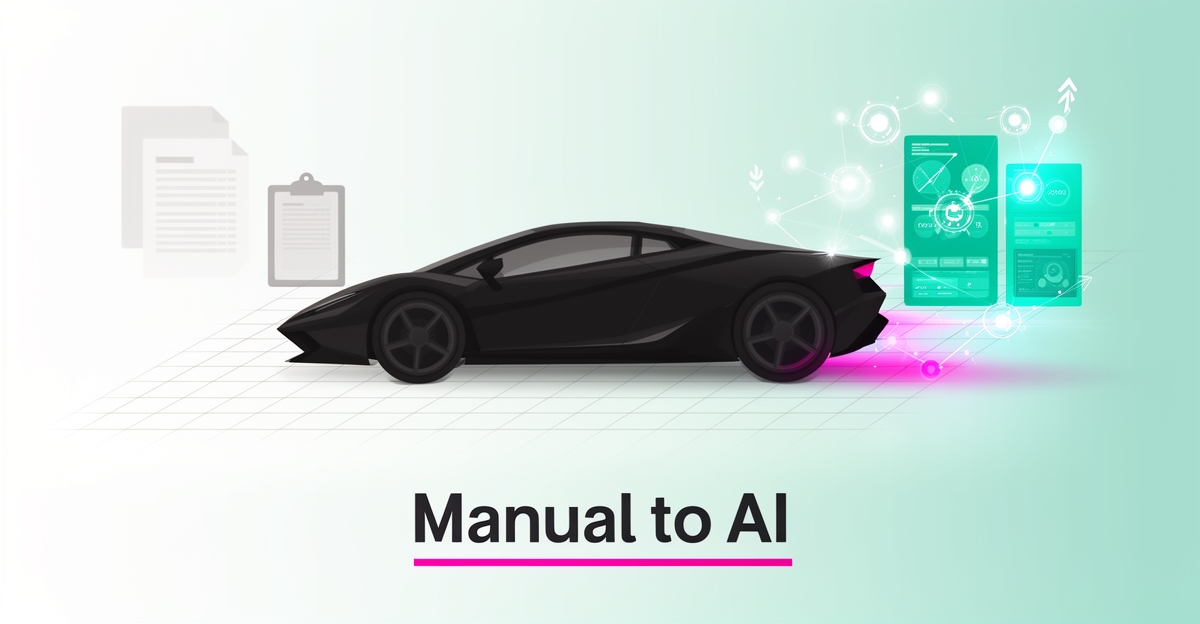
From Manual to AI: Transforming Exotic Car Inventory Management
Key Facts
- Most dealerships are increasing their AI budgets heading into 2026, with industry surveys consistently showing strong adoption intent across automotive retail.
- Slow or inaccurate online engagement is one of the most common reasons luxury shoppers abandon a dealer's website mid-inquiry.
- Dealerships using AI for inventory decisions typically report meaningful revenue gains from faster, more accurate stock and pricing decisions.
- A majority of automotive companies report improved inventory efficiency through AI-driven optimization strategies, per industry analysis.
- AI-powered inventory management typically reduces holding costs by avoiding overstock and shortening days-to-sell.
- In exotic car dealerships where each unit carries six or seven figures, one lost inquiry can erase a month of margin.
- AI inventory systems auto-update stock from trade documents and sales orders without replacing existing dealer management software.
Hire a team member that works 24/7 — for less than a part-time wage.
AI receptionists, SDRs, dispatchers and 99+ roles. Trained on your business, fully managed.
Not sure where to start? Ask our AI planner
The Hidden Cost of Manual Inventory in Exotic Car Dealerships
Paper-based inventory in exotic car dealerships creates invisible drag on every sale. When stock records live in spreadsheets, binders, and memory, the lot becomes a guessing game for sales teams and buyers alike.
Manual tracking introduces lag between a car moving and the system reflecting it. That lag produces phantom inventory, duplicate holds, and missed opportunities on high-value vehicles. Customers requesting a specific model are told it is available, only to learn later it was sold, traded, or moved. That sluggish engagement costs trust — and slow or inaccurate online engagement is one of the most common reasons luxury shoppers abandon a dealer's site mid-inquiry. In a segment where each unit carries six or seven figures, one lost inquiry can erase a month of margin.
Discrepancies also compound operational waste. Staff spend hours reconciling counts, chasing paperwork, and manually updating pricing. Without real-time updates, pricing stays static while market demand shifts, leaving revenue on the table. Dealerships that move to AI-driven inventory decisions typically report meaningful revenue gains, largely from faster, more accurate stock and pricing calls.
The financial impact extends beyond lost sales. Market analysis of dealership operations finds that AI-powered inventory management typically reduces holding costs by avoiding overstock of slow-moving models and shortening days-to-sell.
Manual systems also limit supplier and service coordination. Parts, accessories, and loaner vehicles are tracked separately, creating blind spots across the supply chain. Teams react to stockouts instead of preventing them, which delays deliveries and frustrates high-net-worth clients.
Common pain points of paper-based exotic car inventory include:
- Delayed stock updates leading to overselling and customer disappointment
- Static pricing that misses real-time market shifts
- Reactive replenishment that increases holding costs and ties up capital
- Limited visibility across sales, service, and wholesale channels
For dealerships moving from manual to AI-driven tracking, the shift starts with document processing and management. AI systems can auto-update stock levels from inbound forms, trade documents, and sales orders, detect discrepancies, and support real-time pricing without replacing existing dealer management software.
AIQ Labs builds these systems through AI Workflow Builds — a fixed-price rebuild of the one workflow that costs you the most, delivered in phases and owned outright. It is a practical path for teams that need real-time visibility without vendor lock-in. The result is fewer errors, faster engagement, and inventory that reflects reality the moment it changes.
A majority of automotive companies report improved inventory efficiency through AI-driven optimization strategies, confirming that the cost of manual processes is both measurable and avoidable.
How AI-Driven Inventory Systems Solve Core Dealership Pain Points
Exotic car dealerships can't afford manual errors when each unit represents high value and low turnover. AI-driven inventory systems replace paper logs and spreadsheet updates with automated, always-on control that protects margin and customer experience.
AI automates stock updates by integrating directly with POS, warehouse, and supplier systems. Real-time visibility across the supply chain eliminates the lag between sale, transfer, or service and the inventory record. Dealerships gain real-time inventory updates instead of manual tracking, and can trigger proactive replenishment when stock falls below threshold levels.
Discrepancy detection happens continuously, not during month-end counts. AI models compare historical sales data, market trends, and customer preferences against current counts to flag anomalies, misplacements, or data entry errors before they compound. This predictive approach reduces the risk of overstocking or understocking and supports dynamic pricing based on demand signals.
The business impact is measurable. Industry research finds a majority of automotive companies report improved inventory efficiency through AI-driven optimization strategies, and market analysis shows AI-powered inventory management typically reduces holding costs by preventing overstock and shortening days-to-sell. Combined with the revenue gains dealerships typically see from faster, more accurate inventory decisions, the shift moves inventory from cost center to competitive advantage.
AIQ Labs aligns with this shift through AI Workflow Builds that integrate with existing dealership software, so stock levels auto-update, discrepancies get flagged, and pricing responds to real demand — all in a system the dealership owns outright.
Core pain points solved by AI-driven inventory include:
- Manual stock updates replaced by automated sync with POS and supplier systems for real-time accuracy
- Discrepancies detected automatically through continuous reconciliation of sales, transfers, and counts
- Dynamic pricing enabled by demand forecasting and market trend analysis
- Proactive replenishment triggered by threshold alerts and predictive demand models
Warehouse operations benefit as AI analyzes order history and picking patterns to suggest efficient layouts, reducing labor costs and speeding fulfillment. Stronger supplier coordination follows when AI evaluates performance metrics to identify risks and suggest alternatives, helping dealerships avoid disruptions.
Adoption requires assessing current processes, implementing software that integrates with existing systems, and training models on accurate historical data. When built as owned, integrated workflows rather than subscription widgets, AI inventory becomes a sustainable capability that scales with the business.
Implementing AI Inventory Management: A Practical Roadmap for Dealerships
Moving from paper logs to AI-driven inventory is no longer experimental for exotic car dealerships — it is a competitive necessity as buyer expectations and margins tighten.
A practical roadmap starts with an honest assessment of current workflows. Dealerships map manual tracking points, data entry bottlenecks, and legacy system constraints before selecting tools. This baseline reveals where real-time updates, discrepancy detection, and dynamic pricing will deliver the greatest lift.
Selecting integrable AI tools is the next decision point. The system must connect to existing dealership software, POS, and supplier feeds so stock moves automatically rather than by re-keying. AIQ Labs' AI Workflow Builds rebuild the one workflow that costs the most at a fixed price, integrating with existing systems for a low-risk adoption path.
Implementation works best in phases. With the Build in Milestones payment model, a dealership splits the build into phases, approves and pays per phase, and keeps everything built so far. For teams that want ongoing coverage without a full build, AI Employees run under the Start Monthly model — a flat monthly plan that typically costs around 80% less than a comparable human hire, including setup, training, integrations, monitoring, and improvements. Dealerships ready to connect inventory with sales, service, and pricing across the whole operation can graduate to an AI Operating System, built in phases and owned outright.
Real-time monitoring and replenishment follow integration. AI systems tie point-of-sale, warehouse, and supplier systems together to provide visibility across the supply chain and trigger automated replenishment when stock falls below thresholds. Industry analysis shows a majority of automotive companies report improved inventory efficiency through AI-driven optimization strategies.
Predictive analytics then replaces guesswork. Historical sales data, market trends, and customer preferences feed models that forecast demand and optimize stock levels, reducing overstock and understock risk. Dealerships using AI typically report revenue gains and reduced holding costs from AI-powered inventory management.
Warehouse optimization closes the loop. AI analyzes order history and picking patterns to suggest efficient layouts, cutting labor cost and speeding fulfillment. Supplier performance metrics are evaluated continuously to flag risks and suggest alternatives.
A practical transition sequence looks like this:
- Assess current inventory management processes and identify improvement areas
- Implement AI-powered inventory management software that integrates with existing systems
- Analyze historical sales data and market trends to predict demand and optimize stock levels
- Set up real-time monitoring and replenishment systems to ensure accurate inventory levels
- Optimize warehouse layout and picking patterns to reduce labor costs and speed order fulfillment
With phased delivery and owned systems, dealerships gain real-time inventory updates and proactive replenishment without vendor lock-in. The result is tighter cash flow, fewer stockouts, and pricing that responds to market signals as they happen.
Still paying for 10+ subscriptions that don’t talk to each other?
We build custom AI systems you own outright. No vendor lock-in. Full control.
Not sure where to start? Ask our AI planner
Frequently Asked Questions
How much revenue can exotic car dealerships expect to gain by switching to AI-powered inventory management?
Will implementing AI inventory systems require us to replace our existing dealership software?
How does AI reduce holding costs for exotic car inventory?
Why do shoppers abandon dealer websites, and how does real-time inventory help?
Can AI help prevent stockouts and overstocking in exotic car dealerships?
What is the first step in transitioning from manual to AI-driven inventory management?
From Phantom Stock to Real-Time Revenue
Moving from paper logs and spreadsheets to AI-driven inventory is how exotic car dealerships stop losing trust and margin on every high-value unit. Real-time updates eliminate phantom inventory and overselling, continuous discrepancy detection protects pricing integrity, and predictive analytics turn demand signals into proactive replenishment and dynamic pricing. The result is tighter cash flow, fewer stockouts, and a lot that reflects reality the moment a car moves. For teams that need visibility without vendor lock-in, the practical path is custom AI that integrates with existing dealer management software and is owned outright. AIQ Labs builds those systems — through AI Workflow Builds for a single high-cost workflow, AI Employees for ongoing managed coverage, or a full AI Operating System when the whole dealership needs one connected layer — to auto-update stock from inbound forms and sales orders, flag anomalies, and support real-time pricing while keeping full control in-house. Start with an honest workflow assessment, map your manual tracking points, then pilot an integrated AI workflow for one department. When you're ready to explore fit, take the 2-minute Fit Check at https://aiqlabs.ai/apply and book a free 30-minute strategy call to map your biggest bottleneck and identify high-ROI automation opportunities. A majority of automotive companies report improved inventory efficiency through AI-driven optimization strategies — the question is whether your lot will be one of them.
Make AI your competitive advantage — not just another tool.
Strategy, implementation and ongoing optimization. One partner, end to end.
Not sure where to start? Ask our AI planner