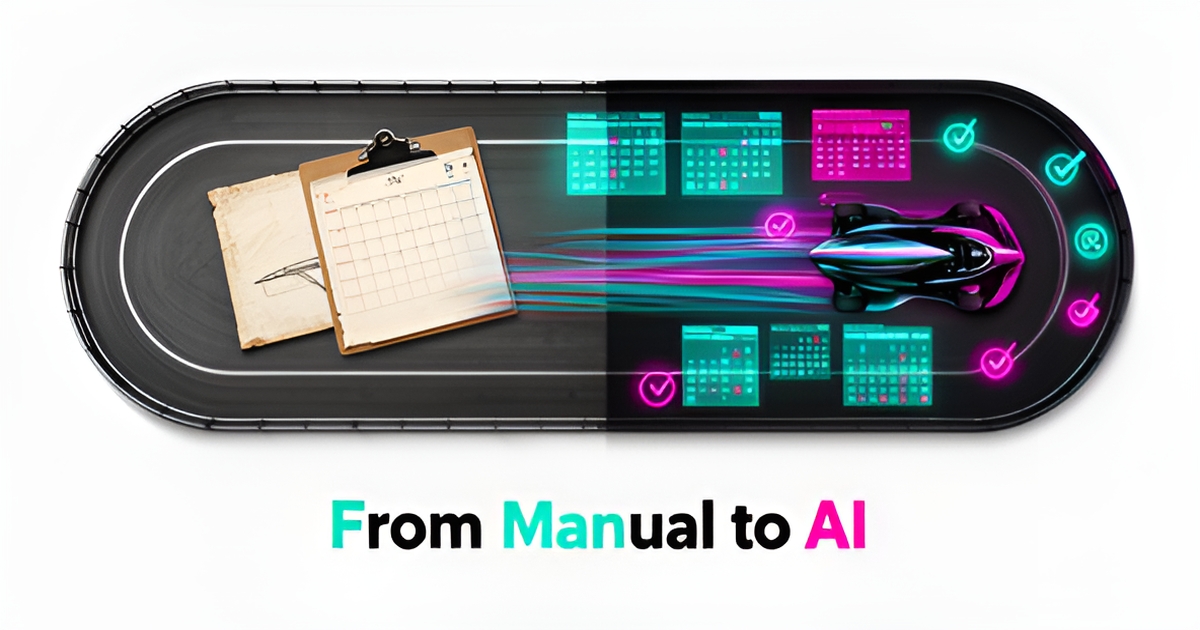
From Manual to AI: Transforming Go-Kart Track Event Planning and Scheduling
Key Facts
- A large share of routine event workflows—bookings, capacity tracking, confirmations—can typically be augmented or fully handled by AI as of late 2026, yet real-world adoption across the events industry remains low.
- AI-driven planning systems automate track bookings, manage participant capacity dynamically, and send real-time confirmations via SMS and email.
- AIQ Labs has deployed 200+ multi-agent systems and runs 4 live SaaS products daily—proof the approach works in production, not just in theory.
- AI Employees typically cost around 80% less than an equivalent human hire while providing 24/7/365 availability with zero missed calls.
- AIQ Labs offers three entry points—AI Employees, AI Workflow Builds, and AI Operating Systems—with payment models that let you start monthly, build in milestones, or own it outright.
Hire a team member that works 24/7 — for less than a part-time wage.
AI receptionists, SDRs, dispatchers and 99+ roles. Trained on your business, fully managed.
Not sure where to start? Ask our AI planner
The High Cost of Manual Event Planning
The traditional approach to event planning at go-kart tracks is riddled with inefficiencies that directly impact revenue and customer satisfaction. Manual scheduling consumes countless hours as staff juggle spreadsheets, phone calls, and paper calendars to coordinate bookings, often leading to double bookings or underutilized track time. This reactive process makes it difficult to anticipate peak demand periods, resulting in capacity miscalculations that leave money on the table during busy weekends or create frustrating wait times for guests. Delayed confirmations further erode trust, as participants wait hours or days for booking approvals, increasing the likelihood they'll choose a competitor with faster response times. These operational bottlenecks aren't just inconvenient—they represent a systemic drag on profitability that scales with every event hosted.
The persistence of these manual methods highlights a stark disconnect between technological potential and real-world application in the industry. As of late 2026, a large share of routine event workflows can typically be augmented or handled by AI, yet adoption across the events industry remains stubbornly low. This implementation gap reveals that many go-kart track owners recognize the value of automation but struggle to bridge the divide between experimentation and operational deployment. The hesitation often stems from concerns about integration complexity, upfront costs, or uncertainty about ROI—factors that keep businesses trapped in costly, error-prone processes despite clear evidence of AI's ability to streamline bookings, optimize capacity, and deliver instant confirmations. Until these barriers are addressed, the industry will continue to leave significant efficiency gains on the table.
The AI-Driven Event Planning Revolution
Go-kart tracks are moving from spreadsheets and phone calls to intelligent systems that plan events while staff focus on the track. The shift is already underway across the events industry, and the technology is now practical for high-volume, time-sensitive bookings.
AI-driven event planning systems automate track bookings, dynamically manage participant capacity, and send real-time confirmations. This automation removes manual bottlenecks and creates a more efficient and effective planning process. Real-time capacity management prevents overbooking and maximizes track utilization during peak demand.
The opportunity is large and adoption is growing. Most event professionals now use AI in some capacity, though far fewer have deployed it strategically across their operations. The gap points to a clear implementation opportunity for operators willing to move early.
For go-kart operators, the benefits show up in daily operations. Systems increase efficiency and productivity by handling repetitive booking tasks. Accuracy improves as AI reduces manual entry errors in participant lists and time slots. Customer experience strengthens through instant confirmations and personalized updates.
AIQ Labs builds intelligent, scalable workflows that adapt to event seasons and peak demand through AI Workflow Builds—rebuilding the one workflow that costs you the most, at a fixed price, in phases. The approach mirrors how modern tracks need systems that learn demand patterns and adjust capacity automatically.
AI-driven planning delivers measurable gains across the event lifecycle:
- Automated track bookings that sync with calendars and payment systems
- Dynamic participant capacity management based on session length and safety limits
- Real-time confirmations and waitlist management sent via SMS and email
- Data-driven insights for pricing, staffing and track allocation
Decision-making shifts from intuition to data. Automated systems provide visibility into utilization trends, no-show rates, and revenue per session. That insight supports better staffing and more profitable peak pricing.
Expert voices emphasize augmentation over replacement. AI is not a substitute for human judgment, but a tool to augment and support decision-making. Staff remain essential for experience quality, while AI handles the repetitive coordination—whether that's an AI receptionist answering booking calls at 2 a.m. or an AI dispatcher managing session queues.
The transformation is practical now for SMB operators who need enterprise-grade automation without enterprise complexity. Custom workflows can be built to own outright, integrated with existing booking tools, and scaled with seasonal demand.
From Chaos to Control: Key Benefits and ROI
Manual scheduling is costing go-kart tracks time, revenue, and repeat customers. AI-driven event planning systems are changing that by automating track bookings, managing participant capacity, and sending real-time confirmations.
The shift is measurable. While a large share of event workflows can typically be AI-augmented as of late 2026, real-world adoption across the industry remains low. That implementation gap represents untapped efficiency for tracks still relying on spreadsheets and phone calls.
Efficiency gains show up first in day-to-day operations. Automated booking and capacity management remove manual back-and-forth, while real-time confirmations reduce no-shows and last-minute scrambles. Increased efficiency and productivity is the most commonly cited benefit, followed by improved accuracy and reduced errors from system-driven scheduling.
Customer experience improves when personalization is possible at scale. AI systems can tailor communications, suggest optimal time slots, and handle changes instantly, moving from limited personalization to enhanced engagement. Better decision-making with data-driven insights also emerges as planners gain visibility into peak demand, group size trends, and revenue per session.
The business impact extends beyond operations:
- Faster booking cycles and reduced staff time on admin tasks
- Higher accuracy in capacity planning and reduced overbooking errors
- Real-time confirmations and automated follow-ups that lift satisfaction
- Data-driven pricing and staffing decisions based on historical demand
Adoption is growing but uneven. Most event professionals now use AI in some capacity, though only a small minority qualify as strategic leaders. The difference is often ecosystem thinking versus platform buying.
As one expert puts it, the biggest mistake event teams make with technology is buying platforms; the winning move is building an ecosystem. That perspective aligns with how AIQ Labs approaches automation for tracks—intelligent, scalable workflows that adapt to event seasons and peak demand, and that you own outright, rather than one-off subscriptions you rent forever.
ROI becomes clear when automation covers the full booking-to-race journey. Tracks that move from manual to AI-driven planning typically see stronger revenue growth, fewer errors, and teams able to focus on delivering a great racing experience instead of chasing confirmations.
Implementing AI in Your Go-Kart Operation
Transforming your go-kart track event planning with AI doesn't require a complete overhaul—it starts with a clear, practical roadmap. By following five focused steps, you can systematically integrate intelligent automation into your workflows while maintaining control and measuring real impact. The process begins with identifying where AI can relieve the most manual burden, such as tracking participant capacity or sending booking confirmations. Most routine scheduling tasks are strong candidates for automation as of late 2026, revealing significant untapped potential in day-to-day operations.
Next, select an approach that aligns with your operational scale and technical environment, prioritizing solutions that offer seamless integration with your existing tools like calendars, payment processors, or CRM platforms. Avoid point solutions that create data silos; instead, look for systems built on flexible architectures that can adapt to seasonal demand fluctuations. AIQ Labs' AI Workflow Builds target exactly this: one workflow, fixed price, delivered in phases so you see value before committing further. Once chosen, integrate the system with your current software using secure APIs to enable real-time data synchronization—this step is critical for avoiding double bookings and ensuring accurate capacity management. Proper integration lays the foundation for a unified system where AI handles repetitive tasks while your team focuses on enhancing the rider experience.
Then, invest in targeted training for your staff to build confidence and competence with the new system. Focus on role-specific scenarios, such as how front desk staff can override AI suggestions during peak hours or how managers can interpret AI-generated insights on peak demand trends. Effective change management increases adoption rates and reduces resistance, especially when employees see how AI reduces their administrative load. Finally, establish clear performance metrics to monitor the system's impact—track reductions in manual entry time, improvements in booking accuracy, and customer satisfaction scores. Regularly reviewing these metrics allows you to refine the system, address edge cases, and scale automation confidently across additional workflows. This iterative approach ensures your AI investment delivers continuous improvement rather than a one-time setup.
Your Track's Next Lap Starts Now
The evidence is clear: manual event planning is costing go-kart tracks time, revenue, and customer trust, while AI-driven systems are already delivering measurable gains in efficiency, accuracy, and guest experience. With most routine event workflows ready for AI augmentation and adoption still lagging, the opportunity to transform your operations is both urgent and achievable. Start by identifying your biggest scheduling pain points, then explore how intelligent automation can integrate with your existing tools to free up your team for what matters most—delivering unforgettable races. Take the first step with the 2-minute Fit Check, then book a free, no-obligation 30-minute strategy call to map your highest-ROI automation opportunities and see if AIQ Labs is the right partner for your journey.
Make AI your competitive advantage — not just another tool.
Strategy, implementation and ongoing optimization. One partner, end to end.
Not sure where to start? Ask our AI planner