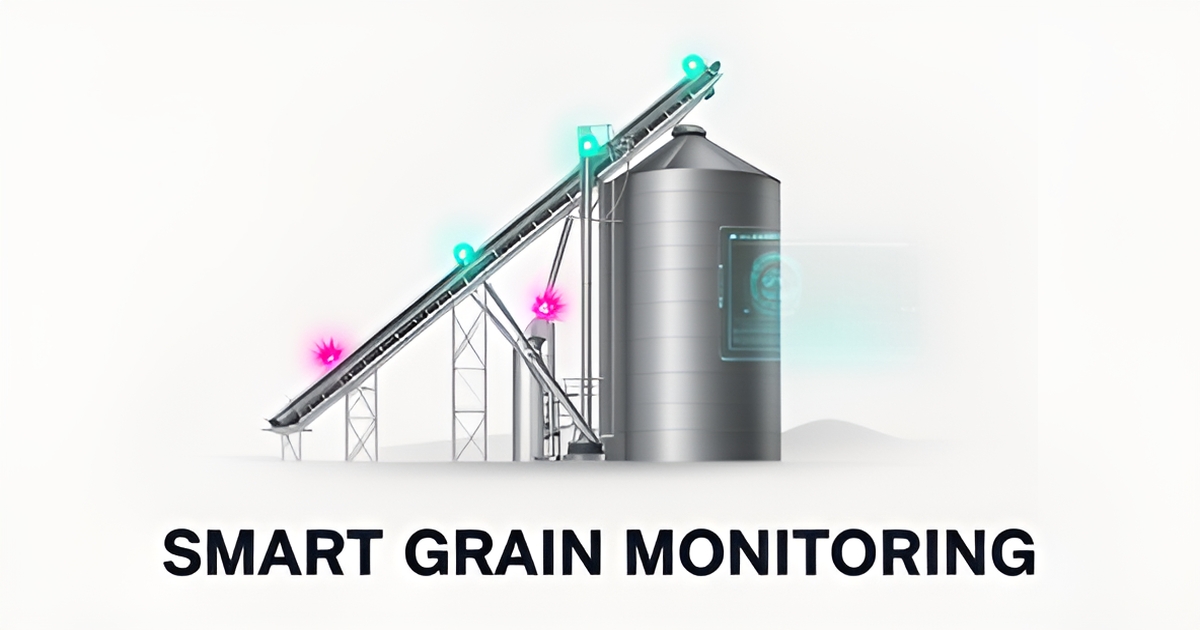
From Manual to AI: Transforming Grain Handling with Smart Monitoring and Alerts
Key Facts
- AI adoption has moved well past the experimental stage across industries as of late 2026, with most large operators now running AI in at least one business function
- AI doesn't fix integration problems—it exposes and accelerates existing weaknesses in data consistency and governance
- Implementation at scale, not model access, remains the primary barrier to AI adoption in industrial settings
- AI agricultural systems optimize inputs mathematically, while manual processes depend on human judgment and field experience
- Manual grain handling relies on visual estimates and intermittent weigh-ins, creating blind spots that compound at scale
- Predictive maintenance tied to real wear patterns typically outperforms fixed-interval servicing on both cost and uptime
Hire a team member that works 24/7 — for less than a part-time wage.
AI receptionists, SDRs, dispatchers and 99+ roles. Trained on your business, fully managed.
Not sure where to start? Ask our AI planner
The Hidden Cost of Manual Grain Handling: Why Legacy Systems Fail at Scale
The shift from manual to AI-driven grain handling isn't just about upgrading tools—it's about confronting the hidden costs of legacy systems that silently erode safety, accuracy, and throughput. Manual processes depend on human judgment and fragmented data streams, creating blind spots that compound at scale. Loading accuracy suffers when operators rely on visual estimates or intermittent weigh-ins, leading to overfilling, spillage, or underutilized capacity. Equipment wear goes unnoticed until failure, because maintenance schedules follow fixed intervals rather than real-time stress indicators. These inefficiencies aren't just operational hiccups—they're systemic risks amplified by inconsistent data and weak governance. Layering AI onto unprepared systems doesn't hide these gaps; it makes them impossible to ignore. In agriculture, where margins are thin and labor shortages persist, relying on manual scouting and experience limits coverage and introduces variability that AI-driven systems reduce through mathematical optimization. Without unified data foundations, even advanced monitoring tools can misfire—producing conflicting alerts or missing critical thresholds due to sensor misalignment or outdated calibration records. This is where a structured approach to AI transformation becomes essential: building systems that don't just automate tasks but establish the data integrity and operational clarity needed for reliable anomaly detection, predictive maintenance, and alert-driven workflows. The result isn't just fewer manual checks—it's a shift from reactive fixes to proactive control, where every bushel moved is tracked, every wear pattern is forecasted, and every alert is grounded in trustworthy, real-time intelligence. By addressing the root causes of manual process failure—fragmented inputs, delayed feedback, and human-dependent variability—smart monitoring transforms grain handling from a liability into a precision operation. This foundation sets the stage for AI to deliver not just incremental gains, but a fundamental rethinking of how grain elevators operate at scale—safer, smoother, and with far fewer surprises.
How AI Monitoring Exposes and Fixes Grain Handling Blind Spots
Smart monitoring does not create problems in grain handling; it makes the ones already there impossible to ignore. When sensors, logs, and operator notes live in separate silos, an AI layer surfaces the gaps instantly.
AI adoption in business operations does not automatically fix underlying integration problems. In practice, AI exposes and accelerates existing weaknesses in data consistency, governance, and access controls. In grain elevators that principle shows up as conflicting tonnage readings, uncalibrated moisture probes, and shift logs that never sync.
AI adoption has become mainstream across industries as of late 2026, with most large companies running AI in at least one business function. That scale of deployment means monitoring systems are frequently layered onto operations that were never designed for unified data.
The first blind spot AI reveals is fragmentation. Loading cells, conveyors, and bin sensors often report to different systems with inconsistent definitions for the same event. AI models trained on that data produce contradictory alerts and erode trust on the floor.
The second is calibration drift. Manual processes rely on experienced scouts and local knowledge, offering contextual depth but limited coverage. AI platforms optimize inputs mathematically, while manual approaches depend on human judgment and field experience. Without a unified pipeline, the math is only as good as the weakest sensor.
Fixing the gaps requires governance before automation. AIQ Labs approaches grain monitoring through AI Workflow Builds—rebuilding the one workflow that costs the most, at a fixed price and in phases, so the data foundation is unified before intelligence is applied on top of it.
A reliable monitoring foundation typically includes:
- Unified data pipelines that normalize telemetry, weighbridge tickets, and maintenance logs into a single source of truth
- Anomaly detection models that flag loading deviations, moisture spikes, and throughput drops in real time
- Predictive maintenance triggers tied to equipment wear patterns and historical failure data
- Operational governance for sensor calibration standards, access controls, and alert ownership
When the pipeline is clean, AI shifts from noise to action. Systems can detect loading anomalies, forecast equipment wear, and trigger alerts for maintenance, improving safety and throughput. AI doesn't make integration intelligent by design—it just makes the gaps harder to ignore.
Implementation at scale remains the barrier, not model access. Even the largest cloud providers have responded by embedding engineering talent directly with customers, because the hard part is integration with existing infrastructure and lasting workflows—not the models themselves.
In practice, grain handling teams that address fragmentation and governance first see monitoring become a control system rather than a dashboard. Decisions move from reactive judgment to mathematical optimization across every acre and every bin, executed consistently and auditable.
From Insight to Action: Implementing AI Monitoring in Grain Elevators
AI adoption succeeds when it solves a specific operational bottleneck, not when it chases abstract efficiency. For grain handlers, that means starting with a targeted workflow—like loading dock anomaly detection—rather than attempting a facility-wide overhaul on day one.
The first phase focuses on a single, high-impact pain point. An AI workflow build targets the loading dock, where sensors and computer vision monitor grain flow rates, detect foreign material, and flag equipment strain in real time. This approach mirrors the broader trend in agriculture, where AI platforms optimize inputs mathematically while manual methods rely solely on human judgment. By containing the initial scope, operators validate ROI quickly without disrupting harvest schedules.
Scaling beyond the pilot requires deep integration with existing SCADA and maintenance systems. AI agents pull telemetry from legacy sensors and push alerts directly into work order systems. However, integration exposes underlying data weaknesses. AI accelerates existing gaps in data consistency and governance rather than resolving them. Without unified sensor definitions and access controls, anomaly detection produces conflicting alerts and erodes trust.
Successful scaling follows a structured maturity path:
- Pilot validation: Deploy anomaly detection on one critical asset, such as a grain leg or conveyor, with predefined success metrics.
- System integration: Connect AI insights to SCADA historian data and maintenance management software via secure APIs.
- Governance framework: Establish clear data ownership, audit trails, and escalation protocols for AI-generated alerts.
- Team enablement: Train operators to interpret AI recommendations and override automated decisions when field conditions demand.
Implementation at scale remains the primary barrier for most industrial operations, which is why major cloud providers now invest heavily in forward-deployed engineering teams to embed AI expertise directly within customer facilities. This shift underscores that technology alone fails without operational context.
AIQ Labs structures grain elevator transformations along these same lines—starting with a targeted AI Workflow Build for the one workflow that costs the most, then scaling toward a full AI Operating System the facility owns outright. The Build in Milestones payment model allows operators to approve each phase before expansion, ensuring the AI system aligns with actual throughput goals and safety protocols. For round-the-clock coverage between phases, AI Employees can handle dispatching, intake calls, and scheduling at a fraction of the cost of additional hires.
Sustainable impact requires ongoing optimization. As AI models ingest more seasonal data, they refine wear forecasts and reduce false positives. The result is a self-improving operational asset that the business owns outright, not a subscription service that locks critical infrastructure behind vendor APIs.
Still paying for 10+ subscriptions that don’t talk to each other?
We build custom AI systems you own outright. No vendor lock-in. Full control.
Not sure where to start? Ask our AI planner
Frequently Asked Questions
Why do manual grain handling processes struggle to scale effectively?
Does implementing AI automatically fix data and integration issues in grain facilities?
What blind spots does AI monitoring reveal in grain handling operations?
How should grain elevators implement AI monitoring without disrupting operations?
Is AI adoption common enough that grain facilities should consider it now?
What is the biggest barrier to scaling AI in grain handling operations?
The Bin Is Full When the Data Says So
Smart monitoring doesn't invent problems in grain handling—it makes the ones already there impossible to ignore. The shift from manual scouting to AI-driven alerts exposes fragmentation in sensor data, calibration drift in moisture probes, and governance gaps that legacy systems paper over with experience. Fixing those foundations first—unified pipelines, anomaly detection tied to real wear patterns, and clear alert ownership—turns monitoring from a dashboard into a control system. Operators move from reactive judgment to mathematical optimization across every load and bin, executed consistently and auditable. The path forward isn't a facility-wide overhaul but a targeted start: validate anomaly detection on one critical asset, integrate with SCADA and maintenance systems, then scale with governance and team enablement baked in. Implementation at scale, not model access, remains the barrier—and that barrier is operational, not technological. AIQ Labs helps grain elevators cross it with AI Employees for around-the-clock operations, AI Workflow Builds that fix the one workflow costing you the most, and AI Operating Systems you own outright. Start with the two-minute Fit Check at aiqlabs.ai/apply, then a free 30-minute strategy call to map your highest-ROI automation opportunity—no obligation, just clarity.
Make AI your competitive advantage — not just another tool.
Strategy, implementation and ongoing optimization. One partner, end to end.
Not sure where to start? Ask our AI planner