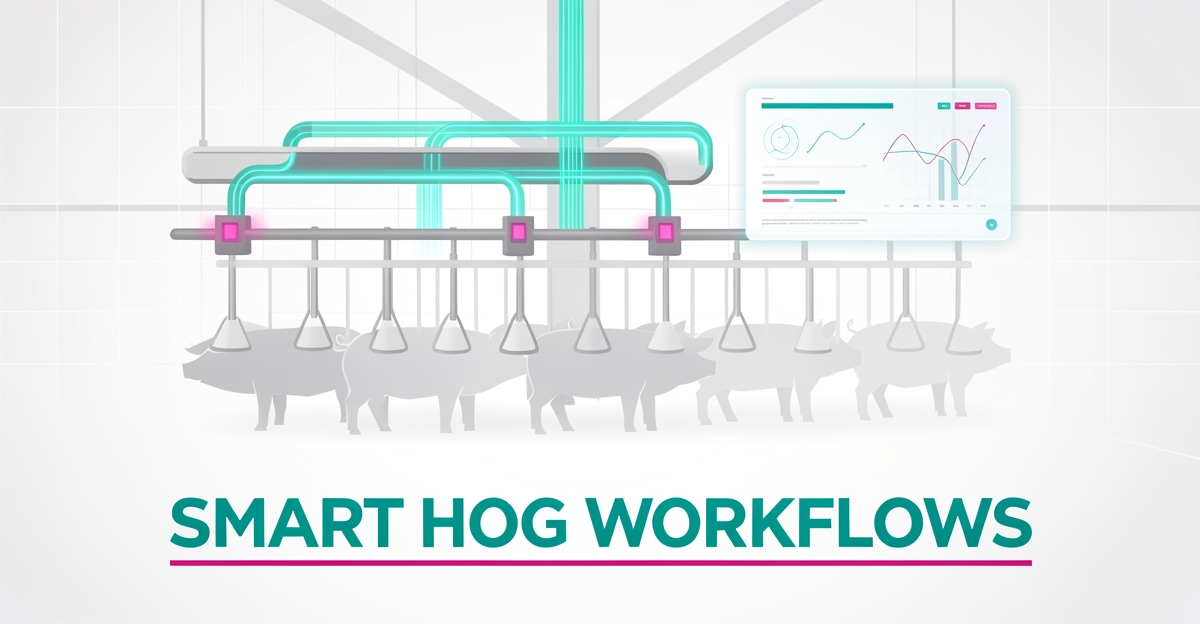
From Manual to AI: Transforming Hog Farm Operations with Smart Workflows
Key Facts
- Manual data entry for 350 sows in batch farrowing systems previously took hours per week as reported by Farmtario
- Only 10% of AI transformation involves AI itself; the remaining 90% is process mapping, data collection, testing, and integration per LinkedIn's AI transformation framework
- Progressive Group of Companies manages 45,000 sows across its operations according to Farmtario
- Workers are given Android phones with no SIM card operating on barn WiFi so data is immediate as noted by Farmtario
- Google's AI-driven code migration achieved a 50% reduction in project time by combining LLMs with traditional engineering tools per LinkedIn's AI transformation content
Hire a team member that works 24/7 — for less than a part-time wage.
AI receptionists, SDRs, dispatchers and 99+ roles. Trained on your business, fully managed.
Not sure where to start? Ask our AI planner
The Hidden Cost of Manual Hog Farm Workflows
Manual feeding logs, paper records, and spot-check waste checks still define daily life on many hog farms — and the cost is measured in labor hours and missed signals.
Farmtario reporting shows the scale of the burden. The Progressive Group of Companies manages 45,000 sows across its operations, and manual data entry for groups of 350 sows in batch farrowing systems previously took hours per week. That time is not just entry; it is repeated transcription across disconnected systems.
Fragmented record-keeping creates the first drag. Data is collected but rarely utilized or integrated, according to veterinary and farm operations analysis. Farmers often need to log into multiple systems to monitor performance, which slows decisions and increases the risk of error at each handoff.
Reactive waste monitoring compounds the problem. Without continuous sensing and aggregation, issues are identified after feed has been wasted or environmental thresholds have been crossed. The result is higher input costs and limited ability to scale without adding headcount.
The inefficiency pattern shows up consistently across operations:
- Manual feeding schedules tied to fixed times rather than real-time growth or intake data
- Paper or siloed digital logs that require hours per week for groups of sows
- Disjointed systems that force multiple logins and duplicate data entry
- Waste checks that are periodic instead of continuous, delaying intervention
These workflows also create human error risk. Time-intensive data entry increases mistakes, and fragmented visibility makes anomalies harder to spot. As Farmtario coverage of hog barn automation notes, workers are given Android phones with no SIM card operating on barn WiFi so data is immediate, which has proved advantageous to managing the flow of pigs and breeding. Immediate capture reduces lag, but only when the workflow is designed for it.
Transformation guidance reinforces the point. AI implementation analysis finds only 10% of AI transformation involves AI itself; the remaining 90% is process mapping, data collection, testing, and integration. In other words, the hidden cost is the manual process before automation ever starts.
AIQ Labs approaches this through AI Workflow Builds: we take the one workflow that costs your operation the most — feeding schedules, record-keeping, waste monitoring — and rebuild it as a governed, automated system at a fixed price, in phases. The focus is on reducing human error and increasing consistency without forcing a wholesale change in how teams work.
The cost of staying manual is not just hours lost. It is slower breeding decisions, inconsistent records, and scalability ceilings that keep farms from growing efficiently.
Why AI Workflows Must Be Governed, Not Just Automated
Automation alone can create new risks on a hog farm. When feeding schedules, record-keeping, and waste monitoring run without oversight, the danger shifts from human error to autopilot fatigue, where reliable systems train staff to stop double-checking.
Governed AI systems keep human judgment in control. The principle is simple: judgment stays human, always. AI should support your team, not replace it. The same logic applies to barn operations, where AI should work inside a governed, auditable system rather than around the edges of one.
Ungoverned automation creates blind spots. As systems become more reliable, people naturally step back. Not because they're careless, but because constantly double-checking something that's almost always right starts to feel unnecessary. The real risk isn't frequent failure, it's that when something does go wrong, it's less likely to be challenged. That is why assistance, not autonomy, is the safer design.
Centralized data and action logging protect decision quality. Farms already feel the cost of fragmented information. The Progressive Group of Companies manages 45,000 sows across its operations, and manual data entry for groups of 350 sows in batch farrowing systems previously took hours per week. Aggregating disparate data across systems can eliminate multiple logins and streamline performance monitoring.
Effective workflows require architectural rethinking, not superficial layering. The goal is not bolting AI onto existing workflows — it is rethinking the underlying structure so that the animal, not the paperwork, is the organizing unit, and intelligent agents operate within governed, auditable systems. For hog farms, that means building a single source of truth for feed, health, and waste data with logged actions at every step.
Implementation discipline matters more than the model. Most of AI transformation has nothing to do with AI. There are 10 steps in the sequence of making an internal process AI-native. Only 1 step is AI, and ironically, the other 9 steps are the far harder part. Mapping manual processes first, prototyping in a controlled barn, and integrating with live IoT and ERP data are prerequisites for safe scale.
AIQ Labs builds these custom, production-ready systems that integrate directly into existing farm routines, with centralized data, action logging, and human-in-the-loop controls. The approach mirrors proven production practice — AIQ Labs has deployed 200+ multi-agent systems and runs four live SaaS products daily — where every action is logged and control stays with your team at every step.
A governed hog farm workflow typically includes:
- Monitoring agents that flag problems early, such as abnormal feed intake or waste spikes
- Assistant agents that draft the routine outputs, like daily pen reports for managers and vets, ready for human review
- Centralized notes and records in one place rather than scattered across inboxes and barn sheets
- Assistance, not autonomy, with every action logged for review and audit
When governance is designed in, AI reduces manual effort without eroding accountability.
Implementing Smart Workflows: From Pilot to Scale on the Hog Farm
Moving from clipboards to intelligent automation doesn't happen in a single leap. It starts with a clear-eyed map of where time and accuracy slip away daily. Research on AI-driven transformation shows that only 10% of the effort involves AI itself; the remaining 90% is process mapping, data collection, and integration according to LinkedIn's AI transformation framework. On a hog farm, that means documenting every step of feeding, health checks, and waste handling before a single line of code is written.
- Map current workflows to isolate high-error, high-labor tasks like manual feed calculations
- Prototype one system—such as automated feeding driven by real-time weight sensors—in a single barn
- Connect the prototype to existing IoT sensors and farm management software for live data flow
- Establish feedback loops where staff flag false alerts and suggest adjustments weekly
- Scale barn-by-barn, retraining the model with each new data set
This phased approach mirrors what progressive operations are already seeing in the field. At a 45,000-sow operation, moving daily batch-farrowing entries off paper and onto mobile devices tied to barn Wi-Fi cut recording time from hours to minutes and eliminated transcription errors as reported by Farmtario. The same principle applies whether the task is feed dispensing, treatment logs, or manure-pit monitoring: start small, prove the loop, then expand.
AIQ Labs applies this exact methodology—discovery, prototype, integrate, scale—when building workflow systems that sit on top of a farm's current infrastructure. Each build is delivered in milestones at a fixed price, so you always know what you're paying for and what comes next. By treating each deployment as a governed, auditable process rather than a black-box tool, the team ensures that human judgment stays at the center of every automated decision. For operations ready to connect everything—feed, health, waste, and reporting—into one layer they own outright, AIQ Labs' AI Operating Systems extend the same phased approach farm-wide. The result is a system that growers trust because they helped shape it, barn by barn.
Still paying for 10+ subscriptions that don’t talk to each other?
We build custom AI systems you own outright. No vendor lock-in. Full control.
Not sure where to start? Ask our AI planner
Frequently Asked Questions
How much time does manual data entry for hog farms typically take, and what impact does it have on operations?
What percentage of AI transformation actually involves the AI technology itself, and what does the rest of the work entail?
Why is it important to govern AI workflows on hog farms rather than just automate them?
What is the recommended approach for implementing smart workflows on a hog farm to ensure success and scalability?
How do mobile data entry systems improve hog farm operations compared to paper logs?
What are the risks of relying too much on automated systems in hog farming, and how can they be mitigated?
Smarter Barns, Stronger Futures: Turning Workflow Gains into Real Growth
From manual feeding logs to siloed records and reactive waste checks, the hidden costs of outdated hog farm workflows add up in lost hours, delayed decisions, and scalability limits. As we've seen, true transformation isn't about bolting on AI—it's about mapping every step, prototyping in real barn conditions, and building governed systems where automation assists without replacing human judgment. The payoff? Fewer errors, faster insights, and the ability to grow without adding headcount. AIQ Labs helps farms make this shift with workflow systems built in milestones at a fixed price, integrating directly into existing routines and putting actionable data in the hands of the people who know their operations best. Ready to see where your biggest time sinks are—and how to fix them? Start with a free two-minute Fit Check, followed by a no-obligation 30-minute strategy call to map your highest-impact opportunities.
Make AI your competitive advantage — not just another tool.
Strategy, implementation and ongoing optimization. One partner, end to end.
Not sure where to start? Ask our AI planner