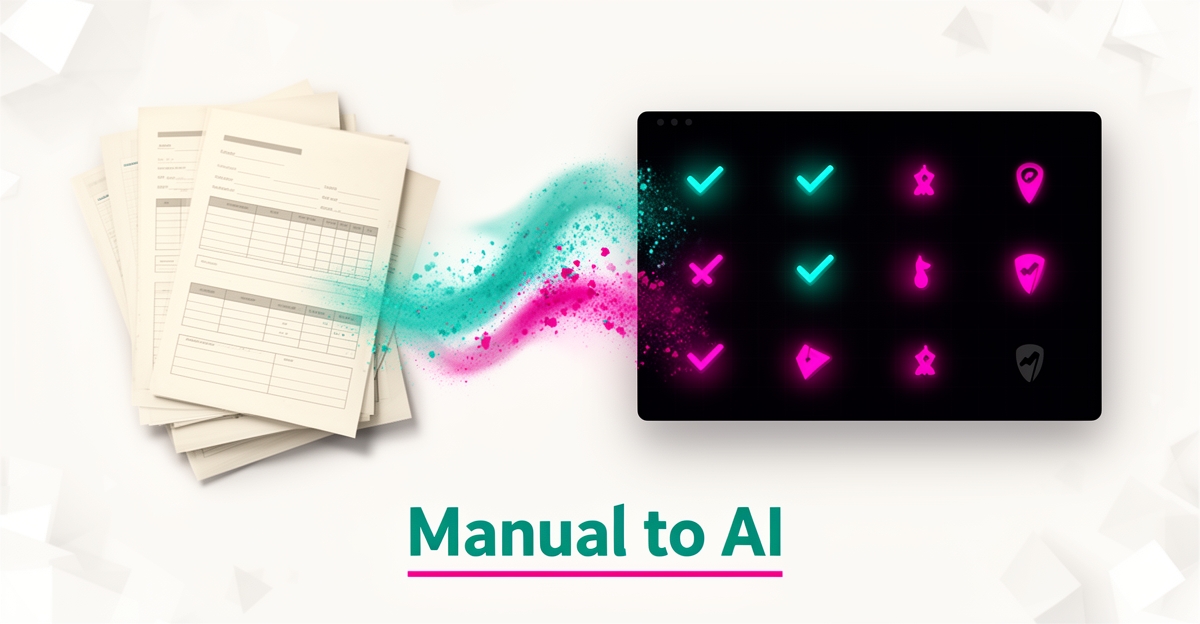
From Manual to AI: Transforming How Surety Bonding Agencies Manage Client Applications
Key Facts
- Manual data entry introduces error-prone typos and missed fields that surface later in underwriting
- AI systems validate application data in real time, cross-checking details against internal databases and external risk indicators
- Human-in-the-loop escalation keeps complex or high-risk cases with experienced agents
- Agencies typically see the biggest gains by automating the single most expensive workflow first, not everything at once
- Audit trails and validation layers support compliance in regulated processes like surety bonding
Hire a team member that works 24/7 — for less than a part-time wage.
AI receptionists, SDRs, dispatchers and 99+ roles. Trained on your business, fully managed.
Not sure where to start? Ask our AI planner
The Hidden Cost of Manual Client Applications in Surety Bonding
Paper forms, phone calls, and spreadsheets still define client applications for many surety bonding agencies. Each submission triggers a chain of manual checks, re-keying, and back-and-forth that consumes staff hours and delays decisions.
Manual intake creates hidden labor intensity across the entire application lifecycle. Agents collect PDFs, transcribe handwritten fields, and chase missing documents by email. The work is repetitive, error-prone, and difficult to scale during peak submission windows.
Processing time compounds quickly when validation is human-dependent. What should take hours often stretches into days of waiting for clients — and overtime for teams trying to keep up.
Error rates rise with volume. Manual data entry introduces typos, missed fields, and inconsistent risk notes that surface later in underwriting. These mistakes force rework, slow approvals, and create compliance exposure when records are incomplete or contradictory.
The bottleneck is not just speed. Traditional workflows offer little visibility into where applications stall. Staff spend time hunting for status updates instead of evaluating risk, and managers lack real-time attribution for delays.
Operational friction shows up in everyday tasks:
- Repeated re-keying of applicant and financial data across forms and spreadsheets
- Manual document collection and follow-up for missing attachments
- Ad-hoc risk flagging based on individual agent judgment
- Delayed escalations because exceptions are discovered late in the process
Adoption inertia keeps the problem in place. Many agencies know AI can handle intake and validation, yet manual habits persist because the current process — however slow — still works. The gap between capability and practice is where cost accumulates.
Scale also exposes fragility. Manual processes that hold up at ten applications a month break under fifty. Without designed efficiency, growth breaks throughput.
These pain points map directly to the workflows AIQ Labs rebuilds for surety agencies. Through AI Workflow Builds, the focus is on replacing paper-heavy intake with automated validation, risk flagging, and human-in-the-loop escalation only when needed — rebuilding the one workflow that costs the most, at a fixed price, in phases.
How AI-Powered Workflows Cut Processing Time
AI-powered workflows transform how surety bonding agencies handle client applications by automating the most time-intensive steps in the process. Instead of relying on manual data entry and sequential human review, AI systems validate application information in real time, cross-checking details against internal databases and external risk indicators. This shift allows agencies to move from reactive processing to proactive validation, cutting the delays caused by incomplete or inconsistent submissions. Work that once took days typically becomes a matter of hours.
These systems go beyond simple data capture — they actively flag anomalies, inconsistencies, or high-risk patterns the moment they arise. For example, if an applicant's financial history doesn't align with stated revenue, or a bond type exceeds typical thresholds for their industry, the system triggers an immediate alert. Rather than waiting for a human agent to spot the issue during a later review, risks surface in real time, enabling faster decisions. This improves accuracy and ensures only truly exceptional cases — those requiring nuanced judgment — reach a human agent.
By routing only exceptions to human reviewers, AI-powered workflows create a more efficient division of labor between machines and people. Agents spend less time on repetitive validation and more on strategic activities like client consultation, risk assessment, and relationship building. This matters in surety bonding, where timely decisions directly impact a contractor's ability to secure projects. For agencies that want managed AI staff handling intake, follow-ups, and document chasing around the clock, AI Employees cover 99+ roles at roughly 80% less cost than a comparable human hire. The result is a streamlined process where technology handles the predictable, and humans focus on what requires expertise.
Building a Scalable, Compliant AI System for Surety Agencies: From Pilot to Production
Building a scalable, compliant AI system for surety bonding agencies begins with a thorough workflow assessment to identify manual bottlenecks and high-volume touchpoints. This initial analysis is critical for targeting automation where it delivers the greatest impact. Agencies should map each step of the client application journey — from document intake and risk validation to underwriting and approval — to pinpoint repetitive tasks suitable for AI augmentation.
Integration with existing CRM and document management systems follows, ensuring seamless data flow without disrupting current operations. AIQ Labs' implementation methodology emphasizes deep two-way API connections that create a unified operational workflow, eliminating silos between tools like HubSpot, Salesforce, or industry-specific platforms. This foundation allows AI agents to extract, validate, and enrich application data in real time while maintaining a single source of truth across departments. For agencies ready to connect intake, underwriting, and reporting into one layer they own outright, AI Operating Systems provide that connected foundation, built in phases.
Establishing guardrails and human-in-the-loop controls is essential for compliance and trust, especially in regulated industries like surety bonding. Configurable escalation paths ensure complex or high-risk cases are routed to human experts, while audit trails and validation layers support regulatory adherence and continuous improvement. Scaling then proceeds incrementally, starting with pilot workflows before expanding to department-wide automation — so you always know what's working before it touches the next process.
Still paying for 10+ subscriptions that don’t talk to each other?
We build custom AI systems you own outright. No vendor lock-in. Full control.
Not sure where to start? Ask our AI planner
Frequently Asked Questions
How much time can AI actually save on surety bonding applications?
Are surety agencies really adopting AI, or is it still early?
What breaks when application volume grows?
Will AI replace agents in surety bonding?
How do you keep AI compliant in a regulated process like surety bonding?
What's the first step to move from manual intake to AI without disrupting operations?
From Paper Trails to Real-Time Decisions: The Surety Bonding Shift
Manual client applications in surety bonding create hidden costs through repetitive data entry, delayed decisions, and error-prone workflows that scale poorly under pressure. AI-powered systems change this by validating information in real time, flagging risks instantly, and routing only exceptions to human reviewers — freeing teams to focus on strategic risk assessment rather than paperwork. For agencies ready to move beyond spreadsheets and phone tag, the path forward starts with identifying your biggest bottleneck. Take the free two-minute Fit Check at https://aiqlabs.ai/apply, then book a free 30-minute strategy call to map your automation roadmap. Questions first? Reach us at [email protected].
Make AI your competitive advantage — not just another tool.
Strategy, implementation and ongoing optimization. One partner, end to end.
Not sure where to start? Ask our AI planner