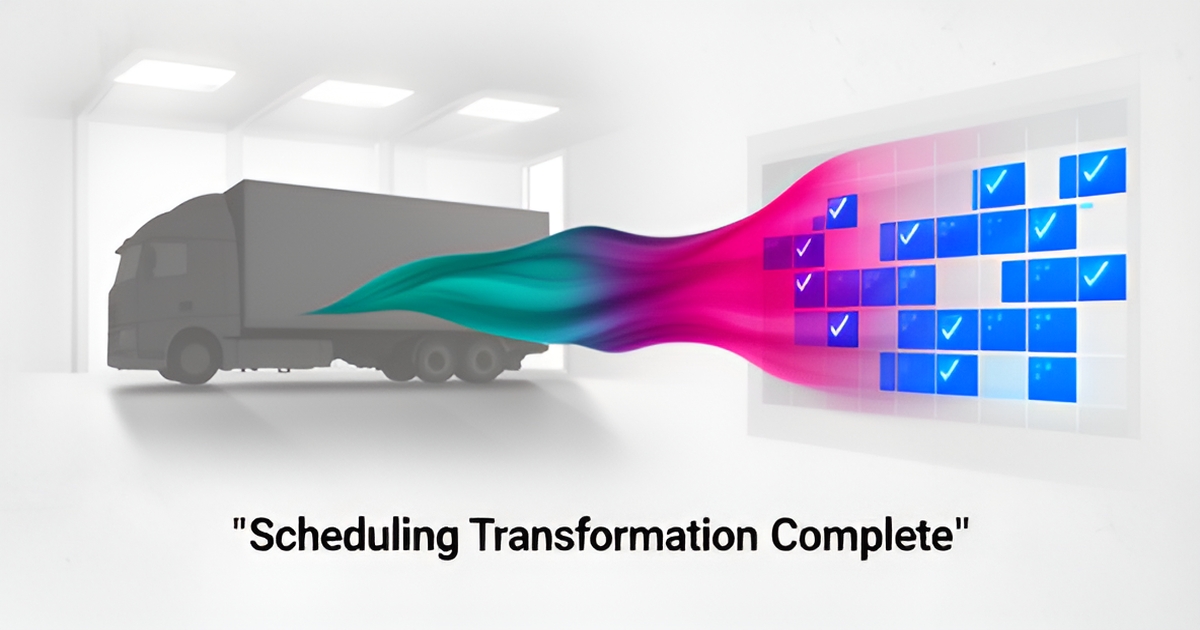
From Manual to AI: Transforming Job Scheduling in Heavy Truck Body Shops
Key Facts
- Manual scheduling commonly leaves technicians idle waiting for assignments, wasting labor capacity in high-overhead shops
- Double-booked bays force rushed repairs, overtime pay, or customer delays
- Skill mismatches extend cycle times and increase rework and comebacks
- AI scheduling matches technician certifications to repair types and forecasts demand from historical patterns
- Phased implementation lets shops validate AI output in parallel before going live
- Human oversight remains essential for complex estimates and atypical repairs
Hire a team member that works 24/7 — for less than a part-time wage.
AI receptionists, SDRs, dispatchers and 99+ roles. Trained on your business, fully managed.
Not sure where to start? Ask our AI planner
The Hidden Drain of Manual Scheduling in Heavy Truck Body Shops
Traditional scheduling methods like whiteboards and spreadsheets create operational drag in heavy truck body shops by relying on gut-feel assignments rather than data. This leads to idle technician time when bays sit empty despite available work, and double-booked bays that force rushed repairs or customer delays. Mismatched skill sets further compound inefficiencies, as technicians may be assigned repairs outside their expertise, increasing rework and extending cycle times.
These scheduling flaws directly impact shop throughput and revenue potential. When technicians wait for assignments or bays remain underutilized, labor costs rise without corresponding output. Double-bookings disrupt workflow continuity, causing bottlenecks that delay multiple jobs simultaneously. Poor skill matching not only extends repair times but also risks quality issues that require costly comebacks. Together, these factors erode profitability by reducing the number of jobs completed per bay per day—a critical metric in high-overhead body shop operations.
The financial toll becomes evident when analyzing shop performance metrics. Idle time can represent a meaningful share of available technician hours in manually scheduled shops, translating to lost revenue capacity. Double-bookings often trigger rush fees or overtime pay to meet commitments, while skill mismatches increase parts waste and labor hours per repair. For a medium-sized shop handling 50 trucks monthly, even a 10% improvement in scheduling efficiency could recover hundreds of labor hours annually—directly boosting throughput without adding headcount or expanding facilities.
AI-powered scheduling addresses these drains by replacing guesswork with predictive intelligence. Systems analyze historical repair data, regional traffic patterns, and seasonal trends to forecast demand with greater accuracy. This enables proactive bay allocation and technician assignment based on certified skill sets, minimizing idle time and preventing scheduling conflicts. By continuously learning from shop performance, AI systems refine predictions over time, adapting to shifting repair volumes and workforce capabilities. The result is a more predictable workflow where resources align with actual demand rather than managerial intuition. For shops seeking to maximize existing assets, this shift from reactive to predictive scheduling unlocks measurable gains in operational efficiency. To explore how AI transformation can resolve scheduling bottlenecks in your body shop, start with a free strategy call to assess your current workflow and identify high-ROI automation opportunities.
How AI Transforms Shop Floor Efficiency
Heavy truck body shops face constant pressure to maximize bay utilization and technician productivity. Manual scheduling often leaves gaps between jobs or creates conflicts when multiple repairs require the same specialized skill set. AI-powered scheduling transforms this dynamic by continuously analyzing shop capacity, technician availability, and incoming job requirements to create optimal workflows.
These systems reduce idle time through intelligent job sequencing that considers repair complexity, parts availability, and technician specialization. By predicting demand based on regional traffic patterns and seasonal trends, AI helps shops staff appropriately for anticipated workload fluctuations. This proactive approach creates more stable, efficient operations that help retain skilled technicians in a tight labor market.
Real-time resource tracking prevents double-bookings by monitoring bay occupancy, tool availability, and technician certifications across all active jobs. When a complex frame repair requires a certified specialist, the AI automatically matches the job to the qualified technician on shift while sequencing complementary tasks around it. This precision matching bases assignments on verifiable skills rather than subjective judgment.
The result is a self-optimizing schedule that adapts to emergencies, parts delays, or unexpected complications without manual rescheduling. Shops using AI-driven scheduling typically report smoother workflow transitions and higher first-time fix rates as technicians consistently work within their certified expertise areas. This operational intelligence creates sustainable efficiency gains that scale with shop growth while maintaining the human expertise essential for quality heavy truck repairs. Ready to see how AI can transform your shop's scheduling? Start the Fit Check, then schedule a Free 30-Minute Strategy Call to map your biggest bottleneck and identify high-ROI automation opportunities.
Predicting Demand Before the Trucks Roll In
Heavy truck body shops face constant pressure to balance technician availability with unpredictable repair volumes. Predicting demand before trucks even arrive allows shops to shift from reactive firefighting to proactive planning, ensuring bays stay productive and staff are utilized effectively.
AI-powered forecasting analyzes regional traffic patterns, seasonal freight volumes, and historical repair data to anticipate workload fluctuations with greater accuracy than manual methods. By identifying peak periods tied to holiday shipping surges or weather-related incident trends, shops can align staffing and bay allocation ahead of time.
This proactive approach reduces idle time during lulls and prevents bottlenecks when demand spikes. Shops using AI-driven scheduling report fewer double-bookings and better matching of technician expertise to specific repair types, such as frame straightening or paintless dent removal. AI adoption streamlines processes and improves decision-making—key advantages when managing complex, variable workflows in heavy truck repair.
- Analyze historical repair volumes by season and region
- Incorporate real-time traffic and freight flow data
- Adjust forecasts based on weather and economic indicators
- Align technician schedules with predicted demand peaks
- Optimize parts inventory alongside labor planning
AIQ Labs builds custom scheduling AI that integrates directly with shop management systems, turning predictive insights into actionable staffing plans. Rather than guessing how many bays will be needed next week, shops can schedule with confidence—maximizing utilization, minimizing overtime, and ensuring the right skills are on hand when trucks roll in. This shift from reactive to predictive scheduling transforms operational efficiency, especially in markets where skilled labor is scarce and downtime is costly. For shops that want scheduling fixed as a single high-impact project, a targeted workflow build is often the fastest path to value.
Implementation: From Spreadsheet Chaos to Intelligent Automation
Heavy truck body shops still rely on spreadsheets and whiteboards for scheduling, creating constant double-bookings and idle technician time. This manual chaos leads to missed deadlines, frustrated customers, and underutilized skilled labor. Transitioning to AI-powered scheduling transforms this reactive scramble into a proactive system that anticipates demand and optimizes workflow.
AIQ Labs builds custom scheduling AI that integrates directly with existing shop management software, eliminating the need for disruptive overhauls. The system learns your shop's unique patterns—like peak repair volumes after winter storms or seasonal fluctuations in long-haul traffic—to predict demand with precision. By analyzing historical data alongside regional traffic trends, it schedules jobs when technicians are available and parts are on hand, recovering labor hours that manual scheduling leaves on the table.
The implementation roadmap prioritizes minimal disruption. Phase one focuses on data integration and workflow mapping, ensuring the AI understands your current processes without changing them overnight. Phase two introduces the AI scheduler in parallel with existing methods, allowing staff to compare outputs and build trust. Only after validation does the system go live, with human oversight retained for complex estimates and atypical repairs that require nuanced judgment.
Change management is critical during this shift. Technicians and service advisors need clear communication about how AI augments—not replaces—their expertise. Training sessions should highlight how the system handles routine scheduling, freeing staff to focus on customer communication and quality control. Shops that involve their teams early report higher adoption rates and fewer workflow bottlenecks.
Custom AI systems adapt to your shop's specific workflows, whether you specialize in frame straightening, paint matching, or electrical diagnostics. The AI learns which technicians excel at certain repair types and matches jobs accordingly, improving first-time fix rates. It also prevents double-bookings by continuously monitoring calendar conflicts and suggesting optimal rescheduling options when delays occur.
Throughout the transition, maintain human-in-the-loop controls for high-stakes decisions. While AI excels at pattern recognition and optimization, experienced estimators still provide essential context for unusual damage patterns or customer-specific requirements. This balanced approach ensures efficiency gains don't come at the cost of quality or safety.
By starting with a targeted workflow fix—like automating the scheduling of routine maintenance jobs—shops can prove value quickly before expanding AI across all operations. This phased approach minimizes risk while building confidence in the system's capabilities. The result is a scheduling process that runs smoothly in the background, letting your team focus on what they do best: getting heavy trucks back on the road safely and efficiently. As of late 2026, shops that connect scheduling into a broader AI operating system gain a single connected layer across intake, scheduling, parts, and customer communication—owned outright rather than rented month to month.
Still paying for 10+ subscriptions that don’t talk to each other?
We build custom AI systems you own outright. No vendor lock-in. Full control.
Not sure where to start? Ask our AI planner
Frequently Asked Questions
How much idle time can AI-powered scheduling actually reduce in a heavy truck body shop?
Will AI scheduling replace my technicians or just help them work more efficiently?
How does AI predict repair demand before trucks even arrive at the shop?
What's the financial impact of poor scheduling in a medium-sized truck body shop?
Is it disruptive to switch from spreadsheets to AI scheduling in an existing body shop?
How does AI ensure fair and unbiased technician job assignments?
Turning Scheduling Chaos into Competitive Advantage
Manual scheduling in heavy truck body shops creates costly inefficiencies—idle time, double-bookings, and skill mismatches that directly erode throughput and profitability. AI-powered scheduling transforms this by predicting demand, optimizing technician assignments, and eliminating guesswork with data-driven precision. Shops see measurable gains in bay utilization, first-time fix rates, and labor productivity without expanding headcount or facilities. The path forward starts with understanding your unique workflow bottlenecks. Begin with a free strategy call to assess your current scheduling process and identify high-ROI automation opportunities tailored to your shop's specific challenges. Ready to see where AI can unlock hidden capacity in your operations? Start the Fit Check, then schedule your Free 30-Minute Strategy Call to map your biggest bottleneck and explore actionable next steps.
Make AI your competitive advantage — not just another tool.
Strategy, implementation and ongoing optimization. One partner, end to end.
Not sure where to start? Ask our AI planner