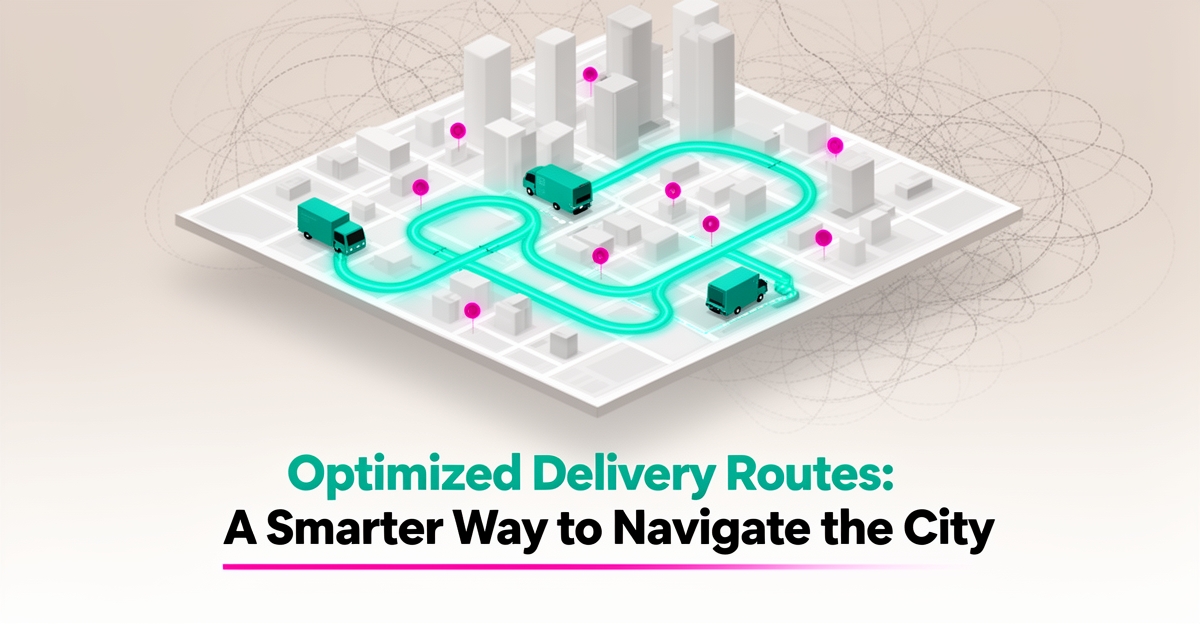
From Manual to AI: Transforming Last-Mile Delivery Workflows with Intelligent Scheduling
Key Facts
- Industry analyses have long estimated that roughly a third of truck journeys run empty, burning fuel and driver hours with zero revenue
- AI-powered route optimization is typically reported to cut delivery costs by 10-30%, per industry research
- AI systems are commonly credited with improving delivery times and first-attempt delivery rates, logistics analysis finds
- Live tracking and real-time ETA adjustments from AI systems lift customer satisfaction and Net Promoter Scores, research shows
- AI can forecast demand before a single package leaves the building, according to last-mile optimization research
- AI is quickly becoming a foundational tool for businesses of all sizes, not just logistics giants, industry analysis notes
Hire a team member that works 24/7 — for less than a part-time wage.
AI receptionists, SDRs, dispatchers and 99+ roles. Trained on your business, fully managed.
Not sure where to start? Ask our AI planner
The Manual Scheduling Tax on Small Delivery Teams
Small delivery teams feel busy without getting efficient. Spreadsheets, phone calls and reactive dispatch create a manual scheduling tax that drains margin every day.
Drivers leave the depot with half-full vans and return with empty ones. Industry analyses have long estimated that roughly a third of truck journeys carry absolutely nothing. That empty mileage is paid fuel, paid time and lost revenue that never shows up as a line item.
Reactive dispatch compounds the problem. Routes are built after the morning rush, changes are relayed by text, and first-attempt failures force costly redelivery loops. Industry research finds AI can meaningfully lift first-attempt delivery rates, directly cutting those repeat trips.
Staffing inefficiencies hide in the gaps. Dispatchers spend hours reconciling orders, drivers wait for instructions, and managers chase status updates instead of optimizing capacity. Demand forecasting remains manual, so stockouts and overstaffing rotate through the week.
The cost shows up in three places teams normalize:
- Empty miles that burn fuel and driver hours with zero revenue return
- First-attempt failures that trigger redeliveries and erode customer trust
- Dispatcher overload from phone-based changes and spreadsheet rework
Manual systems also make improvement impossible to measure. Without real-time visibility, teams cannot see where empty miles accumulate or why certain routes consistently miss windows. Decisions stay anecdotal.
The revenue impact is real. Every empty mile and failed first attempt is margin recovered simply by stopping the scheduling tax—no new customers required.
For SMBs, this is where AI workflow automation changes the equation. AIQ Labs builds production-grade systems that handle daily scheduling, delivery tracking and real-time adjustments with minimal human oversight, turning reactive dispatch into predictive execution.
When scheduling is automated, routes tighten, first attempts rise, and teams stop paying for work that delivers nothing.
How AI Rewires Last-Mile Workflows
Manual dispatch boards and spreadsheet routing are quietly bleeding margin from small delivery businesses every day. AI rewires that workflow by turning reactive scheduling into predictive execution.
AI-powered route optimization is typically reported to reduce delivery costs by 10-30%, according to industry analysis. The same systems are credited with faster delivery times and higher first-attempt delivery rates, cutting costly redelivery loops. That efficiency compounds when live tracking and real-time ETA adjustments improve customer satisfaction scores and Net Promoter Scores.
Visibility becomes operational control. AI integrates multiple logistics partners and provides real-time insights across the entire supply chain, replacing siloed updates with a single source of truth. Demand forecasting shifts planning from guesswork to preparation, reducing staffing inefficiencies and stockouts before they occur. As logistics research notes, AI doesn't just help in the moment—it can forecast what's likely to happen before a single package leaves the building.
For small teams, the transformation is practical and step-by-step. Daily scheduling automates automatically, delivery tracking updates customers without manual calls, and real-time adjustments reroute drivers around delays instantly. AIQ Labs builds production-grade systems that handle complex delivery routing and task assignments with minimal human oversight, fitting the phased AI Workflow Builds approach used across SMB operations.
The rewiring shows up in three connected layers:
- Route intelligence that continuously optimizes for cost, time, and capacity
- Live tracking and dynamic ETA updates that reduce inbound status calls
- Demand forecasting and data visibility across partners to prevent stockouts and empty miles
Empty miles remain a hidden cost. Industry reporting consistently finds a large share of truck journeys carry absolutely nothing—a problem AI routing directly attacks by matching capacity to real demand.
Culture and data readiness matter. Implementation requires clean data, thoughtful rollout, and alignment with business goals. Starting with AI suggestions before moving to automatic execution helps teams adopt confidently. When built correctly, intelligent scheduling becomes a durable advantage rather than another subscription tool.
The result is a last-mile workflow that runs faster, costs less, and feels more reliable to customers.
A Practical Path From Manual to Intelligent Scheduling
Many delivery businesses still rely on spreadsheets and phone calls to schedule routes, leading to inefficiencies that eat into profits. Industry analyses have long estimated that roughly a third of truck journeys carry absolutely nothing, representing a massive waste of fuel, time, and labor that AI-powered scheduling can directly address by optimizing load consolidation and route planning.
The transformation begins with clearly defining the scheduling pain points—whether it's high empty mileage, missed delivery windows, or excessive manual coordination time. Next, assess your current technology stack and data quality: do you have digital delivery records, GPS tracking, or order management systems that can feed into an AI model? Clean, consistent data is essential for accurate forecasting and route optimization, as AI doesn't just help in the moment—it can forecast what's likely to happen before a single package leaves the building.
Start small by implementing AI-generated scheduling suggestions that dispatchers can review and approve, building trust in the system before moving to full automation. This phased approach allows teams to adapt while maintaining control. Integrate the AI scheduler with your existing tools—such as CRM, inventory, or tracking platforms—using APIs to create a seamless workflow where data flows bidirectionally. Throughout the process, involve drivers and dispatchers early; their frontline insights improve system design and increase adoption, reducing the risk of automating existing biases.
AIQ Labs supports this journey through phased workflow builds, helping businesses assess readiness, build custom scheduling agents, and integrate them into operations with human-in-the-loop controls for critical decisions. As confidence grows, expand the system to handle real-time adjustments for traffic, weather, or last-minute order changes, continuously measuring improvements in on-time deliveries and cost per mile.
By following these steps—define, assess, start with suggestions, integrate, and involve teams—small delivery firms can evolve from manual scheduling to intelligent, adaptive workflows that reduce empty miles, improve first-attempt delivery rates, and enhance customer satisfaction through live tracking and real-time ETA adjustments. The result is a scalable, owned AI system that turns scheduling from a daily headache into a competitive advantage.
Build vs Buy and What Ownership Looks Like
Every scheduling tool you rent is a scheduling tool you never truly control. For small delivery businesses, that distinction matters more as AI moves from novelty to necessity — AI is "quickly becoming a foundational tool for businesses of all sizes," not just the logistics giants, according to last-mile optimization research.
The contrast between traditional tech and AI-powered solutions comes down to responsiveness. Traditional routing software is cost-effective and easy to implement, but it struggles with scalability, real-time responsiveness, and customer experience. AI-driven systems, by comparison, are typically reported to reduce delivery costs by 10-30% while improving delivery times and first-attempt rates — the kind of dynamic performance static tools simply cannot match.
But there's a catch hiding in most AI offerings: they're subscriptions. You pay monthly, forever, for a system that lives on someone else's platform. When your delivery volume shifts, your routes change, or you need a custom workflow, you file a feature request and wait. For SMBs running tight margins, that dependency compounds. This is why owned systems beat rented subscriptions for businesses that want their scheduling intelligence to be a lasting asset rather than a permanent line item.
AIQ Labs approaches delivery workflows through three entry points, each mapping naturally to the way a delivery operation actually runs:
- AI Workflow Builds rebuild the one workflow that costs you the most — like scheduling and dispatch — as a production-grade system with deep integrations into your existing tools, built in phases at a fixed price, designed to replace subscription chaos with a unified digital asset you own.
- AI Employees fill defined operational roles like AI Dispatcher or AI Service Coordinator — handling task assignments, customer notifications, and real-time ETA adjustments around the clock, the same way a human dispatcher would, at roughly 80% less cost than a human hire.
- AI Operating Systems connect your entire operation in one layer — scheduling, tracking, forecasting, and communications built in phases and owned outright, so adoption sticks rather than stalling at the pilot stage where most AI initiatives die.
The payment models follow the same ownership-first logic. Start Monthly deploys a single AI Employee — like a dispatcher that never misses a call — for a flat monthly plan, with the build, training, integrations, and monitoring included, and the flexibility to pause or adjust anytime. Build in Milestones tackles one workflow or department system in phases, so you approve and pay per phase and keep everything built even if you stop. Own It Outright delivers a complete AI operating system — with full ownership of the code, agents, and data when complete.
The payoff for owned AI in delivery is measurable. Beyond the cost and speed gains, AI systems improve customer satisfaction and NPS through live tracking and real-time ETA adjustments, and they forecast demand before packages leave the building — reducing stockouts and staffing inefficiencies. As one analysis puts it, "AI doesn't just help in the moment — it can forecast what's likely to happen before a single package leaves the building."
Implementation still demands clean data, thoughtful rollout, and team involvement — challenges worth planning for deliberately. But when the system is yours, every improvement you make compounds into your own asset, not your vendor's platform. That's the difference between automating your delivery operation and merely renting the ability to.
Still paying for 10+ subscriptions that don’t talk to each other?
We build custom AI systems you own outright. No vendor lock-in. Full control.
Not sure where to start? Ask our AI planner
Frequently Asked Questions
How much can AI-powered route optimization reduce delivery costs for small delivery businesses?
Can AI really improve first-attempt delivery rates?
What share of truck journeys are driven empty, and how does AI help fix this?
Is AI in last-mile delivery only for big logistics companies, or can small businesses benefit too?
How does AI improve customer satisfaction in delivery operations?
What's the advantage of owning an AI system instead of subscribing to one for delivery scheduling?
Stop Paying the Manual Scheduling Tax
Manual scheduling is a silent margin killer for small delivery teams. Empty miles, reactive dispatch, and first-attempt failures drain resources daily, with a large share of truck journeys carrying nothing at all. AI-powered intelligent scheduling rewires these workflows by optimizing routes, improving first-attempt delivery rates, and enabling real-time adjustments. The result is a predictive, efficient operation that reduces costs and enhances customer satisfaction through live tracking and accurate ETAs. For SMBs, the shift from manual to AI-driven scheduling is a practical step toward sustainable competitive advantage. Starting with AI suggestions and gradually automating execution allows teams to adopt confidently. AIQ Labs builds production-grade, owned systems that integrate seamlessly into your operations, turning scheduling from a daily headache into a strategic asset. Ready to transform your last-mile delivery? Start the 2-minute Fit Check at https://aiqlabs.ai/apply or book a free 30-minute strategy call at https://aiqlabs.ai/book to map your biggest bottleneck and identify high-ROI AI automation opportunities.
Make AI your competitive advantage — not just another tool.
Strategy, implementation and ongoing optimization. One partner, end to end.
Not sure where to start? Ask our AI planner