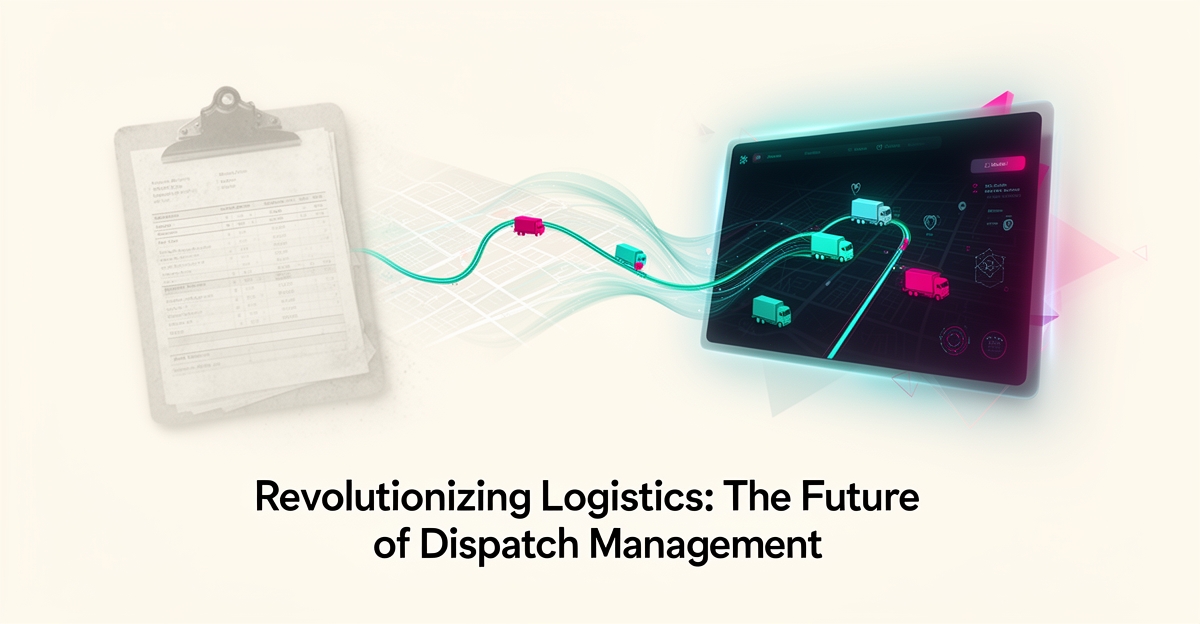
From Manual to AI: Transforming Move Coordination with Automated Dispatching
Key Facts
- Manual dispatching causes double-booking of crews and missed appointments from delayed updates
- AI dispatch systems assign crews, track loads, and send real-time client updates automatically
- AI governance is essential for aligning systems with business objectives and regulatory requirements per Microsoft Cloud Adoption Framework
- AI adoption across business operations has become widespread as of late 2026, with most enterprises using AI in at least one function
- AIQ Labs has deployed 200+ multi-agent systems and runs 4 live SaaS products daily
- AI Employees typically cost roughly 80% less than an equivalent human hire
Hire a team member that works 24/7 — for less than a part-time wage.
AI receptionists, SDRs, dispatchers and 99+ roles. Trained on your business, fully managed.
Not sure where to start? Ask our AI planner
The Manual Dispatch Bottleneck Moving Companies Can't Ignore
Moving companies still relying on manual dispatch logs face a growing competitive disadvantage as industry expectations shift toward real-time coordination and error-free scheduling. The hidden costs of paper-based systems and spreadsheet tracking extend far beyond administrative overhead, directly impacting customer trust and operational reliability. For small and medium-sized moving businesses, these inefficiencies represent not just operational friction but a strategic vulnerability in an increasingly automated market.
Manual dispatching creates a cascade of preventable issues that erode service quality from the first point of contact. Scheduling errors—such as double-booking crews, miscalculating load times, or failing to account for traffic delays—lead to missed appointments and frustrated customers. These mistakes are compounded by delayed or inconsistent updates, leaving clients in the dark about crew arrival times or shipment status. As of late 2026, AI adoption has become standard across most business operations, and the industry trajectory away from legacy dispatch methods is clear. Moving companies that delay this transition risk falling behind competitors who leverage automation for precision and responsiveness.
The financial and reputational toll of these inefficiencies accumulates quickly. Each scheduling conflict requires costly last-minute adjustments, often involving overtime pay or rescheduling penalties. Missed updates generate avoidable support calls, straining limited administrative staff and increasing response times. Over time, repeated service failures damage online reviews and referral rates—critical growth channels for local moving businesses. Stakeholders now view intelligent automation not as optional but essential for long-term viability.
To illustrate the scope of the challenge, consider the most common pain points in manual dispatch workflows:
- Crews dispatched without real-time load or traffic data, leading to inefficient routing
- Paper logs lost or damaged, creating gaps in accountability and audit trails
- No automated notifications for clients, resulting in frequent status-checking calls
- Difficulty scaling operations during peak seasons due to reliance on manual coordination
- Inability to analyze performance trends due to fragmented, non-digital records
These limitations are not merely inconveniences—they directly constrain a moving company's ability to grow, adapt, and deliver consistent service. In an industry where timeliness and transparency are key differentiators, continuing to rely on manual processes introduces avoidable risk. For moving companies, the question is no longer whether to modernize dispatching, but how quickly they can close the gap before inefficiencies become irreversible liabilities. AIQ Labs helps businesses navigate this transition—turning dispatch from a bottleneck into a competitive advantage. Start with the Workflow Builds entry point to rebuild the one workflow that costs you the most.
How AI-Driven Dispatching Replaces Logs with Live Coordination
Imagine a world where the chaos of coordinating moving crews, trucks, and schedules is replaced by seamless, real-time orchestration. This is the promise of AI-driven dispatching, a technological leap that transforms the moving industry's traditional reliance on manual logs into a dynamic, efficient system.
AI-driven dispatching systems assign crews, track loads, and send real-time updates by embedding AI into existing operational frameworks. This integration not only enhances operational efficiency but also significantly improves decision-making processes, and most enterprises now use AI in at least one operational function as of late 2026.
The benefits of AI-driven dispatching are manifold:
- Reduced errors: AI minimizes the risk of human error in scheduling and dispatching, leading to more accurate and reliable operations.
- Improved on-time performance: Real-time tracking and updates ensure that crews and resources are always where they need to be, when they need to be there.
- Enhanced customer satisfaction: With AI handling the logistics, customers receive timely updates and enjoy a smoother moving experience.
- Cost savings: By optimizing routes and schedules, AI-driven dispatching can lead to significant cost reductions in fuel and labor.
AIQ Labs builds custom AI systems for small and medium-sized businesses. Its AI Employees offering includes managed AI staff—receptionists, SDRs, dispatchers, and 99+ other roles—at roughly 80% less cost than a human hire. An AI Dispatcher integrates with your existing systems, providing a robust solution for move coordination. By leveraging AIQ Labs' expertise, moving companies can transition from manual dispatch logs to a fully automated, AI-driven system that enhances efficiency and reduces errors.
However, the transition to AI-driven dispatching is not without its challenges. Establishing a robust governance framework is essential to ensure that AI systems align with business objectives and regulatory requirements. As noted by Microsoft's Cloud Adoption Framework, AI governance, risk management, and ethics are critical components of a successful AI implementation.
Moreover, ensuring AI literacy among employees is crucial for the effective use and management of AI systems. Training and development programs, along with change management strategies, can help employees adapt to the new technology and maximize its benefits.
In conclusion, AI-driven dispatching represents a significant advancement in the moving industry, offering a more efficient, accurate, and customer-centric approach to move coordination. By embracing this technology and partnering with experts like AIQ Labs, moving companies can stay competitive in an increasingly digital world.
Governance, Integration, and Literacy for Safe AI Adoption
The shift from manual to AI-driven dispatching requires more than just technology—it demands a foundation of trust, seamless integration, and team readiness. Without these elements, even the most advanced systems can falter in real-world operations. Moving companies adopting AI must prioritize governance, integration, and literacy to ensure sustainable, safe, and effective transformation.
Establishing a robust AI governance framework is critical for aligning AI systems with business goals and regulatory requirements. This includes implementing AI risk management to identify and mitigate potential issues, as well as embedding AI ethics to ensure fairness, transparency, and accountability in decision-making processes. Proper governance helps prevent unintended consequences and builds confidence in AI-driven outcomes.
Seamless integration with existing CRM and dispatch tools is equally vital for operational success. Embedding AI into current workflows enhances efficiency and improves customer satisfaction by enabling real-time data synchronization and automated task execution. Careful planning and execution are necessary to avoid disruption and ensure that AI-powered automation reduces errors while supporting smoother decision-making across teams.
Equipping employees with AI literacy through targeted training and development programs ensures they can effectively use and manage new systems. Change management strategies are essential to prepare teams for evolving roles and responsibilities, reducing resistance and fostering adoption. When staff understand how AI supports their work, they become active participants in the transformation rather than obstacles to it.
AIQ Labs supports moving companies through each of these pillars—building systems in phases, enabling deep integrations, and driving employee adoption. By addressing governance, integration, and literacy together, businesses can move beyond manual processes with confidence, turning AI adoption into a lasting operational advantage. Start the two-minute Fit Check at https://aiqlabs.ai/apply to begin your AI transformation with a free 30-minute strategy call.
A Practical Roadmap From Spreadsheets to AI Dispatch
Most moving companies don't fail at AI because the technology is out of reach—they fail because they try to automate everything at once. A lean roadmap makes the transition manageable: assess the workflow, deploy in phases, and scale only after the first gains are visible.
The first step is an honest assessment of your current dispatch process. Map how jobs are booked, how crews are assigned, where delays happen, and which updates are still handled by phone, text, or spreadsheets. Manual coordination is quickly becoming the exception rather than the norm as AI adoption spreads across business operations.
From there, the smartest path is a staged rollout. AIQ Labs' Workflow Builds start with identifying the highest-friction workflow, then rebuild it at a fixed price in phases—with the option to graduate to a full AI Operating System when you're ready for one connected layer across the business. That matters because Microsoft's AI governance guidance emphasizes that successful AI adoption depends on aligning systems with business goals, managing risk, and building accountability into the rollout.
For SMB movers, payment structure can be just as important as the technical plan. Flexible models reduce risk and make it easier to start small:
- Start Monthly for a single AI dispatcher or workflow with a flat monthly plan
- Build in Milestones to approve and pay for each phase as it ships
- Own It Outright for a full dispatch system with long-term control of code, agents, and data
This phased approach also helps teams adapt. AI literacy and change management are recurring themes in successful adoption, because employees need to trust the system before they rely on it. Training staff to work with, not around, the new system is what separates smooth rollouts from stalled ones.
The practical goal is not to replace your operation overnight. It is to remove the most fragile manual steps first, prove value quickly, and expand from a stronger foundation. For moving companies, that means fewer scheduling errors, better visibility, and a dispatch process that can grow without adding chaos.
Still paying for 10+ subscriptions that don’t talk to each other?
We build custom AI systems you own outright. No vendor lock-in. Full control.
Not sure where to start? Ask our AI planner
Frequently Asked Questions
What are the biggest problems with sticking to manual dispatch logs for my moving company?
How does AI-driven dispatching actually improve on-time performance and reduce errors?
Is AI dispatching too expensive or complex for a small moving business to implement?
What happens to my current CRM and dispatch tools if I add AI — do I have to replace everything?
Will my dispatchers and office staff resist or struggle to work with an AI system?
How do I know if AI dispatching is right for my company before committing to a full build?
From Bottleneck to Competitive Edge
Manual dispatch logs are no longer a cost of doing business — they are a strategic liability. Paper-based scheduling creates double-bookings, delayed updates, and missed revenue, while AI-driven dispatching replaces that friction with live crew assignment, real-time load tracking, and automated client notifications. The shift from spreadsheets to intelligent coordination is now the baseline for reliability and growth. Sustainable adoption depends on governance, seamless integration with existing CRM and dispatch tools, and AI literacy that prepares teams to trust and use the system. AIQ Labs helps small and medium moving companies make this transition with custom, owned AI systems — from a single AI Dispatcher to a full AI Operating System — that turn dispatch from a bottleneck into an advantage. Start the Fit Check at https://aiqlabs.ai/apply for a free 30-minute strategy call to map your highest-friction workflow and see a clear, phased path to automated dispatch.
Make AI your competitive advantage — not just another tool.
Strategy, implementation and ongoing optimization. One partner, end to end.
Not sure where to start? Ask our AI planner