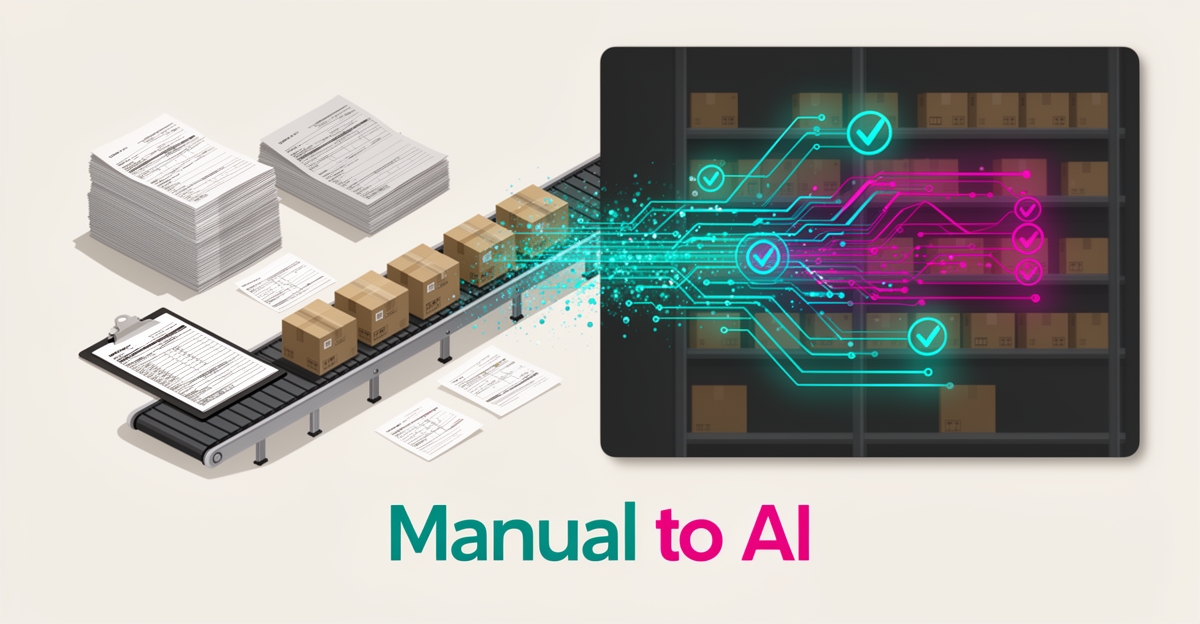
From Manual to AI: Transforming Order Fulfillment in Small Electrical Distributors
Key Facts
- Organizations adopting AI-powered workflows report significant ROI over three years [according to industry research](#)
- A majority of organizations see improved operational visibility after implementing automation [per workflow automation studies](#)
- Most businesses view automation as a competitive edge [per business trend analysis](#)
- Only one of the ten steps in making a process AI-native involves AI itself [as highlighted by process improvement leaders](#)
- Many organizations struggle to identify which workflows to automate first [per workflow prioritization research](#)
- AI-driven inventory forecasting can reduce stockouts by up to 70% and decrease excess inventory by 40% [per inventory optimization case studies](#)
- Simply mapping the current order fulfillment workflow can reveal bottlenecks and improve performance even before automation begins [per process improvement experts](#)
Hire a team member that works 24/7 — for less than a part-time wage.
AI receptionists, SDRs, dispatchers and 99+ roles. Trained on your business, fully managed.
Not sure where to start? Ask our AI planner
The Manual Fulfillment Bottleneck in Small Electrical Distribution
Manual order fulfillment in small electrical distributors creates a cascade of operational pain points that directly impact customer satisfaction and profitability. Long lead times are common as staff manually process orders, check inventory, and coordinate shipping, while human error in picking and invoicing leads to costly returns and rework. Poor visibility into order status leaves both teams and customers in the dark, increasing support inquiries and eroding trust. These inefficiencies are compounded by the fact that many organizations struggle to identify which workflows to automate first, often resulting in scattered efforts that fail to deliver meaningful results.
The business case for transformation is strong: most businesses view automation as a competitive edge, and organizations adopting AI-powered workflows report significant ROI over three years. Additionally, a majority of organizations see improved operational visibility after implementing automation, turning reactive firefighting into proactive management. For small electrical distributors, this means AI isn’t just about technology—it’s about redesigning core processes like order receipt, picking, packing, and invoicing to eliminate bottlenecks before scaling.
- Map the current manual workflow from order entry to delivery to uncover hidden inefficiencies
- Collect historical order data, inventory logs, and shipping records to ground AI models in real operations
- Define success metrics like reduced lead time, lower error rates, and faster invoicing before building any solution
- Build and test a prototype with live inventory and shipping system integration to validate assumptions
- Drive adoption through targeted training and feedback loops that treat users as co-creators of the new process
AIQ Labs helps distributors navigate this journey by focusing on the 90% of transformation work that happens before AI—process mapping, data preparation, and change management—ensuring the technology serves the business, not the other way around. The result is a fulfillment system that’s faster, more accurate, and transparent, turning a cost center into a source of competitive advantage.
Why Process Comes Before AI
Many distributors jump straight to AI tools when tackling slow order fulfillment, only to find the technology underdelivers without the right foundation. The reality is that successful automation begins long before any AI model is trained—it starts with understanding the process itself.
Research shows that transforming a workflow into an AI-native system involves ten distinct steps, but only one of those steps actually involves AI [according to industry experts](#). The other nine—ranging from problem identification and workflow mapping to data collection, change management, and user adoption—are where the real work lies. For small electrical distributors, this means investing time upfront to document how orders move from receipt to delivery, pinpointing delays and error-prone handoffs, is far more critical than selecting an algorithm.
This process-first approach aligns with the four-stage AI workflow: Trigger, Process, Action, and Learn. A new order submission acts as the trigger, prompting the AI to process the request—such as interpreting product codes or customer notes—before executing actions like checking inventory or generating a pick list. Over time, the system learns from outcomes, refining its decisions to reduce exceptions and improve accuracy [as noted in workflow automation studies](#). Unlike traditional rule-based automation, which fails when faced with incomplete orders or unusual shipping requests, context-aware AI can adapt by interpreting intent, much like an experienced dispatcher would.
Before any of this can happen, however, strong data governance is essential. Establishing clear policies for data quality, sensitivity, and model integration ensures the AI operates on reliable inputs—such as accurate SKU levels or validated customer addresses—rather than propagating errors [per cloud adoption guidelines](#). Teams that skip this step often find their AI making confident but incorrect decisions, undermining trust and increasing manual rework.
Ultimately, the greatest efficiency gains don’t come from the AI itself, but from the disciplined process of rethinking how work gets done. Simply mapping the current order fulfillment workflow can reveal bottlenecks and redundancies that improve performance even before automation begins [as highlighted by process improvement leaders](#). For distributors aiming to reduce lead times and errors, starting with process—not technology—is the most reliable path to lasting results. AIQ Labs helps businesses navigate this journey by focusing first on workflow clarity, then layering in intelligent automation where it delivers the most value.
The 10-Step Framework to AI-Native Order Fulfillment
Transforming order fulfillment in a small electrical distributor begins not with AI, but with a clear-eyed look at where the process breaks down. Whether it's mis-picked components, delayed shipping confirmations, or inventory mismatches, identifying the specific pain point is the critical first step. Organizations that start with a well-defined problem—such as high error rates or long lead times—are far more likely to see meaningful results from automation efforts [according to industry research](#).
Next, map the current workflow in granular detail, tracing each step from order receipt through inventory check, picking, packing, and shipping confirmation. This process alone often reveals inefficiencies, as one expert notes that simply mapping workflows can increase efficiency even before any technology is introduced [per LinkedIn insights](#). For electrical distributors, this might uncover bottlenecks in verifying part compatibility or manually entering tracking numbers into multiple systems.
With the workflow mapped, collect relevant data—past order forms, inventory logs, shipping confirmations, and even edge cases like rush orders or returns—to build a realistic test environment. Define success metrics early, such as reducing order-to-shipment time by 30% or cutting data entry errors by half, so progress can be measured objectively [as advised by AI strategy experts](#). Only then should a prototype be built to test the AI hypothesis, followed by rigorous iteration using real-world scenarios.
Integrate the prototype with live inventory and shipping systems to validate performance under actual operating conditions, ensuring the AI can trigger actions like updating stock levels or generating carrier labels. Roll out the solution with hands-on training, then drive adoption by celebrating early wins and inviting feedback. Empower your team to contribute improvements, treating the workflow as a living system. Finally, measure ROI by tracking hard metrics like labor hours saved and error reduction—steps that, together with the initial nine, make up the full journey to AI-native order fulfillment [per the 10-step framework](#). AIQ Labs supports this journey through end-to-end development and integration, helping distributors own their AI systems from prototype to scale.
Building It With Owned AI Systems
The journey from manual order fulfillment to AI-driven automation begins not with technology, but with understanding the process itself. For small electrical distributors, this means dissecting every step—from order receipt to final delivery—to pinpoint where delays, errors, and inefficiencies truly originate. As research shows, only one of the ten steps in making a process AI-native involves AI; the other nine—like workflow mapping and data collection—are where the real transformation happens. [Experts emphasize](#) that this foundational work is often overlooked, yet it’s the critical path to sustainable results.
AIQ Labs applies this insight through a custom AI workflow and integration approach tailored to order fulfillment. We begin by mapping your current process—order entry, inventory checks, picking, packing, shipping, and invoicing—then identify high-impact automation targets. Using multi-agent LangGraph architecture, we build AI agents that handle NLP-based order interpretation, real-time inventory validation, and intelligent routing to shipping systems. Unlike rigid rule-based tools, these AI workflows learn from outcomes, adapting to exceptions like partial shipments or urgent customer requests, which traditional automation often fails to manage. [Organizations using AI-powered workflows report](#) significant ROI over three years and improved operational visibility—gains that stem from reducing manual errors and accelerating execution.
Our Build in Milestones model ensures you see value early without overcommitment. We split the build into phases—such as automating order intake and inventory synchronization first—so you approve and pay for each completed stage. This approach prevents scope creep and lets you retain everything built, even if priorities shift. For inventory forecasting, we deploy custom AI models that analyze historical sales, seasonality, and multi-channel demand to optimize reorder points. These systems reduce stockouts by up to 70% and decrease excess inventory by 40%, directly improving cash flow—a critical advantage for distributors managing tight margins. [AI-driven inventory forecasting](#) transforms reactive ordering into predictive, data-informed decisions.
Finally, we integrate [AI Employees](/ai-employees) for end-to-end order processing and fulfillment. These managed agents function as dedicated team members—handling tasks like order validation, picking instructions, and shipment tracking—while communicating naturally via email, chat, or voice. Trained on your specific workflows and integrated with your ERP, shipping, and accounting systems, they operate 24/7 with zero missed steps. Unlike point solutions that solve one problem in isolation, our end-to-end build creates a unified system where data flows seamlessly between order entry, inventory, and delivery. This eliminates silos, reduces handoff errors, and ensures the AI continuously learns from real operational data—turning your order fulfillment into a self-optimizing engine. When complete, you own the system outright: full control over code, agents, and data, with no vendor lock-in.
Still paying for 10+ subscriptions that don’t talk to each other?
We build custom AI systems you own outright. No vendor lock-in. Full control.
Not sure where to start? Ask our AI planner
Frequently Asked Questions
We're a small electrical distributor drowning in manual order processing. Why shouldn't we just buy an AI tool to fix it immediately?
What kind of ROI can a small distributor realistically expect from automating order fulfillment with AI?
How does AI-powered fulfillment differ from the basic automation or macros we already use in our ERP?
Our team is already stretched thin. How much internal effort does an AI transformation like this actually require?
What happens if the AI makes a mistake on a high-value order or ships to the wrong address?
We've had vendors lock us into proprietary platforms before. How is owning the AI system different with AIQ Labs?
Your Order Fulfillment, Reimagined
Transforming manual order fulfillment isn't about chasing the latest AI trend—it's about methodically rethinking how work gets done, from order entry to delivery, so that technology serves your business, not the other way around. As we've explored, the real gains come from mapping workflows, grounding models in real data, and building with ownership in mind—steps that AIQ Labs prioritizes before any algorithm is trained. The result is a faster, more accurate fulfillment process that reduces errors, cuts lead times, and turns operational visibility into a competitive advantage. For small electrical distributors ready to move beyond manual bottlenecks, the path forward starts with clarity, not code. Take the first step by exploring where your biggest opportunities lie—no obligation, just a real conversation about what’s possible for your business. [Book a free 30-min strategy call](/book) to get started.
Make AI your competitive advantage — not just another tool.
Strategy, implementation and ongoing optimization. One partner, end to end.
Not sure where to start? Ask our AI planner