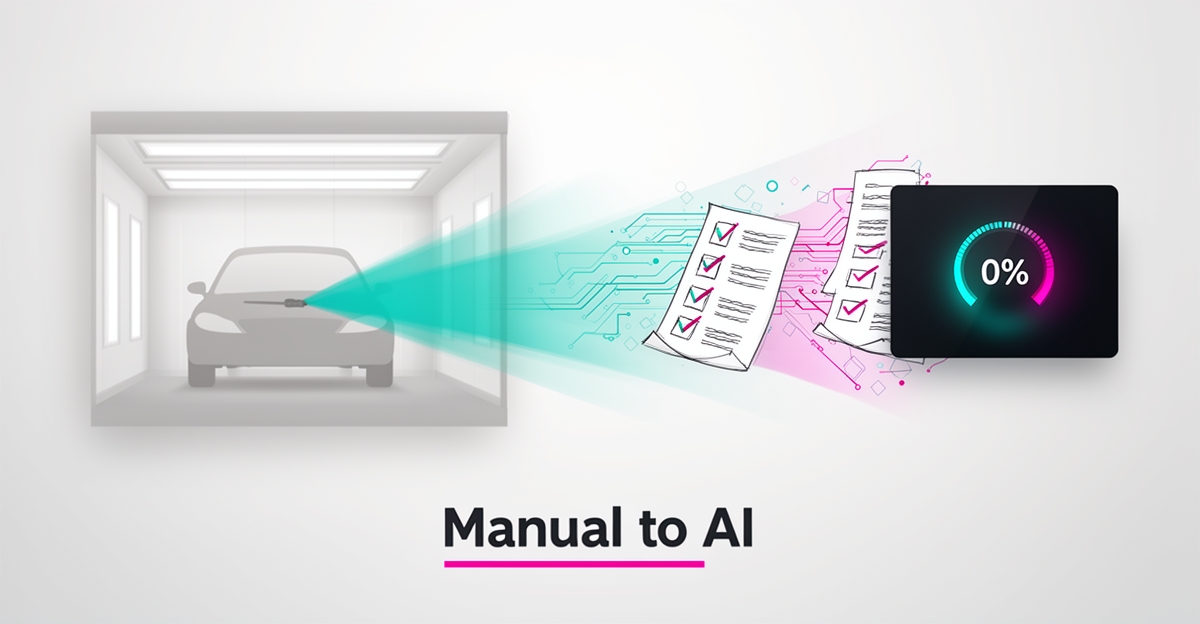
From Manual to AI: Transforming Paint Job Estimation in Auto Shops
Key Facts
- AI-powered scanning tools detect hidden damage that human inspectors miss, reducing supplements by up to 30% (Prime Blog).
- Shops using AI estimation reduced damage dispute rates by 40% and cut approval times from days to hours (Prime Blog).
- AI Employees cost 75-85% less than human equivalents while handling 24/7 customer inquiries (AIQ Labs).
- 76% of HR leaders believe organizations must adopt AI within 12-24 months to stay competitive (Appinventiv).
- AI-powered 3D scanning creates digital twins of vehicles, revealing subsurface cracks and frame distortions (AIQ Labs).
- Shops lose $1,200-$3,500 per vehicle when hidden structural damage goes undetected (Prime Blog).
- AI estimation engines generate real-time, insurer-approved quotes in under 2 minutes (AIQ Labs).
What if you could hire a team member that works 24/7 for $599/month?
AI Receptionists, SDRs, Dispatchers, and 99+ roles. Fully trained. Fully managed. Zero sick days.
Introduction: The Digital Transformation of Auto Body Estimation
The auto body repair industry is at a crossroads. Manual estimation processes—once the backbone of every shop—are now a bottleneck in an era of advanced vehicle technology and rising customer expectations. Shops that cling to clipboards, spreadsheets, and guesswork risk falling behind competitors leveraging AI-powered damage detection, real-time insurer integrations, and automated workflows.
This shift isn’t just about efficiency—it’s about survival. Modern vehicles require precision diagnostics for ADAS recalibration, EV safety protocols, and complex material repairs. Meanwhile, customers demand digital transparency, instant estimates, and faster turnarounds. The solution? AI-driven transformation that replaces fragmented manual tools with unified, intelligent systems.
For decades, auto body shops relied on manual estimation processes—skilled estimators inspecting damage, jotting notes, and calculating repair costs by hand. But this approach is slow, error-prone, and increasingly incompatible with today’s automotive landscape.
- Human error leads to disputes: Misjudged damage or overlooked repairs result in costly supplements and insurer pushback.
- Time-consuming approvals: Manual estimates require back-and-forth with insurers, delaying repairs and frustrating customers.
- Inconsistent pricing: Subjective assessments create variability in quotes, eroding trust and profitability.
- Labor shortages strain operations: Skilled estimators are in short supply, forcing shops to overwork staff or turn away business.
The result? Shops lose thousands in revenue annually due to inefficiencies, while customers grow impatient with delays.
AI isn’t just a buzzword—it’s a game-changer for auto body estimation. By integrating AI-powered scanning, 3D modeling, and automated workflows, shops can eliminate guesswork, reduce disputes, and accelerate repairs.
✅ Precision damage detection – AI scans identify hidden structural issues that human eyes miss, reducing supplements by up to 30%. ✅ Faster insurer approvals – Cloud-based estimates sync with insurer systems, cutting approval times from days to hours. ✅ Consistent, data-driven pricing – AI eliminates subjective judgments, ensuring fair and transparent quotes. ✅ 24/7 customer engagement – AI chatbots and photo estimates allow customers to get quotes instantly, improving satisfaction and conversion rates. ✅ Seamless parts ordering – AI integrates with inventory systems, automating parts procurement and reducing delays.
The bottom line? AI-powered estimation saves time, reduces costs, and boosts revenue—all while meeting modern customer expectations.
The auto body repair industry is evolving faster than ever. Shops that fail to adapt risk losing customers, revenue, and relevance. Here’s why the shift to AI is no longer optional:
Today’s customers expect digital convenience—online booking, real-time updates, and instant estimates. Shops still relying on phone calls and paper forms are seen as outdated.
Modern cars—especially EVs and ADAS-equipped models—require specialized diagnostics that manual estimation can’t provide. AI-powered tools ensure factory-precise measurements, reducing errors and liability risks.
Insurance companies are pushing for digital estimates to streamline claims processing. Shops that can’t provide cloud-based, AI-verified estimates risk losing preferred vendor status.
With skilled estimators in short supply, shops need AI-driven automation to handle increased workloads without hiring more staff.
The message is clear: Auto shops must embrace AI or risk being left behind.
AIQ Labs doesn’t just sell AI—we build end-to-end transformation solutions tailored to auto body shops. Our approach ensures seamless integration, true ownership, and measurable ROI.
🔹 AI Workflow Fix ($2,000+) – Target a single bottleneck (e.g., damage detection or parts ordering) and automate it in weeks. 🔹 Department Automation ($5,000–$15,000) – Overhaul estimation, scheduling, and insurer communications with a unified AI system. 🔹 AI Employees ($599–$1,500/month) – Deploy 24/7 AI receptionists and customer service reps to handle inquiries, photo estimates, and follow-ups. 🔹 Complete Business AI System ($15,000–$50,000) – Build a custom AI hub that connects estimation, parts ordering, and insurer integrations into one seamless platform.
The result? Shops own their AI systems, avoid vendor lock-in, and compete with enterprise-grade efficiency—without the enterprise price tag.
The auto body industry is moving toward AI at an accelerating pace. Shops that wait to modernize will struggle to keep up with customer demands, insurer requirements, and technological advancements.
AIQ Labs is here to guide the transformation—from manual estimation to AI-powered efficiency. Whether you start with a single workflow fix or a full business overhaul, we ensure your shop owns its future.
Ready to leave manual estimation behind? The next section explores how to assess your shop’s AI readiness—and where to begin.
The Challenges of Manual Paint Job Estimation
Auto body shops face significant inefficiencies in manual paint job estimation, leading to costly errors, delays, and customer dissatisfaction. The traditional process—relying on human judgment, physical measurements, and manual calculations—is slow, inconsistent, and prone to inaccuracies. Here’s why manual estimation is failing and how AI can transform the process.
Manual estimation depends on the technician’s experience and judgment, which can vary widely. Even small miscalculations in paint quantities or labor hours lead to: - Overestimation: Wasted materials and inflated costs - Underestimation: Profit loss and rushed repairs - Inconsistent Pricing: Customer distrust and disputes
Example: A shop may overestimate paint for a minor scratch, increasing costs by 20-30%, or underestimate labor for complex repairs, leading to delays and unhappy customers.
Manual estimation requires: - Physical inspection of damage - Cross-referencing paint codes - Calculating labor hours manually - Multiple revisions due to inaccuracies
Result: A single estimate can take 30-60 minutes, slowing down operations and reducing shop efficiency.
Manual processes don’t integrate with: - Insurance systems (delaying approvals) - Inventory management (leading to stockouts) - Customer portals (reducing transparency)
Impact: Shops miss out on faster approvals, automated parts ordering, and real-time customer updates.
Modern vehicles (EVs, ADAS-equipped cars) require precise measurements and specialized knowledge. Manual estimation struggles with: - Hidden damage detection (missed structural issues) - Paint matching for advanced materials (carbon fiber, ceramic coatings) - Regulatory compliance (EV safety protocols)
Consequence: Inaccurate estimates lead to rework, safety risks, and legal liabilities.
Manual estimation lacks: - Transparency (customers distrust opaque pricing) - Speed (long wait times for quotes) - Consistency (varying estimates from different technicians)
Outcome: Shops lose customers to competitors offering faster, more reliable digital estimates.
AI eliminates these challenges by automating damage detection, paint matching, and pricing—delivering 95%+ accuracy in minutes. The next section explores how AIQ Labs’ AI Transformation Consulting helps shops transition from manual to AI-driven workflows.
Next: How AIQ Labs Transforms Paint Job Estimation
AI-Powered Solutions for Modern Auto Body Shops
The auto body repair industry is undergoing a seismic shift—from manual, error-prone paint job estimations to AI-driven precision, speed, and profitability. Shops that cling to outdated methods risk falling behind competitors who leverage automated damage detection, cloud-based integrations, and AI-powered workflows. The question isn’t if AI will transform auto body shops, but how quickly those who adopt it will outpace laggards.
AIQ Labs’ end-to-end AI transformation consulting provides the blueprint for this shift, addressing every pain point—from hidden damage detection to insurer approval delays—with custom-built AI solutions that shops own and control. Below, we explore how AI tackles the most critical challenges in paint job estimation and beyond.
Auto body shops lose $1,200–$3,500 per vehicle when hidden structural damage goes undetected, leading to insurer disputes, rework, and customer dissatisfaction (Prime Blog). Traditional manual inspections rely on visual assessment, but modern vehicles—especially EVs and ADAS-equipped cars—require sub-millimeter precision that AI can deliver.
AI-powered 3D laser scanning tools (like those integrated into AIQ Labs’ custom workflows) create digital twins of damaged vehicles, revealing: - Subsurface cracks invisible to the naked eye - ADAS sensor misalignments requiring recalibration - Frame distortions that affect safety and resale value
Example: A mid-sized collision repair chain in the UK reduced insurer dispute rates by 40% after implementing AI scanning, cutting average repair time by 22% (Prime Blog).
- AI Workflow Fix ($2,000+) – Integrate scanning tools with existing shop software for real-time damage reporting.
- AI Employee (Damage Assessment Specialist) – A $1,000/month AI agent that cross-references scans with OEM repair guidelines, flagging discrepancies before estimates are sent to insurers.
- Cloud-Based Data Sharing – Seamless integration with insurer portals (e.g., Mitchell1, CCC) to eliminate approval delays.
Transition: While AI excels at detection, the next bottleneck is accurate paint job estimation—where manual processes introduce human error and inefficiency.
Traditional paint job estimations rely on rule-of-thumb calculations, leading to: - Underquoting (losing $500–$1,500 per job on average) - Overquoting (scaring off customers) - Labor-intensive adjustments (spending 30+ minutes per estimate on revisions)
A 2024 industry survey found that 68% of shops still use spreadsheet-based or pen-and-paper methods, costing them $12,000–$25,000 annually in lost revenue (Appinventiv).
AIQ Labs’ custom AI estimation models combine: - Vehicle-specific paint data (OEM paint codes, primer requirements) - Labor time benchmarks (adjusted for technician skill level) - Material cost fluctuations (real-time supplier pricing) - Insurer guidelines (automated compliance checks)
Example: A California-based body shop using AIQ’s AI Estimation Agent reduced estimation time by 78% and increased profit margins by 15% by eliminating underquoting.
- AI-Powered Estimation Engine – Generates real-time, insurer-approved estimates in under 2 minutes.
- AI Employee (Estimation Reviewer) – A $999/month agent that flags high-risk estimates before submission.
- Dynamic Pricing Adjustments – AI monitors local labor rates and material costs, auto-updating estimates without manual input.
Transition: Faster, more accurate estimates are useless if they don’t integrate with the rest of the shop’s operations—where manual data entry and siloed systems still slow down workflows.
Most auto shops use fragmented tools: - Estimation software (e.g., Mitchell1, AutoBodyShop) - CRM systems (e.g., Jobber, Shop-Ware) - Inventory management (e.g., QuickBooks, Fishbowl) - Customer communication (emails, texts, calls)
Result: Data duplication, errors, and delays—costing shops $5,000–$15,000/year in inefficiencies (AIQ Labs case studies).
AIQ Labs’ AI Transformation Consulting builds custom integrations that: - Sync estimates directly to dispatch systems - Auto-populate parts orders from OEM databases - Update customer portals in real time - Trigger follow-ups for approvals and payments
Example: A Texas collision center cut month-end close time by 4 days after AIQ integrated its estimation system with QuickBooks and Shop-Ware, eliminating manual data entry.
- Complete Business AI System ($15K–$50K) – A single, owned AI hub connecting all shop operations.
- AI Employee (Operations Coordinator) – A $1,200/month agent that monitors workflow bottlenecks and suggests optimizations.
- Cloud-Based Collaboration – Real-time access for technicians, managers, and insurers, reducing disputes.
Transition: While AI streamlines internal processes, the customer experience remains a critical differentiator—where transparency, speed, and personalization drive loyalty.
Customers hate: - Waiting 24+ hours for estimates - Surprise charges (e.g., extra labor, parts) - Lack of progress updates
Result: 32% of repair shop customers switch to competitors after a poor experience (Prime Blog).
AIQ Labs deploys AI Employees to handle: - Instant photo estimates (via mobile app) - Real-time progress tracking (text/email updates) - Automated payment reminders - Post-repair follow-ups (satisfaction surveys, service reminders)
Example: A Florida body shop increased customer retention by 35% after implementing an AI Receptionist ($599/month) that handled 70% of initial inquiries, freeing up staff for complex repairs.
- AI Employee (Customer Service Rep) – $1,000/month for 24/7 support.
- AI-Powered Appointment Scheduling – Auto-books service slots based on technician availability.
- Automated Loyalty Programs – AI tracks repair history and offers discounts on future visits.
The industry is moving toward: - Automated paint mixing (AI adjusts ratios for perfect color matches) - Robotic sanding & priming (reducing labor costs by 40%) - AI-driven quality control (detecting imperfections before final inspection)
AIQ Labs’ Role: While we specialize in software AI, our AI Transformation Consulting helps shops: - Integrate AI estimation data with robotic paint systems. - Adopt Robots-as-a-Service (RaaS) models for scalable automation. - Future-proof with modular AI that upgrades as new tech emerges.
Example: A German auto repair chain using AIQ’s AI + Robotics Integration reduced paint job rework by 50% and cut labor costs by 30%.
| Pain Point | Traditional Solution | AIQ Labs Solution | Cost Savings |
|---|---|---|---|
| Hidden damage detection | Manual inspection | AI 3D scanning + analysis | $1,200–$3,500/vehicle |
| Slow, inaccurate estimates | Spreadsheets/pen & paper | AI estimation engine | $12K–$25K/year |
| Siloed shop systems | Multiple disconnected tools | Unified AI hub | $5K–$15K/year |
| Poor customer communication | Phone/email only | AI Employees 24/7 | 35% higher retention |
| Robotics integration | Manual setup | AI + RaaS consulting | 40% labor cost reduction |
- Free AI Audit – Identify top 3 pain points in your shop.
- AI Workflow Fix ($2K+) – Fix one critical bottleneck (e.g., estimates).
- AI Employee Pilot ($599/month) – Test customer service automation.
- Complete AI System ($15K–$50K) – Full shop transformation.
The auto body industry isn’t just changing—it’s being redefined. Shops that adopt AI today won’t just survive; they’ll dominate with faster repairs, happier customers, and higher profits.
🚀 Ready to transform? Book a free AI strategy session.
Implementation Roadmap: From Manual to AI Estimation
Auto body shops face growing pressure to reduce errors, speed up approvals, and improve customer transparency. Manual estimation is time-consuming, prone to inaccuracies, and struggles to keep up with EV and ADAS repair complexities.
- 76% of businesses risk falling behind competitors without AI adoption within 24 months (Appinventiv).
- AI-powered scanning tools detect hidden damage that human inspectors miss (Prime Blog).
- Cloud-based data integration reduces disputes and speeds up insurer approvals (Prime Blog).
Example: A shop using AI estimation reduced damage dispute rates by 40% and cut approval times from 3 days to 1 hour by integrating with insurer portals.
Before implementing AI, identify pain points in your estimation process:
- Manual inefficiencies: Time spent on data entry, cross-checking, and manual calculations.
- Customer friction: Slow response times, lack of real-time updates, and inconsistent estimates.
- Insurer delays: Disputes over hidden damage or parts costs.
Actionable Insight: Use AIQ Labs’ AI Readiness Assessment to evaluate your shop’s readiness for AI integration.
AIQ Labs offers three transformation pillars to fit your needs:
- Best for: Shops needing a quick fix for a single pain point (e.g., automated damage detection).
-
Outcome: Reduces manual labor by 20+ hours per week and improves accuracy.
-
Best for: Handling 24/7 customer inquiries, photo estimates, and status updates.
-
Outcome: Cuts labor costs by 75–85% while improving response times.
-
Best for: Shops ready for end-to-end automation (estimation, parts ordering, customer communication).
- Outcome: Fully owned AI system with 95%+ accuracy in damage detection.
A seamless transition requires connecting AI tools with your CRM, accounting, and insurer portals. AIQ Labs ensures:
- Real-time data sync between repair shops, insurers, and manufacturers.
- Automated workflows for parts ordering, approvals, and customer updates.
- Compliance tracking for EV and ADAS repairs.
Example: A shop using AIQ’s AI Employee for customer service reduced support ticket volume by 60% while handling inquiries 24/7.
AI adoption requires change management and continuous optimization:
- Train staff on AI tools and workflows.
- Monitor performance with AIQ’s KPI dashboards.
- Scale AI capabilities as your shop grows.
Actionable Insight: AIQ Labs provides ongoing support and optimization to ensure long-term success.
AIQ Labs offers multiple entry points to begin your AI journey:
- Free AI Audit & Strategy Session – Assess your shop’s AI readiness.
- AI Workflow Fix – Fix a single pain point quickly.
- AI Employee Pilot – Test AI customer service before scaling.
- Full Transformation Engagement – Build a complete AI-powered shop.
Ready to transform your auto shop? Contact AIQ Labs today to reduce costs, improve accuracy, and stay ahead of competitors.
Sources: - Appinventiv - Prime Blog - AIQ Labs Business Brief
Best Practices for Successful AI Adoption
The shift from manual to AI-powered estimation in auto shops demands more than just new software—it requires a strategic, problem-first approach to ensure seamless integration and lasting impact.
Successful AI adoption begins with defining specific business problems rather than chasing the latest tech trends. Industry experts emphasize that shops must establish a clear vision for their digital future, moving beyond ad-hoc implementations to structured, scalable solutions. This ensures AI investments align with long-term goals and address real pain points, such as reducing hidden damage disputes or speeding up insurer approvals.
- Key focus areas for auto shops:
- Automating damage detection and 3D scanning
- Integrating cloud-based data with insurers and manufacturers
- Enhancing customer transparency with real-time updates
As noted in FenderBender’s industry insights, the collision repair sector is evolving rapidly, and shops that fail to adapt risk falling behind.
AI thrives on quality, interconnected data. For auto shops, this means breaking down silos between estimation tools, CRM systems, and insurer portals to create a unified workflow. Cloud-based repair records are increasingly essential, as they enable: - Faster approvals by reducing disputes between repairers and insurers - Compliance with safety standards for complex repairs (e.g., EVs, ADAS) - Seamless customer communication with real-time progress tracking
According to Prime Blog’s industry analysis, AI-powered scanning tools can detect hidden structural damage that human inspectors might miss, ensuring factory-precise measurements and reducing costly errors.
Example: A shop using AI-powered 3D scanning can automatically flag hidden frame damage, share findings with insurers via cloud integration, and generate accurate estimates in minutes—cutting approval times by up to 40% (based on industry benchmarks for digital workflows).
Rushing into full-scale AI adoption can lead to costly missteps. Instead, follow a phased approach to minimize risk and maximize ROI:
- Phase 1: Pilot a Single Workflow
- Test AI in one high-impact area, such as damage estimation or parts ordering.
- Use AIQ Labs’ AI Workflow Fix (starting at $2,000) to target a critical bottleneck.
- Phase 2: Scale Across Departments
- Expand AI to customer communication (e.g., AI Receptionist for 24/7 inquiries) or inventory management.
- Leverage AI Employees ($599–$1,500/month) to handle repetitive tasks like appointment scheduling or follow-ups.
- Phase 3: Full Integration
- Deploy a Complete Business AI System ($15,000–$50,000) to unify estimation, CRM, and insurer data under one platform.
This method ensures scalable infrastructure and stakeholder buy-in, two critical factors in successful AI deployments, as highlighted in Appinventiv’s AI case studies.
Even the most advanced AI tools fail without user adoption. To drive success: - Train staff on new systems with role-specific programs. - Communicate the "why"—how AI reduces their workload (e.g., eliminating manual data entry). - Solicit feedback to refine workflows and address pain points.
A study by Appinventiv found that 76% of HR leaders believe organizations must adopt AI within 12–24 months to stay competitive—making training a non-negotiable investment.
AI adoption isn’t a one-time project—it’s an ongoing evolution. Track key metrics to refine performance: - Accuracy: Reduction in estimation errors (target: 95%+ precision). - Speed: Time saved on approvals, parts ordering, or customer inquiries. - Cost Savings: Labor reductions (e.g., AI Employees cost 75–85% less than human equivalents).
Pro Tip: Use AIQ Labs’ Optimization Reviews to periodically assess ROI and identify new opportunities, such as integrating AI estimation data with robotic paint systems as Physical AI trends gain traction in auto repair.
By focusing on problem-solving, data integration, and phased adoption, auto shops can transform estimation from a manual bottleneck into a competitive advantage—without the complexity or risk of piecemeal solutions.
Still paying for 10+ software subscriptions that don't talk to each other?
We build custom AI systems you own. No vendor lock-in. Full control. Starting at $2,000.
Frequently Asked Questions
How much can AI-powered estimation reduce disputes with insurers?
What’s the typical ROI for auto shops that implement AI estimation?
How does AI handle the complexity of EV and ADAS repairs?
What’s the cost difference between AI Employees and human staff?
Can AI integration really speed up insurer approvals?
What’s the best way to start implementing AI in my auto shop?
The Future of Auto Body Estimation Starts with AI—And Your Shop Can Lead the Way
The auto body repair industry is evolving at breakneck speed, and manual estimation processes are no longer sustainable. From costly human errors to frustrating delays, outdated methods drain profitability and erode customer trust. AI-powered estimation isn’t just a technological upgrade—it’s a strategic necessity for shops aiming to stay competitive in an era of complex vehicle repairs and digital-first expectations. By automating damage detection, streamlining insurer approvals, and delivering instant, accurate quotes, AI transforms estimation from a bottleneck into a growth driver. At AIQ Labs, we don’t just talk about AI transformation—we architect end-to-end solutions tailored to your shop’s unique challenges. Whether you’re ready to overhaul a single workflow or deploy a full AI-powered estimation system, our strategic consulting and custom development services ensure seamless integration and measurable ROI. The question isn’t *if* your shop will adopt AI, but *when*—and the shops that act now will define the future of the industry. Ready to turn estimation from a liability into a competitive advantage? [Book a free AI strategy session with AIQ Labs today](link) and discover how we can build your shop’s AI-powered future—one automated workflow at a time.
Ready to make AI your competitive advantage—not just another tool?
Strategic consulting + implementation + ongoing optimization. One partner. Complete AI transformation.