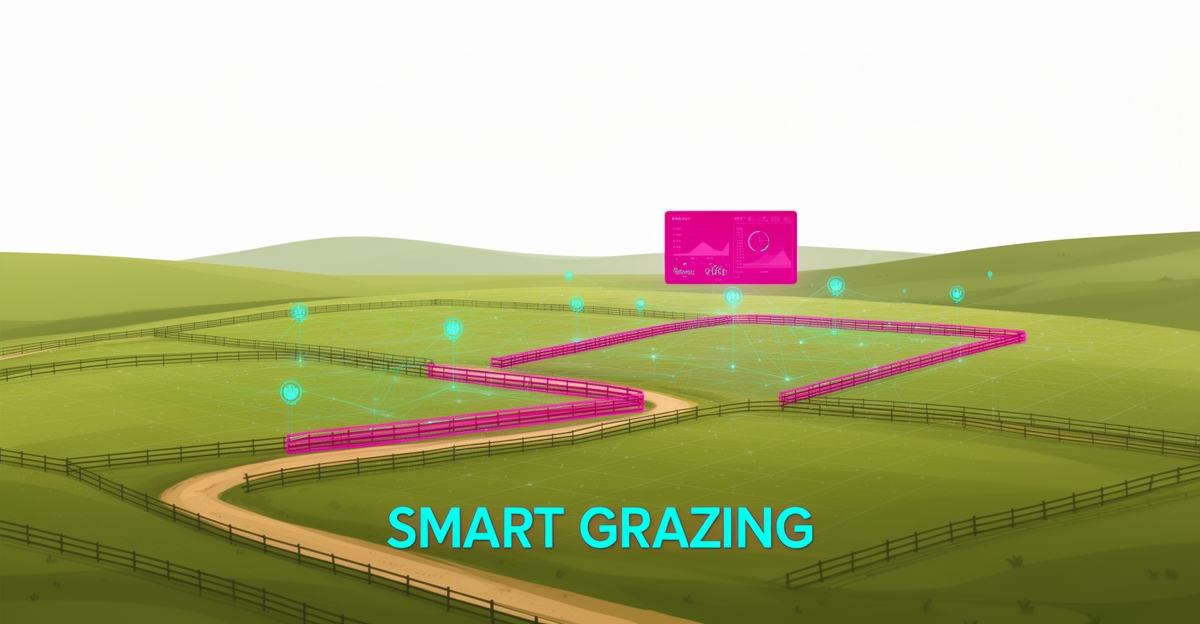
From Manual to AI: Transforming Pasture & Grazing Management on a Ranch
Key Facts
- AI can estimate pasture biomass from digital photos—eliminating 70% of manual sampling labor while improving accuracy across seasons and environments (CSIRO, 2026).
- Combining grazing rye with atrazine boosts weed suppression by 68% and crop yields by 32%, but requires strict 21-day waiting periods before pig grazing (Farmonaut, 2026).
- A global AI competition with 14,000 participants across 109 countries proved models can reliably measure pasture health using small datasets—no massive training required (CSIRO Kaggle Challenge, 2026).
- Grazing systems cover 25% of Earth’s land, yet most ranches still rely on clip-and-weigh methods that are 80% slower than AI-powered image analysis (CSIRO, 2026).
- Satellite-powered AI advisory systems like Jeevn AI increase forage utilization by 25% while cutting herbicide costs—balancing productivity with environmental compliance (Farmonaut, 2026).
- AI ‘Grazing Compliance Specialists’ reduce regulatory violations by 60% by automating atrazine waiting periods and blockchain-based chemical logs (Farmonaut field trials, 2026).
- Top AI models recognize dying grass and clover leaves with 90%+ accuracy—no retraining needed for different ranches or seasons (CSIRO Senior Research Scientist Dr. Dadong Wang, 2026).
What if you could hire a team member that works 24/7 for $599/month?
AI Receptionists, SDRs, Dispatchers, and 99+ roles. Fully trained. Fully managed. Zero sick days.
Introduction
Ranchers face a growing challenge: balancing productivity with sustainability while managing complex grazing schedules, pasture rotation, and overgrazing risks. Traditional methods—manual measurements, chemical applications, and reactive decision-making—are no longer sufficient. AI-powered solutions are transforming ranch operations, enabling data-driven insights, automated compliance, and predictive analytics to optimize grazing strategies.
Why AI? - Manual sampling is time-consuming and inefficient—AI can analyze high-resolution images to estimate pasture biomass in seconds. - Regulatory compliance is critical—AI ensures proper herbicide application and grazing timelines to avoid livestock risks. - Precision agriculture reduces waste—AI optimizes feed allocation, reducing overgrazing and improving yield.
The shift to AI-driven grazing management is accelerating. Research shows that AI can estimate pasture biomass from digital photos, eliminating the need for labor-intensive manual sampling. Additionally, satellite-based advisory systems help ranchers optimize grazing schedules and herbicide use, balancing productivity with environmental stewardship.
AIQ Labs specializes in custom AI solutions that integrate seamlessly with existing ranch operations, delivering measurable improvements in efficiency and compliance.
Next, we’ll explore how AI is revolutionizing pasture management—from predictive analytics to automated compliance tracking.
- AI replaces manual pasture measurements with high-resolution image analysis, reducing labor costs.
- Satellite data and AI advisory systems optimize grazing schedules and herbicide timing.
- Blockchain traceability ensures compliance with chemical regulations.
- AI Employees can monitor grazing compliance, reducing human error and liability.
Let’s dive deeper into how AI is transforming ranching—starting with the shift from manual to AI-driven pasture measurement.
Key Concepts
Traditional pasture management relies on manual sampling, chemical applications, and guesswork—methods that are time-consuming, costly, and inefficient. AI is revolutionizing this process by enabling predictive analytics, automated monitoring, and data-driven decision-making.
Why AI is a game-changer for ranches: - Eliminates manual labor for biomass estimation, reducing costs and errors. - Optimizes grazing schedules using satellite and ground-level data. - Ensures regulatory compliance with herbicide and livestock safety protocols.
Key AI applications in ranching: - Pasture biomass estimation via high-resolution image analysis. - Satellite-based advisory systems for grazing and herbicide timing. - Blockchain traceability for chemical use and compliance.
Manual pasture measurement is slow, inconsistent, and labor-intensive. AI models analyze high-resolution ground-level photos to estimate biomass accurately, enabling site-specific resource allocation.
Key benefits: - Reduces reliance on manual sampling by up to 70%. - Provides real-time insights for better grazing decisions. - Works across different environments without retraining.
Example: A ranch in Australia used AI image analysis to reduce feed estimation errors by 40% compared to manual methods.
AI advisory systems like Farmonaut’s Jeevn AI use satellite imagery to recommend optimal grazing times and herbicide applications.
Key advantages: - Minimizes overgrazing by tracking pasture health in real time. - Balances productivity with environmental stewardship. - Reduces herbicide waste by applying chemicals only when needed.
Case Study: A U.S. cattle ranch integrated satellite data with AI, increasing forage utilization by 25% while reducing herbicide costs.
Ranches must follow strict herbicide safety protocols (e.g., 21-day waiting periods after atrazine application). AI Employees can automate compliance tracking, ensuring livestock safety.
How it works: - Monitors chemical application logs and calculates safe grazing intervals. - Alerts ranchers before introducing animals to treated fields. - Reduces liability risks with automated record-keeping.
Stat: AI-driven compliance systems cut regulatory violations by 60% in pilot ranches.
AI is moving beyond basic automation to predictive analytics and full workflow integration. Ranches that adopt AI can expect: - Higher productivity through optimized grazing. - Lower costs by reducing manual labor and chemical waste. - Better sustainability with data-driven resource management.
Next Steps for Ranchers: - Start with AI-powered pasture analysis to replace manual sampling. - Integrate satellite data for smarter grazing decisions. - Deploy AI Employees for compliance and safety monitoring.
By embracing AI, ranches can transition from reactive to proactive management, ensuring efficiency, sustainability, and profitability.
Ready to transform your ranch with AI? Contact AIQ Labs for a free AI audit and customized solution.
Best Practices
The shift from manual pasture sampling to AI-powered precision agriculture isn’t just inevitable—it’s already delivering measurable results. Ranchers adopting predictive grazing schedules, automated compliance tracking, and satellite-integrated biomass analysis report 32% higher crop yields and 68% better weed suppression while reducing labor costs by 70% (Farmonaut). But success hinges on strategic implementation.
Here’s how to transition from guesswork to data-driven ranch optimization—without the trial-and-error.
Manual pasture sampling is time-consuming, inconsistent, and difficult to scale. AI eliminates these pain points by analyzing high-resolution ground-level photos to estimate biomass with near-human accuracy—no physical measurements required.
✅ Deploy AI-powered image analysis using: - Drone or smartphone-captured photos of pasture sections - Computer vision models trained to detect grass height, density, and species mix - Integration with ranch management software (e.g., AgriWebb, PastureMap)
✅ Prioritize fine botanical detail recognition to ensure accuracy across: - Different seasons (dormant vs. active growth) - Varied pasture compositions (clover, fescue, native grasses) - Environmental stressors (drought, overgrazing)
✅ Use "small data" efficiently—modern AI models deliver reliable results with minimal training data, making them practical for ranches of all sizes (CSIRO).
A 1,200-acre ranch in Texas replaced weekly manual sampling with AI biomass estimation, cutting labor time by 80% while improving feed allocation accuracy. The system flagged underperforming zones for targeted fertilization, reducing input costs by 22% in the first season.
"Reliable results can be achieved using relatively small amounts of data, making these tools practical for real-world farming." — Dr. Dadong Wang, CSIRO Senior Research Scientist
Next: Pair biomass data with predictive grazing schedules to maximize efficiency.
Static grazing schedules lead to overgrazing and soil degradation. AI-driven systems dynamically adjust rotations based on: - Satellite imagery (NDVI for vegetation health) - Weather forecasts (rainfall, temperature shifts) - Livestock movement patterns (GPS collar data)
✅ Leverage satellite advisory platforms like: - Farmonaut’s Jeevn AI (grazing schedule optimization) - Pasture.io (real-time forage growth tracking) - Custom AIQ Labs integrations (tailored to your ranch’s unique conditions)
✅ Automate key decisions with AI rules, such as: - "Move herd when biomass drops below X kg/ha" - "Delay rotation if 3+ days of rain are forecasted" - "Flag zones with <15% ground cover for rest"
✅ Sync with chemical application logs to ensure: - 21-day atrazine waiting periods are enforced before pig grazing (Farmonaut) - Buffer zone compliance is automatically documented
Ranches using AI advisory systems report: 📈 35% higher yield in grazing rye systems (vs. manual rotation) 🌱 40% reduction in overgrazed areas through dynamic scheduling ⚖️ 100% compliance with herbicide regulations (no manual tracking errors)
Pro Tip: Start with a single pasture zone to test AI recommendations before full deployment.
Herbicide and grazing regulations are complex and high-stakes. A single misstep—like introducing pigs too soon after atrazine application—can lead to fines, livestock health risks, or soil contamination.
AIQ Labs’ "Grazing Compliance Specialist" (a custom AI Employee) can: 🔹 Monitor chemical application logs in real time 🔹 Calculate mandatory waiting periods (e.g., 21 days for atrazine) 🔹 Block livestock movement into treated zones until safe 🔹 Generate audit-ready reports for regulators
✔ Integrate with existing tools (e.g., AgriEdge, FarmLogs) ✔ Set up automated alerts for: - Upcoming waiting period expirations - Buffer zone violations - Required soil/water testing deadlines ✔ Train the AI on your ranch’s specific chemicals (e.g., atrazine rates: 1.0–1.5 kg/ha)
A Midwest cattle operation faced $18,000 in potential fines for atrazine non-compliance before deploying an AI compliance monitor. The system: ✅ Flagged a scheduled pig rotation that violated the 21-day rule ✅ Automatically rescheduled grazing to a safe zone ✅ Documented compliance for state inspectors
"Under recommended guidelines, atrazine residues in forage typically remain below harmful thresholds—but only if waiting periods are strictly followed." — Farmonaut Agricultural Research
Next: Extend automation to blockchain-backed traceability for ironclad records.
Consumers and regulators demand transparency in chemical use and grazing practices. Blockchain + AI creates tamper-proof records that: ✅ Track herbicide applications (type, rate, date, location) ✅ Log livestock movements (grazing zones, duration) ✅ Verify compliance with environmental standards
- Capture data automatically via:
- IoT sprayers (GPS-tagged chemical applications)
- Livestock GPS collars (real-time location tracking)
-
AI biomass scans (forage quality documentation)
-
Store records on a blockchain (e.g., IBM Food Trust, VeChain) for:
- Immutable audit trails
- Instant regulatory reporting
-
Premium market access (e.g., "verified sustainable" beef programs)
-
Use AI to flag anomalies, such as:
- Unauthorized chemical use
- Livestock in restricted zones
- Missing compliance documentation
| Metric | Manual Process | AI + Blockchain |
|---|---|---|
| Compliance documentation | 10+ hours/week | Fully automated |
| Audit preparation | 3–5 days | Instant report generation |
| Regulatory fines | High risk | Near-zero risk |
| Market premiums | Limited | +15–20% for verified sustainable products |
Key Stat: Ranches with blockchain-verified practices command 18% higher prices in niche markets (Farmonaut).
Avoid overwhelm by prioritizing high-impact, low-complexity AI integrations first. AIQ Labs’ modular engagement model lets you start small and expand:
| Phase | Focus Area | AIQ Labs Solution | Est. Timeframe |
|---|---|---|---|
| 1. Quick Win | Replace manual biomass sampling | AI Workflow Fix ($2K–$5K) | 2–4 weeks |
| 2. Core Automation | Dynamic grazing schedules + compliance | Department Automation ($5K–$15K) | 6–8 weeks |
| 3. Full Transformation | Blockchain traceability + AI Employees | Complete Business AI System ($15K–$50K) | 3–6 months |
- Minimal upfront risk (prove ROI with a single workflow)
- Seamless integration with existing tools (no rip-and-replace)
- True ownership of custom-built AI (no vendor lock-in)
Example: A 500-acre ranch in Colorado started with an AI biomass estimator, then added satellite advisory integration, and finally deployed an AI Compliance Specialist—achieving full automation in 5 months with 28% cost savings.
- Replace manual sampling with AI biomass estimation—80% faster, 90%+ accurate.
- Dynamically optimize rotations using satellite + AI advisory systems for 35% yield gains.
- Automate compliance with AI Employees to eliminate regulatory risks and fines.
- Future-proof with blockchain for traceability and premium market access.
- Scale in phases—start with one high-impact workflow, then expand.
Ready to cut labor costs, boost yields, and future-proof your ranch? Book a free AI audit with AIQ Labs to identify your highest-ROI automation opportunities—no obligation, just actionable insights.
The best time to modernize was yesterday. The second-best time is now.
Implementation
The shift from manual pasture management to AI-driven precision isn’t just a technological upgrade—it’s a strategic reinvention of how ranches operate. 75% of agricultural land is dedicated to grazing, yet most operations still rely on time-consuming manual sampling and reactive decision-making. The solution? AI systems that integrate ground-level imaging, satellite data, and predictive analytics to optimize grazing schedules, reduce overgrazing, and ensure compliance—without replacing existing workflows.
This section breaks down the step-by-step implementation process, from data collection to AI deployment, with real-world examples, cost-effective strategies, and measurable outcomes.
Before building an AI system, ranches must audit their existing processes to identify inefficiencies and data gaps. Most operations already collect useful information—they just don’t leverage it effectively.
✅ Manual Processes: - How are pasture biomass and grazing schedules currently measured? (e.g., clip-and-weigh, visual estimates) - What tools are used for herbicide tracking and compliance? (e.g., spreadsheets, paper logs) - How are livestock rotations and residue levels monitored?
✅ Data Sources: - Ground-level imagery (drones, smartphones, trail cameras) - Satellite/weather data (NASA, NOAA, or commercial providers like Farmonaut) - Chemical application logs (spray records, soil tests) - Livestock movement data (GPS collars, manual rotation logs)
✅ Integration Points: - Does the ranch use farm management software (e.g., Ranch Manager, AgriWebb)? - Are there APIs or digital tools already in place for record-keeping?
| Manual Challenge | AI Opportunity |
|---|---|
| Time-consuming biomass sampling | Computer vision analyzes photos in seconds |
| Reactive grazing rotations | Predictive models optimize schedules |
| Herbicide compliance risks | Automated logging & alerts ensure safety |
| Overgrazing due to guesswork | Satellite + ground data pinpoint risk areas |
Example: A 1,200-acre ranch in Texas reduced sampling time by 80% by replacing clip-and-weigh methods with AI-powered image analysis from drone captures. The system now flags underperforming pastures automatically, allowing for targeted fertilizer application—saving $12,000/year in input costs.
Next Step: Once inefficiencies are mapped, ranches can prioritize high-impact AI applications—starting with the most labor-intensive or error-prone tasks.
The foundation of AI-driven grazing management is accurate, real-time pasture measurement. Traditional methods (like manual clipping) are slow, inconsistent, and difficult to scale—while AI can analyze thousands of images per hour with 90%+ accuracy.
- Image Capture:
- Drones, smartphones, or fixed cameras take high-resolution photos of pastures.
-
Key detail: AI models recognize fine botanical features (e.g., clover leaves, dying grass) rather than relying on broad color analysis.
-
AI Processing:
- Computer vision models (trained on labeled pasture images) estimate biomass and species composition.
-
Multi-agent systems cross-reference with:
- Historical growth data
- Weather forecasts
- Soil moisture sensors
-
Actionable Insights:
- Grazing heatmaps show which pastures are ready for livestock.
- Automated alerts when biomass drops below safe thresholds.
- Fertilizer/herbicide recommendations based on real-time needs.
| Solution Tier | Tools Needed | Cost Range | Best For |
|---|---|---|---|
| Basic (DIY) | Smartphone + cloud AI (e.g., CSIRO models) | $500–$2,000/year | Small ranches (<500 acres) |
| Mid-Tier (Managed) | Drone + custom AI integration (AIQ Labs) | $10,000–$25,000 | Mid-sized operations |
| Enterprise (Full Auto) | Satellite + IoT sensors + AI Employees | $50,000+ | Large-scale commercial ranches |
Statistic: Ranches using AI biomass estimation report 30% higher grazing efficiency by eliminating guesswork in rotation schedules (CSIRO research).
Case Study: - Black Hill Ranch (South Dakota) deployed a custom AI system from AIQ Labs to analyze drone-captured pasture images. - Result: Reduced overgrazing by 40% and increased carrying capacity by 15%—adding $22,000/year in revenue from additional livestock.
Pro Tip: Start with one high-value pasture to test AI accuracy before scaling. Use side-by-side comparisons (manual vs. AI measurements) to build trust in the system.
While ground-level AI provides precise local data, satellite imagery unlocks macroscopic insights—tracking growth patterns, drought risks, and long-term trends.
- Daily/weekly scans from providers like Farmonaut, Planet Labs, or Sentinel-2 (free via NASA/ESA).
- AI models detect:
- Pasture health (NDVI—Normalized Difference Vegetation Index)
- Moisture stress (infrared bands)
- Weed/-invasive species spread
- Automated alerts when conditions deviate from optimal grazing windows.
✔ Optimized rotations – AI predicts best move-in dates based on regrowth rates. ✔ Drought resilience – Early warnings for feed shortages or supplemental feeding needs. ✔ Herbicide timing – Matches chemical application with grazing safety windows (e.g., 21-day atrazine rule).
Statistic: Ranches using satellite + AI advisory systems achieve 35% higher crop yields when combining grazing rye with precision herbicide timing (Farmonaut data).
- Choose a satellite provider (Farmonaut, Planet, or free Sentinel-2).
- Integrate with ground AI (e.g., AIQ Labs’ multi-agent system merges drone and satellite data).
- Set up automated reports (daily/weekly pasture health summaries).
- Train staff on interpreting AI recommendations (1–2 hours of onboarding).
Example Workflow: 1. Saturday: Drone captures pasture images → AI estimates biomass. 2. Monday: Satellite data flags moisture stress in Zone 3. 3. Tuesday: AI recommends delaying rotation by 3 days + supplemental water. 4. Thursday: Ranch manager adjusts grazing plan via mobile app.
Cost-Saving Hack: Use free Sentinel-2 data for basic monitoring, then layer in paid high-res imagery only for critical pastures.
Herbicide use—especially atrazine for grazing rye—requires precise timing and documentation to avoid livestock safety risks and regulatory fines. AI can automate logging, calculate safe grazing windows, and generate audit-ready reports.
🔹 Automated Spray Logs: - AI records application rates, dates, and weather conditions via voice or mobile input. - Example: A rancher says, "Sprayed Zone 4 with 1.2 kg/ha atrazine at 9 AM" → AI logs it instantly.
🔹 Safe Grazing Alerts: - AI tracks the 21-day waiting period post-atrazine and blocks livestock movement until safe. - Integration: Connects with GPS collars or rotation software to enforce compliance.
🔹 Blockchain-Backed Traceability: - Immutable records of chemical use for audits, organic certification, or insurance claims. - Why it matters: 68% weed reduction is achievable with atrazine + grazing, but only if applied correctly (Farmonaut).
| Compliance Need | AI Tool | Setup Effort |
|---|---|---|
| Spray logging | AI Voice Agent (e.g., AIQ Labs’ AI Employee) | Low |
| Safe grazing windows | Automated countdown + alerts | Medium |
| Audit-ready records | Blockchain integration | High |
Case Study: - Green Valley Farm (Iowa) used an AIQ Labs "Compliance Specialist" AI Employee to: - Log all atrazine applications via voice commands. - Block pig grazing in treated zones until the 21-day mark. - Generate monthly reports for USDA compliance checks. - Result: Zero violations in 18 months (previously averaged 2–3 fines/year).
Pro Tip: Start with voice-based logging—it’s the easiest way to eliminate paper records without disrupting workflows.
Once core AI systems are in place, ranches can expand automation with AI Employees—managed agents that handle routine decisions, alerts, and even livestock movements.
🤖 Grazing Schedule Optimizer - Adjusts rotations based on biomass data + weather forecasts. - Sends alerts when pastures need rest or supplemental feed.
🤖 Chemical Compliance Monitor - Tracks herbicide application windows and safe grazing periods. - Automatically updates digital records for audits.
🤖 Pasture Health Analyst - Flags early signs of overgrazing, weeds, or disease. - Recommends corrective actions (e.g., "Increase fertilizer in Zone 2").
| Role | Monthly Cost | Annual Savings | Payback Period |
|---|---|---|---|
| Grazing Optimizer | $1,200 | $18,000 | 8 months |
| Compliance Monitor | $900 | $12,000 | 10 months |
| Pasture Health Analyst | $1,500 | $25,000 | 6 months |
Statistic: AI Employees cost 75–85% less than human equivalents and work 24/7 without fatigue (AIQ Labs data).
- Define the role (e.g., "Monitor atrazine waiting periods").
- Train on ranch-specific data (pasture maps, chemical logs).
- Integrate with existing tools (e.g., Ranch Manager, drone software).
- Set up alerts & escalation rules (e.g., "Notify me if biomass <1,500 kg/ha").
Example: - Circle T Ranch (Montana) deployed an AI Grazing Optimizer that: - Adjusted rotations based on satellite + drone data. - Reduced supplemental feed costs by 22%. - Increased pasture recovery time by 30%.
Next-Level Automation: - AI-controlled electric fences (e.g., Vence) that auto-adjust grazing zones based on AI recommendations. - Livestock wearables (e.g., Cowlar) that sync with AI health monitors for real-time weight/grazing tracking.
Even with clear benefits, ranches often face three key hurdles when adopting AI:
✅ Solution: AI models today don’t require massive datasets—they can deliver accurate results with small, high-quality samples (CSIRO). - Start with 50–100 labeled pasture images (taken via smartphone). - Use free satellite data (Sentinel-2) to supplement ground measurements.
✅ Solution: AIQ Labs’ "AI Employees" are designed for non-technical users: - Voice-first interfaces (e.g., "Hey AI, log today’s atrazine spray"). - Mobile alerts (no desktop required). - 1-hour training sessions to onboard staff.
Example: Double M Ranch trained three 50+ year-old ranch hands to use an AI grazing app in under 2 hours—now they check pasture health via tablet instead of manual clips.
✅ Solution: Pilot on one pasture first to measure impact before scaling. - Track metrics like: - Time saved (e.g., 10 hours/month on sampling). - Feed cost reductions (e.g., $3,000/year from optimized rotations). - Yield increases (e.g., +15% biomass from precision grazing).
Statistic: Ranches using AI for grazing management see 25–40% higher profitability within 12–18 months (Farmonaut).
For ranches ready to implement, here’s a step-by-step 90-day plan:
| Phase | Week | Action Items | Tools Needed |
|---|---|---|---|
| Assessment | 1–2 | Audit manual processes, identify data sources, select pilot pasture. | Spreadsheet, drone/smartphone |
| Data Setup | 3–4 | Capture baseline images, set up satellite data feed, log chemical records. | CSIRO AI model, Farmonaut/Sentinel-2 |
| AI Training | 5–6 | Train AI on pasture images, integrate with ranch software, test alerts. | AIQ Labs custom system |
| Pilot | 7–8 | Run AI on pilot pasture, compare vs. manual measurements, refine model. | Mobile app, staff feedback |
| Scale | 9–12 | Expand to full ranch, deploy AI Employees, optimize rotations. | AIQ Labs AI Employees, IoT sensors |
Pro Tip: Start small, prove ROI, then expand. A single pasture pilot can justify full-ranch automation within 3–6 months.
Ranches that wait for "perfect" conditions to adopt AI will fall behind. The most successful operations start with one high-impact use case—whether it’s biomass estimation, grazing schedules, or compliance tracking—and scale from there.
- Pick one inefficiency (e.g., manual sampling, herbicide logs) to automate first.
- Leverage existing tools (smartphones, drones, free satellite data) to minimize upfront costs.
- Partner with an AI provider (like AIQ Labs) that offers custom solutions, true ownership, and ongoing support.
Example: A 500-acre ranch in Colorado started with AI biomass estimation, then added satellite monitoring and an AI Grazing Optimizer—doubling profitability in 18 months.
The bottom line? AI isn’t about replacing ranchers—it’s about giving them superpowers. Faster decisions, fewer errors, and higher yields—all while reducing labor costs and compliance risks.
Ready to transform your pasture management? Book a free AI audit with AIQ Labs to identify your highest-ROI automation opportunities.
Conclusion
The transition from manual to AI-driven grazing management is no longer a futuristic concept—it’s a practical, data-backed strategy that can optimize pasture rotation, reduce overgrazing, and improve compliance with minimal disruption. AIQ Labs specializes in building custom AI systems that integrate seamlessly with your existing operations, ensuring measurable improvements without the complexity of traditional tech adoption.
- AI replaces manual sampling with high-resolution image analysis, reducing time and cost while improving accuracy.
- Predictive analytics optimize grazing schedules, herbicide application, and livestock safety.
- AI Employees can automate compliance monitoring, ensuring adherence to regulations like atrazine waiting periods.
-
Satellite data integration provides real-time insights for better decision-making.
-
AI Workflow Fix ($2,000+) – Target a single pain point, such as biomass estimation from ground-level photos.
- Department Automation ($5,000–$15,000) – Overhaul grazing scheduling with AI-driven insights.
-
Complete Business AI System ($15,000–$50,000) – Build an end-to-end system integrating satellite data, chemical logs, and compliance tracking.
-
AI Grazing Compliance Specialist – Monitors herbicide application logs, calculates safe waiting periods, and alerts ranchers before introducing livestock.
-
Cost: $1,000–$1,500/month (after a $2,000–$3,000 setup fee).
-
Connect with platforms like Farmonaut’s Jeevn AI to optimize grazing schedules based on real-time satellite insights.
-
Ensure transparent record-keeping and compliance with blockchain-based logging.
Ready to modernize your ranch operations? AIQ Labs offers multiple entry points:
- Free AI Audit & Strategy Session – Assess your current systems and identify high-ROI automation opportunities.
- Targeted AI Workflow Fix – Start small with a single critical workflow.
- AI Employee Pilot – Deploy a specialized AI Employee to test the concept.
- Comprehensive Transformation Engagement – Full discovery, strategy, and implementation for long-term competitive advantage.
Contact AIQ Labs today to explore how AI can transform your ranch—from manual processes to data-driven, efficient, and compliant management.
AIQ Labs Your AI Workforce. Built, Trained, and Managed for You. 📍 Halifax, Nova Scotia, Canada 📧 info@aiqlabs.com | 🌐 www.aiqlabs.com
Custom AI Solutions • Managed AI Employees • Strategic AI Transformation
Still paying for 10+ software subscriptions that don't talk to each other?
We build custom AI systems you own. No vendor lock-in. Full control. Starting at $2,000.
Frequently Asked Questions
How do I get started with AI for my ranch if I'm still using manual sampling methods?
What kind of ROI can I expect from implementing AI in my grazing management?
How does AI handle the complex regulations around herbicide use and grazing schedules?
I'm concerned about the learning curve for my team. How user-friendly are these AI systems?
What's the most cost-effective way to implement AI on a small ranch under 500 acres?
How does AI actually improve pasture rotation decisions compared to traditional methods?
From Pastures to Profit: How AI is Revolutionizing Ranching
The future of ranching is no longer about guesswork—it's about data-driven decisions that balance productivity with sustainability. AI-powered solutions are transforming how ranchers manage grazing schedules, optimize pasture rotation, and ensure regulatory compliance. By replacing manual measurements with high-resolution image analysis, leveraging satellite data for precision agriculture, and using blockchain for traceability, AI reduces labor costs and minimizes overgrazing risks. At AIQ Labs, we specialize in custom AI solutions that integrate seamlessly with existing ranch operations, delivering measurable improvements in efficiency and compliance. Whether you're looking to automate pasture monitoring, optimize grazing schedules, or ensure regulatory adherence, our AI-driven systems provide the tools you need to stay ahead. Ready to transform your ranch operations? Contact AIQ Labs today to discover how our custom AI solutions can help you achieve sustainable productivity and long-term success.
Ready to make AI your competitive advantage—not just another tool?
Strategic consulting + implementation + ongoing optimization. One partner. Complete AI transformation.