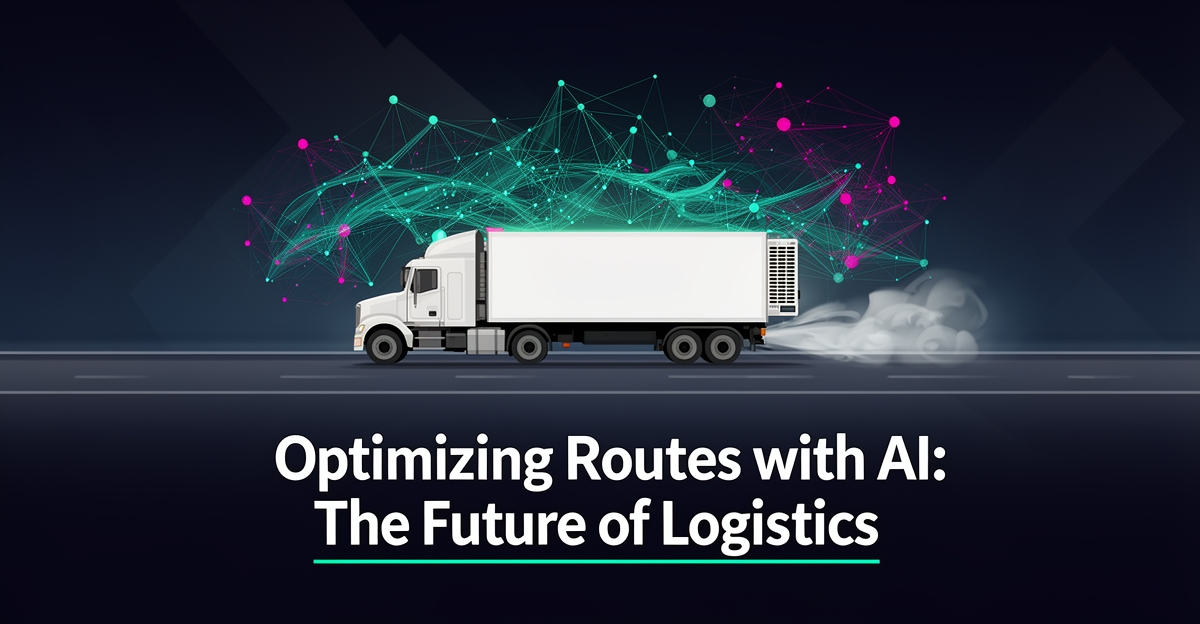
From Manual to AI: Transforming Refrigerated Trucking Dispatch Operations
Key Facts
- Industry analysis suggests AI-powered dispatch can reduce operational costs by roughly 15-25% by eliminating idle time and optimizing resource allocation according to operator analysis
- AI-powered dispatch systems have been reported to increase on-time delivery rates by up to 30% through predictive routing and dynamic load matching per operator analysis
- The AI logistics market was valued at roughly $6.1 billion in 2024 and, as of late 2026, is projected to keep growing rapidly through the decade according to industry research
- AI in logistics can lead to a 35% reduction in inventory carrying costs and a 65% higher service level compared to competitors per McKinsey research
- Process mining reveals idle time, missed handoffs, and suboptimal routing by analyzing actual workflows from telematics and dispatch histories
- AI-powered dispatch systems improve fuel efficiency across fleets by optimizing routing and reducing waiting periods per operator analysis
- Owned AI workflows built through process mining align with actual fleet performance and improve as conditions change over time
Hire a team member that works 24/7 — for less than a part-time wage.
AI receptionists, SDRs, dispatchers and 99+ roles. Trained on your business, fully managed.
Not sure where to start? Ask our AI planner
The Manual Dispatch Bottleneck in Refrigerated Trucking
Refrigerated trucking dispatch remains trapped in manual workflows that create costly inefficiencies across scheduling, loading, and routing. Dispatchers juggle spreadsheets, phone calls, and paper logs to coordinate temperature-sensitive shipments, leading to delays and errors. This reactive approach leaves trucks idling at docks or waiting for clearance, wasting fuel and driver hours while increasing operational costs. The lack of real-time visibility into load readiness and traffic conditions compounds these delays, turning routine dispatches into bottleneck-prone processes.
These manual methods directly impact profitability and service reliability in cold chain logistics. Industry analysis suggests AI-powered dispatch systems can reduce operational costs by roughly 15-25% by eliminating idle time and optimizing resource allocation. Without such automation, fleets often experience missed delivery windows due to poor route planning and last-minute changes, damaging customer trust and increasing the risk of spoilage for perishable goods. The financial toll extends beyond fuel waste to include detention fees, overtime labor, and potential claims from temperature excursions.
The consequences ripple through compliance and performance metrics as well. Manual tracking makes it difficult to maintain accurate records for regulatory audits, increasing vulnerability to Hours of Service (HOS) violations or food safety infractions. Additionally, fleets relying on manual dispatch consistently lag behind automated peers in on-time delivery performance—gaps that AI systems have been reported to close by up to 30% through predictive routing and dynamic load matching. For refrigerated carriers, where timing is critical to product integrity, these delays aren’t just inconvenient—they’re costly failures.
- Idle time at loading docks due to poor scheduling coordination
- Increased fuel consumption from suboptimal routing and waiting periods
- Higher risk of compliance violations from inconsistent record-keeping
- Elevated spoilage potential from temperature excursions during delays
- Revenue loss from detention fees and missed delivery windows
AIQ Labs helps refrigerated fleets break free from this cycle by applying process mining to historical dispatch data, uncovering patterns that manual oversight misses. By analyzing actual loading durations, route deviations, and dock wait times, the Workflow Builds approach rebuilds the one workflow that costs the most—fixed price, in phases. This foundation enables targeted automation that reduces idle time, improves on-time delivery, and strengthens compliance without requiring a complete rip-and-replace of existing systems. The result is a dispatch operation that adapts dynamically to conditions while protecting the integrity of the cold chain.
How Process Mining and AI Transform Dispatch Operations
Refrigerated dispatch has long been a manual balancing act of loads, lanes, and limited visibility. AI is turning that reactive process into a predictive system that learns from every run.
AI-powered dispatch systems analyze historical dispatch data, driver patterns, and outcomes to optimize load assignments, route planning, and resource allocation in real time. According to industry analysis of freight dispatching, these systems can reduce operational costs by roughly 15-25%, increase on-time delivery rates by up to 30%, and improve fuel efficiency across fleets.
The market momentum is clear. Industry research valued the AI logistics market at roughly $6.1 billion in 2024, with projections as of late 2026 pointing to continued rapid growth through the decade. That growth is driven by fleets needing more than static rules.
Process mining makes the transformation practical. Instead of guessing where delays occur, AI maps actual workflows from telematics, ELD logs, and dispatch histories to reveal idle time, missed handoffs, and suboptimal routing. AIQ Labs leverages process mining to build automated workflows that align with actual fleet performance, improving efficiency and reducing idle time.
In refrigerated trucking, the impact shows up in three operational layers:
- Load assignment optimization that matches temperature requirements, appointment windows, and backhaul opportunities
- Dynamic route planning that adapts to traffic, weather, and real-time capacity constraints
- Resource allocation that balances driver hours, trailer availability, and maintenance schedules
The result is a dispatch operation that learns continuously. Machine learning models identify which patterns lead to late deliveries or excess fuel burn, then adjust future recommendations without manual intervention. Real-time decisioning replaces end-of-day reporting.
Platforms such as Energent.ai, Samsara, Onfleet, Motive, and Route4Me illustrate how the category is maturing, with capabilities ranging from route optimization to last-mile management. Comparisons of AI-powered dispatch software highlight the shift toward integrated, data-driven tools.
For SMB carriers, the key is starting with clean, consistent data and a focused use case. AI works best when it is trained on accurate historical dispatch data and integrated with existing TMS and telematics. As adoption scales, the same models extend from dispatch to broader supply chain visibility.
This is where AI Business Process Automation in Process Mining & Optimization applies directly. By analyzing historical dispatch data and optimizing scheduling, loading, and routing patterns, AI creates a closed loop between performance and planning.
From Insight to Implementation: A Practical AI Roadmap
Transforming refrigerated trucking dispatch operations begins with a clear understanding of where manual processes create the most friction. By analyzing historical dispatch data through process mining, businesses can pinpoint inefficiencies in scheduling, loading, and routing that directly impact delivery performance and fuel consumption. AIQ Labs’ workflow fix approach starts by mapping these pain points to build a foundation for targeted automation.
The first phase focuses on data quality and system readiness, ensuring that telematics, temperature logs, and delivery timestamps are accurate and consistent. Poor data undermines AI effectiveness, so cleaning and structuring historical records is essential before any model training begins. Once data integrity is established, the next step involves integrating AI capabilities with existing dispatch and fleet management tools using secure API connections—avoiding rip-and-replace disruptions while enabling real-time decision support.
Pilot implementation follows a controlled rollout, typically targeting one high-impact workflow such as load-to-truck matching or route optimization for perishable goods. During this phase, AI employees or automated agents work alongside human dispatchers to validate recommendations, building trust through transparency and measurable outcomes. Research suggests AI-powered dispatch systems can reduce operational costs by roughly 15-25% and improve on-time delivery rates by up to 30%, making early wins critical for securing stakeholder buy-in.
Scaling requires deliberate change management, including role-specific training, feedback loops, and performance tracking to refine AI behavior over time. As confidence grows, organizations expand automation across additional workflows—such as predictive maintenance alerts or dynamic re-routing based on weather and traffic—while maintaining human oversight for exceptions. This phased, milestone-based approach ensures AI adoption aligns with operational reality, turning insight into sustainable efficiency gains for refrigerated fleets. To explore how this roadmap applies to your operation, start the two-minute Fit Check and schedule a free 30-minute strategy call.
Why Ownership and Integration Matter for Fleet AI
Off-the-shelf dispatch software promises efficiency, but it delivers standardization. For refrigerated trucking, where temperature windows, loading sequences, and driver hours interact, generic rules create idle time and manual workarounds.
The market is moving fast. The AI logistics market was valued at roughly $6.1 billion in 2024, with projections as of late 2026 pointing to continued rapid growth, according to industry research. That growth is driven by systems that learn from actual operations, not just templates.
Owned AI workflows built through process mining start with historical dispatch data. Patterns in scheduling, loading, and routing are mapped to real outcomes, then automated. This creates true ownership of the logic that runs the fleet, rather than renting a feature set that can change with a vendor roadmap.
Seamless integration is where ownership pays off. Custom workflows connect directly to telematics, TMS, and refrigeration units, eliminating the swivel-chair data entry that plagues point solutions. AI-powered dispatch systems can reduce operational costs by roughly 15-25%, increase on-time delivery rates by up to 30%, and improve fuel efficiency across fleets per operator analysis. Those gains compound when the system is tuned to your lanes, not an average fleet.
Continuous optimization is the differentiator for SMB fleets. Process-mined AI aligns with actual fleet performance and improves as conditions change. The use of AI in logistics can lead to a 35% reduction in inventory carrying costs and a 65% higher service level compared to competitors according to McKinsey research. With owned systems, you control retraining, guardrails, and integration depth.
Off-the-shelf platforms like Energent.ai, Samsara, Onfleet, Motive, and Route4Me are listed among the top AI-powered dispatch software platforms per vendor comparisons. They provide useful modules, but they also enforce pricing tiers and feature limits per vehicle per month.
An owned approach changes the economics and control:
- Full code and data ownership with no vendor lock-in
- Two-way API integrations that mirror your existing dispatch, maintenance, and compliance tools
- Workflows that evolve with your lanes, customers, and equipment
- Continuous improvement based on your historical performance, not generic benchmarks
AIQ Labs builds these systems using process mining to analyze historical dispatch data and optimize scheduling, loading, and routing patterns—200+ multi-agent systems deployed to date. The result is automated workflows that reflect how your fleet actually performs, reducing idle time while keeping the business in control of its AI assets.
Still paying for 10+ subscriptions that don’t talk to each other?
We build custom AI systems you own outright. No vendor lock-in. Full control.
Not sure where to start? Ask our AI planner
Frequently Asked Questions
How much can AI dispatch actually reduce costs for a refrigerated trucking fleet?
What is process mining and how does it improve dispatch operations?
Do I need to replace my current TMS or dispatch software to use AI?
How long does it take to implement AI dispatch for refrigerated trucking?
What's the difference between off-the-shelf dispatch software and custom AI?
How fast is the AI logistics market growing?
From Dispatch Chaos to Cold Chain Confidence
The shift from manual to AI-powered dispatch isn’t just about technology—it’s about reclaiming control over the variables that make or break refrigerated trucking: timing, temperature, and trust. By leveraging process mining to uncover real-world inefficiencies and building owned, integrated AI workflows, fleets can reduce idle time, cut operational costs, and lift on-time delivery—all while protecting the integrity of the cold chain. The path forward starts with clean data and a focused pilot, scaling only as confidence and results grow. If you’re ready to see where your dispatch operation stands and what’s possible, start with the free two-minute Fit Check and schedule a no-obligation 30-minute strategy call with AIQ Labs to map your highest-impact opportunity.
Make AI your competitive advantage — not just another tool.
Strategy, implementation and ongoing optimization. One partner, end to end.
Not sure where to start? Ask our AI planner