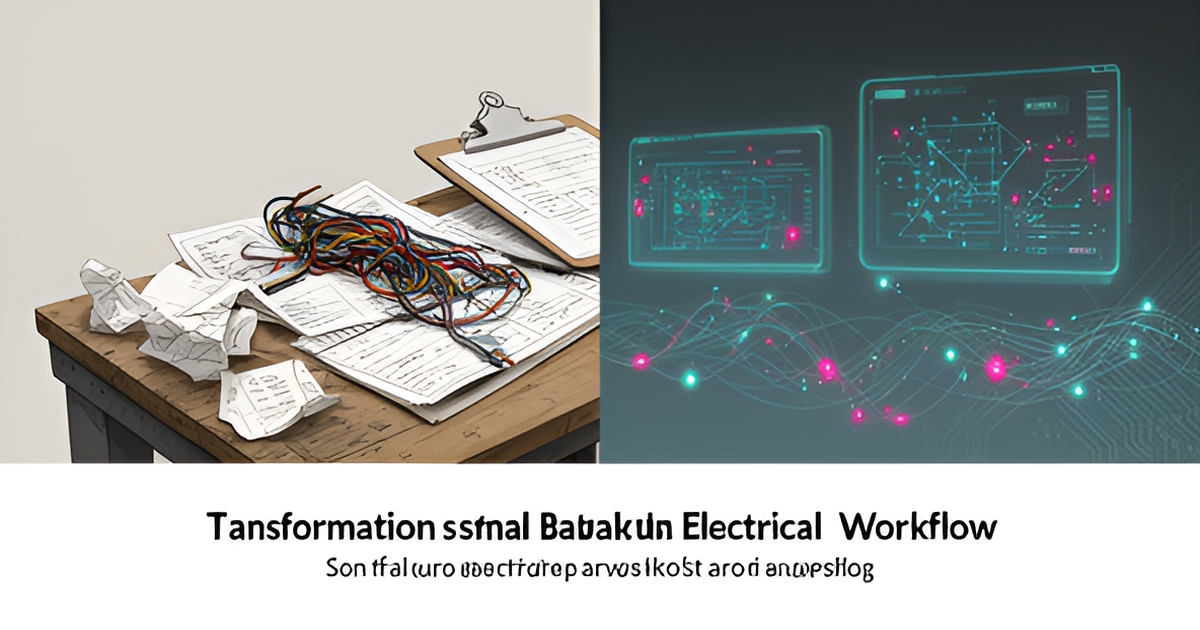
From Manual to AI: Transforming Repair Workflows in Small Auto Electrical Shops
Key Facts
- Manual, paper-based workflows remain common in small service shops, and every handoff is a place where steps get missed, entries get duplicated, and billable time goes unbilled.
- Data-driven checks catch errors earlier in the repair process, which typically means fewer comebacks, less rework, and cleaner invoices.
- Automating routine coordination—status updates, scheduling, intake triage—frees technicians to focus on billable, complex electrical work.
- Early fault detection through AI-assisted diagnostics can meaningfully reduce emergency interventions in predictive maintenance models.
- Predictive scheduling aligns technician loads with parts availability, which typically improves bay utilization and reduces idle time.
- Data-driven parts ordering based on historical repair patterns can substantially cut stockout incidents.
- AI employees typically cost roughly 80% less than an equivalent human hire while providing 24/7/365 availability with zero missed calls.
Hire a team member that works 24/7 — for less than a part-time wage.
AI receptionists, SDRs, dispatchers and 99+ roles. Trained on your business, fully managed.
Not sure where to start? Ask our AI planner
The Hidden Cost of Manual Repair Workflows
Paper-based intake and ad-hoc scheduling feel manageable until the delays compound. In small auto electrical shops, manual repair workflows quietly erode billable hours every day.
Inconsistent intake forms and handwritten job cards create gaps that technicians must chase. Customers call for updates, parts arrive late, and the shop reacts instead of plans. These friction points are typical when processes are tribal rather than mapped.
Manual handoffs increase the risk of missed steps, duplicate entries, and lost revenue from unbilled time—a pattern that shows up in small service shops everywhere, where paper records still dominate day-to-day operations.
Reactive scheduling amplifies the cost. Without visibility into technician load, parts availability, and diagnostic status, jobs slip and bays sit idle. The same principle that applies in any service business applies here: automating status updates and scheduling frees technicians to bill instead of administrate.
Errors are expensive. A misrecorded voltage reading or lost customer authorization can force rework and erode trust. Data-driven checks catch mistakes before they reach the customer. In auto electrical work, that means fewer comebacks and cleaner invoices.
The hidden drag shows up as:
- Delayed diagnostics from incomplete vehicle history and scattered notes
- Lost billable hours chasing paperwork instead of repairing
- Customer churn from poor communication and missed promises
- Inventory waste from reactive parts ordering and stockouts
Most owners underestimate this cumulative drag because the cost is distributed across small daily losses. Process mapping can expose existing workflows, identify bottlenecks, and suggest improvements. That's exactly the approach behind AIQ Labs' AI Workflow Builds—rebuilding the one workflow that costs you the most, at a fixed price, in phases.
When workflows are visible, shops can shift from reactive problem-solving to proactive maintenance and optimized scheduling. That shift protects billable hours and builds the foundation for sustainable growth.
How AI Maps and Fixes Broken Workflows
Small auto electrical shops often operate with fragmented processes that create hidden delays and increase the likelihood of mistakes. AI transforms these workflows by first mapping every step—from customer intake to final quality check—to expose where time is lost and errors creep in. By identifying and eliminating redundant or inconsistent steps in repair processes, data-driven checks typically deliver meaningful reductions in rework and QA-type costs. Once bottlenecks are visible, AI-driven diagnostics support technicians with real-time data analysis, improving accuracy and cutting the time spent troubleshooting electrical faults.
Beyond diagnostics, AI enhances inventory management by forecasting parts demand based on historical repair patterns and seasonal trends, reducing both stockouts and excess inventory. Automated customer communication keeps clients informed at every stage—appointment confirmation, repair progress, and completion—freeing staff from repetitive updates while improving satisfaction. These integrated improvements don't just speed up repairs; they create a predictable, scalable system where technicians spend less time on administrative tasks and more on complex problem-solving. The result is a workflow that learns and adapts, turning reactive repairs into a proactive, efficient operation. To explore how AI can map and optimize your shop's specific processes, start with a free strategy call to identify your highest-impact automation opportunities.
From Reactive to Predictive: The New Operating Model
The shift from reactive fixes to proactive care begins with data. Manual operations often mean technicians respond only after a failure occurs, leading to emergency repairs, extended downtime, and frustrated customers. AI-powered systems change this dynamic by continuously analyzing vehicle performance, service history, and usage patterns to predict when maintenance is truly needed. This predictive approach transforms the shop from a place of constant firefighting into one of planned, efficient interventions.
Catching issues earlier and minimizing rework is where the savings compound. In an auto electrical context, this means fewer comebacks, less wasted labor, and more reliable outcomes. Predictive maintenance doesn't just prevent breakdowns—it optimizes the entire repair cycle by aligning parts availability, technician schedules, and customer expectations before a fault even manifests.
The result is a measurable gain in both efficiency and predictability. Shops using AI-driven scheduling typically see reduced idle time and better load balancing across bays, while diagnostic accuracy improves through pattern recognition that goes beyond manual inspection. AI-powered tools automate routine analysis—like tracking recurring electrical faults or battery drain patterns—freeing technicians to focus on complex troubleshooting and customer consultation.
- Early fault detection can meaningfully reduce emergency interventions
- Predictive scheduling typically improves bay utilization by aligning technician loads with parts availability
- Data-driven parts ordering can substantially cut stockout incidents
This new operating model doesn't replace the technician—it elevates them. By handling routine data aggregation and trend analysis, AI allows skilled professionals to apply their expertise where it matters most: interpreting ambiguous symptoms, advising customers on long-term vehicle health, and executing precision repairs. The shop becomes less chaotic, more scalable, and fundamentally more reliable—all while keeping human judgment at the core of every decision. For small auto electrical businesses aiming to grow without proportionally increasing overhead, this shift from reactive to predictive isn't just an upgrade—it's a necessity. For shops ready to go further, AIQ Labs' AI Operating Systems connect scheduling, intake, inventory, and customer communication into one operating layer, built in phases and owned outright.
A Practical Roadmap: Implementing AI in Your Shop
Many small auto electrical shops operate with fragmented processes that create avoidable delays and mistakes. A practical path forward begins with mapping current workflows to pinpoint where manual handoffs, data silos, or repetitive tasks slow down repairs and frustrate technicians. This clarity sets the foundation for targeted AI interventions that address real pain points rather than adding complexity.
Start by defining clear, measurable goals tied to shop performance—such as reducing diagnostic time, cutting parts ordering errors, or decreasing customer wait times for status updates. With objectives in place, launch a pilot project focused on one high-impact area, such as automating parts inventory alerts or using AI to triage customer intake questions. This controlled test allows the team to validate benefits, uncover integration needs, and build confidence before broader rollout.
Successful implementation hinges on integrating AI with existing data sources like repair histories, parts databases, and scheduling tools—ensuring the system has accurate, timely information to act on. Poor data quality remains a top barrier, so audit and cleanse critical datasets early, establishing simple rules for ongoing data hygiene. Equally important is investing in role-specific training: technicians need to understand how AI diagnostics suggestions work, while front staff should practice using AI-assisted scheduling tools. Resistance to change often stems from fear of the unknown, so frame AI as a tool that handles routine tasks, freeing staff for higher-value work like complex wiring repairs or customer consultation. Monitor key metrics weekly during the pilot—such as time saved per repair or reduction in repeat visits—and adjust based on feedback. Shops that follow this structured approach see AI not as a disruptive technology, but as a practical upgrade that makes their existing expertise more effective and their operations more predictable. To explore how this roadmap applies to your shop's specific workflows, take the two-minute Fit Check at https://aiqlabs.ai/apply for a free 30-minute strategy call with an AIQ Labs engineer to map your biggest bottleneck and identify high-ROI automation opportunities.
Getting Started Without Big-Business Budgets
Small auto electrical shops don't need enterprise budgets to start automating. They need a clear first win, a flexible way to pay, and a partner who maps the real workflow before building anything.
Manual processes still dominate repair operations in small shops—paper intake forms, phone-based dispatch, whiteboard scheduling. Those inconsistencies create delays, errors, and lost revenue.
AI can map existing workflows, identify bottlenecks, and suggest improvements without ripping out what already works. That process-first approach turns chaotic operations into a streamlined system by starting with one broken workflow, such as dispatch or intake, and rebuilding it properly.
Flexible engagement models make enterprise-grade automation accessible. Shops can start with a single workflow fix and scale as confidence grows, rather than committing to a full overhaul upfront.
Three practical entry points are commonly used:
- Start Monthly — one AI employee (receptionist, dispatcher, SDR, and 99+ other roles) with setup plus a flat monthly plan, typically around 80% less than a human hire, with build, training, integrations, monitoring and improvements included and the ability to pause or adjust anytime. See AI Employees.
- Build in Milestones — one workflow or department system split into phases, approve and pay per phase, stop anytime and keep everything built so far. See AI Workflow Builds.
- Own It Outright — a full AI operating system with one project price, built in phases, with full ownership of code, agents and data when complete. See AI Operating Systems.
Starting small delivers measurable relief fast. The efficiency logic is straightforward: automating repetitive work and improving accuracy reduces the average cost of every repair, and fewer errors mean fewer comebacks eating into margin.
The highest-ROI first move is usually the workflow that touches customers and technicians daily. Dispatch, intake, and service reminders are common starting points because they eliminate missed calls, duplicate data entry, and scheduling errors.
AIQ Labs works with small shops through end-to-end automation services that map current processes, pinpoint bottlenecks, and design improvements built to be owned, not rented—with 200+ multi-agent systems deployed and four live SaaS products the company runs daily. A free strategy session maps the business's biggest bottleneck and identifies high-ROI automation opportunities with no obligation.
Start the Fit Check at https://aiqlabs.ai/apply—a two-minute fit check leading to a free 30-minute strategy call at https://aiqlabs.ai/book. It's a real working session with an AI engineer, not a sales pitch. If there isn't a clear win, we'll say so.
Start monthly, prove value on one workflow, then scale is how small shops access enterprise-grade automation without big-business budgets.
Still paying for 10+ subscriptions that don’t talk to each other?
We build custom AI systems you own outright. No vendor lock-in. Full control.
Not sure where to start? Ask our AI planner
Frequently Asked Questions
How can AI reduce QA and rework costs in auto electrical repair shops?
What are the most common starting points for AI implementation in small auto electrical shops?
Do I need a big budget to start using AI in my auto repair shop?
How does AI improve diagnostic accuracy and reduce troubleshooting time in auto electrical work?
Can AI really help reduce idle time and improve bay utilization in my shop?
Will AI replace my technicians or make their skills less important?
Your Shop's Next Chapter Starts With One Workflow
The transformation from manual chaos to AI-powered precision doesn't require a massive upfront investment or a complete operational overhaul. By mapping your existing workflows, identifying bottlenecks, and implementing targeted automation—whether that's predictive maintenance, intelligent scheduling, or automated customer updates—you create a system where technicians focus on complex electrical work instead of chasing paperwork. The result is fewer comebacks, optimized parts inventory, and customers who stay informed without constant phone calls. Small shops that embrace this shift aren't just surviving; they're building scalable, predictable operations that grow without proportionally increasing overhead. Ready to identify your highest-impact automation opportunity? Start the Fit Check at https://aiqlabs.ai/apply for a free 30-minute strategy call with an AIQ Labs engineer. We'll map your biggest bottleneck and show you exactly where AI can deliver ROI—no obligation, just clarity.
Make AI your competitive advantage — not just another tool.
Strategy, implementation and ongoing optimization. One partner, end to end.
Not sure where to start? Ask our AI planner