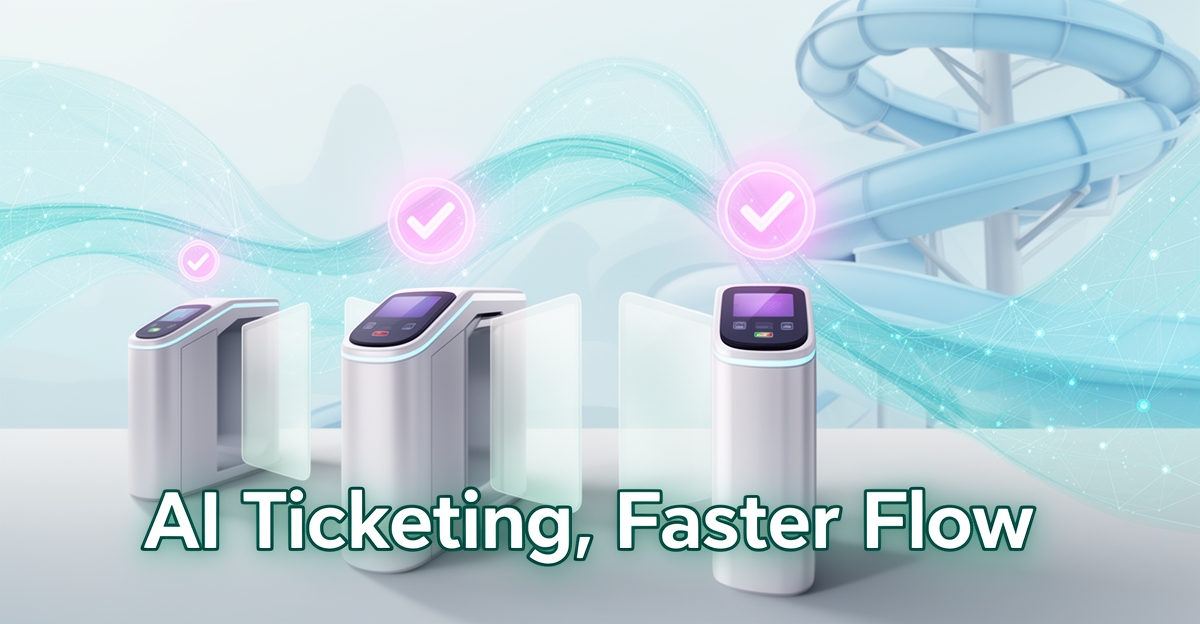
From Manual to AI: Transforming Ride Booking & Ticketing at Water Parks
Key Facts
- AI validation reaches 95–98% accuracy even in challenging conditions, while manual methods struggle with consistency.
- AI fleet management saves $54,000–$120,000 annually versus manual dispatch, with full ROI in 30–90 days.
- AI agents cut average pickup times by 35% and reduce support handling costs by 42% in ride-hailing systems.
- Automated validation platforms achieve up to 70% fraud reduction and 20–40% retention gains over manual systems.
- Manual dispatch costs $3,500–$5,500 monthly per dispatcher and requires 60–120 minutes of daily route planning, comparative analysis shows.
- AI route planning compresses dispatch planning from hours to under five minutes per day.
- The global AI in transportation market is projected to reach $23 billion by 2026, with ride-hailing among the fastest-growing segments.
Hire a team member that works 24/7 — for less than a part-time wage.
AI receptionists, SDRs, dispatchers and 99+ roles. Trained on your business, fully managed.
Not sure where to start? Ask our AI planner
Why Manual Ticketing and Ride Booking Break Down at Scale
Paper tickets and phone bookings create bottlenecks the moment gates open. At water parks, manual validation and handwritten logs turn peak hours into long queues, frustrated guests, and missed revenue.
Manual ticketing introduces human error at every touchpoint. Staff misread passes, duplicate entries slip through, and phone-based reservations get lost between desks. Industry research shows AI monitoring reaches 95–98% accuracy, while manual methods struggle with consistency, a gap that mirrors front-gate validation.
Dispatch-style operations break down under scale. Manual dispatch for fleets costs $3,500–$5,500 per month per dispatcher and requires 60–120 minutes daily for route planning. Comparative analysis finds AI fleet management can save $54,000–$120,000 annually compared to manual dispatch, with full ROI in 30–90 days.
The same patterns appear in ride-hailing and ticketing workflows. Recent analysis reports AI agent systems reduce average pickup times by 35% and cut support handling costs by 42%, demonstrating how automation removes queue friction and staff overload.
Fraud and retention risk grow with paper systems. AI-powered ride-sharing guidance notes up to 70% fraud reduction and 20–40% increases in retention when validation and matching move to automated platforms.
Operational pain points compound during peak demand:
- Long queues at entry and ride check-in from manual validation and paper scanning
- Errors in ticket counts, duplicate sales, and lost phone bookings
- Limited real-time visibility into capacity, wait times, and staffing needs
- Fraud risk from counterfeit paper tickets and manual re-entry
These inefficiencies limit scalability. Parks cannot add lanes fast enough, staff fatigue rises, and guest experience degrades when systems rely on people to process every transaction. Manual processes do not scale with attendance, and the cost is measured in lost throughput and reputation.
AIQ Labs works in the AI Business Process Automation space, focusing on AI Document Processing & Management to eliminate paper, reduce errors, and improve scalability for operations like ticketing and validation. Transitioning from manual to AI-driven booking is a business case built on accuracy, speed, and ownership of the system that runs the park.
How AI-Driven Booking Platforms Process Tickets, Validate Passes, and Notify Guests in Real Time
When a guest taps "buy" at a water park, the difference between a clunky manual system and an AI-driven platform is measured in seconds — and in whether that guest ever returns. Behind the scenes, modern AI booking platforms handle three jobs simultaneously: processing tickets, validating passes, and keeping guests informed, all in real time.
Real-time ticket processing works much like the dispatch engines proven in ride-hailing. AI agents in that industry autonomously manage matching, pricing, and support workflows, delivering a 35% reduction in average pickup times and a 42% decrease in support handling costs, according to industry analysis of AI agents in ride-hailing. The same architecture translates directly to water parks: instead of matching riders to drivers, the system matches guests to available time slots, cabanas, and ride reservations instantly, without a human clerk touching the transaction.
Pass validation is where computer vision earns its keep. AI traffic monitoring systems combine computer vision, machine learning, and sensors to interpret data in real time, achieving 95–98% accuracy even in challenging conditions — far more consistent than manual checks. Applied at a park entrance or ride queue, a camera-based system can scan season passes, wristbands, or QR codes in a fraction of a second, flagging expired or duplicated passes automatically. This matters because fraud is a real cost: AI-powered booking platforms have demonstrated up to 70% fraud reduction alongside meaningful gains in customer retention.
Predictive capacity management rounds out the system. The same forecasting logic that lets AI fleet management platforms outperform manual dispatch — with savings of $54,000–$120,000 annually and route planning compressed from hours to under five minutes — can predict queue buildup, staff ride capacity appropriately, and redistribute guest flow before bottlenecks form.
Automated notifications tie it all together. Guests receive confirmations, pass alerts, wait-time updates, and rebooking offers through SMS or app notifications the moment their status changes — no front-desk phone calls required. The result is a fully automated loop:
- Ticket purchased and confirmed instantly through AI processing
- Pass validated at entry via computer vision with 95–98% accuracy
- Capacity predicted and queues balanced proactively
- Guest notified in real time of wait times, upgrades, or changes
This is the model AIQ Labs builds: custom, ownership-based AI systems that eliminate paper, reduce errors, and scale with attendance — whether the park handles 500 guests a day or 50,000.
Implementation Roadmap: From Data Audit to Owned AI System
Traditional ticketing systems at water parks often lead to long lines, manual errors, and frustrated guests, but AI-driven platforms can transform this experience by processing tickets, validating passes, and sending real-time notifications with greater accuracy and speed. By adapting proven steps from ride-sharing AI deployment, water parks can begin their transformation with a clear, phased approach that builds confidence and delivers early wins.
Start by defining specific goals such as reducing ticket validation errors, cutting guest wait times, or minimizing fraudulent pass usage—objectives directly tied to improving operational efficiency and guest satisfaction. Next, gather historical and real-time data including ticket sales, entry timestamps, payment transactions, and guest flow patterns from existing systems to establish a reliable foundation for AI training and decision-making. Choose initial high-impact features like automated ticket scanning, dynamic pricing based on demand, or real-time capacity alerts, which align with proven AI benefits such as the 35% reduction in average pickup times and 42% decrease in support handling costs seen in AI agent systems for ride-hailing.
Prototype the solution in a single zone—such as one popular slide complex or family pool area—to test performance, refine workflows, and validate assumptions before broader rollout. Establish feedback loops where guest interactions, staff input, and system performance data continuously inform AI improvements, ensuring the system learns from real-world conditions. Track key performance indicators like ticket processing speed, error rates, and guest satisfaction scores to measure impact and guide scaling decisions, leveraging AIQ Labs’ ownership-based build models and managed AI Employees for ticketing and guest support to maintain control, reduce dependency on third-party platforms, and ensure long-term adaptability. This structured path turns manual inefficiencies into a scalable, intelligent guest experience engine.
Build, Own, and Scale with a Partner That Builds What It Sells
Moving from pilot projects to park-wide transformation requires a partner that builds what it sells — and stands behind every system in production. AIQ Labs operates three integrated pillars: custom AI development with true ownership, managed AI Employees for 24/7 guest service, and AI Transformation Consulting that guides water parks up the maturity curve. Our own portfolio runs 70+ production agents daily across revenue-generating SaaS products, including a compliant voice AI platform that handles sensitive conversations in regulated industries — proof that multi-agent architecture works at scale.
- Custom development delivered through Start Monthly, Build in Milestones, or Own It Outright payment models
- AI Employees that answer phones, validate passes, and route guests — costing less than a part-time hire
- Transformation consulting structured around six pillars: assessment, development, integration, governance, adoption, and scaling
The same multi-agent frameworks powering our marketing suite — orchestrating 70+ specialized agents for real-time research and content generation — can coordinate ride booking, ticket validation, and guest notifications across a water park. Our collections platform demonstrates voice AI that meets strict compliance requirements while maintaining natural conversation, a capability that transfers directly to guest-facing phone and kiosk interactions. AI fleet management platforms show the financial upside: $54,000–$120,000 in annual savings versus manual dispatch, with most operations seeing full ROI within 30–90 days industry analysis confirms. AI agents in ride-hailing cut average pickup times by 38% and reduce fraudulent payouts by 34% production data shows, while traffic monitoring systems achieve 95–98% accuracy in challenging conditions research validates.
Water parks ready to move beyond pilots start with a free 30-minute strategy call — no obligation, just a working session with an AI engineer to map the highest-ROI automation opportunities. If there isn't a clear win, we'll say so.
Still paying for 10+ subscriptions that don’t talk to each other?
We build custom AI systems you own outright. No vendor lock-in. Full control.
Not sure where to start? Ask our AI planner
Frequently Asked Questions
How much can water parks save annually by switching from manual dispatch to AI fleet management?
What accuracy rate do AI traffic monitoring systems achieve for pass validation at water park entrances?
Can AI reduce fraud and improve guest retention in water park ticketing systems?
How much faster can AI agents process ride bookings compared to manual systems in water parks?
Is it true that AI systems for water parks require ongoing third-party subscriptions and create vendor lock-in?
What’s the first step for a water park looking to implement AI-driven ticketing and booking?
Where AI Meets the Water Slide: Turning Chaos into Clarity
Water parks thrive on joyful moments, not long lines or lost tickets. As we’ve seen, manual systems buckle under peak demand—creating errors, fraud risks, and frustrated guests—while AI-driven platforms deliver real-time ticket processing, 95–98% accurate pass validation, predictive capacity management, and automated guest notifications. The result is smoother operations, higher retention, and measurable savings, with AI fleet management alone showing $54,000–$120,000 in annual ROI within 30–90 days. For parks ready to scale without the growing pains, the path forward is clear: start with a focused pilot, validate impact, and build toward an owned, intelligent system. AIQ Labs helps water parks make that shift—from data audit to full transformation—with custom AI development, managed AI Employees, and strategic consulting that puts ownership and scalability first. Take the first step with a free 30-minute strategy call to map your highest-ROI opportunity—no obligation, just clarity on where AI can make the biggest splash.
Make AI your competitive advantage — not just another tool.
Strategy, implementation and ongoing optimization. One partner, end to end.
Not sure where to start? Ask our AI planner